
Vision and Valor: The War Through Women’s eyes
By Juanita Leisch Jensen · Originally published May-June 2026 · pp. 16–21
Introduction
This article describes the United States Sanitary Commission (USSC) and women’s roles associated with it. These roles involved many thousands of women, including socially and economically prominent women whose activities were widely publicized and are the best known and most thoroughly documented roles of women in the war. After considering the legacy of improvements the USSC produced during the Civil War (and ever since), it is obvious that any credit given to the USSC is, in truth, inadequate.
Organization
The U.S. Sanitary Commission was modeled on the British Sanitary Commission, which had successfully improved the health and well-being of British soldiers during the Crimean War. The principal organizer of the U. S. Sanitary Commission was the Reverend Doctor Henry W. Bellows, a Unitarian pastor who, in June 1861, convinced the government of the need for a group to supplement the capacity of the Army Medical Department. Many who initially questioned the need for the Sanitary Commission (including Abraham Lincoln, who called it a “fifth wheel”) later acknowledged its value and praised its accomplishments. The following account by a contract surgeon was initially published in a Wisconsin newspaper:
When I went into the field in 1861, I found a large proportion of the surgeons,… opposed … that Commission. … One evening … surgeons met in my tent. The Commission soon became our subject; something must be written against it, and I must write it. … I had nearly finished it when the sound of artillery came booming over the country. …The sufferers in the battle began to arrive. We had scarcely anything they needed. … by the time the wounded were examined, in came those sanitary agents with the very articles of comfort which Government failed to supply. My article, which had been hastily thrown aside, I now put away to finish at a “more convenient season.” … After the battle of Lee’s Mill, I was almost without medicine, or any articles of diet for the sick, …. Just then were discovered a number of ‘those sanitary chaps’ … Somehow or other they had the very things we needed. That night, … I went to my trunk, took out that article ‘on the Sanitary’ and read a few lines. It did not read as well as I thought it would, so I raised a garment and put it under. … The battle of Williamsburg followed; and before the smoke of the battle had blown away, right alongside of our Army lay one of those everpresent sanitary steamers, freighted not only with necessities, but with luxuries for the sick and wounded. They … were distributed to us without limit. Another shirt was thrown on that article! … At the time of the battle of Hanover Court House. … I had not a bed, not a dozen blankets, not a cooking utensil, and nothing to cook. … I appealed for assistance … with such importunity that I was threatened with dismissal from the service. I procured a pass to White House. There I found the United States Sanitary Commission. I told them the story …. Hundreds of clean sheets, blankets, bedsacks, and pillows were packed in less time than it needs to read the story. … At Antietam, I took the paper from the bottom of my trunk and… burned it. And now I declare upon my honor that I never wrote it, and that I never will do so again.1
Evolution
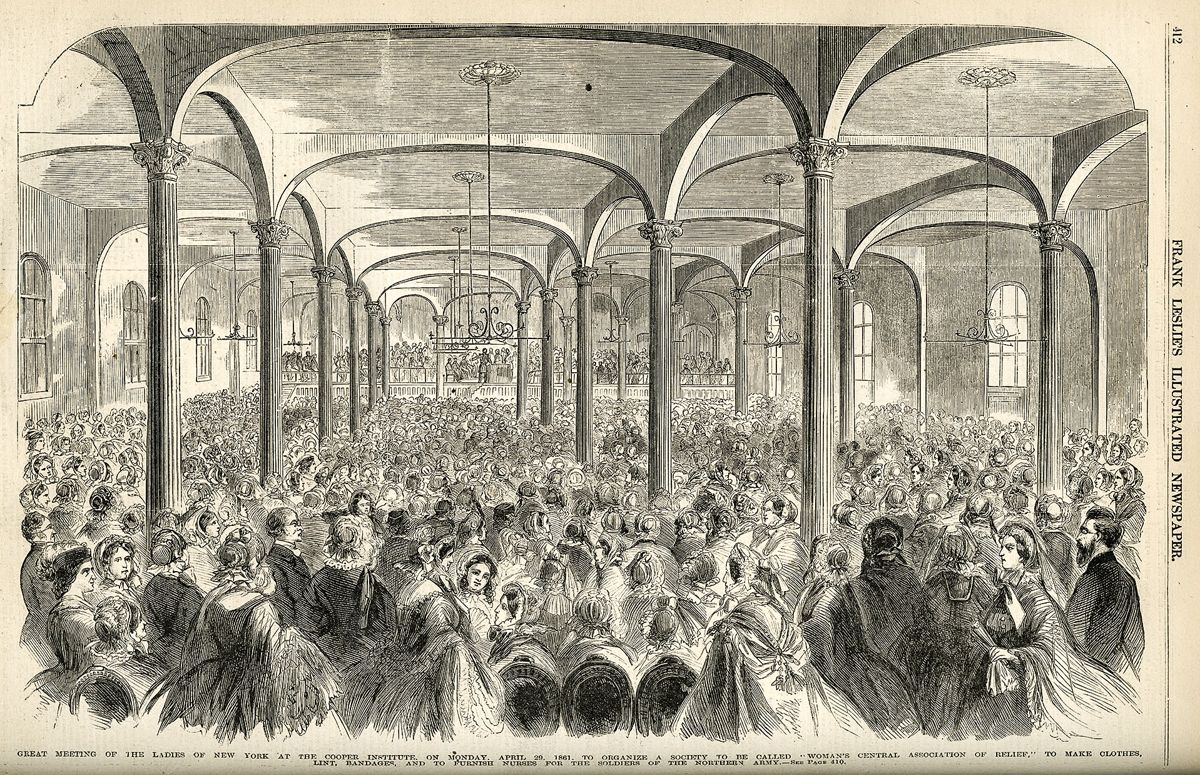
During the war, the mission of the U.S. Sanitary Commission expanded to providing just about anything that would improve the welfare of soldiers. This evolution was possible because, from day one, the commission’s logistics and finances were augmented by people wellequipped to help: Many socially prominent women were experienced in the “business of benevolence” prior to the Civil War. Recent successful efforts had included erecting a monument at Bunker Hill and purchasing and preserving George Washington’s home, Mount Vernon. Just days after the firing on Fort Sumter, Dr. Elizabeth Blackwell and a small group of friends issued a public notice inviting women interested in supporting northern war efforts to a meeting. From the more than two thousand women who showed up for the meeting, they organized the New York City-based Women’s Central Association of Relief (WCAR). In communities throughout the country, women organized soldiers’ aid societies and sent food, uniforms, and other necessities to “their” soldiers, only to see the goods left behind at the depot by train conductors focused on transporting soldiers, not packages. The U.S. Sanitary Commission and the many ladies’ aid societies shared a single objective: to improve the lives of soldiers. The WCAR merged its efforts with Dr. Bellows’ Sanitary Commission, and (with mixed results) encouraged local ladies’ aid societies to join them.
Operation
The U.S. Sanitary Commission employed a ‘federal’ model, encouraging local committees, ladies’ aid societies, and other organizations to maintain their independence while raising funds and gathering supplies. Instead of sending to ‘their’ soldiers, they were invited to surrender their gifts to the national organization for distribution. From there, the U.S. Sanitary Commission pioneered a practice of distributing goods and services based on need rather than political or geographic connection.
Innovation
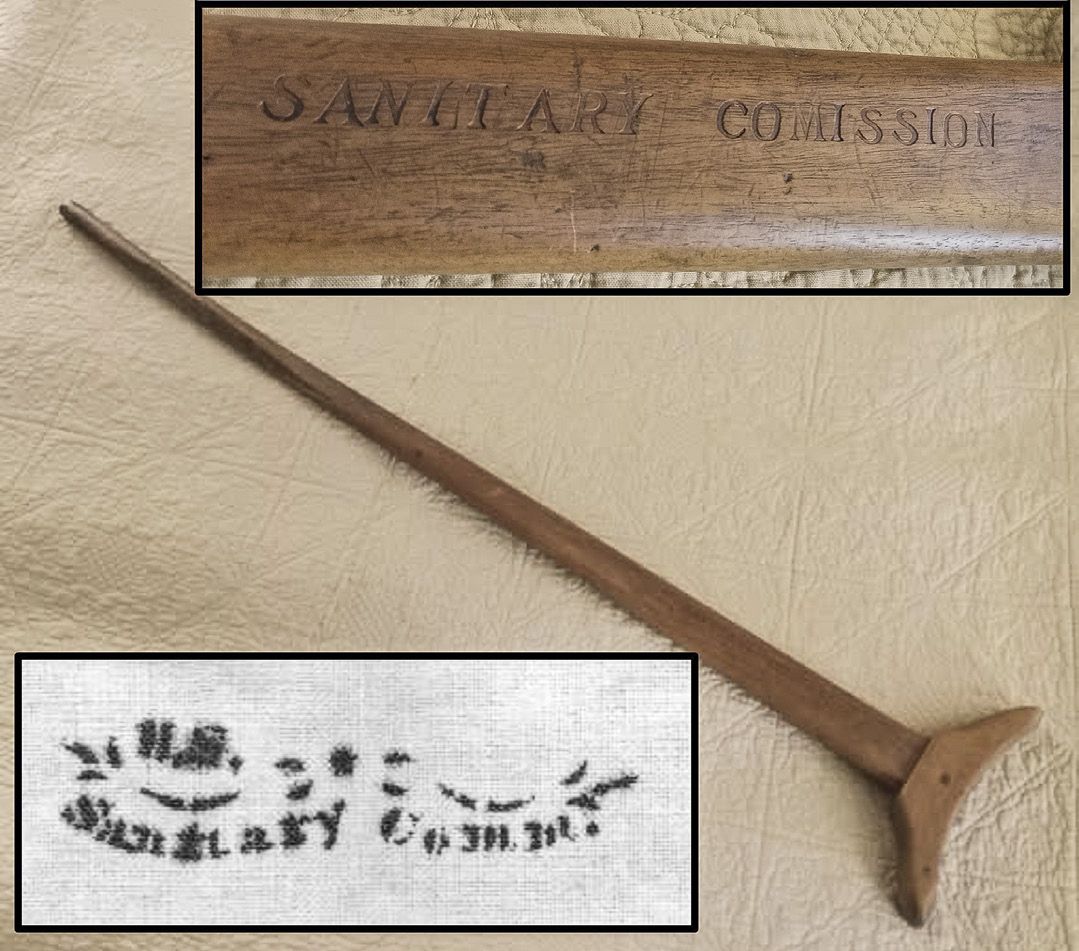
The Civil War was very likely the first war in the world in which a majority of soldiers and their families were literate and could correspond with one another. Sadly, the desire and ability to communicate by letter were not enough. Soldiers found that they lacked stamps, or the funds to buy them. Families found that when regiments changed locations, letters were returned for additional postage rather than being forwarded to the new camp location. A committee from the U.S. Sanitary Commission visited the Postmaster General in Washington, D.C., judiciously taking along with them a descendant of Benjamin Franklin, the first American Postmaster General. The U.S. Post Office Department thereafter introduced several improvements: Beginning in July 1861, soldiers were allowed to mail letters without stamps by writing “Soldier’s Letter” on the envelope. Postage was collected from the recipient, and Left: Items distributed by the U.S. Sanitary Commission were very often marked as such. The photo at the lower left is a detail of a pillowcase stamped with a commonly seen logo. The crutch in the main photo and upper right is crudely etched with “Sanitary Comission, missing the “U.S.” and with “Commission” misspelled. (Both objects are from the Author’s Collection)
mail to soldiers was forwarded without requiring additional postage. From this promising start during the Civil War, the USPS has continued to provide special accommodations for soldiers’ letters ever since, to the benefit of countless millions of soldiers and military families.
Financial Foundation
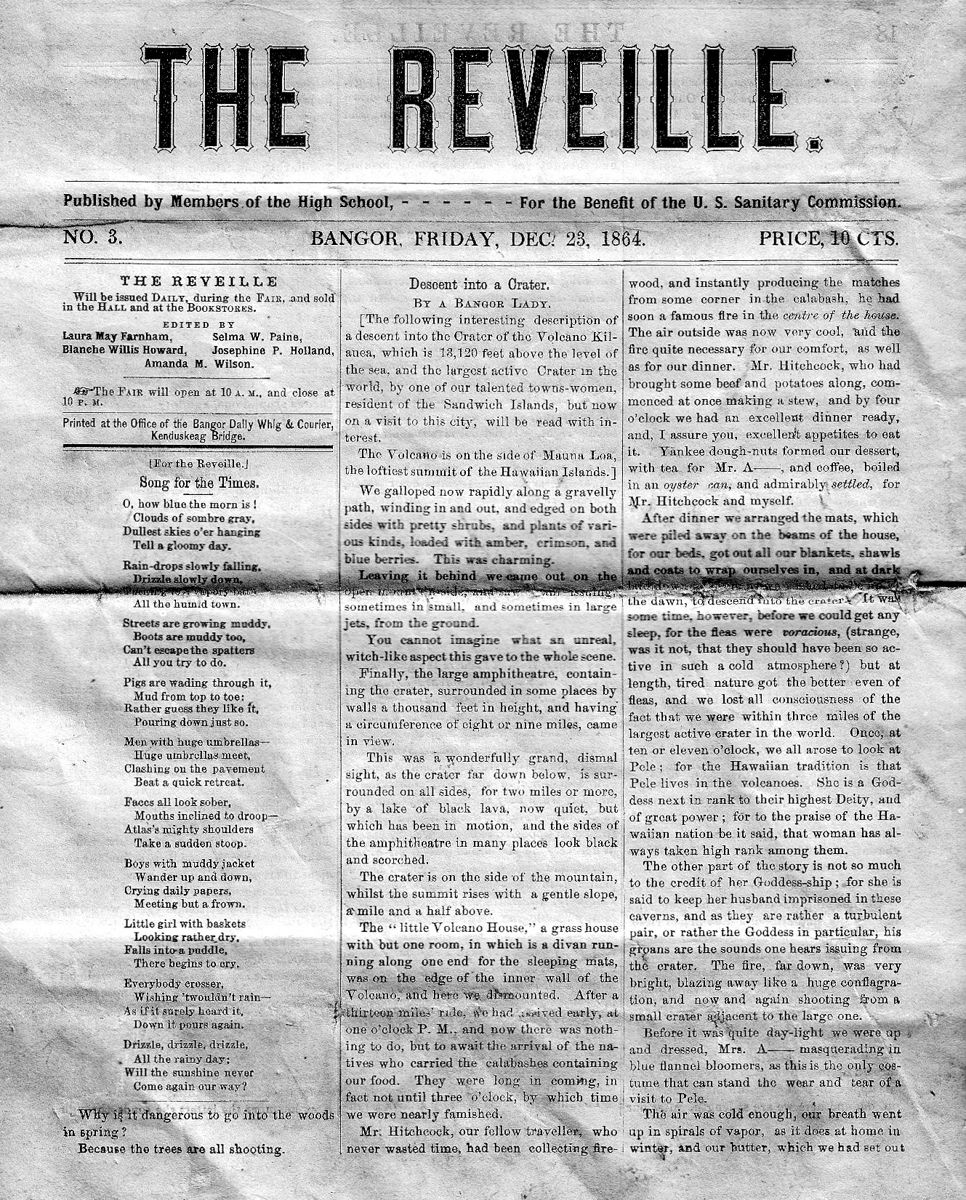
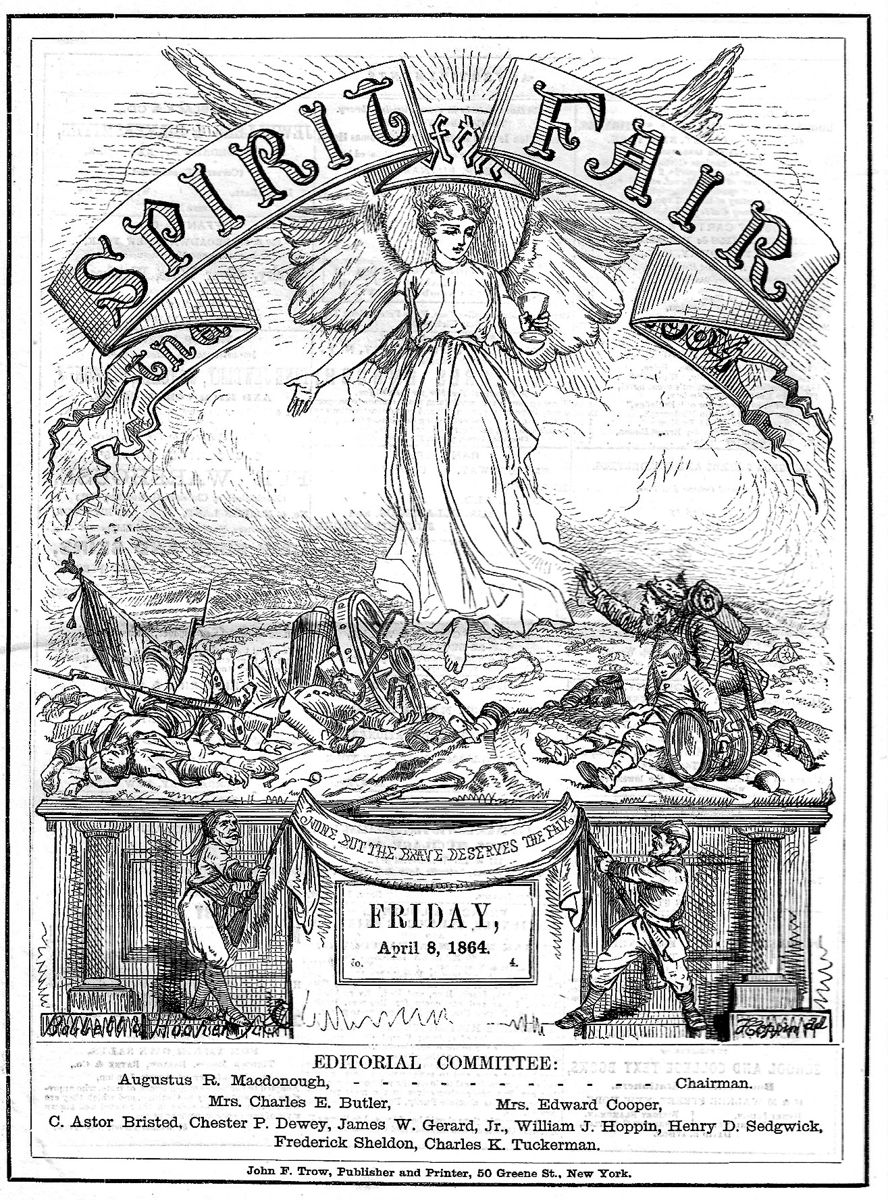
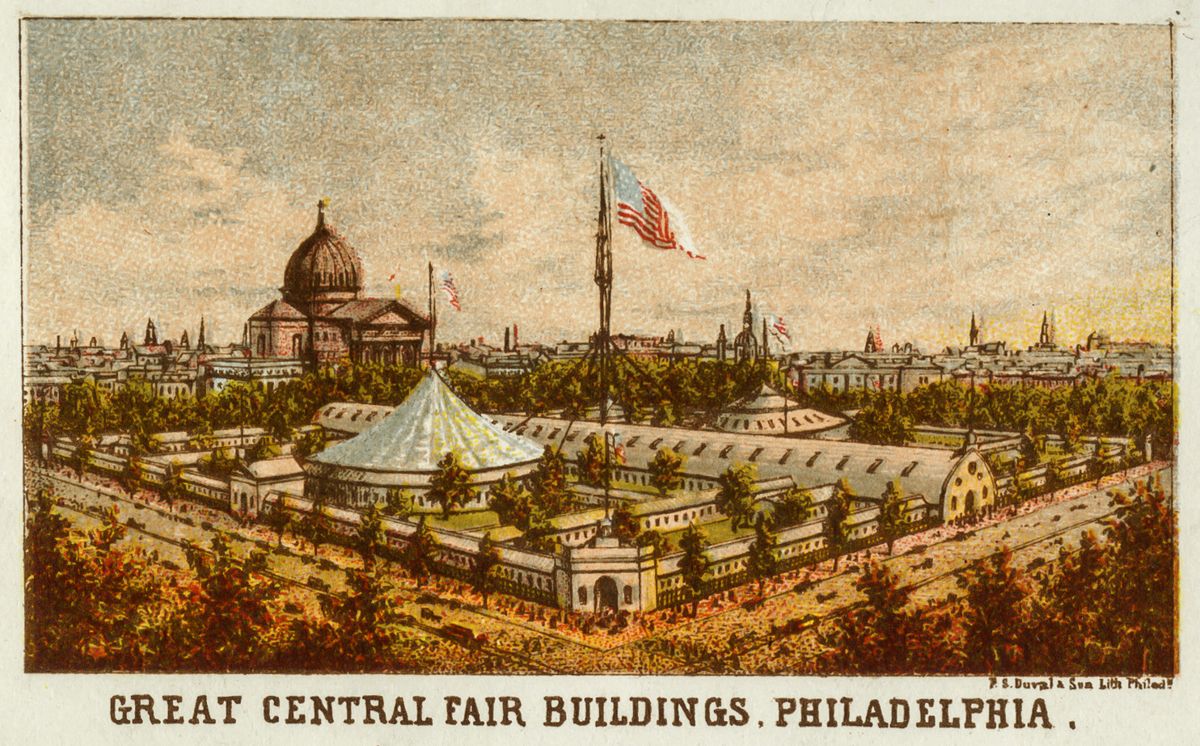
As the operations of the U.S. Sanitary Commission cost money, successful and creative fundraising efforts were a significant key to its success. Fundraising fairs were far and away the most successful and well-publicized efforts to raise funds for the Commission. Between February 1863 and July 1865, 22 fairs were held, attracting tens of thousands of volunteers, visitors, and supporters, and generating massive publicity. Organizing committees solicited participation from manufacturers and commercial establishments and set up extensive exhibits of everything from fancy goods to flowers to captured flags. In addition to charging admission, attendees were invited to part with their money at booths selling goods; to have their
Cover page of “The Reveille,” a newspaper published by students of Bangor High School for the Sanitary Fair in Bangor, Maine. (Author’s Collection)
fortune told by a gypsy, to visit the post office booth where letters could be posted or retrieved; or to eat in the “Knickerbocker” kitchen where they were served by women wearing costumes of an earlier era. Fair committees in various cities both competed and cooperated with each other. Organizers of the Pittsburgh fair purchased buildings and fixtures previously used in the Fair held in Cleveland. They dismantled the buildings and shipped the lumber to Pittsburgh by rail for use in the Pittsburgh fair. The redesigned facility was described in a history of the Pittsburgh fair:
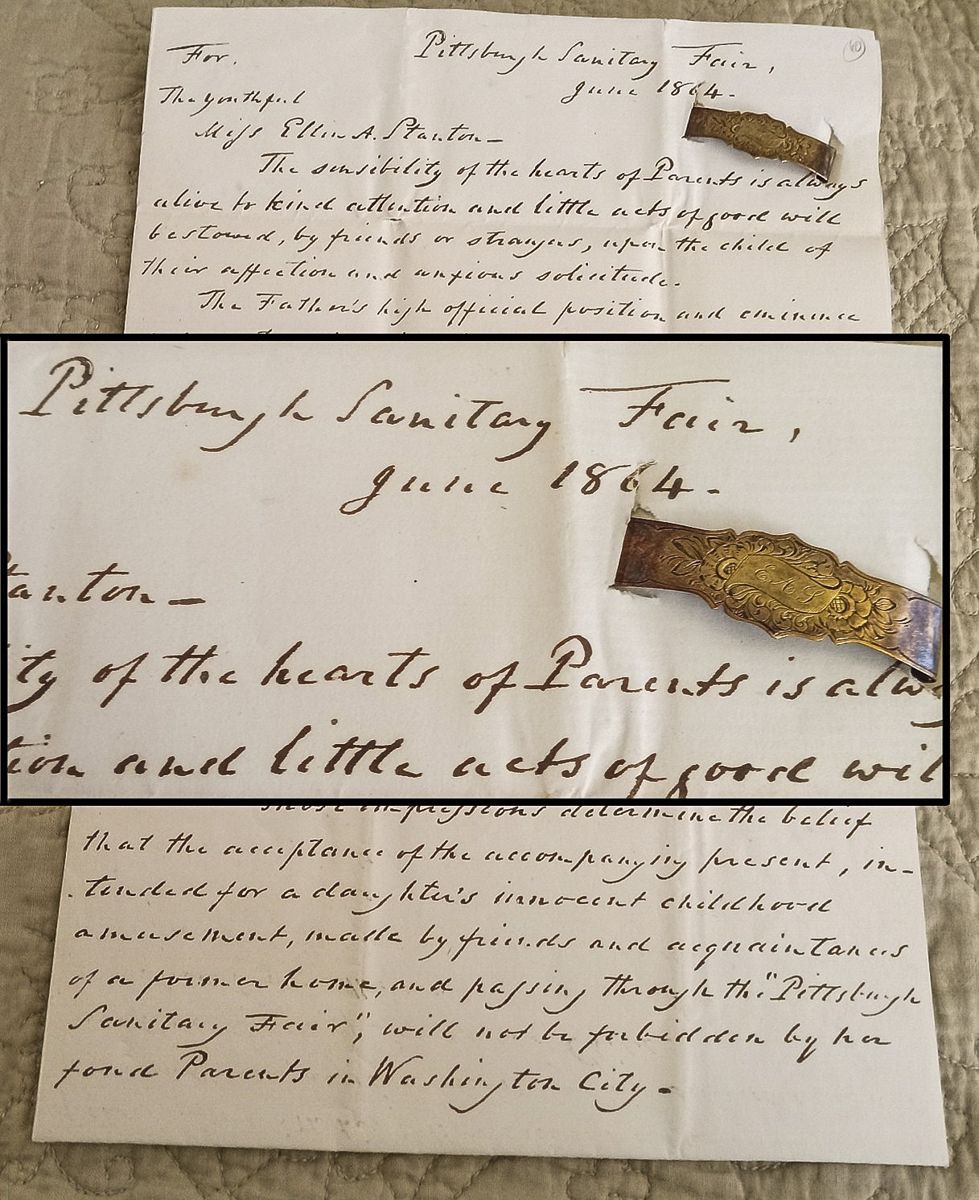
Monitor Hall, the largest of the fair buildings, contained cannon patterns from the Fort Pitt Works, … and samples of cannonballs. The building also housed a miniature lake containing models of the USS Monitor and Confederate ship Merrimac, and several other smaller, less notable ships.2 Gold washed barrette attached to a manuscript indicating it was to be presented to Eleanor A. Stanton, the 7-year-old daughter of Edwin Stanton, at the Pittsburgh Sanitary Fair. (Author’s Collection)
Five months later, a Sanitary Fair in Boston featured—on a somewhat larger scale—a similar exhibit, which Henry Cabot Lodge described in the memoir of his childhood in Boston:
The victory of the Monitor … was … momentous. … Sometime afterwards, in connection with one of the fairs for the benefit of the Sanitary Commission, an arrangement was made for a presentation of the fight by miniature vessels. A portion of the Frog Pond was shut in and covered by a tent with a platform running round it for the spectators. Upon the sheet of water thus enclosed there came out a little Merrimac, propelled by steam, which, as I remember, rammed and sank two representatives of the Cumberland and Congress. Then out darted the Monitor, and there was much firing of little guns until the Merrimac was withdrawn, sinking and crippled. I went to the first performance, and in addition to the sham fight, which I keenly enjoyed, the evening is memorable to me because it was the only occasion upon which I ever heard Edward Everett speak.3
While Civil War soldiers had been informally ‘reenacting’ battles practically since they stopped shooting, this event was surely the first Civil War battle reenactment to feature reproduction weapons.
Summation
The U.S. Sanitary Commission made significant improvements in the health, welfare, and well-being of soldiers during the Civil War. It is estimated that the
Commission secured and supplied $15,000,000 in goods, raising and spending more than $5,000,000 in cash. After the war’s end, the Commission disbursed the $250,000 it had on hand to assist disabled soldiers and their families and to soldiers’ homes. The ‘federal’ model pioneered and proven by the U.S. Sanitary Commission has been adopted and used by other national charitable organizations since the Civil War, including the American Cancer Society, American Red Cross, and the United Way. In addition, tens of millions of soldiers and military families have—and continue to—benefit from the special treatment of soldiers’ letters, which was initially prompted and promoted by representatives of the U.S. Sanitary Commission. Improvements inaugurated by the USSC during the Civil War have been continued by the USPS and national charities ever since, benefiting countless millions of soldiers, families, and causes served by national charitable organizations.
Bibliography • • •
• •
• • •
Lodge, Henry Cabot. Early Memories. New York: Charles Scribner’s Sons, 1913 Hammond, Harold Earl, ed. Maria Lydig Daly Diary of a Union Lady 1861–1865. Lincoln: University of Nebraska Press, 1962. Stille, Charles J. History of the United States Sanitary Commission. Gansevoort, NY: Corner House Historical Publications, 1997. Gordon, Beverly. Bazaars and Fair Ladies. Knoxville: University of Tennessee Press, 1998. Kantor, Alvin Robert and Marjorie Sered Kantor. Sanitary Fairs A Philatelic and Historical Study of Civil War Benevolences. Glencoe, IL: SF Publishing. Brodt, Zachary L. “A Fair History of Pittsburgh.” Pittsburgh: University of Pittsburgh Press, 2024. Brayton, Mary Clark and Ellen F. Terry. Our Acre and Its Harvest. Cleveland: Fairbanks, Benedict & Co. 1869. Wormeley, Katharine Prescott. The United States Sanitary Commission: A Sketch of Its Purposes and Its Work. Little, Brown and Company, 1863.
Endnotes 1. 2. 3.
Wormeley, Katharine Prescott. The United States Sanitary Commission. Little, Brown and Company, 1863, pp. 289-292. Brodt, Zachary L. “A Fair History of Pittsburgh.” Pittsburgh: University of Pittsburgh Press, 2024, p. 11. Lodge, Henry Cabot. Early Memories. New York: Charles Scribner’s Sons, 1913, p. 121.
Juanita Leisch Jensen is a nationally recognized speaker, author, researcher (and avid collector) of topics related to civilians and the Civil War. She can be reached at lesandjuanita 1@ hushmailcom to arrange talks and presentations. She is the author of two books: Who Wore
What: Women’s Clothing 1861-65 and An Introduction to Civil War Civilians. Juanita and her husband, military historian Les Jensen, divide their time between homes in New York and Virginia.
Custom Made
Civil War Muskets
Fort Fisher items wanted t!