
Vision and Valor: The War Through Women’s eyes
By Juanita Leisch Jensen · Originally published July-August 2026 · pp. 18–21
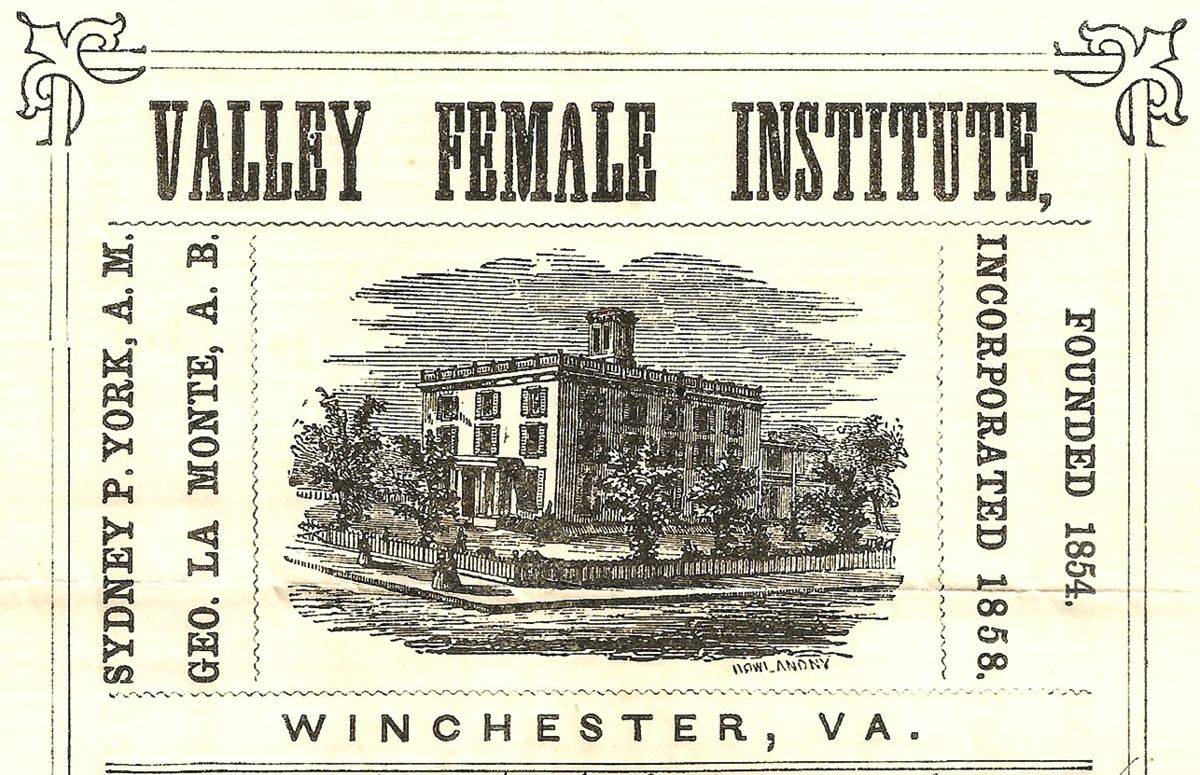
Most “Vision and Valor” articles focus on women’s lives and roles during the Civil War. However, the lives of Civil War women did not begin with the firing on Fort Sumter, and they did not end with Appomattox. This article explores sources of information that provide insight into the life and experiences of one Virginia woman, Flora Baker Hiett, before, during, and after the Civil War. Her name is not well known among historians, but the reason she was chosen as a subject for an article to be published during the month of America’s 250th birthday will become clear. Three sources of information provide the bulk of what we know about Flora Baker: 1. Her personal archive contains essays, exercises, and report cards from her three years at the Valley Female Institute in Winchester, Va. It also contains two wartime letters from soldiers, along with other correspondence with family, friends, and Joseph T. Hiett, the soldier she married in 1872.
Flora Baker attended the Valley Female Institute in Winchester, Va., from 1856–1859. Flora Baker Hiett Archive. (Author’s Collection)
- A scrapbook, made from an old 1820s store ledger, that Flora Baker composed during and shortly after the Civil War, contains approximately 100 pages covered in newspaper clippings and another 40 pages inscribed with poems, essays, and songs of support for the Confederacy. 3. Articles and interviews published in Virginia and Washington, D.C., newspapers on her birthdays from age 98 to 103.
To begin, a brief biography: Flora Baker was born in 1844, the eldest child of Henry M. and Catherine Grove Baker. The family lived at Glendobbin Farm in Frederick County, Va. Flora attended the Valley Female Institute in Winchester from 1856 to 1859. During the Civil War, Flora spent her time observing and studying military operations and troop movements, both through personal observation and by reading newspapers. Late in life, Flora summarized her own activities in the war, claiming she observed military actions on and around Glendobbin and ran errands for her father, a “gentleman farmer” and portrait painter. In 1872, she married Joseph T. Hiett, who had served in the 12th Virginia Cavalry. The couple moved to Falls Church, Va., where they lived for the rest of their lives. Flora was a steadfast parishioner of The Falls Church and a founding member of the Robert E. Lee Chapter of the United Daughters of the Confederacy. Flora Baker Hiett died at age 104 and was buried with her husband in Mount Hebron Cemetery in Winchester, Va. At this point, you are no doubt still wondering why Flora Baker Hiett is an especially relevant subject for the 250th birthday of our nation. Here is the explanation: In the mid-19th century, schoolchildren around America learned about the Declaration of Independence and its importance in our nation’s history. While they did not necessarily memorize it, most were very familiar with the text, if not the entire list of 27 grievances against the king. Flora Baker took her lessons on the Declaration of Independence a step further and wrote her own version, updating it to reflect her sentiments and priorities:
Declaration of Independence [Rewritten by] Flora Baker (Miss Baker’s changes in red)
“Enemies in War butFriends inPeace” By Juanita Leisch Jensen
When in the course of human events it becomes necessary for one young lady to dissolve the maternal bands which bind her to her Mamma, and to assume amongst the women of the earth, the equal station to which the Laws of nature and nature’s God entitle her,… A decent respect to the opinions of womankind requires that she should declare the causes which compel her to the separation. We hold these truths to be selfevident, that all women are created equal, that they are endowed by their Creator with certain unalienable rights, that among these are Life, Liberty and the pursuit of Happiness; that to secure these rights, Governments are instituted among them, deriving their just rights from the consent of the governed, — That whenever any Form of Government becomes destructive of these ends, it is the Right of all Daughters to alter or to abolish it, and institute new rules on such a foundation as to them shall seem to effect their Safety and Happiness. Prudence, indeed, will dictate that Governments long established should not be changed for light causes; and accordingly all experience hath shown that woman-kind are more disposed to suffer, while evils are sufferable, than to right themselves by breaking forms to which they are accustomed. But when a long train of abuses, pursuing invariably the same object, evinces a design to reduce them under absolute subjection, it is their right to provide new guards for their security. Such has been the patient sufferance of many young ladies; and such has caused them often to change the existing system of government. The history of many Mamas is a history of repeated injuries and usurpations, all having in direct object the establishment of an absolute tyranny over their Daughters. To prove this, let the world listen to some facts. They have refused to let their Daughters wear their new bonnets when it looks showery; they have refused to let them ask their Pa’s for a new dress unless their consent was first obtained, and when obtained have utterly neglect to cut the dress for which their Daughters wished. We must therefore acquiesce in the necessity which denounces our separation, and hold them as we hold the rest of womankind, “Enemies in War, in Peace, Friends.” – Flora Yes, Flora rewrote the Declaration of Independence to complain about access to bonnets and dresses. Indeed, a keen interest in
Flora Baker wrote her Declaration of Independence on Valley Female Institute stationery. Flora Baker Hiett Archive. (Author’s Collection)
clothing was as common among young ladies in the mid19th century as it is today. Despite the frivolity of Flora’s Declaration of Independence, most of Flora’s school essays and exercises addressed more serious subjects. In an essay titled “Hope” and dated April 15, 1859, Flora expressed sentiments that might have helped her endure and recover from tougher times ahead:
“Flora’s Declaration of Independence”. Juanita can be reached at lesandjuanita1@hushmail.com to arrange talks and presentations on Flora and other topics related to civilians and the Civil War. She is the author of Who Wore What: Women’s Clothing 1861–1865 and An Introduction to Civil War Civilians. Juanita and her husband, military historian Les Jensen divide their time between homes in New York and Virginia. exhibit titled
“… Hope enables us to look beyond the scenes of sorrows … it cheers us in the middle of affliction; … and points us to that haven of repose where “the wicked cease from troubling and the weary are at rest.” In an essay titled “Patience,” Flora opined,
“Patience is that calm and unruffled temper with which the good man bears the evils of this life. … Prosperity cannot be enjoyed any more than adversity be supported without patience.”
We do not know if Flora referred back to these schoolgirl essays in her adulthood, but throughout her life, at every opportunity to discard them, she saved them.
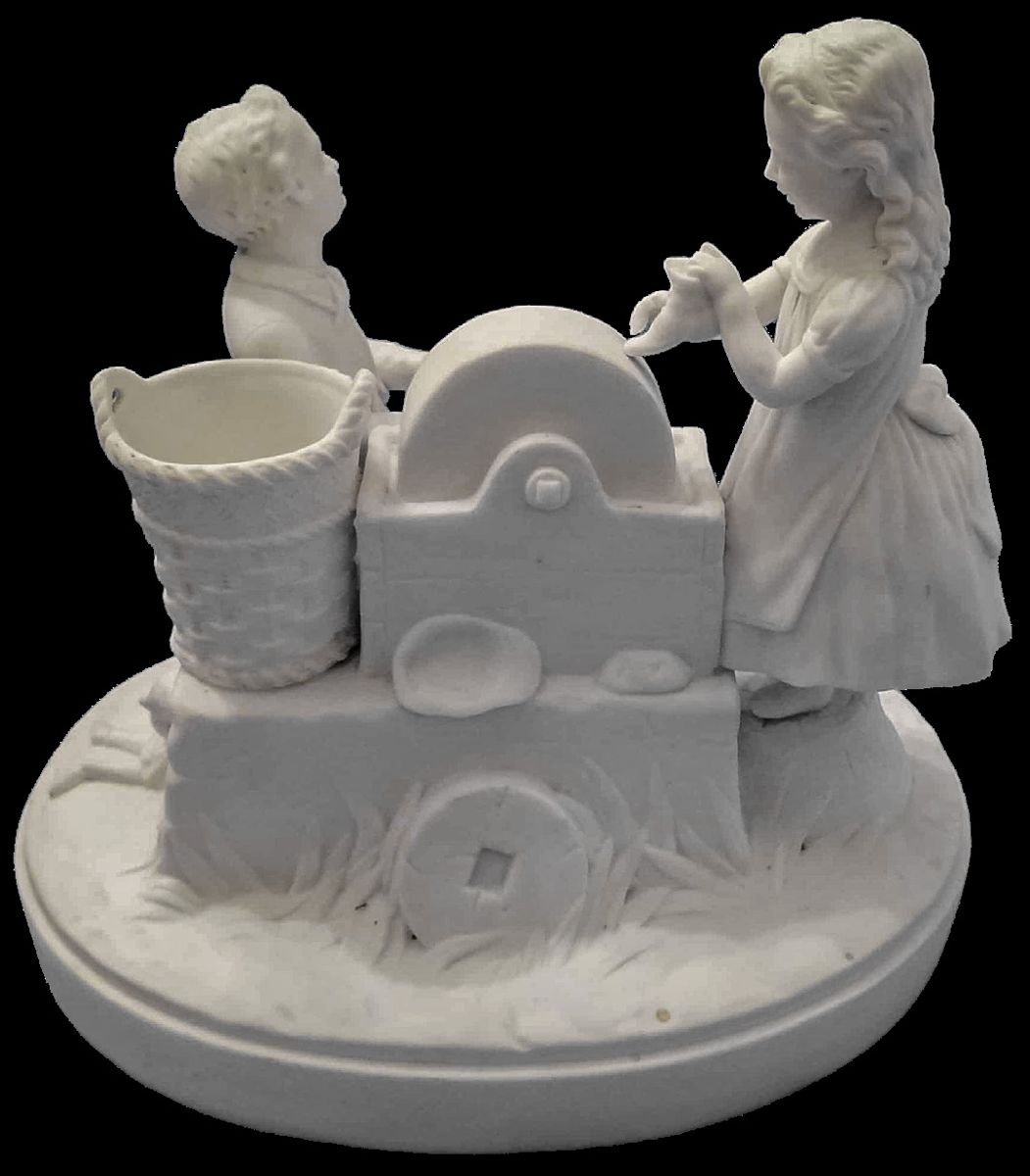
This Parian statue with the title “Square ‘Em Up” engraved on its base depicts a young lady so intent on updating her shoes to have square toes that she has enlisted the help of a boy and a grinding wheel. Based on the girl’s clothing, the statue probably dates shortly after the Civil War. (Author’s Collection)
As the Civil War progressed, it appears that Flora developed an all-consuming desire to know everything she could about military movements. She spent untold hours reading newspapers, clipping long and short articles, and laboriously fitting them together and pasting them into a discarded store ledger. When she encountered blank pages in the ledger, she filled them by copying poems, songs, and essays expressing support for soldiers and the Confederacy. The extent of her scrapbook is impressive, encompassing nearly 150 pages of material, with only a single graphic illustration in the entire scrapbook. After the war, Flora worked briefly as a schoolteacher, but her expressions of delight at the end of the term indicate this was not her preferred avocation. In 1872, Flora married Joseph T. Hiett, who had served in the 12th Virginia Cavalry. Flora was fond of telling a story about his military service. As retold in a newspaper article published for one of her birthdays:
“In the early days of the war a youth, mounted on a spirited horse, was sent out to guard along the Rapidan River. Reaching his station, he had not been there long when he heard a voice say, ‘Good morning.’ The youth looked up the high bank and, to his surprise, saw a Union soldier. The youth answered ‘Why don’t you kill me?’ The enemy replied ‘I am not here to kill you, but to watch you.’ The youth and the soldier awkwardly eyed each other for a minute, and then the Union man asked ‘Have you any tobacco?’ The youth replied that he had, and did the Unionist have any sugar? So they exchanged. And the youth, holding tight his few lumps of precious sugar, dashed safely for his camp, never again seeing the Union soldier who had spared his life.’
Mrs. Hiett smiled, then concluded, ‘I married that youth in 1872.’”1 The Hietts raised two children: son Henry Lee Hiett and daughter Katie Lee Hiett Unverzagt. In 1897, Joseph Hiett purchased a house and lot of land in West Falls Church, but died in 1907, just 10 years later. In 1924, Mrs. Hiett was one of the Fairfax County applicants for a Confederate pension. In 1925, she helped found the Robert E. Lee Chapter of the United Daughters of the Confederacy. By 1944, newspapers were consulting Mrs. Hiett and publishing her views and advice on a wide variety of topics. In one article, she approved of women taking their places in business and professions and was quoted as saying,
“A woman has a brain and she has a right to use it to work. She should vote because she lives in this country and has a right to have some say as to how it shall be run.”2
By the time of her hundredth birthday in 1944, Mrs. Hiett’s grandsons were looking for a way to honor her on her birthday. One grandson, Henry T. Unverzagt, was serving as U.S. consul at Medellín, Colombia, South America. He flew orchids from South America to Washington, D.C. Another grandson, William Lee Unverzagt, worked at the Pentagon and was able to pick up the flowers at the airport and deliver them to Mrs. Hiett’s birthday party.3 The many newspaper articles about Mrs. Hiett shed much light on the woman the schoolgirl from Winchester became. By studying the life of Flora Baker Hiett only during the war years, a researcher might easily conclude that the Civil War was the largest and only major military event of her life. Studying her postwar life, however, shows that she found ways to view the Civil War in a larger perspective. In an interview on her 101st birthday, the reporter noted,
“Mrs. Hiett calmly sat by her radio Tuesday when President Truman announced that the Japanese had surrendered and the war was over. America had declared war and made peace several times in her life … Born in Winchester, VA in 1844 Mrs. Hiett was four years old at the end of the Mexican war. She can tell you about the Civil War which ended when she was 21. She can also tell you of the Spanish-American War, the World War and about members of her family who fought in this war.”4 By studying the life of Flora Baker Hiett only during the war years, a researcher might easily conclude she developed a lifelong aversion to soldiers in the United States Army. Instead, we learn in an article published in 1943 that,
“Mrs. Flora Baker Hiett, 98 years old, does her share in the war. She spends much of her time composing poetic prayers in behalf of American boys ….”5 Could this be evidence of just how seriously she took to heart the “enemies in war, but friends in peace” conclusion that appears in both her version and the original Declaration of Independence? Endnotes: 1. 2. 3.
“Mrs. Hiett Recalls How Yanks and Rebs Fought in this Area.” Winchester Evening Star, Winchester, Va., Sept. 23, 1939, p. 2. “Oldster Gives Good Advice.” Roanoke Times, Sept. 24, 1944, p. 18. “Mrs. Hiett, Native of County, Still ‘Unreconstructed Rebel’ at 100.” Winchester Evening Star, Winchester, Va., Aug. 30, 1944, p. 2. “Native of Winchester Celebrated Her 101st Birthday Yesterday.” Winchester Evening Star, Winchester, Va., Aug. 18, 1945, p. 2. “Woman, 98, Composes Prayers for Soldiers.” Martinsville Bulletin, Martinsville, Va., March 15, 1943, p. 7.
Juanita Leisch Jensen is a nationally recognized speaker, author, researcher (and avid collector) of topics related to civilians and the Civil War. She has created a traveling