A Healer’s Hat and Manual Fannie Palmer, Artist
Originally published July-August 2026 · pp. 22–25
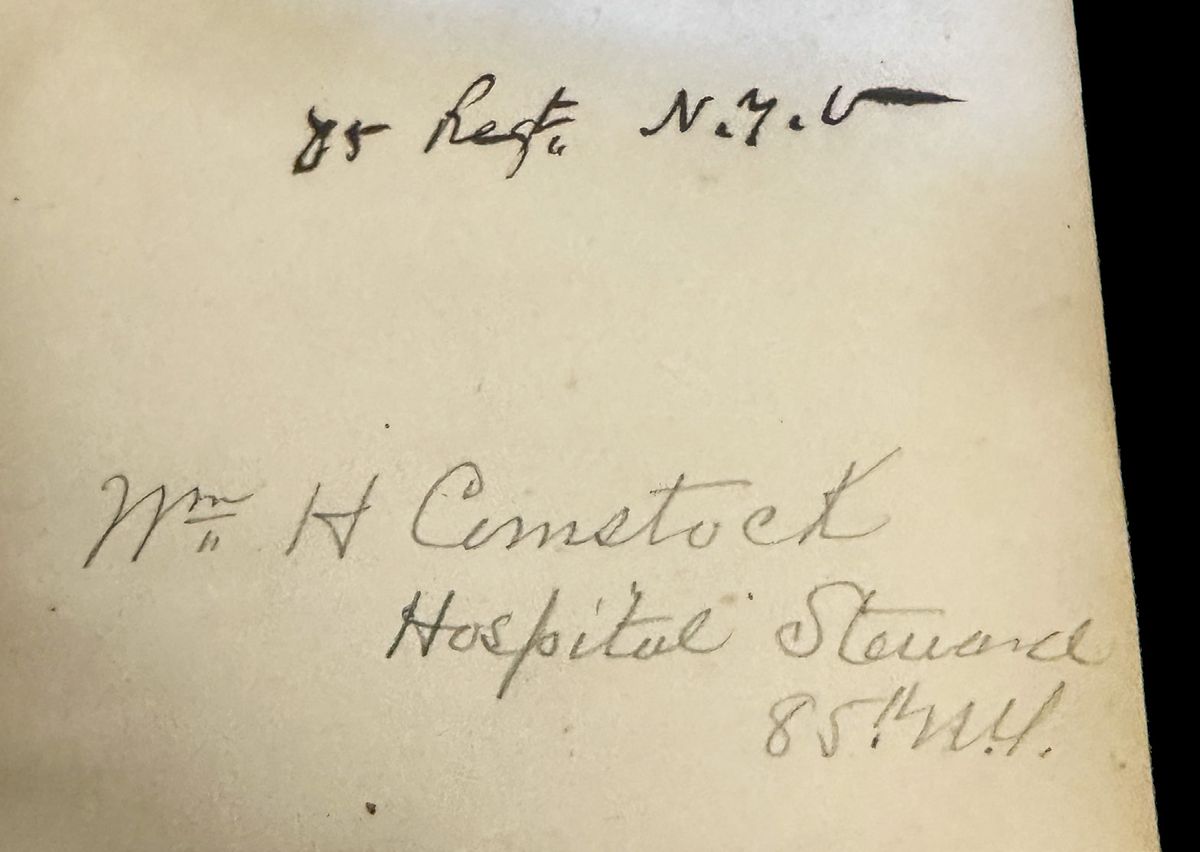
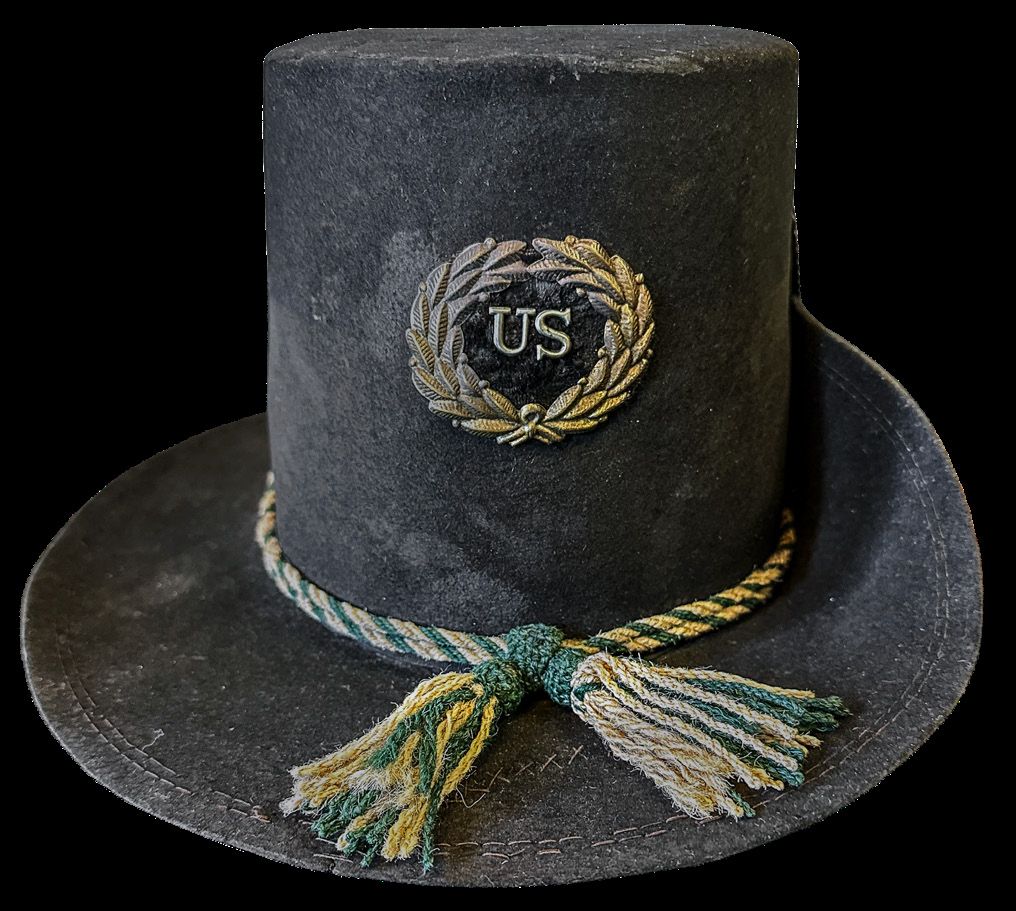
Objects relating to hospital stewards who served either Army during the Civil War are incredibly rare, so the National Museum of Civil War Medicine was pleased when a patron recently arranged a long-term loan of a U.S. Model 1858 Dress Hat and a copy of the 1862 publication The Hospital Steward’s Manual signed by its owner. Comstock enlisted in the 85th, a regiment raised from the Empire State’s Southern Tier and organized in Elmira, in September 1861 as a 20-year-old private. He was promoted on July 5, 1863, to hospital steward and served in that role for the rest of the conflict, reenlisting in January 1864. Considered non-commissioned officers and specialists, hospital stewards were paid $30 a month, compared to a private who made $13 a month. Union Surgeon Joseph J. Woodward, author of The Hospital Steward’s Manual, wrote that stewards should be “18-35 years old, able-bodied, free of disease, honest and upright,” of “good intelligence, having a knowledge of English, able to spell and write correctly,” and “industrious, patient, and good tempered.” Comstock worked as a bookkeeper before the war, and it is easy to imagine how the skills he acquired in that profession dovetailed into the requirements for a hospital steward.
All photos: NMCWM Collection, items on loan from Paul Mehney Collection/Photos by Melissa A. Winn.
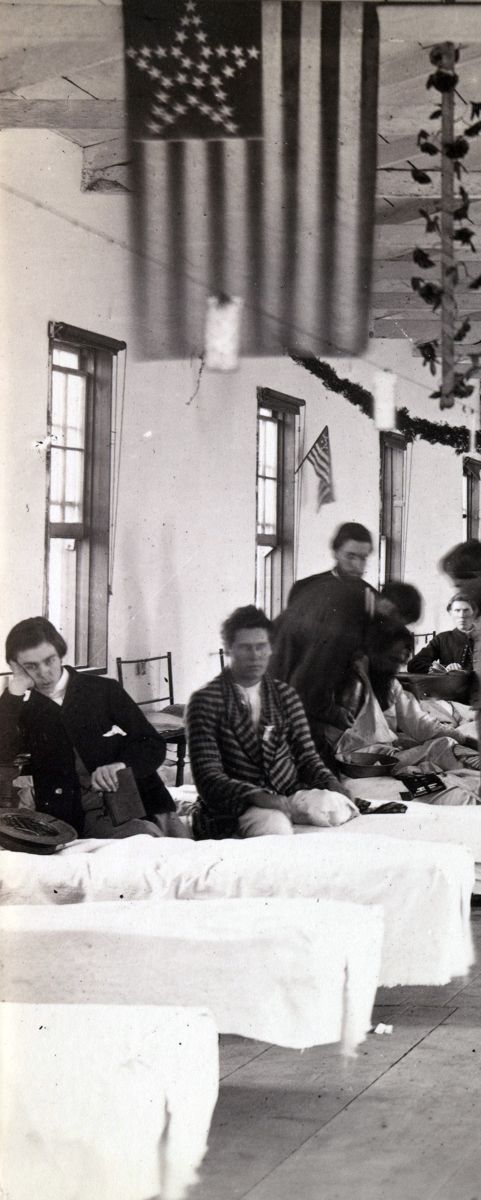
Surgeons get most of the attention when it comes to Civil War healthcare, but stewards were the glue that held medical departments together. They helped deliver first aid on battlefields, directed nurses, made and administered medicine, cooked food, supervised the disbursement of clean laundry, and even performed some amputations and surgery. Stewards worked to the edge of exhaustion, as this quote from 49th New York Infantry Steward John Henry attests:
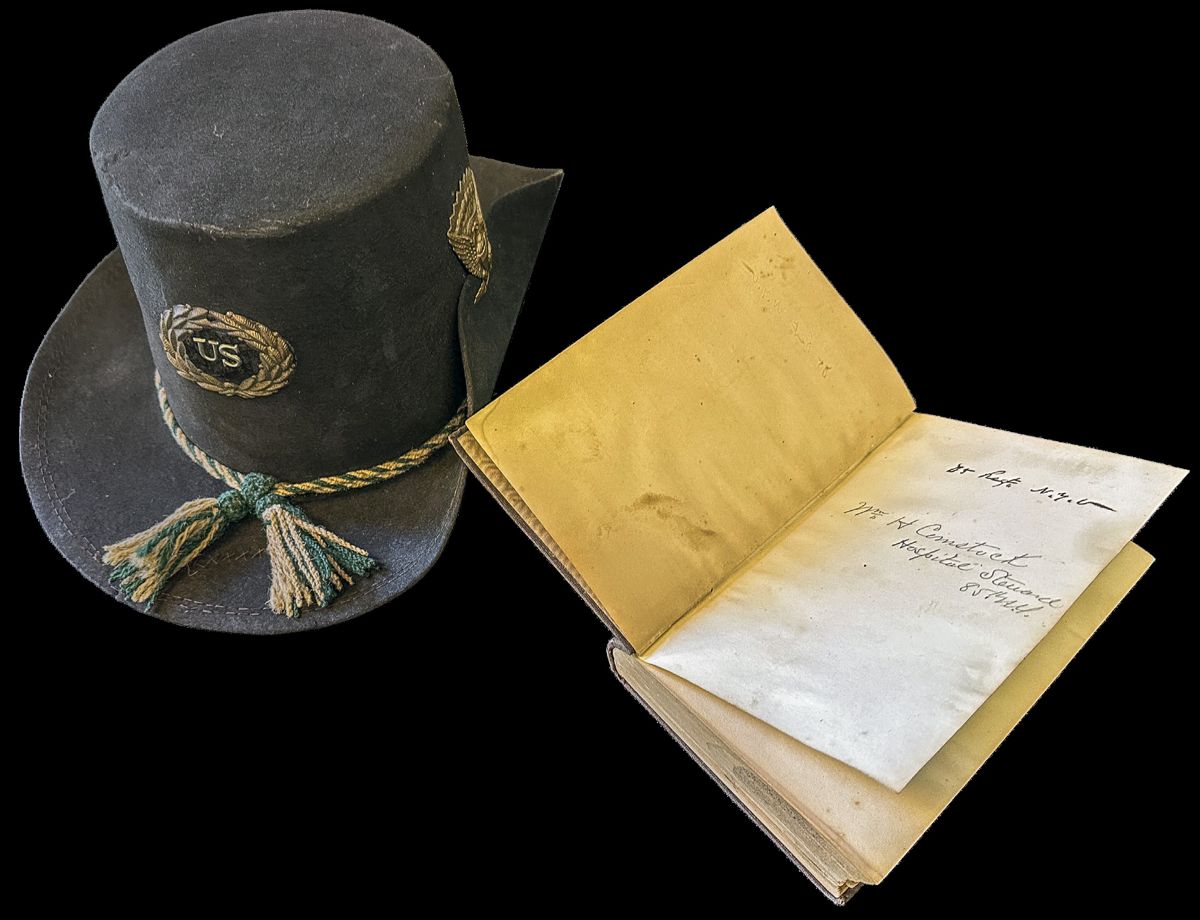
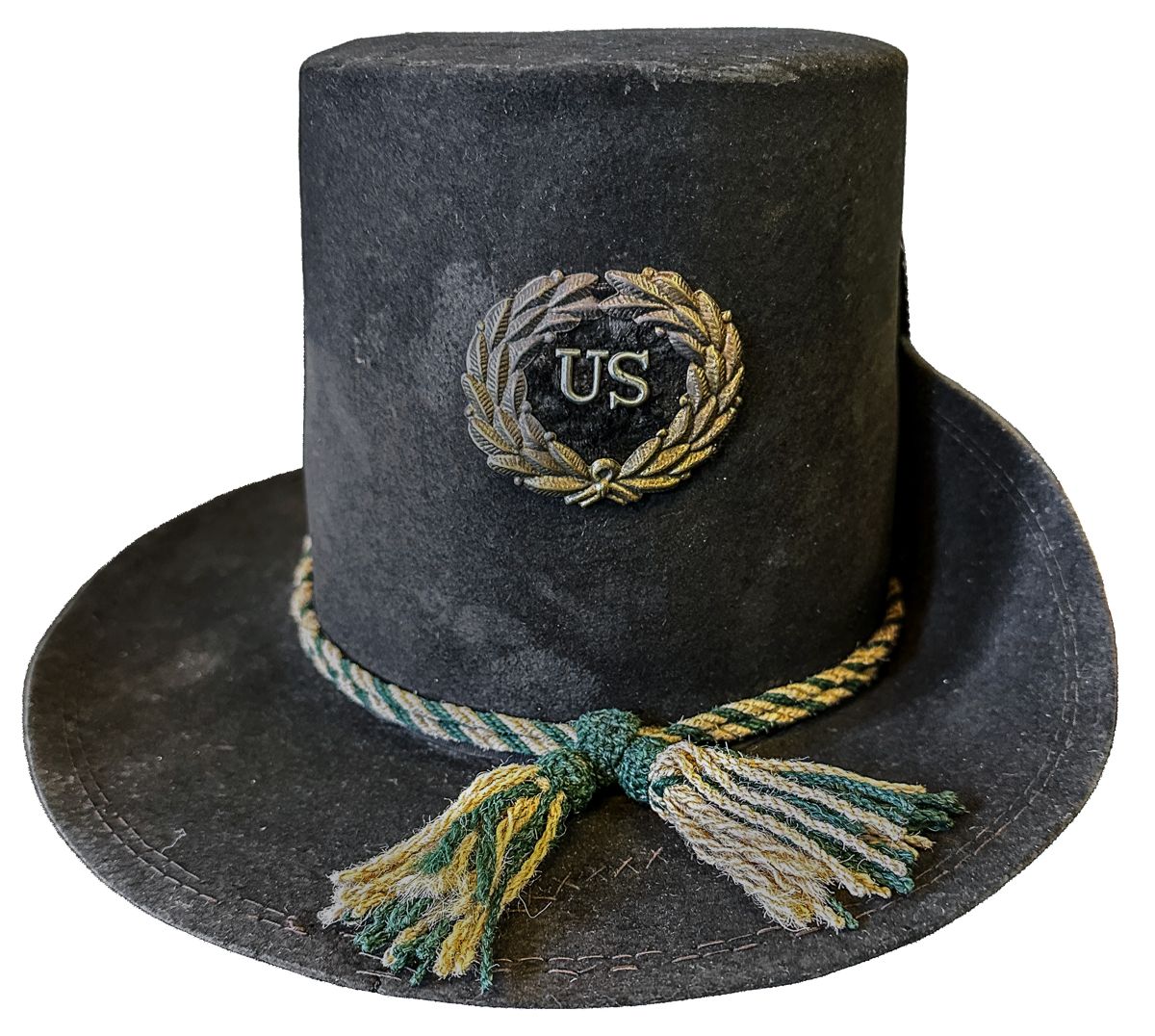
“I am up in the morning from 4 till 10’oclock, then spread down my rubber blanket on a narrow strip of floor at the head of the stairs, take my knapsack for a pillow … and lie down and sleep soundly until two o’clock when I get up and commence duty which holds me from 16 to 20 hours … I must have more sleep or I shall give out.” For all that hard work, hospital stewards deserved distinct uniforms. And they had them. Comstock’s dress hat, more commonly called a “Hardee Hat,” conforms to Union regulations that called for stewards to have “an eagle pin on the right side, a gold Laurel wreath on the front with a silver US (not MS), and a green and buff hat cord.” Crimson trim accented their coats and trousers, and Stewards were also identified by the insignia of the Medical Department, a caduceus, a staff with two snakes coiled around it, on a green chevron on each sleeve.
The NMCWM is currently undergoing a redesign, scheduled for completion in 2027. At that time, Hospital Steward William Henry Comstock’s hat and manual will be on public display for the first time, sharing his role in the evolution of healthcare during America’s internal conflict. Comstock’s specialty did more than afford him good pay and a unique uniform; it also helped him survive. On April 20, 1864, Confederates captured the 85th New York en masse during the Battle of Plymouth, N.C., and most of the regiment was taken to Confederate prisons, where more than 200 of them died. The survivors of those intolerable internments called themselves the “Plymouth Pilgrims.” But Henry Comstock had a better fate. His Confederate captors impressed him into their medical service at General Hospital No. 7, the “Fair Ground’s Hospital,” at Raleigh, N.C., from May 1864 until the war ended. He mustered out from Union service in June 1865 and returned home to New York to marry and die there in 1887. He is buried in Whitesville’s Rural Cemetery.
Dana is the Director of Interpretation at the National Museum of Civil War Medicine, where he is helping direct the redesign and reinterpretation of all the Museum’s galleries. He can be seen on YouTube representing the NMCWM and in partnership with multiple organizations. Prior to joining the Museum in November 2023, he served for 15 years as the editor and public face of Civil War Times magazine. He is currently working on a chapter regarding the Army of the Potomac’s medical department that will be included in a forthcoming Louisiana State University Press collection of essays on the history of that army, edited by Jennifer Murray and Ken Noe.