
What makes a good battle book?
By Alexander B. Rossino · Originally published January-February 2026 · pp. 32–41
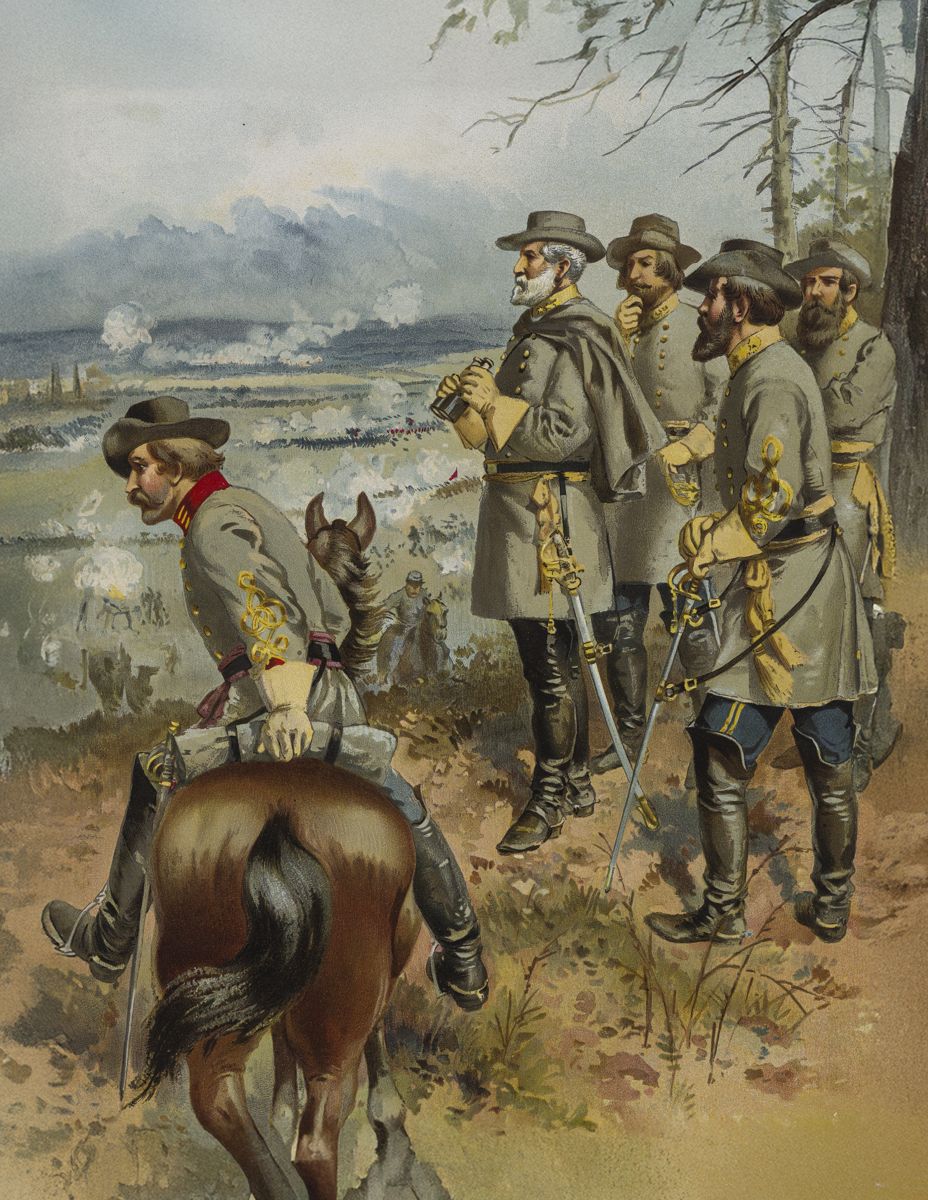
Confederate Grand Strategy: Is What Historians Think About Robert E. Lee All Wrong? By Alexander B. Rossino
It is safe to say that, aside from President Abraham Lincoln, no other figure from the Civil War era has been the subject of more books and articles than General Robert E. Lee. A quick search of his name on Amazon.com yields over 1,000 results, most of which are publications from the last 40 years, reflecting Amazon’s recency bias. In contrast, searching the same term in the Library of Congress’s catalog produces over 44,000 books and pamphlets. There are 1,705,035 total records available online from the Library of Congress when searching for “General Robert E. Lee.” Many of these entries are likely duplicate editions, but even with repetitions, the main point remains: Robert E. Lee has attracted considerable attention over the years. This overwhelming focus on Lee has decisively shaped Civil War Studies. If an author is writing about the 1862– 1865 campaigns in the East, General Lee’s decisions take center stage. Crossing the Potomac into Maryland? Lee decided that. Entering Pennsylvania in the summer of
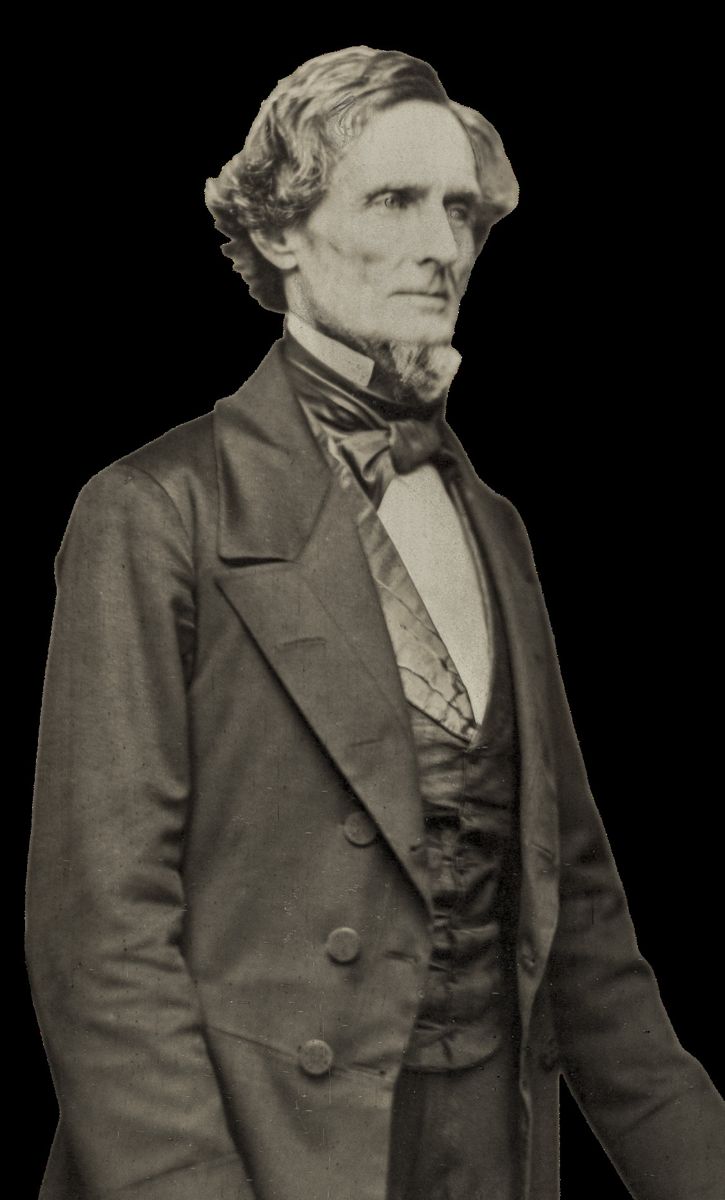
1863? Robert E. Lee made that decision as well. Gary W. Gallagher, an emeritus in the subject, has even called Lee’s ascension to command of the Army of Northern Virginia one of the war’s turning points. Lee’s presence on the historical scene is so unavoidable, in fact, that it overshadows the roles played in the war by nearly everyone else. One of the lasting effects of this Lee-centricity has been to overlook the influence of Jefferson Davis on Confederate military operations. Historians who have examined the LeeDavis relationship, such as Steven E. Woodworth, Alan T. Nolan, Thomas L. Connelly, Christian Keller, and others, tend to argue that Davis and Lee differed on the importance of offensive versus defensive action. Davis usually comes away from these scholarly evaluations as having favored assuming a defensive posture, while the audacious Lee always sought to go on the attack. The eminent British military historian J.F.C. Fuller summarized this thesis as follows: “President Davis…had no grand strategy beyond a rigid defensive;” while Alan Nolan concluded, “it was Lee, not Davis, who proposed and initiated the movements of Lee’s army, movements that brought on its battles, including the Maryland campaign and Gettysburg.”1 Zeroing in on Lee necessarily forces scholars to inquire about the general’s grand strategic vision, and on this score, he is usually found wanting. Judged as too focused on taking the war to the enemy, Lee is portrayed as squandering the Confederacy’s limited wealth and manpower on campaigns he could not win. Costly attacks inspired by Lee’s audacity, such as those at Malvern Hill and Gettysburg, are seen as illustrations of the general being out of touch with the limited resources available to him, leading to the conclusion that the Confederacy simply could not sustain the effort required for the type of war Lee fought. George A. Bruce, a prominent military historian writing more than 100 years ago, offered the following observation on the subject. His thinking still applies today:
The population of the Confederate States was little less than half that of the Northern States. If the resolution of one was equal to that of the other, it would be easy to calculate the end of a war where the losses on each side in every context were equal. To illustrate, if a manufacturer or merchant worth a million dollars should enter into a trade warfare with a competitor worth two millions, and so aggressively carry it on as to entail a loss to each of $250,000 a year, the result would be that at the end of four years one would be bankrupt and the other still rich. This was the kind of war inaugurated by General Lee.2
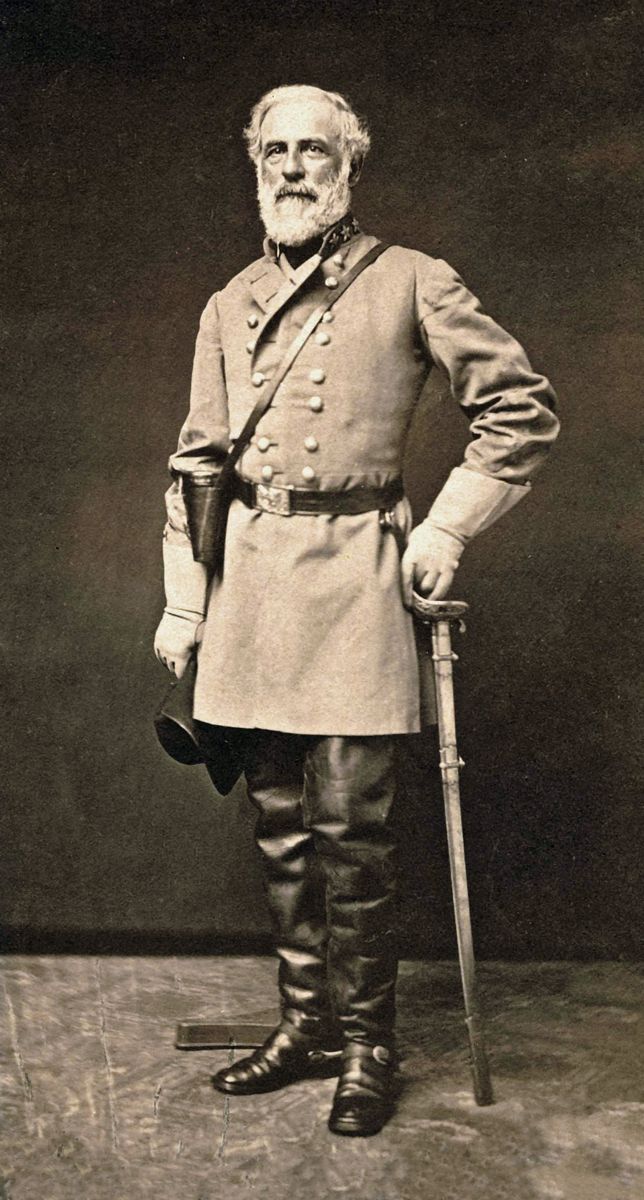
General Robert E. Lee. Scholars focused on Lee tend to find his grasp of grand strategy lacking. (Virginia Museum of History and Culture)
Meanwhile, certain critics of the Confederate war effort, such as Thomas Connelly and Archer Jones, have even argued that “a meaningful Confederate grand strategy may never have existed,” implying that Lee (and Davis) spent irreplaceable blood and treasure on uncoordinated, localized operations with no overarching objective in mind.3
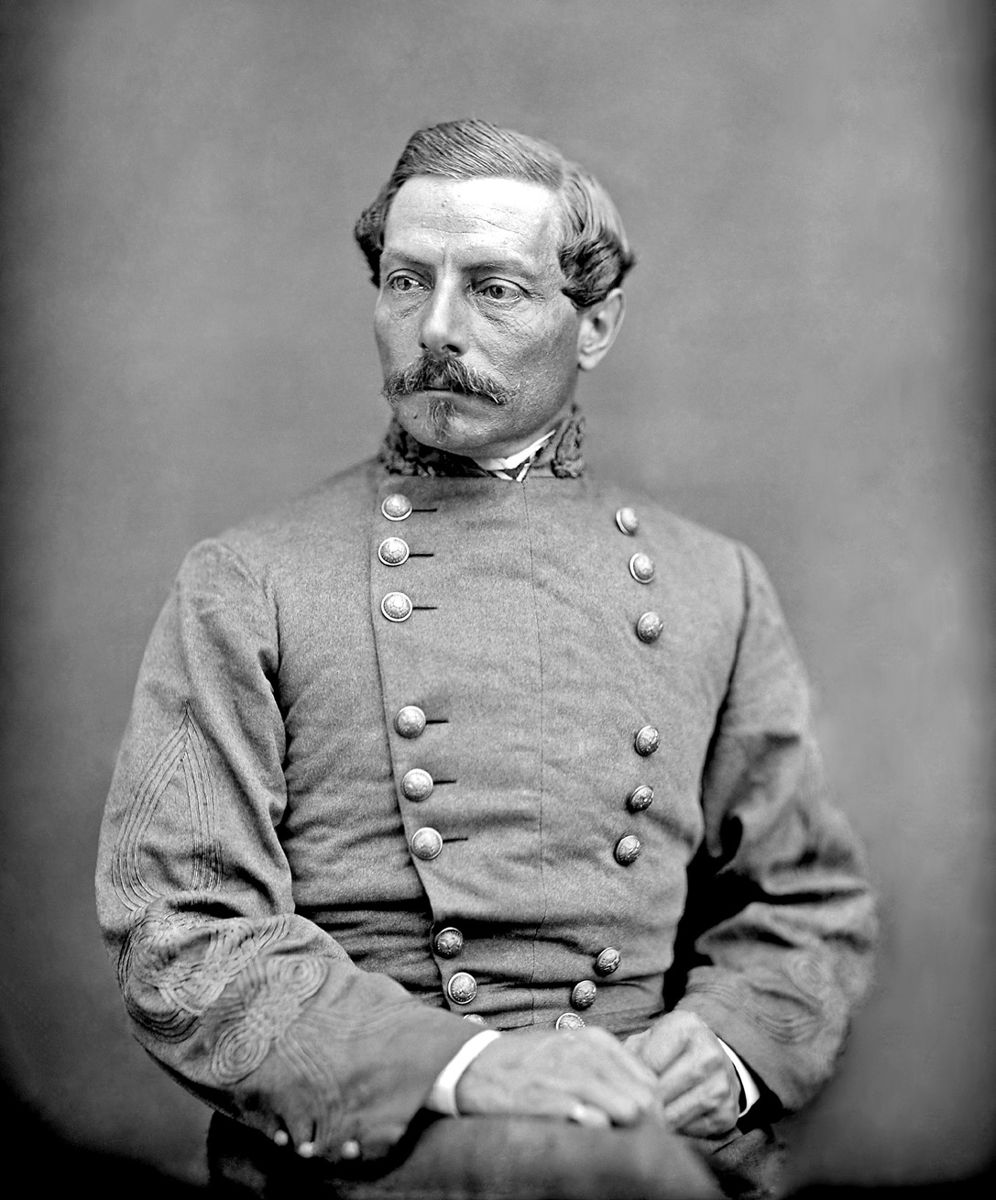
How accurate are these characterizations? Civil War campaign studies are written to fit into the established interpretative structure because not doing so means rewriting the Lee-centric framework. Very few historians are inclined to take on such a task, but is that because the existing framework is valid, or does it mean only that they will not make an effort to re-examine it? This article argues that a reconsideration of Lee’s role in the development and implementation of Confederate strategy is required because compelling evidence overlooked by generations of historians demands it. To put a finer point on it, the sources show that Robert E. Lee did not fight the war in line with any grand strategic vision of his own. Rather, he fought it to accomplish objectives identified and proposed by the Confederate president, Jefferson Davis. Several examples illustrate this fact. In the middle of July 1861, Davis entertained a visit from Col. James Chesnut of General P.G.T. Beauregard’s staff. Beauregard, knowing that Davis and Chesnut were well-acquainted, sent the colonel to Richmond with a plan to carry the war into Maryland. After arriving at the Executive Mansion, Chesnut outlined Beauregard’s proposal to the president, General Lee, who was then Davis’s military advisor, and to Samuel Cooper, the army’s Adjutant General. When Chesnut had finished speaking, Davis and Lee complimented Beauregard on his “well conceived” plan, which “might be brilliant in its results if we should meet with no disaster in the details.” General Lee, though, “expressed the opinion … that the time for its execution had not yet arrived.” When Chesnut questioned Lee more closely about his misgivings, the general admitted that: the subject [of going on the attack] had been thought of generally [but] … the enemy was as yet too close to his cover; that if he found us with combined and superior forces before him he would not, or might not, give battle, but retire behind the protection of the guns of his intrenchments, and thus defeat the objects of our combination; that in such an event we would be put to a great disadvantage of achieving nothing and leaving the other points exposed, &c.; that in his opinion it would be better to draw the enemy farther from his intrenchments, and by lengthening to weaken his line, which would give us a better chance of success.4 Ironically, Lee rejected Beauregard’s plan for reasons that he would later need to take into account when he launched his own operation in Maryland. In July 1861, however, Confederate forces in Virginia remained in defensive positions south of the Potomac River. Two-and-a-half months later, in September 1861, Beauregard tried again to convince Davis of the need to adopt an offensive strategy, only this time he mustered the support of generals Joseph E. Johnston and Gustavus W.
Smith. The four men met at Fairfax Court House on October 1, with Davis considering the invasion plan on his own this time because Lee had gone to western Virginia in late July. Davis quickly learned during the conference that Johnston and the others required 50,000-60,000 “seasoned soldiers” (i.e., veterans) before the Confederate Army of the Potomac could get underway. Johnston, Beauregard, and Smith also requested additional arms, ammunition, wagons, and field officers that the government could not supply. As Davis later recalled about the meeting:
To my inquiry as to what force would be required for the contemplated advance into Maryland, the lowest estimate made by any of them was about twice the number there present for duty. How little I was prepared for such a condition of things will be realized from the fact that previous suggestions by the generals in regard to a purpose to advance into Maryland had induced me, when I went to that conference, to take with me some drawings made by the veteran soldier and engineer, Colonel Crozet, of the falls of the Potomac, to show the feasibility of crossing the river at that point. Very little knowledge of the condition and military resources of the country must have sufficed to show that I had no power to make the demanded addition to that army without a total disregard of the safety of other threatened positions. It only remained for me to answer that I had not power to furnish such a number of troops; and, unless the militia bearing their private arms could be relied on, we could not possibly fulfill such a requisition until after the receipt of the small-arms which we had early and constantly striven to procure from abroad, and had for some time expected.5 Nothing came of this October conference because of the Confederacy’s material weaknesses. Davis sought to strengthen his nation’s military on a daily basis, but he could not conjure arms from a non-existent manufacturing base or recruit volunteers unless they stepped up to serve, since
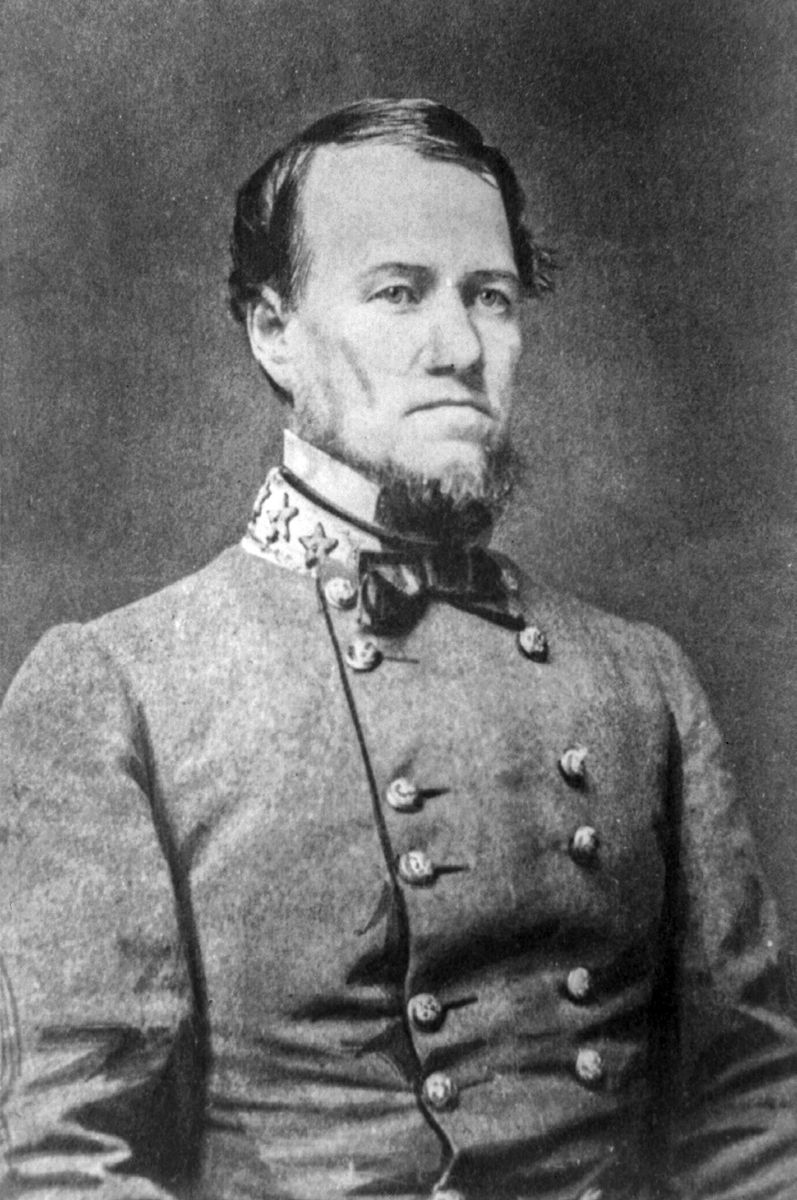
General Gustavus W. Smith. Smith proposed plans for having the army enter Maryland in October 1861, as well as for carrying the war as far north as New York City in April 1862. A conversation with Stonewall Jackson likely inspired the latter plan’s broader scope. (Library of Congress)
conscription had not yet been introduced. The president and his senior subordinates nevertheless debated going on the offensive, demonstrating the attack-oriented mindset that dominated Southern military thinking regardless of the realities in the field. Beauregard, Johnston, and Smith wanted to fight the war on soil controlled by Union forces in order to keep the conflict out of Virginia. Davis elaborated on these themes in a letter to James Chesnut on November 11, 1861, stating that the subjects he had discussed with Johnston and the others were:
things which no one desired more than myself… Thus has apparent confirmation been given to the slander that I would not permit the Army to advance to the capture of Washington and the liberation of Maryland; attributing to me political views which I think you must know were not entertained by me. The importance of this is not any effect it may have on me individually, but is the injury inflicted on the public interest by the belief created that the Army has been doomed to inactivity to avoid the exasperation of the enemy.6 And so for the second time in 1861, Davis expressed both the desire to go on the offensive and regret over the fact that he could not muster the men and materiel needed to do it. These comments in November would not be his last on the subject, either. On February 28, 1862, Davis informed Johnston, who had just begun evacuating supplies from his position in northern Virginia, “Increased effort has recently been made to raise…more than 100,000 effective troops. If that were done, your present position [at Centreville] would answer the purpose for which it seemed to me suited—a base from which to advance.” Two weeks later, on March 10, Davis telegraphed Johnston, “Further assurance given to me this day [confirms] that you shall be promptly and adequately reënforced, so as to enable you to maintain your position, and resume first policy when the roads will permit.” The “first policy,” Davis admitted, “was to carry the war beyond our own border.” Then, on March 15, 1862, Davis assured Judge W.M. Brooks of Marion, Ala., “You seem to have fallen into the not uncommon mistake of supposing that I have chosen to carry on the war upon a ‘purely defensive’ system.”7 Throughout the war’s first winter, Davis mulled over the prospect of forcing the war north without the advice of General Lee, who had gone south to inspect coastal defenses after his disappointing campaign in western Virginia. Away from the capital for seven long months, Lee finally returned to Richmond on March 9, 1862. Approximately one month later, with George McClellan’s Army of the Potomac assembling on the York River Peninsula, Davis convened a council of war at the Executive Mansion. Attended by the president, the new Secretary of War, George W. Randolph, and generals Lee, Johnston, Smith, and James Longstreet, this council discussed what to do about their situation from around 10 a.m. until around 1 a.m. the following day. Smith presented two plans at this meeting: one defensive, the other offensive. In the former, Smith “proposed that all the troops that could well be spared from the Carolinas and Georgia should be brought to the vicinity of Richmond, and that the forces at Norfolk and near Yorktown should be withdrawn without making prolonged defence of those places; thus concentrating all our available strength near the capital.” Along with these forces, Smith also recommended transferring Thomas J. “Stonewall” Jackson’s Army of the Valley to Richmond. Once this concentration had been accomplished, the combined force would “draw McClellan from his gunboats and water-base, and then attack and beat him near Richmond.”8 Concerning the offensive plan, Smith proposed defending Richmond to bog down McClellan in a long siege while “the larger portion” of the army marched “rapidly across the border…[for] an active offensive campaign beyond the Potomac, striking Baltimore and Washington, if not Philadelphia and New York, before McClellan could take the works around the Confederate capital.” Smith had clearly resurrected a version of the attack plan that he, Beauregard, and Johnston presented to Davis at Fairfax Court House back on October 1, 1861. Yet, by the time the conference ended, Davis supported the opinion voiced by General Lee and Secretary Randolph that they should defend the peninsula against McClellan before taking any other action. Accordingly, the president ordered Johnston to send reinforcements to Yorktown to contest McClellan’s advance. For the second time since July 1861, then, Lee had argued in favor of defending rather than attacking. Although Davis supported Lee’s opinion on April 14, he did not share the general’s view on offensive operations. Lee acknowledged this on May 1 when Johnston submitted yet another invasion plan. Telling Johnston that he had forwarded the proposal to the president, Lee added that the idea of moving the army north of the Potomac, “has been the subject of consideration with him [Davis] for some time…[he] concurs in your views as to the benefits to be obtained by taking the offensive, and is very desirous of being able to carry it into effect.”9 Alas for Johnston, he would not remain commander of the Army of Northern Virginia long enough to see such a plan implemented. Wounded on May 31, Johnston stepped aside in favor of Lee, whom Davis named as the army’s new chief on June 1. Three days later, Davis visited Lee at his Dabbs House headquarters for a long talk. Arriving as a meeting between Lee and his senior subordinates was taking place, Davis “withdrew and rode to the front, where, after a short time, General Lee joined me.” The two men then “entered into conversation as to what, under the circumstances, I [Davis] thought it most advisable to do.” Davis recommended reinforcing Stonewall Jackson for a feint toward Pennsylvania from the Shenandoah Valley. After the enemy had responded to that threat, Jackson could turn and march rapidly on Richmond for a joint attack with Lee on McClellan.10 Davis also urged Lee “to ‘carry the war into Africa’ and plant his standard on the North bank of the Potomac”
when the opportunity presented itself. The president then repeated an opinion he had held since the middle of 1861, “saying that a slave-holding nation was the strongest for an invasive war, and the weakest for a defensive [one].” As for Maryland, she “would spring to our feet an armed border state, while around his [Lee’s] banner an army of half a million of the bravest and best riders and shots [from across the nation] would rally immediately; Washington City would fall and the enemy be compelled to fly to Havre-deGrace and ultimately to Pennsylvania, upon whose soil, and not ours, the battle would be fought; Peace would speedily follow.” To all this Lee replied simply, “we have not the men.” Thus passed the third occasion on which Robert E. Lee argued against the idea of launching a northward attack.11 Lee also came around more slowly than Davis to the notion of increasing Confederate forces in the Shenandoah Valley. When Jackson requested reinforcements in late May, Davis assented almost immediately. Lee, though, expressed doubt on June 3 about the wisdom of sending men so far from Richmond. Two days later, on June 5, he had changed his mind, writing, “after much reflection I think if it was possible to reinforce Jackson strongly it would change the character of the war.” Lee’s vacillation on this subject suggests that he still debated if the moment for a northward attack had arrived. Indeed, Lee continued to ponder the possibility until events forced him to make a firm decision and keep his men in place. This occurred when a report from J.E.B. Stuart revealed that the right wing of McClellan’s army lay vulnerable to attack north of the Chickahominy River. Lee promptly called Jackson to Richmond on June 16, saying, he “must help me to drive these people away from Richmond first.”12 Davis nevertheless kept alive the dream of invading Pennsylvania, writing to his wife on June 11, “I will endeavor by movements which are not without great hazard to countervail the Enemy’s policy. If we succeed in rendering his works useless to him and compel him to meet us on the field, I have much confidence in our ability to give him a complete defeat, and then it may be possible to teach him the pains of invasion and to feed our army on his territory.” In other words, although the capital city remained in peril, and Jackson fought desperately for his army’s survival, Davis still wanted to launch the attack across the Potomac that he had sought since June 1861.13 Davis repeated these sentiments in the weeks after the Seven Days Battles, too. On July 11, he wrote Col. Jehu Foster Marshall of the First South Carolina Rifle Regiment, “Your view as to our present policy coincides in its main features with my own. Indeed, such has been my purpose for many months, and I have silently borne criticism on the supposition that I was opposed to offensive war, because to correct the error would have required the disclosure of facts which the public interest demanded should not be revealed.” The president then added that General Lee is “fully alive to the advantage of the present opportunity, and will, I am sure, cordially sustain and boldly execute my wishes to the full extent of his power.”14 This telling statement confirms that even as the Army of Northern Virginia licked its wounds from the nearly 21,000
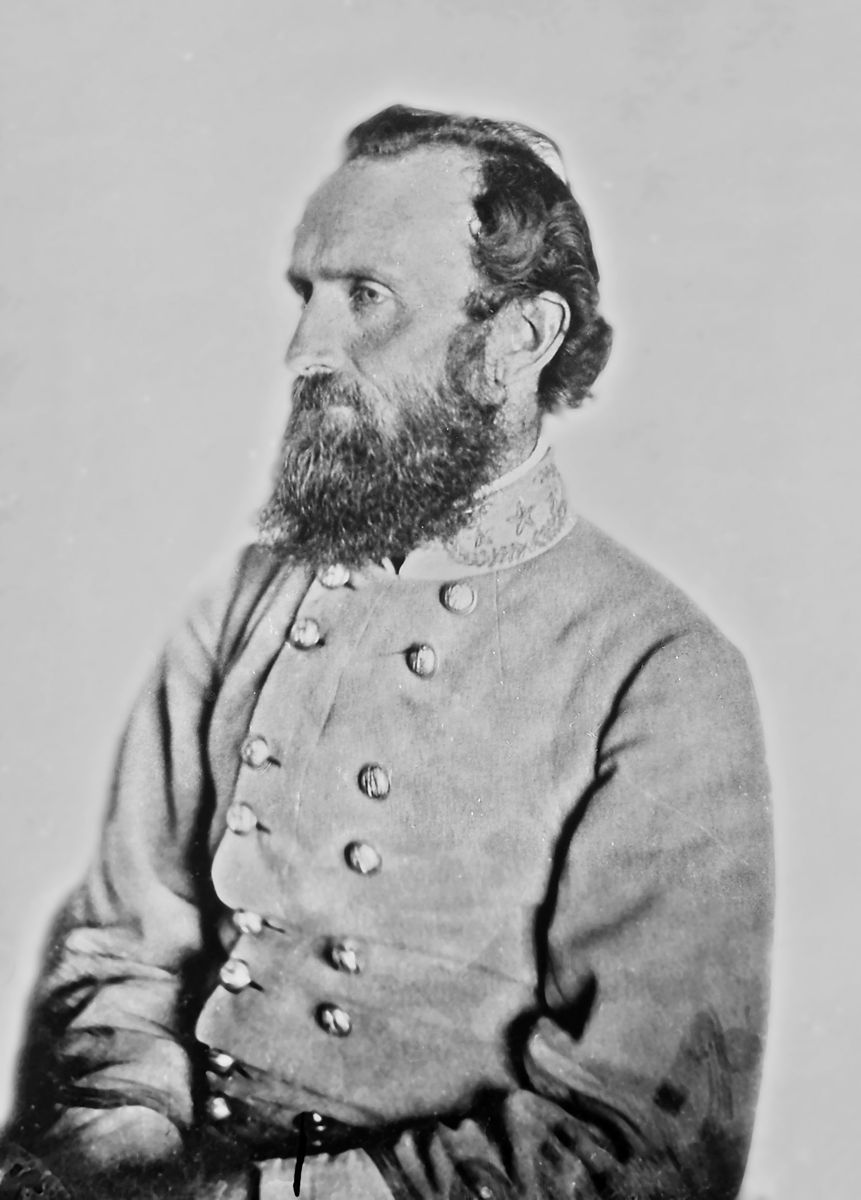
casualties it had recently taken, Davis wanted Lee to go on the offensive. Lee appeared to have driven McClellan into a corner at Harrison’s Landing and the Federal commander showed no inclination to come out. Davis suspected, therefore, that the opportunity had come to drive north over the Potomac, rescue Maryland, and push the war deep into Union territory. The final individual to be considered in this context is General Jackson. He argued for sending troops to occupy Maryland Heights, opposite Harpers Ferry, in May 1861, but Lee ordered him not to do so because “The policy of the State [of Virginia] at present is strictly defensive.” Jackson tried again in October 1861 to convince G.W. Smith of the need to attack Pennsylvania instead of defending Virginia. Smith expressed sympathy, but could offer no hope because of Davis’s inability to provide the needed men and materiel. Undeterred, Jackson sent an aide named Alexander Boteler to Richmond in late May 1862 to say that if his “command can be gotten up to 40,000 men, a movement may be made beyond the Potomac, which will soon raise the siege of Richmond and transfer this campaign from the banks of the James to those of the Susquehanna.”15
Circumstances at the time kept Jackson from receiving the help he needed. Now, after the bloody victories of the Seven Days, Jackson went around Lee to again lobby Davis for permission to take a force across the Potomac. Asking Boteler to deliver another message to Davis at some point between July 5-7, Jackson said to the colonel:
in a tone of considerable excitement: ‘Do you know that we are losing valuable time here?’ ‘How so?’ I [Boteler] asked. ‘Why, by repeating the blunder we made after the battle of Manassas, in allowing the enemy leisure to recover from his defeat and ourselves to suffer by inaction.’ ‘Yes,’ he continued, with increasing excitement, ‘we are wasting precious time and energies in this malarious region that can be much better employed elsewhere.’16 The general then proceeded to argue that McClellan’s army had been “thoroughly beaten; that it would need to be reinforced and reorganized before it could become effective in the field; [and] that, therefore, so far as it was concerned, the safety of Richmond was assured.” Under these circumstances, “the movement northward which he had previously advised should be made without further delay … he wanted me again to bring the matter to President Davis’s attention, and that in doing so to tell the President it was not from any self-seeking he was so persistent in urging the movement, as he was entirely willing to follow any leader in making it whom he might think proper to designate.” Indeed, Jackson preferred that Lee lead the expedition north, exclaiming:
Why don’t we advance? Now is the time for an advance into Pennsylvania! McClellan is paralyzed, and the Scipio Africanus’ policy is the best! Let the President only give me the men, and I will undertake it. Gen. Lee, I believe, would go; but perhaps he cannot. People say he slow. Gen. Lee is not slow! No one knows the weight upon his heart—his great responsibilities. I have known Gen. Lee for five-and-twenty years—he cautious; he ought to be. But he is not ‘slow.’ Lee is a phenomenon; he is the only man whom I would follow blindfold!17 Jackson also cannily used General Lee to press Davis on the issue. Informing his brother-in-law, Captain Rufus Barringer, of a conversation he had with Lee around this time, Jackson stated that a “new phase of the struggle is full upon us, and General Lee is in great perplexity how to meet it. I have just had a conference with him on this vital point. No plan of campaign has as yet been agreed on. But I gave him frankly certain outlines of my own plan of waging the contest, which he considered favorably, and which he promised to lay before Mr. Davis, and try to secure his approval, in whole or in part.”18 This moment proved to be the turning point for Lee. Finally convinced that driving north would be preferable to standing on the defensive, Lee, who seems to have possessed no plan of his own, promised to take up Jackson’s proposal with Davis. Should the president agree to attack, then that is what would be done. Predictably, Davis approved the idea during a conference with Lee, Jackson, and James Longstreet at the Executive Mansion on July 13. That Davis agreed with Jackson is no surprise. He had after all urged Lee to take the war to Africa—a reference to the campaign of Scipio Africanus—only five weeks earlier. General Lee, in contrast, had repeatedly demonstrated a reluctance to take the strategic offensive until he felt his army was strong enough. This time had at last arrived in the middle of July 1862, when tens of thousands of conscripts swelled Confederate ranks, giving Lee the confidence that he needed to adopt Davis’s long-espoused offensive philosophy.
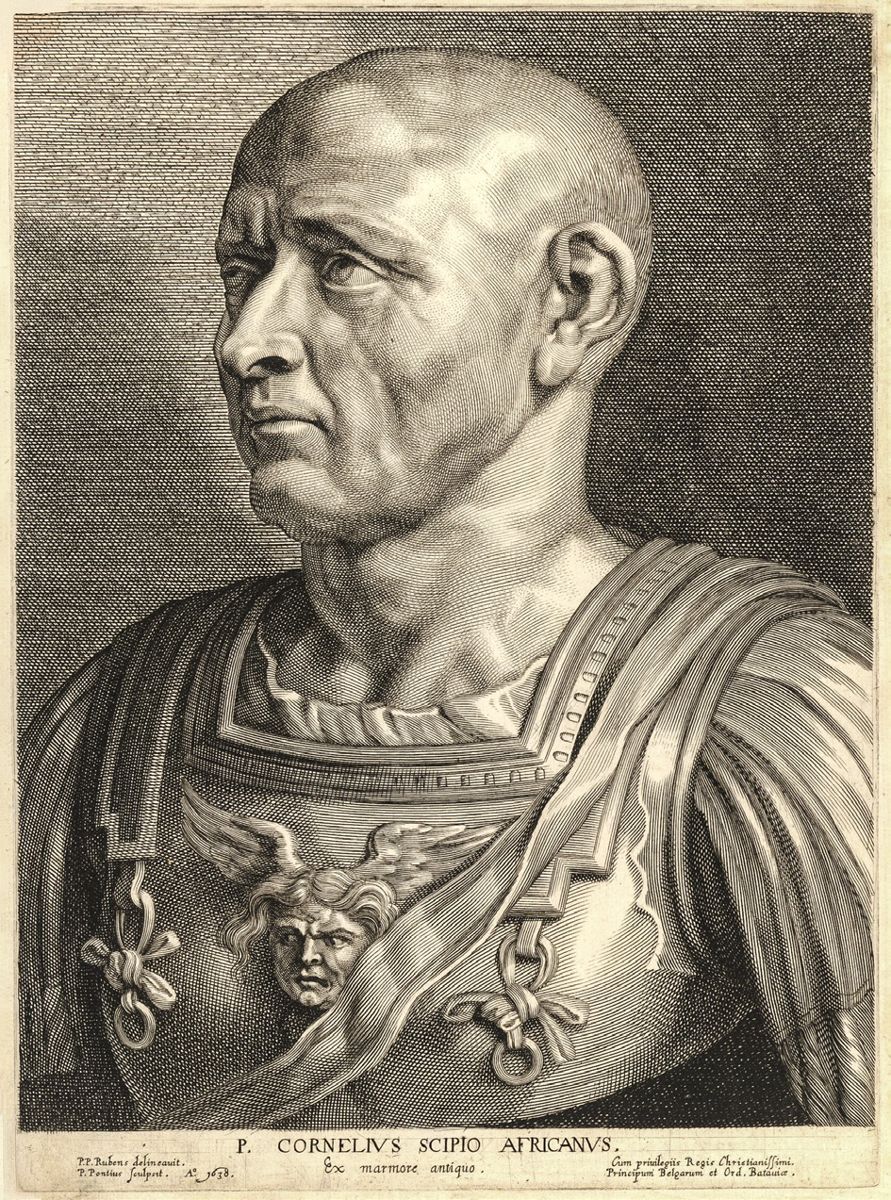
General Publius Cornelius Scipio Africanus. Architect of the Roman campaign to defeat the Carthaginian General Hannibal Barca, Africanus adopted an invasion policy that took his army into North Africa and inspired Confederate leaders to take a similar approach during the first two years of the American Civil War. (The British Museum)
Prior to this point, as Jackson put it, Lee had been “in great perplexity” about how to respond to the circumstances. Jackson’s comment implies that the Lee of legend did not where Lee was responsible for battlefield decisions, but when it came to the overall approach to fighting the war, Lee clearly sought to realize the president’s wishes. He did his duty as a Confederate officer and fought the war that Davis wanted him to fight. Historians have judged that approach ruinous, and so it was, but flaws in the Confederacy’s grand strategy should not be laid at the feet of General Lee. The proper place for them is on the shoulders of Jefferson Davis. Endnotes: 1.
Alan T. Nolan, “General Lee,” in Gary W. Gallagher, ed., Lee the Soldier (Lincoln, NE, 1996), 236. See page 235 of Nolan’s essay for Fuller’s quote. Map of Proposed Invasions. A section of James Wyld’s 1861 Military Map 2. George A. Bruce, “The Strategy of the United States, the arrows indicate various proposed invasions of of the Civil War,” A paper Maryland and points farther north in 1861 and 1862. Some proponents read before the Massachusetts of offensive action in the east argued for going as far as New York City. Historical Society on April 1, 1913. exist in July 1862. It suggests instead that the Army of 3. The quote is Alan Nolan’s in reference to Thomas L. Connelly Northern Virginia’s commander had difficulty discerning and Archer Jones, The Politics of Command: Factions and Ideas a path forward. Had Lee possessed a grand strategic vision in Confederate Strategy (Baton Rouge, LA, 1973). for winning the war by going on the offensive Jackson 4. James Chesnut to Jefferson Davis, Nov. 2, 1861, in U.S. War never would have needed to push him in that direction, nor Department, ed., The War of the Rebellion: A Compilation of the would Davis have needed Lee to “boldly execute my wishes Official Records of the Union and Confederate Armies, 128 vols. to the full extent of his power.”19 The general would have (Washington, DC, 1880–1901), Series 1, Vol. 51, Part 2, 129f. taken matters into his own hands and suggested a course of Cited hereafter as OR. action to Davis. 5. Jefferson Davis to Marcus J. Wright, Oct. 15, 1880, in Dunbar The evidence shows that prior to the July 13 conference, Rowland, ed., Jefferson Davis, Constitutionalist: His Letters, Lee had never proposed an offensive to push the war out Papers and Speeches, 8 Vols. (Jackson, MS, 1923), 8:508-509. of Virginia. Even on February 28, 1863, six months after Also see Gustavus W. Smith, Confederate War Papers: Fairfax the first incursion above the Potomac had ended in failure, Court House, New Orleans, Seven Pines, Richmond, and North it was Jefferson Davis who decided during a cabinet Carolina (New York, NY, 1884), 33ff. meeting that “General Lee should cross the Potomac and 6. Davis’s comment conflated events discussed during the October put himself in a position to threaten Washington, Baltimore, 1 meeting and in the talk Davis and Lee had with Chesnut in July and Philadelphia” in order to “protect Vicksburg” by 1861. See Jefferson Davis to James Chestnut, Nov. 11, 1861, in putting “Washington and Baltimore in danger.” To be sure, Rowland, ed., Jefferson Davis, 5:165. Lee endorsed a similar course of action, but just as he had 7. Jefferson Davis to Joseph E. Johnston, Feb. 28, 1862, in OR 5, blessed the Maryland Campaign to proceed in July 1862, 1084; Jefferson Davis, The Rise and Fall of the Confederate it was Davis who ordered what became the Gettysburg Government, 2 Vols. (New York, NY, 1912), 1:464ff; Rowland, Campaign in February 1863. It then took Lee another four ed., Jefferson Davis, 5:216f. months to find an opportunity to carry out the president’s 8. Smith, Confederate War Papers, 41f. command.20 9. Lee to Johnston, May 1, 1862, in OR 11:3, 485. Lee’s deference to Davis as the Confederacy’s chief 10. Davis, Rise and Fall, 2:131. executive is to be expected, but this fact seems to have 11. James Lyons to W.T. Walthall, July 31, 1878, in Rowland, ed., become lost in the Lee-centric historiography. Davis Jefferson Davis, 8:215-217. The only indication Davis gave of deserved Lee’s obedience just as much as President Lincoln the date when this conversation took place is his statement to had a right to expect Ulysses S. Grant to carry out his James Lyons, “When Genl Lee took command in Virginia I called instructions, and yet historians have continued to argue that on him.” Davis visited Lee several times during the first week of Lee pursued his own vision of how the war should be fought. June, and did so again in early July, so they could have spoken This is certainly true on the operational and tactical levels, about invading the North during that latter period. I have chosen
here to place the date of their talk as June 4 because of the context clues. The most important of these is Lee’s retort that the army did not have enough men. This is something it makes sense for Lee to have said in early June, but not in July when the Army of Northern Virginia’s ranks had swelled to more than 100,000 troops. Robert E. Lee to Thomas Jackson, June 16, 1862, in OR 12:3, 913. Also see Lynda L. Crist, Mary S. Dix, and Kenneth H. Williams, eds., The Papers of Jefferson Davis, 14 Vols. (Baton Rouge, LA, 1995), 8:226. Mary Anna Jackson, Life and Letters of General Thomas J. Jackson (New York, NY, 1892), 290. Jefferson Davis to Varina Davis, June 11, 1862, in Crist, et al., eds., The Papers of Jefferson Davis, 8:236. Jefferson Davis to Col. J. Foster Marshall, July 11, 1862, in Rowland, ed., Jefferson Davis, 5:293. Alexander R. Boteler, “Stonewall Jackson in Campaign of 1862,” in Southern Historical Society Papers, 44 Vols. (September 1915), 40:165. Boteler was also a Confederate Congressman at the time. Ibid., 40:180. Ibid. John Esten Cooke, Hammer and Rapier (New York, NY, 1870), 86. Jackson’s mention of Publius Cornelius Scipio Africanus is the third time a Confederate commander (Beauregard) or political leader (Davis) referred to the legendary Roman commander. Africanus crushed three separate Carthaginian armies in Spain before defeating the Carthaginian General Hannibal in North Africa. Clearly, Jackson and the others were familiar with the Roman author Livy and considered Africanus’s policy of taking the fight to the enemy a valuable military historical lesson. For a modern history of Africanus see B.H. Liddell Hart, Scipio Africanus: Greater than Napoleon (New York, NY, 2004). The italics in Jackson’s comments are in the original text. Jackson, Life and Letters, 311. Jackson made these comments to Barringer on the evening of July 14. It is clear from the context, however, that Jackson was describing a conversation with Lee that had taken place some days earlier. Robert Dabney, for example, reported Jackson stating the following to Alexander Boteler concerning his desire for an offensive: “He wished to follow, and not to lead, in this glorious enterprise: he was willing to follow anybody; General Lee, or the gallant Ewell. ‘Why do you not at once urge these things,’ asked Mr. Boteler, ‘upon General Lee himself ?’ ‘I have done so;’ replied Jackson. ‘And what,’ asked Mr. Boteler, does he say to them?’ General Jackson answered: ‘He says nothing’.” Given this evidence, I have elected to situate Jackson’s comments in the period immediately after the end of the Seven Days, when it is known that the general lobbied Davis to implement an offensive strategy. Robert L. Dabney, Life and Campaigns of Lieut.-Gen. Thomas J. Jackson (Richmond, VA, 1866), 486f. 19. The new Confederate levies began appearing in large numbers in mid-to late June, raising the estimated strength of Lee’s army to 92,400 men, including Jackson’s force of roughly 18,000. The influx of soldiers continued into July, with the Army of Northern Virginia’s ranks swelling to 139,110 men, including 127,999 infantry, 6,724 cavalry, and 4,387 artillerists. At the beginning of the Maryland Campaign, Lee commanded a force of between 64,000 and 75,000 men. See Walter H. Taylor, Four Years with General Lee (New York, NY, 1878), 52; “Strength of the Brigades of the Army of Northern Virginia near Richmond, as shown in General Johnston’s memorandum of May, 21, 1862,” in OR 11:3, 530f; “Abstract from Field Return of the Army of Northern Virginia, commanded by General R. E. Lee, July 20, 1862,” in OR 11:3, 645; Stephen W. Sears, To the Gates of Richmond: The Peninsula Campaign (Boston, MA, 1992), 156; Alexander B. Rossino, “John S. Clark’s Estimate of Confederate Strength in September 1862,” in Civil War News magazine (Jan.Feb. 2025), 45; John Owen Allen, “The Strength of the Union and Confederate Forces at Second Manassas.” Thesis Submitted for Master of Arts Degree (1993). George Mason University. Fairfax, VA, 41; D. Scott Hartwig, To Antietam Creek: The Maryland Campaign of September 1862 (Baltimore, MD, 2012), 679f; and Gene Thorp, “In Defense of McClellan at Antietam: A Contrarian View,” in The Washington Post (September 2012). 20. John H. Reagan, Memoirs: With Special Reference to Secession and the Civil War (New York, NY, 1906), 152.
A resident of Boonsboro, Md,. Dr. Alex Rossino earned his Ph.D. in History at Syracuse University. He is the author of several books and articles, including Their
Maryland: The Army of Northern Virginia from the Potomac Crossing to Sharpsburg in September 1862 and The Tale Untwisted: General George B. McClellan, the Maryland Campaign, and the Discovery of Lee’s Lost Orders, which he co-wrote with Gene Thorp. His latest book, Calamity at Frederick: Robert E. Lee, Special Orders No. 191, and Confederate Misfortune on the Road to Antietam, came out with Savas Beatie in October 2023. Dr. Rossino is also a novelist. His book, Six Days in September: A Novel of Lee’s Army in Maryland, has been praised for its historical accuracy by Civil War enthusiasts. Its companion, The Guns of September: A Novel of McClellan’s Army in Maryland, was released in September 2024.
To purchase back issues visit our secure website: https://simplecirc.com/shop/civil-war-news or call us at 800-777-1862.
Civil War VOL. 50, NO. 5 | MAY-JUNE 2024
NEWS
$7.99
Civil War NEWS
$7.99
Civil War NEWS
$7.99
Civil War NEWS
$7.99
The Truth At
Featuring
Ken Burns, Martin Sheen, & Sam Waterston
Cassville Was Joe Johnston honest with History?
Maj. Gen. John A. Rawlins On Display:
Vision and Valor: The War Through Women’s Eyes
The Herb Peck
The Enfield at Manassas
Photography Collection
Fresh Views of the War’s Most Famous Fort Battles—and Their Impact on Families
A Surprising Collection of His Personal Belongings is Discovered
Gen. David Hunter and the Newtown Burnings
Medal of Honor for Two of Andrew’s Raiders
The Lawbook Raid
Stephen Lang and Jeff Shaara Star in a Holiday Weekend
Douglas Southall Freeman: Lee’s Lieutenants
Burnside’s Invasion of East Tennessee Remembering Peter Carmichael “Funded by Faith”
Cotton Bonds & The Erlanger Loan
Tragedies and Statistics
PTSD in the Civil War
Shelby Foote’s The Civil War: Fort Sumter to Perryville
Thoughts on Hat Insignia
Lost from the Landscape
Civil War
Civil War
Civil War
Civil War
NEWS
$7.99
NEWS
$7.99
NEWS
That Old Yell
$7.99
We Had Learned To Know So Well
NEWS
$7.99
Anesthesia
Before and During the Civil War
“Behold a Pale Horse”
“Playing War”
Captain Winston J.T. Stephens and the St. Johns Rangers in NE Fla.
Sham Battles During and After The Civil War
Behind The Lines Charleston Free Badge Burnside’s Invasion of East Tenn. Reading Mary Boykin Chestnut
N-SSA’s 150th Nationals Riddick’s Folly Lincoln’s Cabinet Building M1842 Rifle Musket
Dodging the Draft “Armed with Needles” Lincoln Forum’s 29th Meeting Fidelity: The Fighting Swearers
Middle Tenn. 37th Show Fort Fisher’s New Museum Dismantling Slavery in Maryland Soldier’s Winter Quarters in Virginia
Civil War to Civil Rights An Atlanta Collector Only Where the Tiger Couched Fighting for the Forts
Civil War
Civil War
NEWS
$7.99
Phil Sheridan
Columbus Belmont Battlefield Imagining Emancipation Interview with Harold Holzer Drawn to War: Artists in the Civil War
Ohio Civil War Show Hoppin John and Limpin Susan
A Blackguardly Trick? Visiting Picacho Peak
No Idle Hands – Knitting Socks for Soldiers
Wyse Fork Battlefield Anniversary
The Army of the Potomac and the Peninsula
A Regiment Doomed from the Start
NEWS
$7.99
The Pipe Creek Circular
To purchase back issues call
Irene Sheridan’s Campaign to Protect Her Husband’s Memory us at 800-777-1862. Limited supply, only $10/each plus
One of the Fiercest Fights
Andersonville
A Few Thoughts on Military Hospitals
The Belgian Musket in the Civil War
They Swear a Big Oath
Battle of Fredericksburg Letter
USS Hartford Met Ignoble End
Ice Down in the Civil War South
Women Doctors in the Civil War
Joh G. Keyser, Artist Soldier
The Mud March: Union Soldiers’ Perspectives
Retesting Your General Knowledge
Early Visitors to Central Virginia’s Battlefields
The Dentist, the Emperor, and the American Civil War
Civil War Show News CSS Florida Early Trials mailing.