
Through the Lens A Good Thrashing
By Stephanie Hagiwara · Originally published January-February 2026 · pp. 4–7
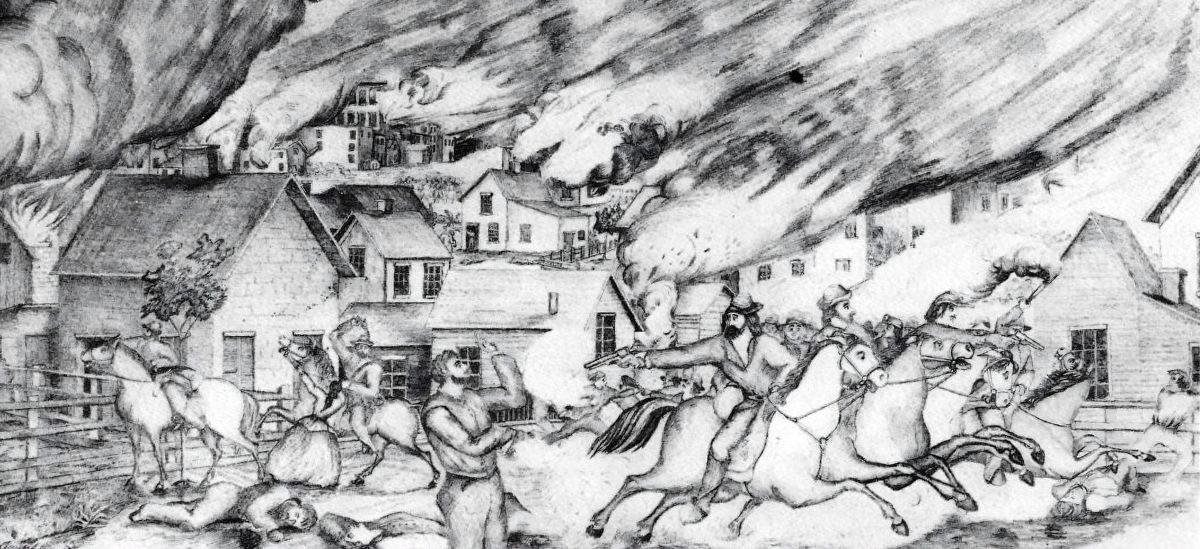
On the evening of January 7, 1863, U.S. Gen. Egbert B. Brown, Cmdr., Southwest Division, received word that an estimated 2,000 to 6,000 men of C.S. Gen. John S. Marmaduke’s First Corps, Fourth Division, TransMississippi Army, had left Arkansas and were en route to attack his headquarters and supply depot in Springfield, Mo.
“[In support of Col. Emmett MacDonald] a thousand warriors sprang to their feet, and, with one wild Missouri yell, burst upon the foe.” – Col Joseph O. Shelby, Mo. Cavalry.
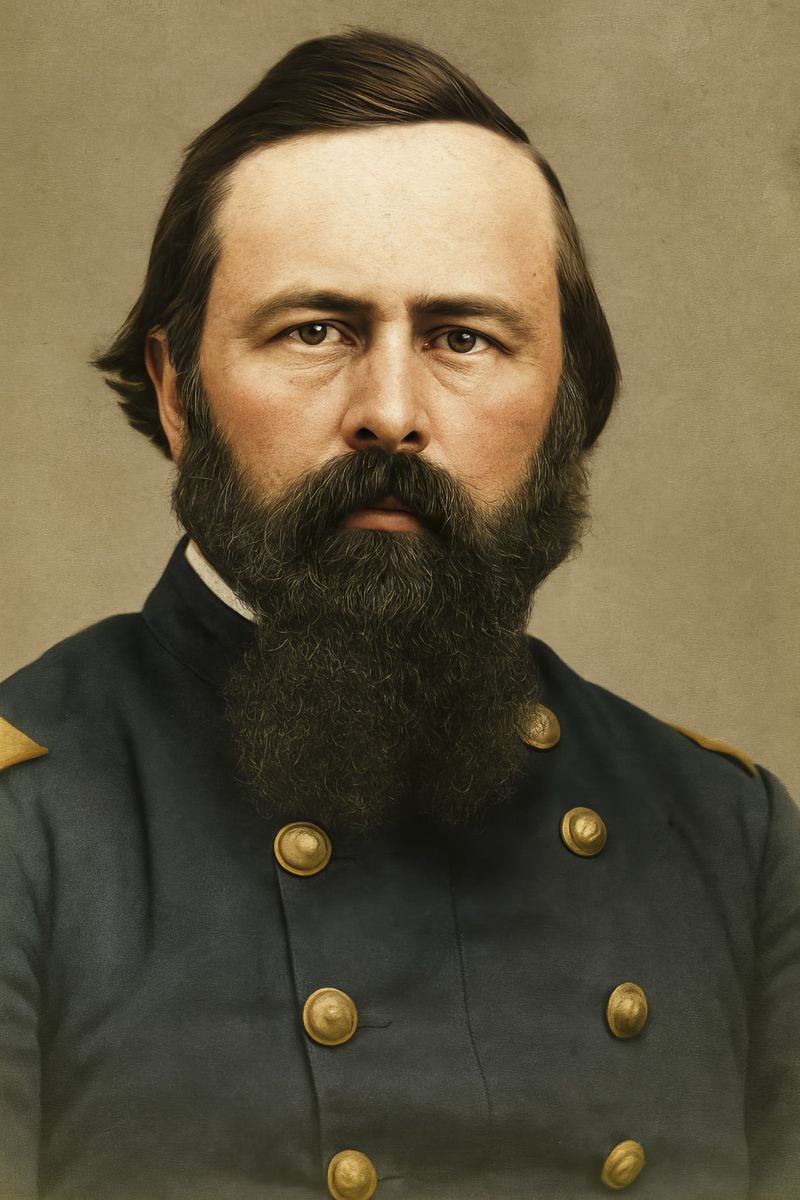
Brown was outnumbered. Between the 18th Iowa Infantry and the 3rd Missouri State Militia (M.S.M.), Brown had about 825 men, plus 1,000 sick and wounded in tent hospitals and several hundred convalescents camped north of town awaiting transportation. Brown was contemplating abandoning the town, which was 70 miles from Arkansas and the nearest Federal railroad 100 miles away. The military and civilian population objected. Beginning in August 1862, all able-bodied men had been required to work a portion of their time building four earthwork forts and performing the hard labor of digging the trenches that surrounded them. Furthermore, the town had changed hands more than once. Residents had returned based on the premise that the Federals would protect the large military supply depot intended to support the Army of the Frontier in Arkansas. While he mulled retreat, Brown prepared for battle. Messengers were sent, calling up the militia and detached companies in the surrounding area to Springfield. Men from the 18th Iowa were sent to occupy Forts No. 1 and 2. Detachments from the M.S.M. were stationed to watch the roads west, east, and south of town. From the supply depot, 50,000 army rations were moved into the fortifications. A concoction made of “oil, turpentine, shavings and other inflammables” was prepared to blow the arsenal and magazine if needed. Brigade Surgeon Samuel Henry Melcher and Col. B.O. Carr, Chief Quartermaster, Army of the Frontier, offered to assist Brown. Melcher suggested arming Fort No. 4 with the “three old iron guns, two 12-pounders and a 6-pounder, lying on the ground down by the Presbyterian church.” In the hospital, Lt. Joseph Hoffman, Sgt. Christian Mindener, and seven privates of the 1st Missouri Light Artillery were awakened to man the guns. Gun carriages were made from the front wheels of three army wagons; blocks and wedges were substituted for elevating screws. Ample ammunition was sent to the fort. The arsenal issued guns to anyone able to fight. Melcher canvassed the sick and wounded in the hospitals to find 300 men who could hold a gun. Hospital cooks prepared rations and packed grub and medicine in haversacks. Under the command of nurses, stewards, and disabled commissioned officers, the Quinine Brigade
Brigade Surgeon Samuel Henry Melcher. Colorization © 2025, civilwarincolor.com. (National Museum of Civil War Medicine)
“marched totteringly but bravely out to the skirmish line.” Throughout the night, the townspeople prepared their action plan. Residents left town or went to Fort No. 1, which had two bronze 6-pdrs. emplaced. Some readied to shelter in their cellars during the fight. Rebel sympathizers prepared feasts for Confederate officers. All hid their money and valuables. On the last day of 1862, Marmaduke entered Missouri unprepared for his “march for foray on the border’s side.” Battle victories had yielded control of Arkansas to the Union and decimated the Confederates’ supply chain. His men “were indifferently armed, … thinly clad, [and] marched without baggage wagons or cooking utensils.” Marmaduke had split his column into three. Marmaduke, with Col. Joseph O. Shelby’s 1,800 men and Lt. Richard A. Collins’s two-gun battery, went to Ozark. Col. Emmett MacDonald’s 200-man regiment went to destroy the Lawrence Mill Fort, and Col. Joseph C. Porter’s Arkansas Cavalry, 800 men, advanced to Hartville. Scouts reported that Springfield “with its rich army stores, was weakly garrisoned, though strongly fortified.” Couriers were sent to MacDonald and Porter to meet at Springfield for a surprise attack.
At sunup, Marmaduke arrived. He reconnoitered on the outskirts of Springfield while waiting for MacDonald and Porter. Brown, observing his foe through binoculars, knew the Rebel headcount had been overblown. Brown committed to the fight. On January 8, the Battle of Springfield began about 10 a.m. after MacDonald arrived. The fight pitted Marmaduke’s 1,870 men against Brown’s 2,099 “irregular troops and militia.” The Confederates advanced from the south. The Federal skirmishers retreated toward Fort No. 4. Brown gave residents minutes to grab their possessions before ordering about ten houses burned that obstructed the gunners’ view. About noon, U.S. Col. Walter King, 3rd M.S.M., and Shelby’s men began galloping toward their opponents, rapidly firing their carbines, galloping back, turning around, and repeating the action. King broke the pattern by forming a defensive line near Fort No. 4, holding off Rebels probing the streets, looking for weakness. Collins dragged in his battery and “was soon banging away.” U.S. Lt. Joseph Hofman, 1st Missouri Light Artillery, recruited from the hospital, exchanged “metallic compliments” from Fort No. 2. MacDonald charged, facing houses west of Fort No. 4. The 4th M.S.M. countercharged, driving the Rebels back. Shelby’s men charged to support MacDonald, scattering the Federals. The Rebels advanced “from house to house and from fence to fence.” They reached the former brick college building with a wooden stockade used as a prison. The Confederates captured the unguarded stronghold for their use. From one part of town to another, the Federal officers did a lot of galloping about. The men did a lot of “doublequicking,” and “the route from town to Fort No. 1 was also well thronged with fugitives tramping back and forth from their homes carrying over their most valuable articles for safe keeping.” To encourage his men, Brown “did there what no other Federal Brigadier General ever did in front of Shelby’s brigade, he rode its entire length under a severe fire, clad in bold regimentals, elegantly mounted and ahead of all so that the fire might be concentrated upon him. It was reckless bravado, and General Brown gained by one bold dash the admiration and respect of Shelby’s men. … As he rode along the front of the brigade two hundred voices were heard above the crashing muskets: ‘Cease firing—don’t shoot that man—let him go—let him go!’” Positioned inside a house, a Rebel sharpshooter shot Brown from his horse after he returned. Seriously wounded, Brown transferred his command to Col. Benjamin Crabb. Hard fighting for Fort No. 4 drifted into the cemetery. “Back and forth through the aisles and across the graves of the silent sleepers ran blue coats and gray jackets, and through the trees, … whistled the cannon shot and shrieked the bombshell.”
MID SOUTH MILITARY HISTORY & CIVIL WAR SHOW The South’s Oldest Military History Show
ADMISSION: ADULTS $10 (2 day pass $15) • CHILDREN 12 & UNDER FREE QUALITY RELICS FROM THE AMERICAN REVOLUTION - VIETNAM ERA
BOOKS DOCUMENTS CANNONS ANTIQUE BOTTLES
March 6 & 7, 2026 Friday 1-6 PM • Saturday 9-5 PM
LANDERS CENTER
I-55 at Church Rd, EXIT 287, Southaven, MS 38671
15 minutes from Downtown Memphis
FOOD TRUCKS • LIVE MUSIC & MORE ! WEAPONS CURRENCY UNIFORMS HISTORIANS & SPEAKERS
A 6-pdr. bronze field piece was taken from Fort No. 1 to open fire on Shelby’s men. C.S. Maj. John Bowman ran up and demanded its surrender. U.S. Capt. John Landis, 18th Iowa, responded, “We were here first; you surrender!” In the ensuing melee, Bowman was mortally wounded, and the Iowans were either wounded or killed. The “Iowa” gun had been captured. About 5 p.m., Shelby’s men charged Fort No. 4 and were beaten back. The battle ended at sundown. Collins’ battery continued to “fire at whatever target happened to present itself” until it was dark. Marmaduke waited until daybreak for Porter. He sent a message asking care for his wounded before moving out. Melcher’s operation on Brown, saving his arm, was written up in medical journals. During the battle, Melcher suffered a concussion from a burst shell, losing the use of his left eye. His right eye failed in sympathy, making him totally blind by 1890. News of the victory was cheered. U.S. Gen. Samuel R. Curtis, Cmdr., Department of the Missouri, sent a message to state Gov. Hamilton Gamble that “the enemy got nothing but a good thrashing and one gun. … [the] enrolled militia … fought like heroes.” Sources: • •
Holcombe, R.I., ed. History of Greene County, Missouri. Clinton, MO: The Printery, 1969. First published 1883. Wood, Larry. Civil War Springfield. The History Press, 2022. • United States, War Department. The War of the Rebellion: A Compilation of the Official Records of the Union And Confederate Armies. Series 1, Volume 22, In Two Parts. Part 1, Reports. Pgs: 179-186, 195-202.
Stephanie Hagiwara is the editor C ivil W ar I n C olor . com and CivilWarIn3D.com. She also writes a column for HistoryInFullColor.com for
1850s to the present. Her articles can be found on Facebook, Tumblr, and Pinterest.
that covers stories of photographs of historical interest from the
Every Day Civil War Hallowed Ground is Lost
WE SAVE IT!