
USS Hartford “He Died for Me”
By Bob Rue · Originally published September-October 2025 · pp. 60–65
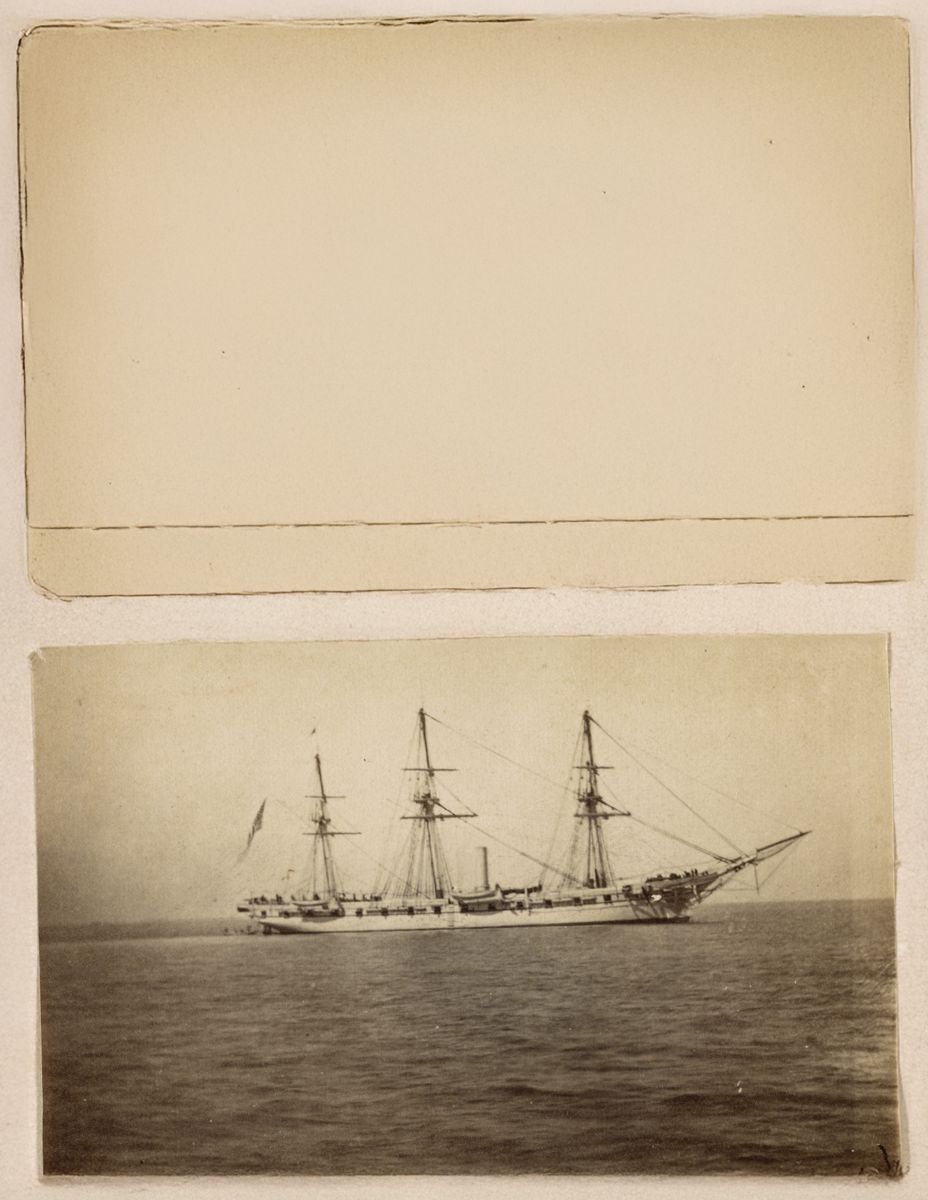
As the crow flies, the Norfolk Naval Shipyard in Portsmouth, Va., lies 795 miles from Mobile Bay in Alabama, about 690 nautical miles. While Admiral David Farragut’s flagship, the USS Hartford, survived Confederate artillery, torpedoes, and warships during the Battle of Mobile Bay in August 1864, the gallant Yankee warship eventually succumbed to neglect and the elements at her Norfolk berth while awaiting a restoration that never happened.
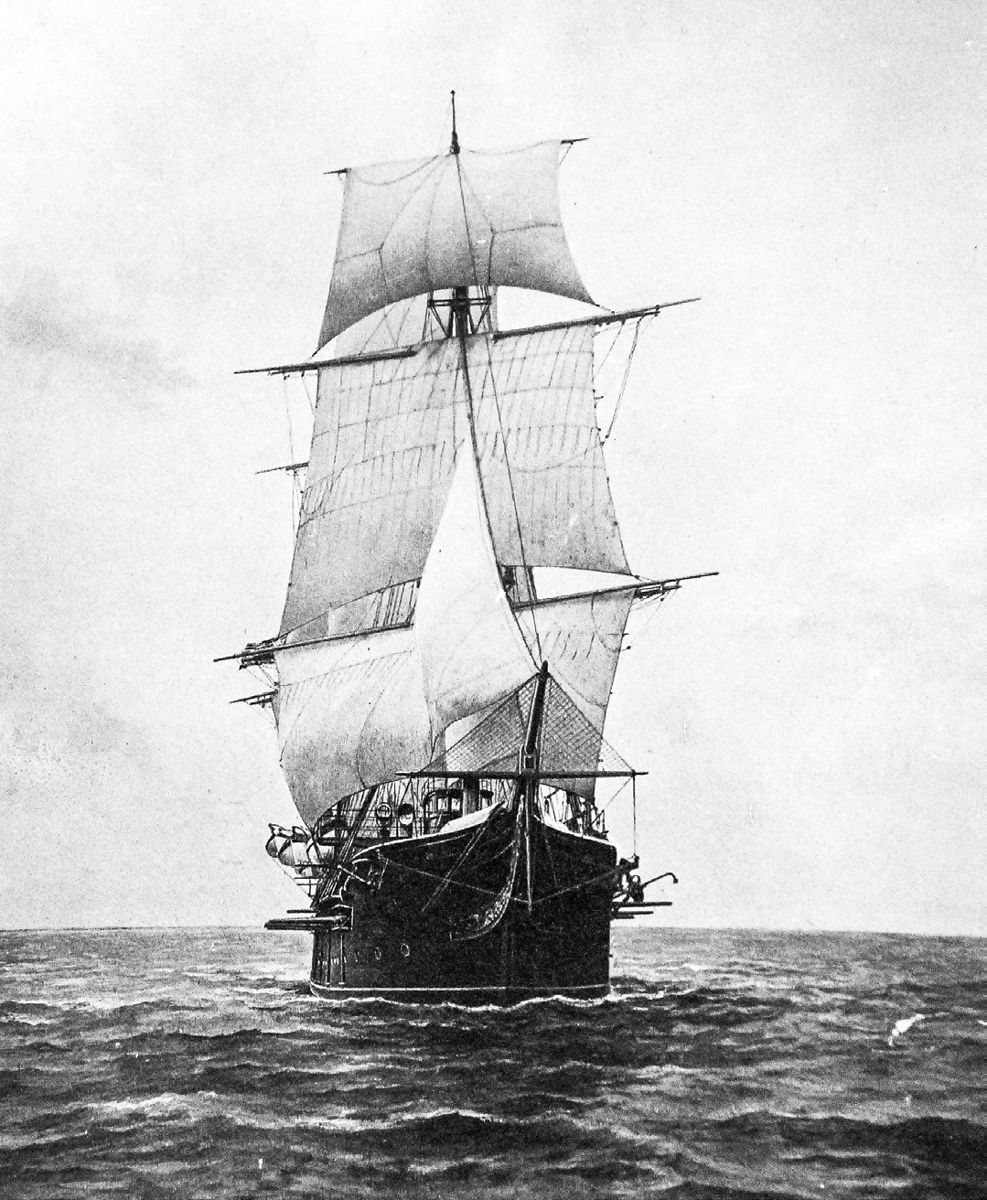
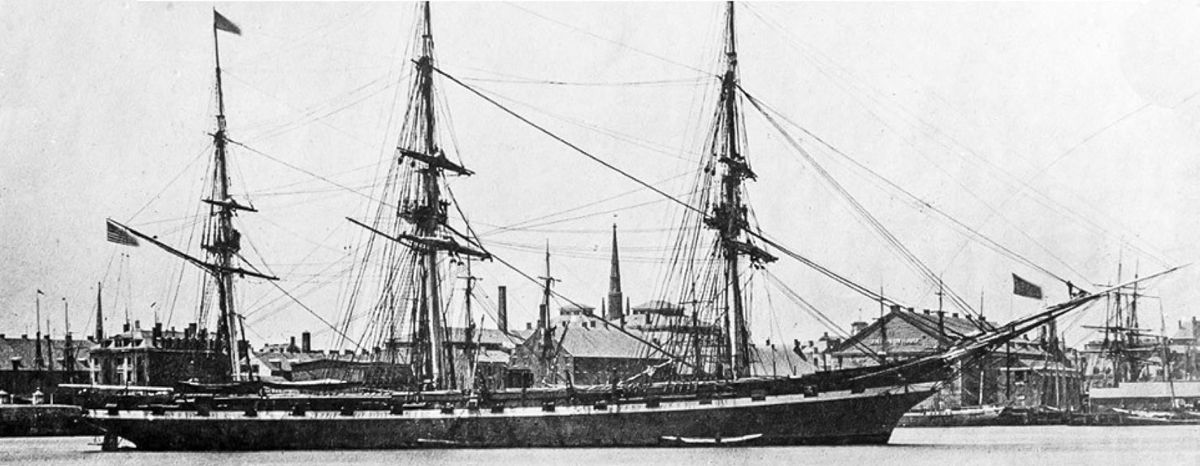
The screw sloop of war USS Hartford was built, launched, and ultimately commissioned at the Boston Navy Yard on May 27, 1859. The 2,900-ton vessel was 225 feet in length with a beam of 44 feet. It was a hybrid warship propelled by both steam and sails. It was armed with twenty IX-inch Dahlgren guns, two 20-pounder Parrott rifles, and a pair of 12-pounder guns. The USS Hartford saw service in the East Indian Squadron before the American Civil War began. With the advent of the War, it returned stateside to serve with the West Gulf Blockading Squadron as Rear Admiral David Farragut’s flagship. As Farragut’s flagship, the screw sloop participated in the Battle of New Orleans, the Siege of Vicksburg, and the Battle of Mobile Bay. Navy Photo)
The capture of New Orleans and the naval victory in Mobile Bay were among the highlights of Farragut’s service aboard the USS Hartford during the vessel’s gallant service with the West Gulf Blockading Squadron. In 1864, prior to the Battle of Mobile Bay, Mobile was the most important Confederate port on the Gulf Coast. Guarded by Fort Morgan, Fort Gaines, and Fort Powell, blockade runners operating out of Mobile continued to defy the Union blockade. Farragut’s mission was to complete the Federal stranglehold on the Gulf Coast. The Confederate stronghold was defended by three forts, three gunboats, and a formidable ironclad ram called the CSS Tennessee. The channel that provided entrance to the bay was mined with torpedoes, barrels of black powder
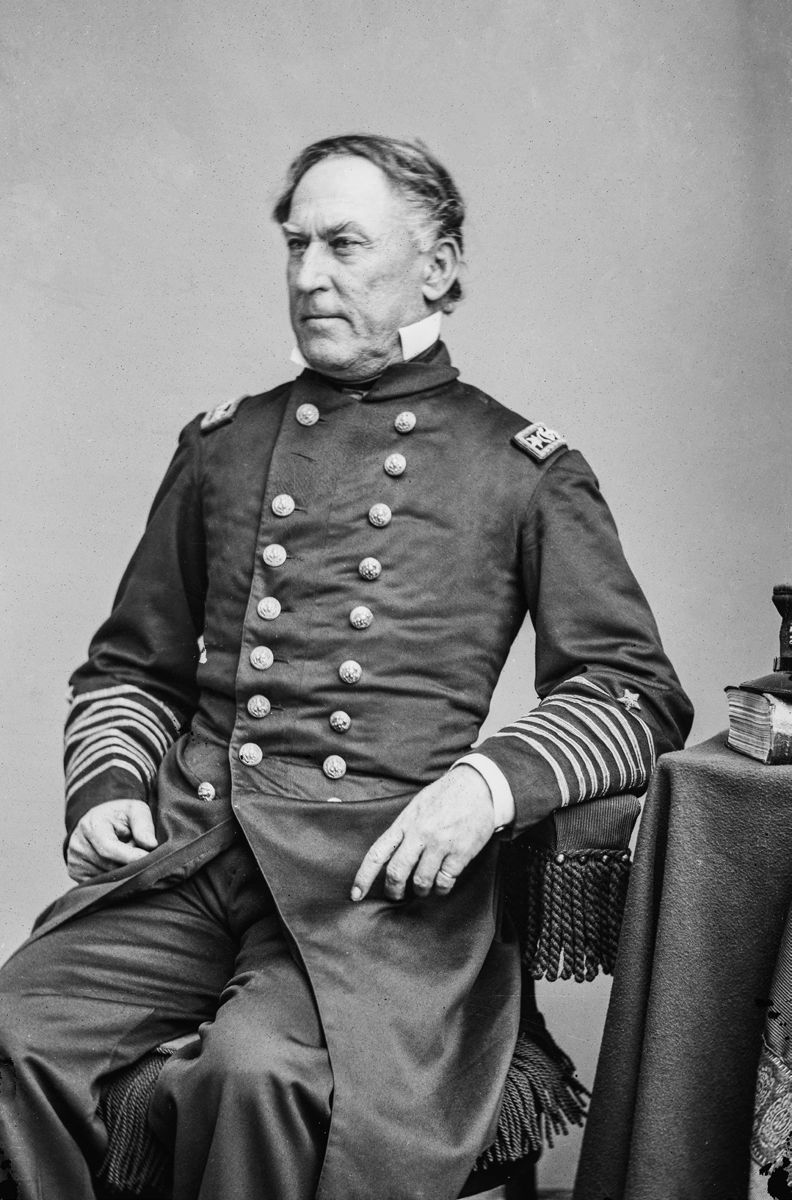
U.S. Navy Rear Admiral David Farragut resided in Norfolk before the Civil War. He considered Norfolk home and had reservations about commanding an attack on his hometown, friends, and family. Farragut adamantly objected to Southern secession and remained loyal to the Union. (Library of Congress)
rigged to explode upon contact with a vessel. To gain access to the bay, warships had to run the gauntlet by sailing through the channel under the guns of Fort Morgan while avoiding the torpedoes. Farragut developed a bold but risky plan to shut down operations from the Gulf Coast seaport. He assembled a flotilla that consisted of 14 wooden warships and four ironclad monitors. He ordered the wooden ships lashed together in pairs so that they might better withstand the artillery while passing the Confederate forts. At dawn on August 5, 1864, Rear-Admiral Farragut launched his assault on Mobile Bay from the deck of the USS Hartford. Led by four powerful monitors, the flotilla sailed into the channel under fire from the guns of Fort Morgan. When the monitor Tecumseh struck a torpedo and sank, caution prevailed, and the attack slowed. Farragut knew that the success of his dangerous naval operation depended upon sailing his warships past formidable Fort Morgan as quickly as possible. Lashed to the rigging of the Hartford, Farragut observed that the pace of his fleet past the Confederate defenses had slowed and gave his illustrious order, “Damn the torpedoes! Full speed ahead.” Farragut’s fleet sailed forward firing broadsides at the Confederate bastion and absorbing punishment from the Rebel artillery, eventually arriving near the center of the bay where Farragut’s small armada fought and defeated the Confederate gunboats and the ironclad ram CSS Tennessee. Over the next two days, Fort Gaines and Fort Powell succumbed to attacking Union forces. Fort Morgan surrendered in late August. Once Federal forces controlled the entrance to Mobile Bay, Farragut’s victory closed the Gulf Coast east of the Mississippi River to blockade runners and Confederate shipping. Immediately following the Civil War, the USS Hartford was decommissioned and underwent extensive repairs in 1865. After the overhaul, the former flagship returned to service with the Asiatic Squadron and was later decommissioned in 1887 for use as an apprentice seaBow of USS Hartford in Charleston Navy Yard. (U.S. Navy Photo) training vessel at Mare Island.
The Hartford was recommissioned again in 1899 and reassigned to the Atlantic fleet as a training and cruise ship for midshipmen. In October 1912, the USS Hartford was transferred to Charleston to serve as a station ship. Her masts were cut away, topsides cleared and covered with housing, and the rigging vanished. The ship was again decommissioned in 1926 and remained at Charleston until it was moved to the Washington Navy Yard in 1938. The Hartford was designated a relic. President Roosevelt wanted to build a naval museum in Washington and include the USS Hartford as a museum ship. Plans for the naval museum in the nation’s capital ended with Roosevelt’s passing.
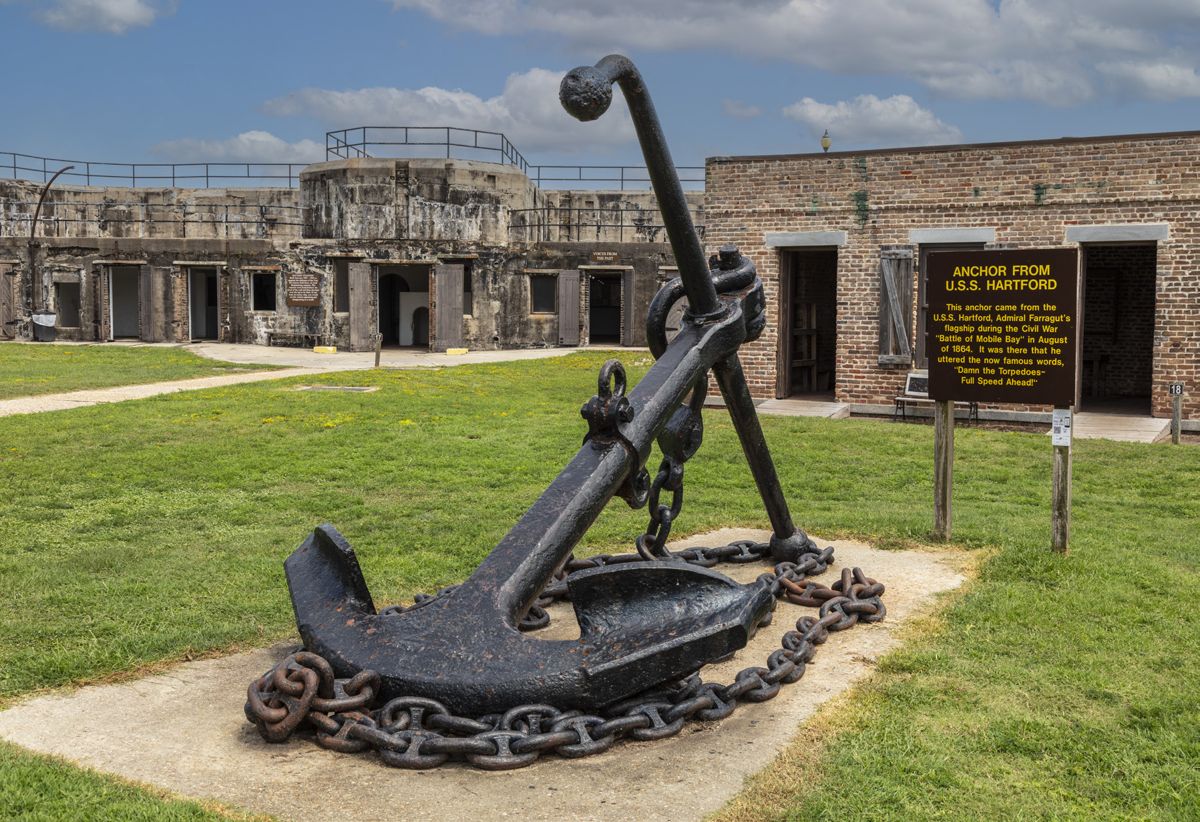
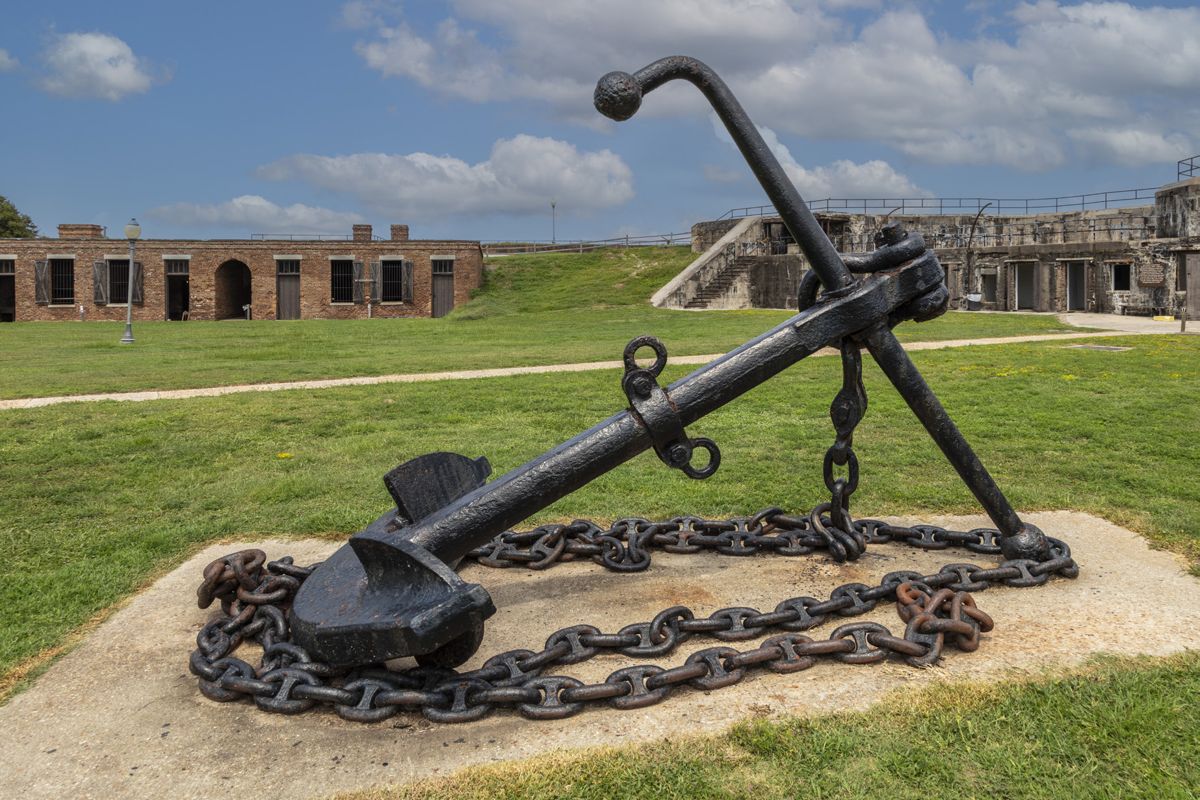
Close up of the anchor markings. “7900 / 1861 / US / NYW / N 1055”
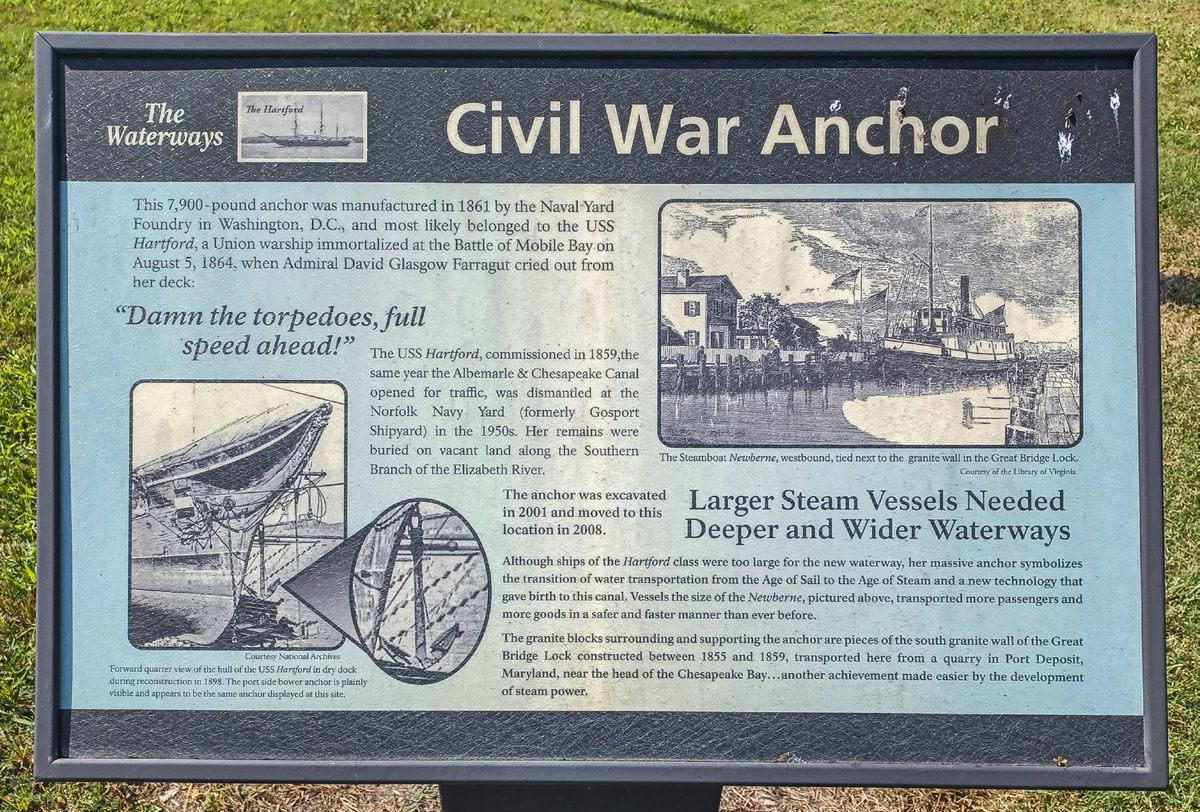
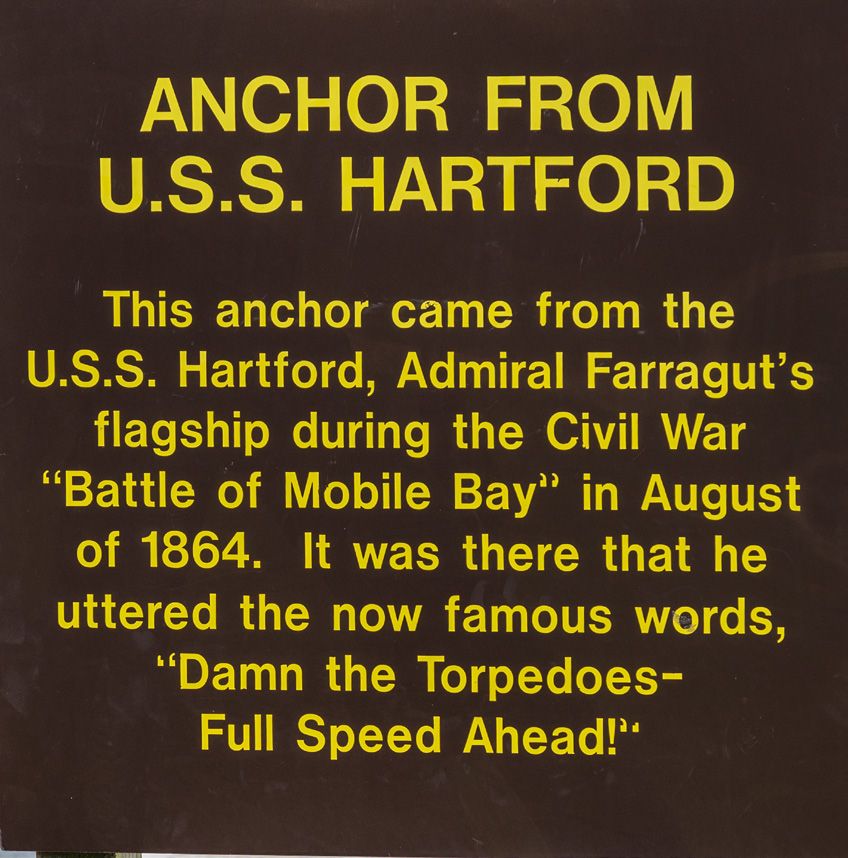
This historical marker offers park visitors background information on the anchor. The anchor and related hardware were excavated in 2001 and set up as an exhibit in Great Bridge Park in 2008. (Bob Ruegsegger)
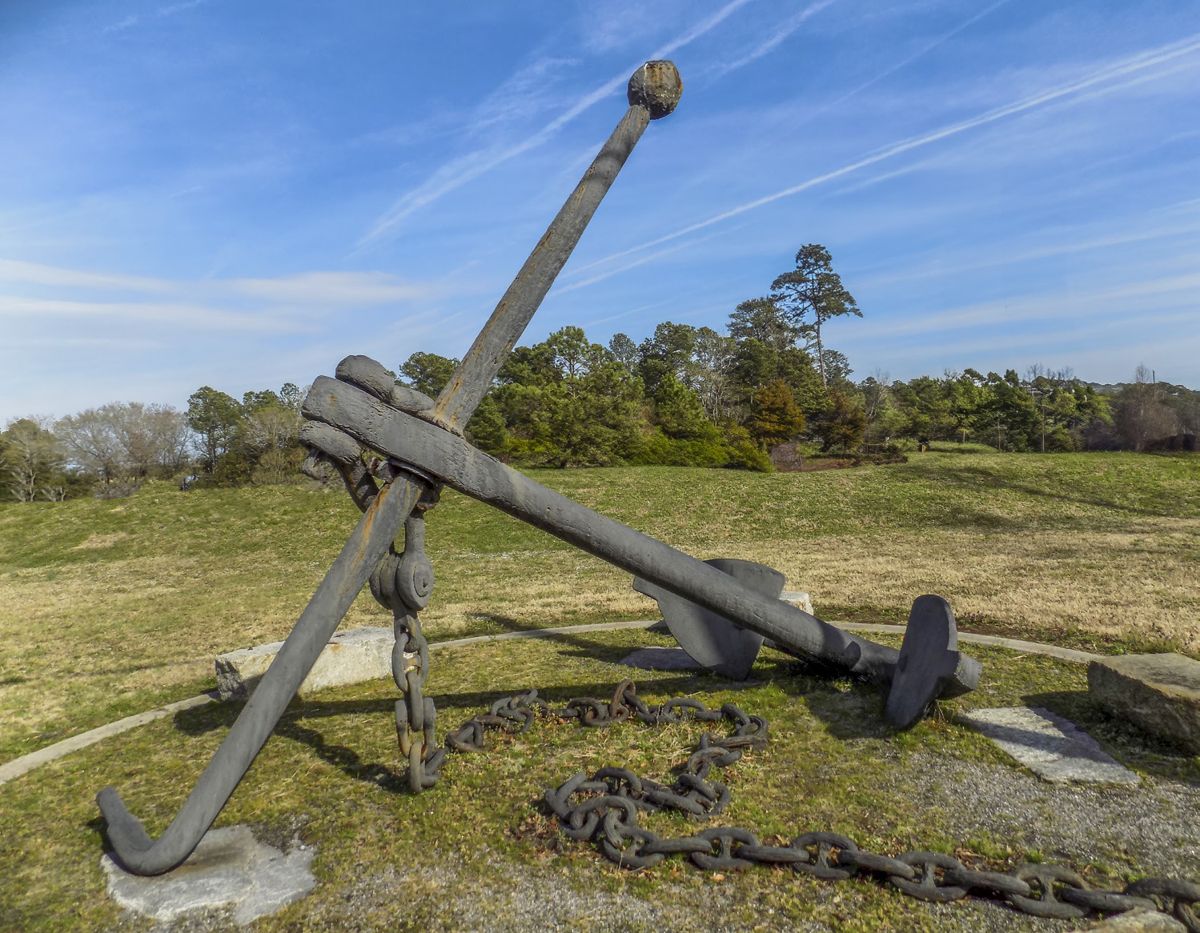
USS Hartford. Giant shackles connected the heavy anchor chain to the massive 7,900-pound This Civil War era anchor on exhibit at Great Bridge Lock Park is anchor manufactured at the believed to have belonged to the USS Hartford, Farragut’s flagship at Washington Navy Yard in 1861. the Battle of Mobile Bay. It bears the date 1861 and the letters NYW (Bob Ruegsegger) (Navy Yard Washington)
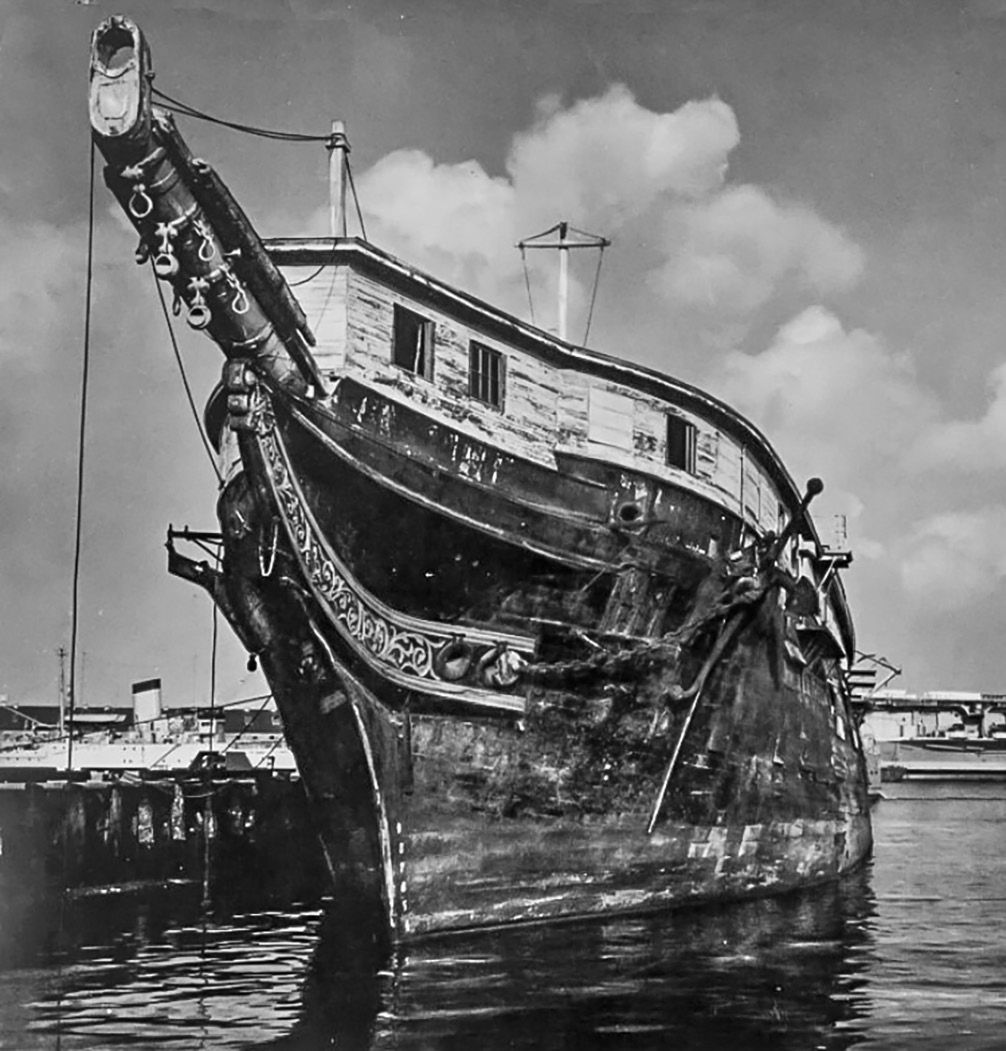
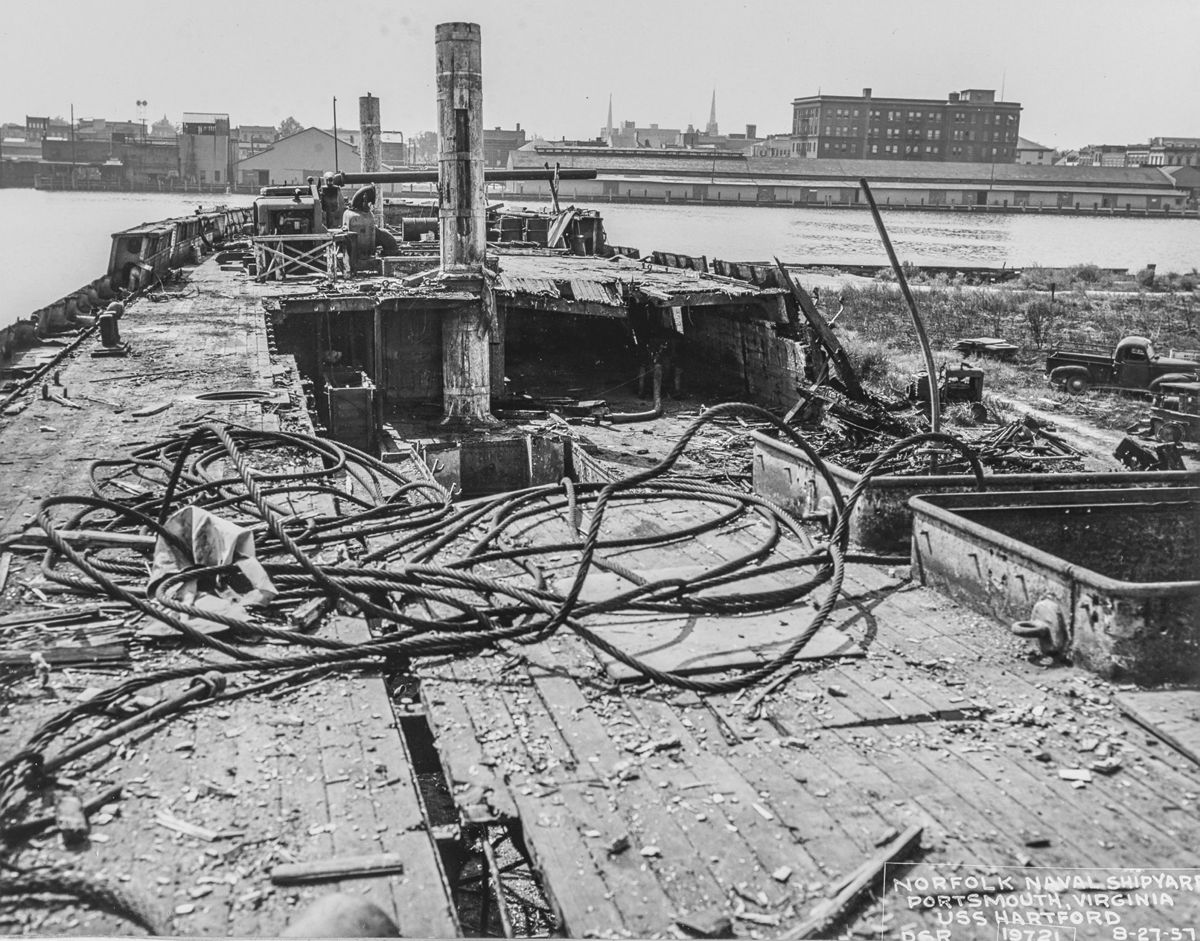
The USS Hartford, a derelict hulk with masts removed in the Norfolk Naval Shipyard in Portsmouth, Va. (U.S. Navy Photo)
Following World War II, the USS Hartford, a deteriorating floating artifact, was towed to the Norfolk Navy Yard with an ambiguous notion of preserving the decaying vessel until funds be “made specifically available for its restoration.” Time and water had taken their toll on the old vessel’s hull. Shipyard security turned on electric pumps every eight hours to keep the water level in the bilges down. Attempts were made to reduce the leakage, plugging and caulking, with only limited success. Eventually, the USS Hartford, Queen of the Yankee Fleet, sank at her Norfolk Naval Shipyard berth one winter night in 1957. Time and neglect had achieved what no Confederate warship, ironclad or otherwise, could accomplish. Salvors refloated the Hartford and towed the sloop of war to an abandoned pier at the St. Helena Annex on the Elizabeth River, where it was set afire. It required a month to turn the Hartford’s timbers to ashes. The last remaining Civil War ship died isolated and unlamented in a Southern seaport.
Bob Ruegsegger’s assignments frequently take him to historic sites throughout Virginia, the Mid-Atlantic, and the Southeast. His favorite haunts include sites within
Virginia’s Historic Triangle—Jamestown, Yorktown, and Williamsburg. Bob served briefly in the U.S. Navy. He is a retired educator and has been an active newspaper journalist for over 25 years.