
Through the Lens One of the Fiercest Fights
By William Griffing · Originally published September-October 2025 · pp. 34–37
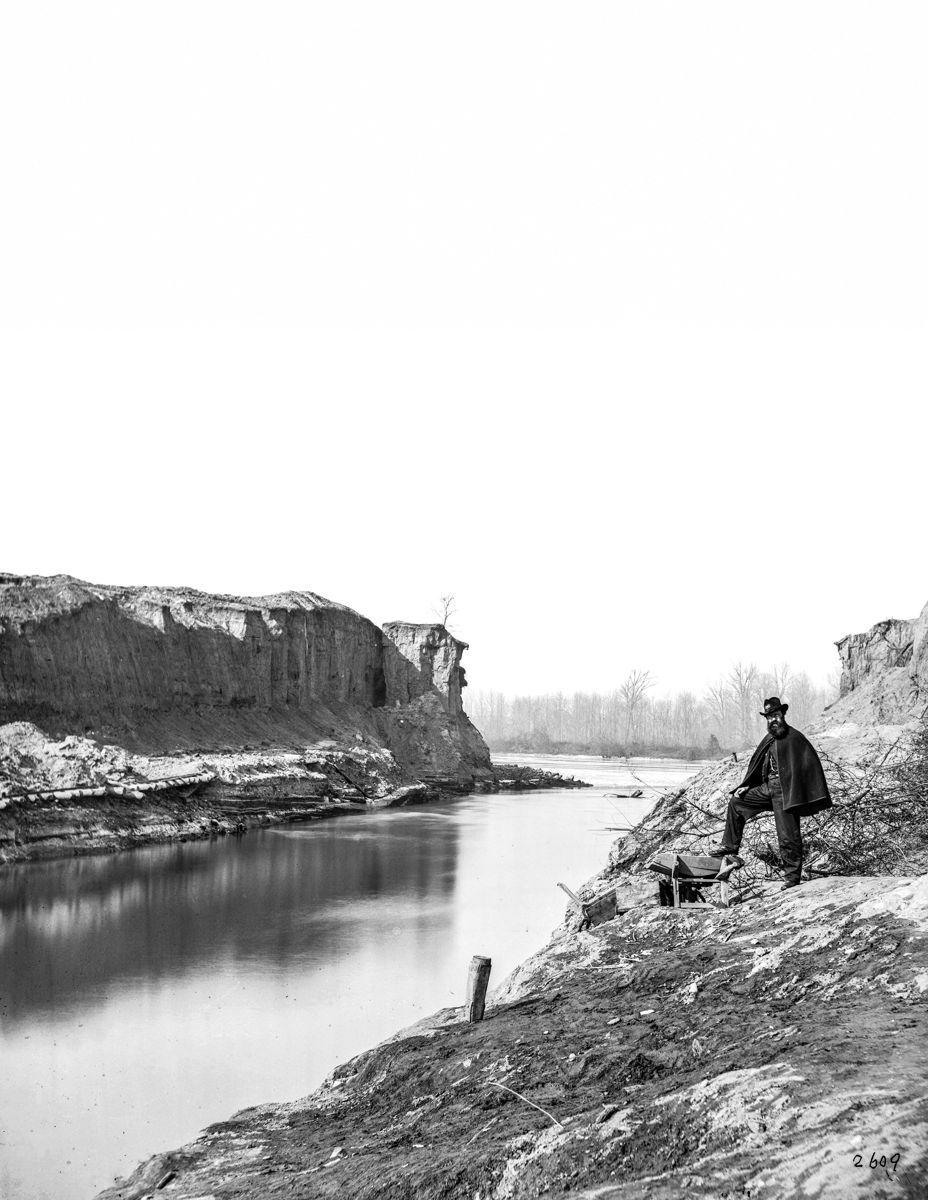
“They Swear a Big Oath”
T Levi Hayden.

Professor Benjamin Maillefert poses for a photograph of the completed canal at Dutch Gap, Va. (Library of Congress)
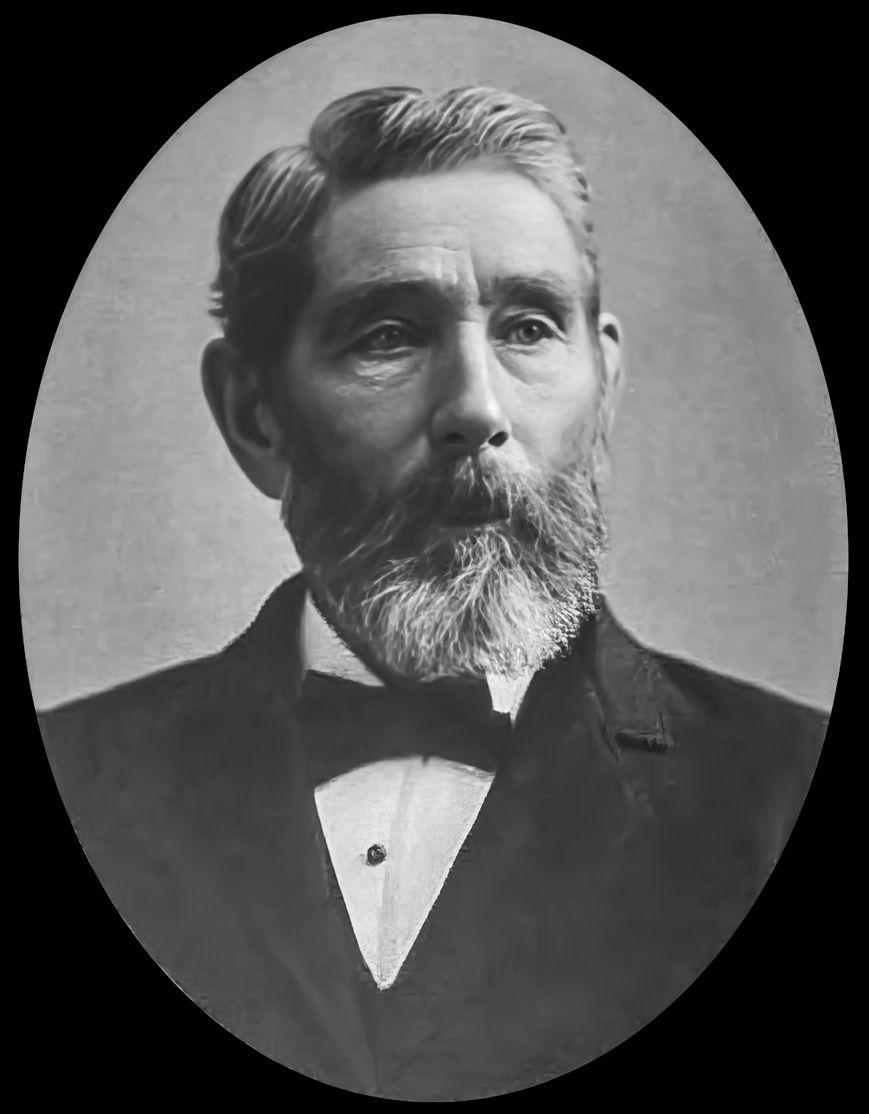
his incredible letter was written by Levi Hayden (1813–1888) of Roslindale, Massachusetts, who, at age nine, was left an orphan and raised himself up as a house and ship joiner. After spending some time building houses in the early 1830s in the fledgling village of Chicago, he went to sea as a ship’s carpenter and sailed the Pacific Ocean. He returned to the East Coast in the late 1840s after years of long sea voyages. He set himself up in maritime businesses until just before the Civil War when he organized the New York Submarine Engineering Company—a company often hired to clear obstructions, usually wrecks, from navigable waters.

As one can imagine, the skills of Hayden’s firm were in great demand during the Civil War, and he and Professor Benjamin Maillefert, his partner, were frequently hired to accompany Union expeditions. Their first experience was with General Burnside on the expedition to North Carolina and the capture of Roanoke Island and Newbern, where they demolished the channel obstructions in the Neuse and Pamlico Rivers and later blocked the Dismal Swamp Canal by blowing up the locks. When this letter was written in October 1864, Hayden and Maillefert had been equipping tugboats and ironclads with boom torpedoes and placing torpedoes and sunken vessels in the channel of the James River opposite Farrer’s Island. Aside from contributions made by Hayden in supporting the U.S. Navy during the Civil War, the letter is particularly significant in that it confirms the use of Rebel prisoners, at least for a time, in the construction of the Dutch Gap Canal across Trent’s Reach on the James River by order of General Benjamin F. Butler. When Rebel authorities complained that Butler was misusing Confederate prisoners of war, he sent word to them that they too had misused black soldiers taken prisoners when they put them to work building Rebel fortifications.
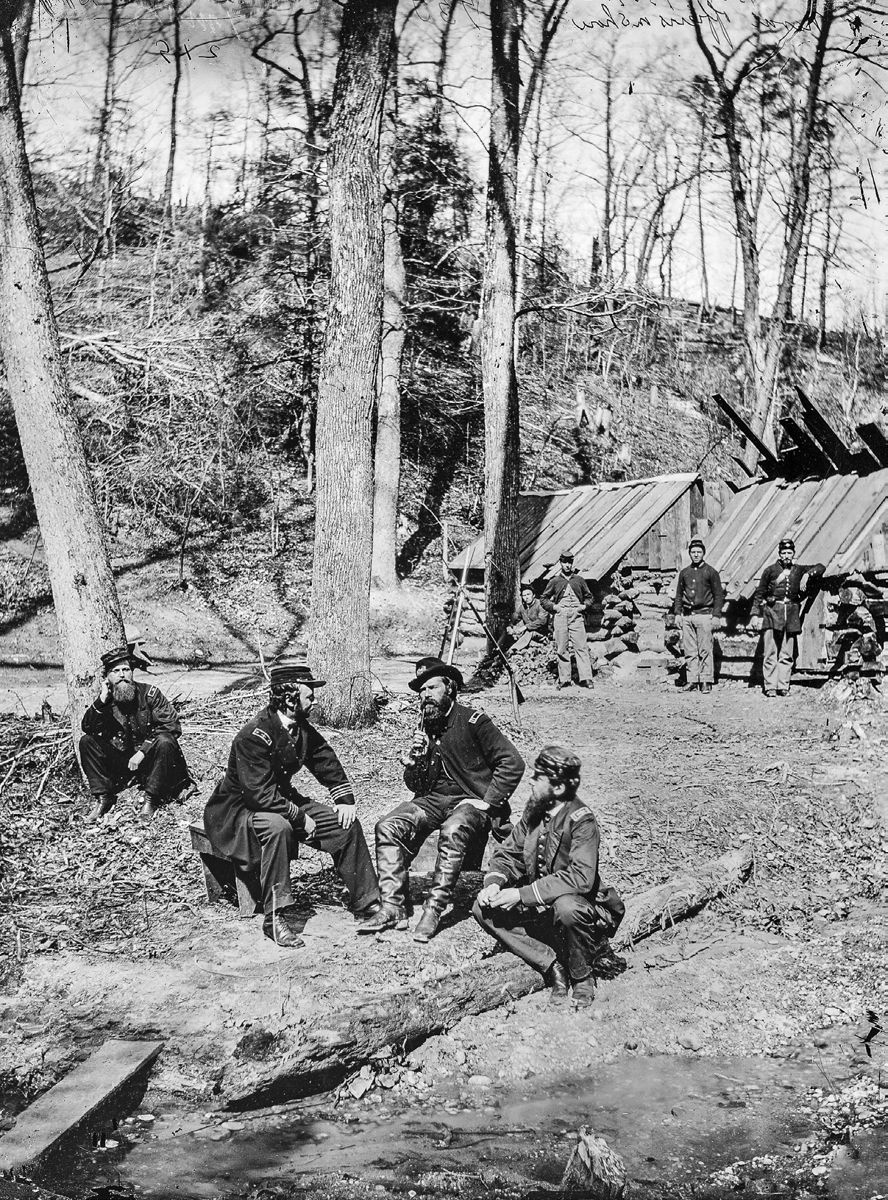
Transcription “U.S.S. Delaware James River, Virginia October 16, 1864 My Dear Bland, I wrote you on the 11th from this place and I have heard nothing from home or the professor [Maillefert] since I parted with him at Norfolk on the 6th. I am all right so far. Our river improving project is being examined at Washington and no action since I wrote you. The canal, by the way, in now going on rapidly and Capt. Smith told me yesterday that he had the best possible guarantee that it would be completed and ready to pass by the first of November. The work is generally accelerated by one of General Butler’s plans of using a few of the F. F. V.’s [First Family’s of Virginia] to forward this state improvement so we have now 100 Johnny Rebs digging for dear life in the Sacred Soil. Day before yesterday as I came in from the front 18th Corps Headquarters, I came upon those fellows just caught and well guarded by our Ebony Boys. The officers in charge halted them just long enough to tell them the direct way to Dutch Gap. As I write this, the professor [Maillefert] comes alongside and of course disturbs my writing. He is all right. Had to lose tell you that these fellows are awful mad to be shot at by a day at Baltimore by failing to connect with the steamer their friends, being aware that General Butler had notified to the Fortress. He complains that his visit is too short but the Confeds of their situation. They swear a big oath that poor fellow, it can’t be remedied. The money matters in with this rude treatment, they have determined to be Reb settlement, he says, are all right. I will examine the papers no more. They are camped right in range of the Rebel guns at leisure. Well, [back to] the Dutch Gap & reb story. The captives of whom I spoke were marched directly into the Gap and put to work and I understand that word was sent to the Rebel commander that as they had failed to accord to our Colored soldiers the usages of Prisoners of war, and [instead] set them at work on their fortifications, he (Butler) claimed the privilege of getting a little service out of their captives in our hands. Yesterday I visited the Gap under a very disagreeable smashing of Rebel shells and found these fellows fully as efficient as our Black Boys with the spade & pick. They make a ludicrous appearance among our Union Darks—Dig, Dig, Dig—and bang goes the shell overhead and under foot. While there, one poor Darkey got his left leg smashed off with Dutch Gap Canal. Small buildins have been dug out of the hill behind a fragment of shell. Pity it had the stack of barrels and wheel barrows. (Library of Congress) not hit a F. F. V. Well, let me
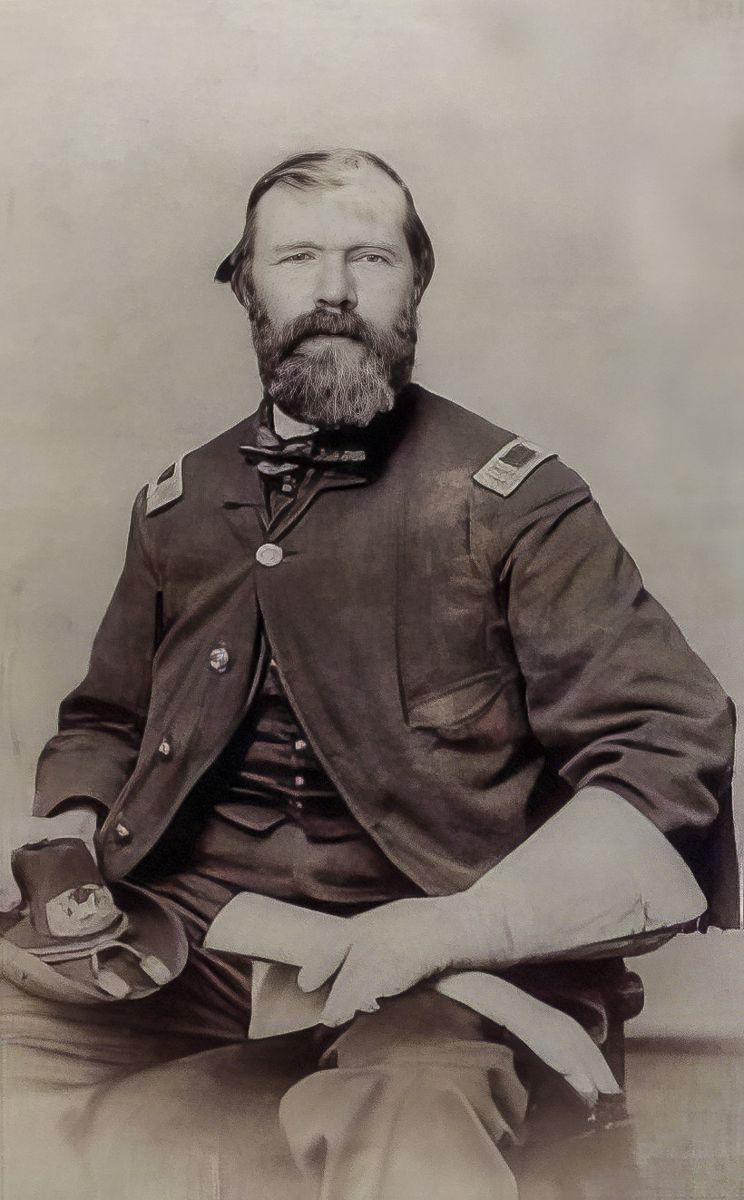
& mortars so they eat, drink, sleep & work under fire. One pleasant gent told me they like our beef & coffee and yet get whiskey rations besides just the same as our Lordly Negroes…Butler has one more interesting coon under his hand of discipline. I say coon for one of our sentries found a well-dressed intelligent Reb in a tree a few nights since near the Gap, evidently having crossed the river and getting information as to our progress and observing the range of the Rebel shells. Well, his story was not good. Said he had just come from New York to get the dead body of a friend. Old Ben could not swallow this [and] thought it strange he should be found in a tree at 2 o’clock a.m. after a dead man, so he too has a central place in this famous Gap with chain and ball on his legs. Well he don’t like it any better than his brethren. Our military men are daily gaining evidence of the fitness and efficiency of the Black men for soldiers. One veteran officer, Col. [George Washington] Cole of the 2nd U. S. [Colored] Cavalry, told me that he had seen much service and engaged all through this war. His regiment—all Black; these men, he says, are docile as lambs in camp but fight like fiends when engaged. Many the Reb officer and private, he says, after laying down their arms, have barely been rescued by the interference of White officers sharing the trench mercies of Fort Pillow. I expect to return in a day or so to Norfolk to look after the work there until further orders. Capt. Smith, commanding the fleet, told me yesterday that Admiral Porter, having charge of the North Atlantic Blockading Squadron, now had sent to the Navy Department that he wished to have one of us permanently with the Navy up the river so I think in a few days we shall be in line—one perhaps Navy and the other Army. I shall try and see General Butler before returning down the river. I think a final dash will come off about the first of November. The Gap is then to be done and a powerful force will be placed before Wilmington, naval and military. I close this 3 o’clock this p.m. Sunday. Have been to church this a.m. on board the flag ship Onondaga. My regards to friend Miller & Iverson. Yours truly, — Levi Hayden The Military and Naval friends of Little Mac are several. Send us a detective to search out. Will you please send me a few cloth bank checks in a letter. I think I have a book of them in my desk. L. H.”
William J. Griffing has worked at the Department of Labor and the Department of Energy, and later as the ES&H Director at the National Renewable Energy Laboratory and Fermi National Accelerator Laboratory. Since his retirement in 2010, he has focused on preserving American history, mainly Civil War letters and diaries that remain unpublished in private collections. His transcribed Civil War soldier and sailor letters are found at: https://tinyurl.com/sparedshared. Updates on newly transcribed letters are available at: facebook.com/Griff.CWLetters. In 2024, he coedited a book titled A Great and Good Man with Jonathan A. White, which includes rare first-hand accounts of Abraham Lincoln, drawn primarily from about 15,000 letters he has transcribed since retiring.