
This & That
By Gould Hagler · Originally published September-October 2025 · pp. 38–41
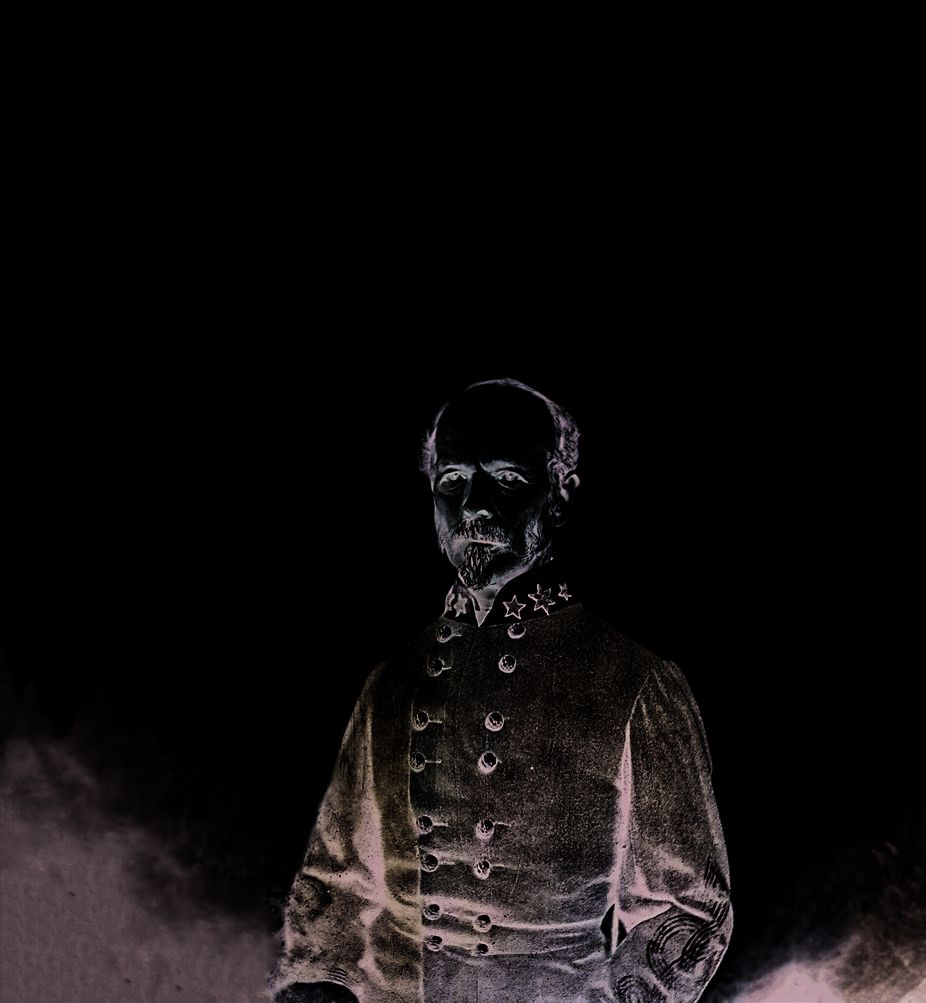
& I
Retesting Your General Knowledge
n 2024, I devoted a column to a quiz, entitled “Testing Your General Knowledge.” I cited some data about the pre-war lives of men who later became famous and asked readers to identify the generals in question. Let’s have another go. This time, I will ask about five Confederates and five Federals, with some emphasis on their postwar lives.
Questions:
- One historian wrote that this Confederate general, months before the war’s end, felt his cause to be hopeless. After the war, he “espoused the Republican cause” and was ostracized by his erstwhile comradesin-arms. He then “turned to his former enemies for employment,” and “almost to the end of his long life he held one Federal employment after another.” 2. The namesake of the America’s Cup, the schooner America, built in 1851, became the property of the United States Navy in 1864. Eight years after the war this Federal general acquired the America and owned it until his death. 3. Some Confederate political and military leaders, fearing prosecution and imprisonment, fled to foreign parts when the Confederacy collapsed. One well-known general perhaps had more to fear than most others. The general’s fears stemmed from certain actions he took regarding prisoners captured in battle in North Carolina in 1864. The general escaped to Canada, where he lived with his wife and child under an assumed name. 4. In March 1885, Congress passed a bill to restore Grant’s commission as general of the army. President Arthur, a Republican, signed the bill hours before Democrat Grover Cleveland was sworn in. The measure dated the commission to 1861 and allowed
Grant to receive army retirement pay for the few remaining months of his life. This Federal general, by then a Democratic congressman from California, was a vocal opponent of the legislation to provide such aid to Grant. 5. This Confederate general and his wife both died in a yellow fever epidemic, leaving 10 orphaned children. 6. One prominent Federal general, while serving as assistant treasurer of the United States during the Grant administration, received a large and unexplained payment from Jim Fisk, who, along with Jay Gould, Grant’s brother-in-law Abel Corbin, and others, was a principal in what became known as the “Gold Conspiracy.” 7. A high-ranking Confederate general had a brother who served as the Confederacy’s attorney general. A cousin was on the other team and commanded a Wisconsin regiment and later the Iron Brigade. Earlier, well before the Civil War, our subject survived an attempt on his life perpetrated by his own men. 8. This Federal general fought in the Eastern Theater and rose to corps command. Immediately after a Federal victory in a crucial battle he was removed from command without explanation. The general immediately sought a court of inquiry, but despite his repeated requests none was granted until 1879. 9. This New York-born general commanded a garrison that withstood a long siege before surrendering in 1863. 10. This North Carolinian was an effective leader in the Eastern Theater until Appomattox. Prior to the war, he taught artillery and tactics at the U.S. Military Academy and authored The Artillerist’s Manual in 1859.
Answers: 1. James Longstreet. Douglas Southhall Freeman wrote of Longstreet’s postwar experience in an appendix to Lee’s Lieutenants. Longstreet took his first Federal job in 1869, when Grant named him the surveyor of customs in New Orleans. Longstreet and Grant were friends at West Point. The future Confederate was the best man in Grant’s wedding and was also Mrs. Grant’s distant cousin. While disapproving of Longstreet’s postwar career choices, Freeman nevertheless stated that the ostracized general “received at the hands of his former military associates far less than justice as a soldier.” 2. Benjamin Butler. The America was eventually purchased by the Confederacy, rechristened as the Memphis and used as a blockade runner. Scuttled by the Confederates in the St. Johns River and refloated by the Federals, the blockade runner became a blockader under her original name. In 1873, acting through a front man, Butler purchased the ship for $5,000. There were some shady aspects to the deal. According to one blog (https://halibutpointnotes. blogspot.com/), “Some observers were dismayed that the Navy had so mysteriously lost its prize. They interpreted the proceedings as shenanigans.” Nevertheless, the landlubber general proved a good steward and kept the national treasure in top racing form. Butler owned the ship until his death in 1893. His heirs eventually gave it back to the Navy. (David Gendell, in The Last Days of the Schooner America, tells the story of the ship and its accidental destruction during World War II. 3. George Pickett. In 1864, Pickett led an effort to capture New Bern. The expedition was unsuccessful, but Pickett did snag some prisoners. Some of those captured were members of the 2nd Loyal North Carolina Regiment. Twenty-two of these North Carolina Unionist soldiers were accused of being deserters from the Confederate army. They were hastily tried after the retreat to Kinston, found guilty, and hanged pursuant to Pickett’s order. Two investigations led to recommendations that Pickett be tried for murder. However, Grant intervened, stating that Pickett had been paroled at Appomattox, and that the terms of the parole precluded prosecution. No further action was taken. Pickett’s exile was brief: he and his family returned to Virginia in 1866. (Justice or Atrocity by Gerard A. Patterson provides a thorough examination of this controversy.) 4. William S. Rosecrans. Rosecrans served two terms in the House of Representatives, from 1881 to 1885. In speaking against the bill Rosecrans stated that his opposition was not motivated by personal animosity; rather, his reason was the former president’s connection to fraudulent business dealings which had “been conducted to rob poor people of millions and which, if done on a smaller scale, would have sent its managers to prison.” Grant died on July
23, 1885. (In General Grant and the Rewriting of History, Frank Varney relates this bit of history and explains in detail why Rosecrans felt a deep animosity toward Grant, even if this animosity was not the reason Rosecrans opposed the bill.) 5. John Bell Hood. In the winter of 1865–1866, Hood settled in New Orleans. He entered the insurance business and prospered. He married in 1868. The Hoods had 11 children, including three sets of twins. Like many other Confederates (and Federals, too), Hood replaced his sword with a pen and vigorously defended his war record. Yellow fever struck the city in 1878. The epidemic’s severe economic impact wrecked Hood’s business, leaving the large family in serious financial straits. In July 1879, the fever first claimed the Hoods’ eldest daughter, then Mrs. Hood. General Hood died in August, leaving 10 orphans ranging in age from nine years to four months. Friends created the Hood Orphan Memorial Fund, supported in part by income from Hood’s memoirs, Advance and Retreat, finished but not yet published when Hood died. (This information is available from numerous sources. I used Stephen Davis’s Into Tennessee and Failure: John Bell Hood.) 6. Daniel Butterfield. According to James Pula in his 2024 biography of Butterfield, “The plotters [in the Gold Conspiracy] planned to induce Butterfield to use his inside information to inform them when the government planned to sell gold so they could dispose of their holding before the increased supply caused the market to drop.” The plot failed when Grant got wind of the scheme and ordered a sudden sale of government gold before word could get out. The conspirators had other channels of inside information, and it is not certain that Butterfield had agreed to alert the plotters in advance of any planned sale. However, Butterfield did admit receiving the $10,000 payment and testified that it was a loan. (Pula’s Union General Daniel Butterfield: A Civil War Biography includes a thoughtful discussion of this event.) 7. Braxton Bragg. His brother, Thomas Bragg, was the C.S. attorney general from March 1862 to October 1863. His cousin, Brig. Gen. Edward Bragg, commanded the Iron Brigade from June 1864 until February 1865. The story of the murder attempt, perpetrated by soldiers under his command, fits well with the image of the cantankerous, disputatious, and unpopular officer familiar to students of the war. Battles and Leaders, v. III, contains an entry by a member of Bragg’s staff, Col. David Urquhart, on the Kentucky Campaign. Urquhart wrote that at the conclusion of that campaign a cheerful Bragg would “join the staff about the camp-fire and relate with zest incidents of his service under General Taylor in Mexico.” In a footnote Urquhart wrote that Bragg “told how on one occasion, when he was asleep, the men of his battery had placed under his cot a shell, which exploded, tearing everything to pieces, but without harming him.”
-
Gouverneur Warren. After the Battle of Five Forks, in which Warren commanded the V Corps, he was removed from command by Maj. Gen. Philip Sheridan. Warren remained in the regular army with his permanent rank of major. He finally got the chance to clear his name 14 years after his humiliating dismissal, when President Rutherford B. Hayes ordered that a court be convened. President Grant, by then out of office, and Sheridan, soon to be the army’s commanding general, were among the many witnesses who testified. The court determined that Sheridan’s action to remove Warren from command was not justified. The findings of the court were not published until after Warrens’ death in 1882. (General Grant and the Verdict of History by Frank Varney covers the controversy and provides much detail on the court of inquiry.) 9. Franklin Gardner, C.S.A. Gardner was born in New York. He commanded the garrison at Fort Hudson, which surrendered on July 9, 1863, five days after the surrender of Vicksburg. Gardner’s mother was from Louisiana, where he was raised. His wife was the daughter of Alexandre Mouton, governor of the state from 1837 to 1842.
-
John Gibbon, U.S.A. Gibbon was born in Pennsylvania but raised in North Carolina from the age of 11 in a slave-holding family. He had three brothers and two brothers-in-law who served in the Confederate army. Confederate Gen. Johnston Pettigrew was his cousin. Gibbon stuck with the Old Army in 1861 and continued his service postwar. He retired in 1891 and died in 1895.
Gould Hagler is a retired lobbyist living in Dunwoody, Ga. He has been a regular contributor to CWN since 2016. He can be reached at gould.hagler@gmail.com.
l
Promoters of Quality Shows for Shooters, Collectors, Civil War and Militaria Enthusiasts
l
Chickamauga (Dalton) Civil War Show
February 7 & 8, 2026 Mike Kent and Associates, LLC • PO Box 685 • Monroe, GA 30655
(770) 630-7296 • Mike@MKShows.com • MKShows.com
2025 • CHICAGOLAND • NATIONAL
September 20 9am to 4pm / $10 • Early Buyer 8am / $25 • Free Parking 1,000’s of Civil War Treasures! Plus! Revolutionary War • Spanish-American War Indian Wars • Mountain Men • Bowie Knife Collector Arms • Fur Traders • World Wars I & II
Tim Prince College Hill Arsenal PO Box 178204 Nashville, TN 37217 615-972-2418
Photographs from the Original Article

Captions and credits appear in the article text as originally printed.