
Vision and Valor The War Through Women’s Eyes
By Juanita Leisch Jensen · Originally published November-December 2025 · pp. 22–25
T Women Doctors in the Civil War his article highlights female doctors in the Civil War, describing fewer women than the roles typically discussed in “Vision and Valor.” One reason for the small numbers is that at the time of the Civil War, there were relatively few female doctors. In the nineteenth century, as now, achieving the status and claiming the title of “doctor” required graduation from a medical college. So long as medical colleges refused to admit female students, women had few (or no) opportunities to become doctors. This plan went awry when the faculty and administration of Genesee Medical College in New York offered their student body the opportunity to vote on whether a particular female applicant should be admitted. They specified that the vote needed to be unanimous and anticipated using the student vote as a reason to reject the applicant. Remarkably, (and possibly as a joke), the students unanimously voted to admit her. Faculty and administrative expectations went awry again when she graduated at the top of the class of 1849. Her name was Elizabeth Blackwell. Co-educational medical education remained an exception as medical schools for women students were established. The first of these, the New England Female Medical College, was founded in 1848, after Blackwell was accepted at Genesee. It merged with Boston University to become the Boston University School of Medicine in 1874. The Female Medical College of Pennsylvania was founded in Philadelphia in 1850. It became known as The Woman’s Medical College of Pennsylvania and then the Woman’s Medical College. Today, it is part of Drexel University. The following are some of the female doctors who supported Union and Confederate operations during the Civil War.
Dr. Elizabeth Blackwell
A native of England and 1849 graduate of Genesee Medical College, Dr. Elizabeth Blackwell was the first woman to graduate from an American medical school. She focused her professional career on making health and medical care available to poor and medically underserved women and children through her New York Infirmary for Indigent Women and Children. In addition, she organized lectures and held classes to train mothers and caregivers in nursing practices. She encouraged, supported, and assisted women who wished to become doctors. During the Civil War, she helped to initiate and organize efforts to improve both the distribution of medical supplies and professional training of nurses. From the outset of hostilities, Dr. Blackwell was a guiding force in the formation of the Women’s Central Association of Relief and the United States Sanitary Commission. She worked and cooperated with Dorothea Dix, Superintendent of Army Nurses for the U. S. Army. Blackwell initiated, designed, operated and managed a course of professional training for Army nurses. She worked in the background, encouraging others to promote their names and involvement over hers. As reported in Lone Woman, a novelized biography of Blackwell,
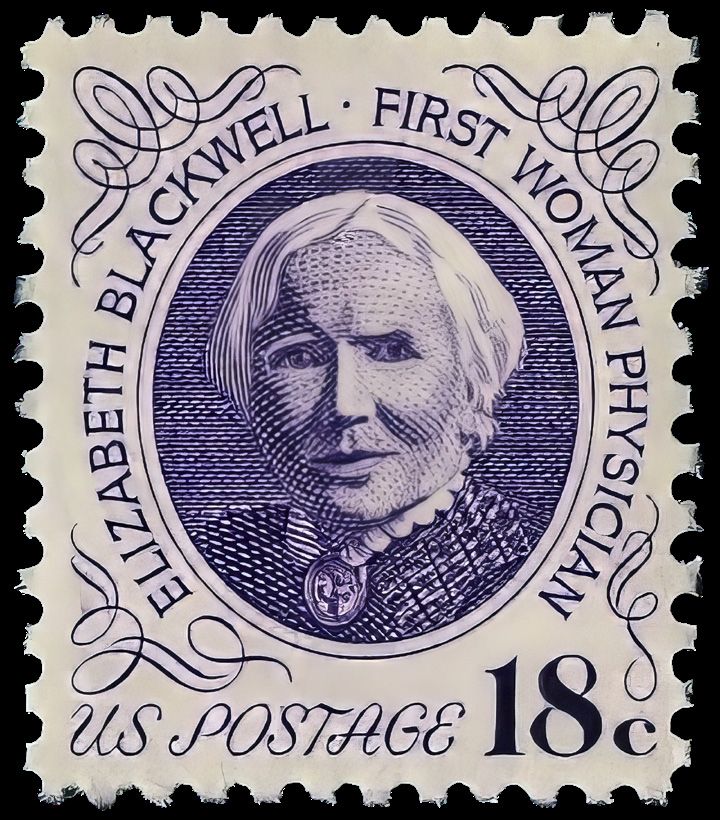
Elizabeth Blackwell was commemorated on a U.S. postage stamp in 1974, designed by Joseph Stanley Kozlowski. (Syracuse University Medical School Collection)
“It makes me indignant,” one of her Quaker friends once said to her, “that thee has not received more credit for what thee has accomplished in the training of nurses!” Elizabeth only smiled. “Does thee suppose I care for the credit, so the work is done?”1 In 1949, one hundred years after Blackwell graduated from medical school, the American Medical Women’s Association established the Elizabeth Blackwell Medal, which is awarded annually to a woman physician “who has made the most outstanding contributions to the cause of women in the field of medicine”. Appropriately, the medal associated with Elizabeth Blackwell honors and focuses attention not on her, but on those who carry on her work.
Dr. Esther Hill Hawks
A native of New Hampshire and 1857 graduate of the New England Female Medical College, Dr. Esther Hill Hawks acted as a non-commissioned surgeon in charge of a hospital for U.S. Colored Troops. Her pioneering efforts working with black civilians and soldiers included missionary work and teaching school, as well as providing health and medical care. Dr. Hawks applied to serve as a physician or nurse for the Army, and was rejected. Her husband was contracted to work at a hospital serving U.S. Colored Troops, including those wounded in the Battle of Fort Wagner. She found opportunities to assist her husband’s hospital work and took charge of hospital operations when her husband was called away from the hospital for periods of time. In her diary, she acknowledged she would probably not have been allowed such authority “if my brother had not been hospital steward—or if the patients had been white men.” She worked in the hospitals and freedmen’s schools of South Carolina and Florida throughout the remainder and after the end of the Civil War. During the War, Dr. Esther Hawks never held an official position as a surgeon, but she was honored and remembered as such, and in 1899, the New Hampshire Association of Military Surgeons elected Hawks an honorary member. Today, the Hawks Trust, which was established by Dr. Hawks, awards scholarships to high school graduates.
Dr. Orianna Moon Andrews
A native of Virginia and 1857 graduate of the Female Medical College of Pennsylvania, in 1861, Dr. Andrews offered her services to the Confederate government. She was employed as the superintendent of a team of nurses in a makeshift hospital at the University of Virginia. Later, she moved to Richmond, Virginia, and continued her work in a Confederate hospital there.
Dr. Chloe Anette Buckel
A native of rural New York and 1858 graduate of the Women’s Medical College of Pennsylvania, Dr. Buckel began her medical career working for Dr. Elizabeth Blackwell at her New York Infirmary for Indigent Women and Children, then practiced medicine in Chicago until 1863. After offering her services to Governor Morton, she secured the concurrence of General Ulysses S. Grant for free military transport as she travelled between government hospitals selecting and supervising nurses. By September 1864, Buckel was working as the agent for Dorothea Dix in assigning Army nurses. Buckel was appointed sanitary commissioner for Indiana by Governor Morton. After the Civil War, Buckel relocated to California, where she was active in philanthropic work and civic efforts. At her death, she left her estate in a trust to care for intellectually disabled children; those funds were the basis of a research study into the educational needs of intellectually disabled children.
Dr. Sarah Ann Chadwick
A native of Maine and a resident of Illinois since her teenage years, Chadwick graduated from Cleveland Medical College in 1856. She served as a non-commissioned surgeon with the 7th Illinois Infantry beginning November 15, 1861. From December 27, 1861, to August 25, 1862, she served as Assistant Surgeon of a hospital in Cairo. In 1866, she married a discharged soldier, Henry Clapp. He died in 1887, and in 1890, Chadwick, finding it difficult to live on the $8 widow’s pension, petitioned the government for compensation for her own war work. A bill signed February 7, 1907, awarded her $850 for her services. Chadwick, the first woman doctor to serve as a Surgeon and Assistant Surgeon for the U.S. Army, died December 1, 1908.
Dr. Almira Fifield
A native of Canada and Indiana, and an 1859 graduate of the New England Female Medical College, Dr. Fifield was requested by her brother’s regiment, which agreed to pay for her salary to be their surgeon. She was instead assigned Hospital No. 10. in Paducah, Ky. A physician recognized her knowledge and skills and put her in charge of a surgical ward at the hospital. She fell ill and died on March 26, 1863, at the age of 27 while caring for Civil War Soldiers.
No article on women doctors in the Civil War would be complete without a mention of Dr. Mary Edwards Walker. A native of Oswego, N.Y., and an 1855 graduate of Syracuse Medical College, Dr. Mary Edwards Walker served as a volunteer nurse in the Patent Office Hospital in Washington, D.C. In September 1863, she was appointed assistant surgeon of the Army of the Cumberland assigned to the 52nd Ohio. From April to August 1864, she was a prisoner of war in Richmond. In October 1864, she was given a contract as an “acting assistant surgeon” in a women’s prison hospital and an orphanage. Walker’s appointments occurred two and three years after those of Dr. Sarah Anne Chadwick. Contrary to much common knowledge, Walker was not, therefore, the “first” or “only” woman to serve as a surgeon or assistant surgeon for the U.S. Army during the Civil War. Walker left government service in June 1865. In November 1865, President Johnson awarded her the Congressional Medal of Honor. Dr. Mary Edwards Walker was the first and remains the only woman ever awarded the Medal of Honor. The following is the citation signed by President Johnson:
Whereas it appears from official reports that Dr. Mary E. Walker, a graduate of medicine, “has rendered valuable service to the Government, and her efforts have been earnest and untiring in a variety of ways,” and that she was assigned to duty and served as an assistant surgeon in charge of female prisoners at Louisville, Ky., upon the recommendation of Maj. Gens. Sherman and Thomas, and faithfully served as contract surgeon in the service of the United States, and has devoted herself with much patriotic zeal to the sick and wounded soldiers, both in the field and hospitals, to the detriment of her own health, and has also endured hardships as a prisoner of war four months in a Southern prison while acting as contract surgeon; and Whereas by reason of her not being a commissioned officer in the military service, a brevet or honorary rank cannot, under existing laws, be conferred upon her; and Whereas in the opinion of the President an honorable recognition of her services and sufferings should be made; It is ordered, That a testimonial thereof shall be hereby made and given to the said Dr. Mary E. Walker, and that the usual medal of honor for meritorious services be given her. Given under my hand in the city of Washington, D.C., this 11th day of November, A.D. 1865. ~ Andrew Johnson2 Dr. Walker’s Medal of Honor (along with hundreds of others) was rescinded following the 1916–1917 review of
Army Medal of Honor awards, as she was a civilian at the time of her valor. Recipients were not asked to return the medals or to refrain from wearing them, and Dr. Walker continued to wear hers until her death. She was restored to the Medal of Honor Roll by President Carter in 1977. Before the Civil War, Walker adopted “reform dress,” wearing outfits with calf-length skirts worn over bloomers or trousers. After the War, she was elected president of the National Dress Reform Association and was closely associated with factions of various reform movements, not always agreeing with prevalent views. For example, her view of the suffrage question was that the Constitution had already given the vote to women. She thought the legislation sought by organized suffragists to be unnecessary and pointless. In the decades after the Civil War, she was viewed as increasingly eccentric as she adopted male attire, and she was arrested more than once for masquerading as a man. Dr. Walker’s fame as a female doctor in the Civil War far exceeds that of any other female doctor. Websites mentioning her and her Medal of Honor—even more than her actual service—dominate the results of any internet search on “women doctors of the Civil War.” It is ironic that a woman who was a bold proponent of her own beliefs and accomplishments is mainly known not for anything she did, but for something awarded to her.
Lone Woman by Dorothy Clarke Wilson. Boston: Little, Brown and Company, 1970, p. 388. https://www.mohhc.org/dr-mary-edwards-walker/
Sources:
Juanita Leisch Jensen is a nationally recognized speaker, author, researcher (and avid collector) of topics related to civilians and the Civil War. She can be reached at lesandjuanita 1@ hushmailcom to arrange talks and presentations. She is the author of two books: Who Wore
What: Women’s Clothing 1861-65 and An Introduction to Civil War Civilians. Juanita and her husband, military historian Les Jensen, divide their time between homes in New York and Virginia.
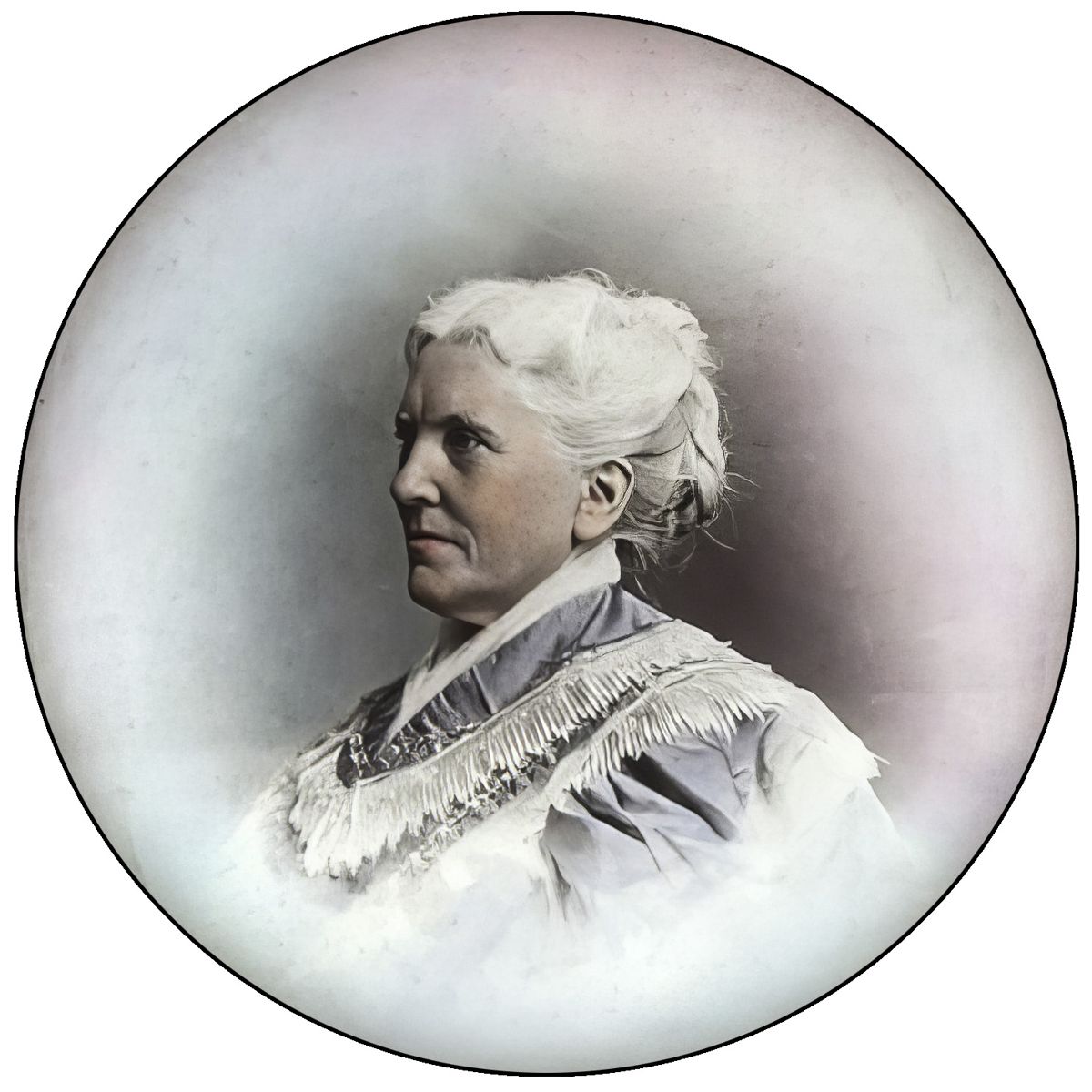
National American Woman Suffrage Association Records: Subject File, 1851–1953; National Dress Reform Association. (Library of Congress)
Endnote: 1. 2.
“Dr. Sarah Ann Chadwick (Clapp): Civil War Surgeon” in The Journal of the Society for Civil War Surgeons, 1st Quarter, 2022. Lone Woman: The Story of Elizabeth Blackwell, The First Woman Doctor. by Dorothy Clarke Wilson. Boston: Little, Brown and Company, 1970. A Woman Doctor’s Civil War Diary: Esther Hill Hawks’ Diary. edited by Gerald Schwartz. Columbia: University of South Carolina, 1989. Women at the Front: Hospital Workers in Civil War America. By Jane E. Schultz. Chapel Hill: University of North Carolina, 2004. Women in White by Geoffrey Marks and William K. Beatty. New York: Charles Scribner’s Sons, 1972.