
Through the Lens Does the General Expect us to Fly?
By Lloyd W. Klein · Originally published November-December 2025 · pp. 28–37

The Pipe Creek Circular: Controversies & Implications By Lloyd W. Klein
In retrospect, Gen. Robert E. Lee had no definite tactical plan for his Pennsylvania campaign. Thinking he was facing Gen. Joseph Hooker, Lee likely thought that the right time and place would be apparent and that he would outfox Hooker again as he had at Chancellorsville. The Union Army command had no idea where the various elements of the Army of Northern Virginia (ANV) were located. General Hooker had to anticipate an attack against Washington, D.C., or
Baltimore and wanted to bring as many troops to their defense as possible. He was fired when he insisted on letting Harper’s Ferry go and bring its garrison closer to help in the defense. So, three days before the great battle, a new Union commander took over. General Meade had just three days to assume command before the single most decisive battle of the war. He had to make decisions of immense consequence under less-than-ideal circumstances inherited from his predecessor, depend on others’ spur-of-the-moment judgments, and struggle to get his army to action. When General Meade took command of the Army of the Potomac (AoP), he had no clue where Lee’s army was, what his plan was, or any sense of what his deployments should be. Meade’s communication and rail transportation had been cut, and he had staff who didn’t support him. His army was spread out all over Maryland and southern Pennsylvania. All he knew was that General Stuart had been in his rear and had destroyed railroads and telegraph lines leading northwest. Everyone realized a battle was imminent. The only instruction General Halleck gave Meade was that he had to cover both Washington and Baltimore. Stuart’s raid had destroyed the railroad supplying the general area of northwestern Maryland, where Meade was located.
Meade Takes Command General Meade was a quiet, meticulous, and thoughtful man with an engineering background. He lacked the flamboyance of Hooker, the overconfidence of McClellan, and the single-mindedness of Pope; he was not superficially from the leader mold. It turned out that these characteristics were precisely those that would carry the AoP to victory in the next few days.
Pipe Creek
Meade decided that his best course of action was to stop looking for Lee and instead let Lee look for him. He believed that Lee had turned away from the Susquehanna
River. Rather than search for him, which would stretch his lines and put stress on his resources, men, and animals, he would determine where Lee was and then pull back. He wanted the trains parked and horses rested in preparation for the battle to come. He decided the smart thing to do was to build a defensive perimeter. On June 30, Meade’s engineers identified the south bank of Big Pipe Creek in northern Maryland as an ideal defensive position. The Pipe Creek Line (figure 1) was a defense against any threat to attack Baltimore and Washington, D.C. The line ultimately functioned as a reserve line in case a Union fallback from Gettysburg was necessary, although that wasn’t the original idea. Meade selected the Pipe Creek Line to wait for Lee and then fight a defensive battle. By advancing toward the Pennsylvania border, his troops could cover the region Halleck demanded, and by concentrating his forces, he wouldn’t be vulnerable to Lee attacking isolated detachments. In his understated manner, Meade made the smartest decision possible. The Pipe Creek Line was located in Carroll County in northern Maryland. It ran just north of Westminster, a town of great strategic significance because the Western Maryland Railroad had its terminus there. The Western Maryland would serve as the army’s primary supply line if it operated anywhere in the vicinity, including at Gettysburg, and protecting it was critical. The position was a strong defensive line situated along a ridge with the creek in its front. It possessed the additional advantage of proximity to the Union’s supply base at Westminster, only about fifteen miles to the south.
Figure 1. The Pipe Creek Line.
Faced with an almost impossible task, Haupt rebuilt enough of the railroad and telegraph lines to be functional for the Battle of Gettysburg. In a coincidence of astounding proportion, here was a man who knew railroad construction, had worked on this line in his youth, and was married to a woman whose family lived in the town the battle would be in, a place he’d visited often.
The Pipe Creek Circular
Meade decided to notify his commanders of his intent to occupy this defensive position and planned how to assemble his various corps in an orderly manner. He wrote out these orders, called the Pipe Creek Circular (see appendix) stating that he planned to fall back on Big Pipe Creek in northern Maryland and wait for Lee. It was written on the evening of June 30 and dated July 1, to be sent out early in the morning. In it, Meade ordered his forces to start pulling back to this Pipe Creek ran generally from east to west. Along the The Pipe Creek Circular was dated July 1, well before south side of the creek was a row of hills that provided heavy fighting at Gettysburg began. Its purpose was to an excellent defensive position. The 20 miles of this creek inform corps commanders he had selected the Pipe Creek and the row of adjacent hills covered all the main roads to Line as the primary line of defense and operations and Washington and Baltimore from the north, where Lee was begin concentrating there. In it, Meade ordered his generals maneuvering his army. The defensive line ran along Parr to start pulling back and await Lee’s expected advance. The Ridge, a substantial ridge on an east/west axis, extending rapid escalation of fighting at Gettysburg rendered the plan from Manchester on the eastern end to Middleburg on the irrelevant, and the focus shifted to the battle itself. In one west. Except for some lower ground around Middleburg, sense, the circular represented little more than pre-battle the entire position was on high, easily defensible ground planning that was ultimately set aside due to the rapidly that was probably impregnable unless Lee flanked the unfolding situation. The Pipe Creek Circular detailed how strong position from the west. However, to accomplish this, individual Union corps would fall back to the roughly his supply lines would become vulnerable. 20-mile-long defensive position between Middleburg to Manchester, Md. Logistics Myriad controversies surround the circular, which had There were substantial logistical obstacles when General important implications for understanding how the Battle of Meade decided to create a defensive perimeter at Pipe Gettysburg occurred. Creek. J.E.B. Stuart had raided behind the Union lines in mid-June, resulting in substantial damage to the railroad and I. Was this a contingent plan or the primary plan? telegraph lines from Baltimore to Westminster. If Meade was going to fight a battle here, he would need supply The most common interpretation of the circular is that and communication lines that would carry the necessary it reflected Meade’s cautious and strategic approach to the resources rapidly to the front. Meade would also have to campaign. Most post-battle interpretations suggest that the bring forces spread out all over Maryland and southern circular was a contingency plan; that is, if the Confederates Pennsylvania, back to this line without creating traffic jams attacked and he could not fight to his advantage at that or allowing Lee to attack any isolated corps. location, then this would be the fallback position. In this Meade recruited the services of Herman Haupt, a logistical light, the Pipe Creek Circular illustrates Meade’s shrewd railroad genius, who figured out how to get supplies to the leadership, contrasting him with the often less calculating Pipe Creek area from Baltimore and Washington despite tactics of other Civil War commanders. It shows his focus a railroad ruined by J.E.B. Stuart. By advancing toward on minimizing risks while still seeking victory. the Pennsylvania border, his troops would protect the In retrospect, the Pipe Creek Circular demonstrated space Halleck demanded, and by concentrating his forces, Meade’s careful preparation and desire to fight only on he wouldn’t leave isolated groups for Lee to attack. In favorable terms. It showed his concern with protecting his understated manner, Meade made the wisest decision Washington, D.C., and Baltimore while avoiding being possible. drawn into a potentially disastrous confrontation. At the same time, he authorized General Reynolds to seek Lee northwest of his position, near Gettysburg, Penn. Within hours of issuing the Pipe Creek Circular, the battle had already begun, obliging Meade to nullify it by ordering a general advance toward Gettysburg. Because these two contradictory orders were issued so close together, Meade was later criticized for being indecisive and timid. In response to a call for reinforcements from Gen. Winfield Scott Hancock later that afternoon, whom Meade had sent to replace Reynolds, Meade began a swift movement of his army to Culp’s Hill and Cemetery Ridge on the outskirts of Gettysburg. This movement was aided by the strategic planning to move Meade’s army at Pipe Creek. The contingency argument demonstrated General Meade was adaptable and a good planner. While Meade prepared a defensive posture for Pipe Creek, he left open the possibility of engaging the Confederates elsewhere if conditions were right. As events unfolded, this allowed him the flexibility to pursue Lee’s army once contact was made near Gettysburg. Meade did not expect fighting in Pennsylvania on the eve of the battle. He intended to rest his forces where they were on July 1, then consolidate behind his defensive line. The plan changed on the fly that morning when Generals Buford, Reynolds, and Doubleday found themselves in a battle they hadn’t expected but where they thought it was a good place to defend. Hancock was sent by Meade that afternoon to determine whether Gettysburg was the right place to make a stand. Hancock agreed with Reynolds’ decision and reported to Meade that there was a strong defensive position. Meade then rode to the battlefield, arriving late in the evening, and decided it was too late to withdraw. Ultimately, the Pipe Creek line was not used as Meade decided to engage Lee at Gettysburg. The circular reflected Meade’s strategic mindset and his readiness to fall back to a strong defensive position if needed on June 30. By the evening of July 2, a staff meeting concurred with staying at Gettysburg. There are several interpretations which dispute this characterization of the circular. Brown (page 85), says that Meade fully intended to fight the battle at Pipe Creek. The recollection of Gen. Henry Jackson Hunt, his chief of artillery, was that Meade indeed intended the battle to be fought at Pipe Creek, and Hunt thought it would have been a more favorable position. While an offensive movement was not ruled out, the purpose of the Pipe Creek Line was to define the location of a future battle on topography Meade had selected. The circular’s text (see appendix) suggests that the only question was when to move towards Pipe Creek. In that sense, whether or not one would call it a contingency plan or a movement order would be semantical; since operationalizing the plan depended on future developments.
The Pipe Creek Circular illustrates Meade’s prudence as a new commander; it was wise for him to plan for a fallback position to protect Washington, D.C., and Baltimore. The following passage from the circular seems to suggest that this was the primary battle plan but its implementation was contingent on circumstances yet to be determined:
The time for falling back can only be developed by circumstances. Whenever such circumstances arise as would seem to indicate the necessity for falling back and assuming this general line indicated, notice of such movement will be at once communicated to these headquarters and to all adjoining corps commanders. While the circular outlined a defensive posture along Pipe Creek, it did not dictate avoiding a battle. Meade wanted the Union Army to fight from a strong defensive position, at Pipe Creek or elsewhere. Despite what would later be alleged, it does not suggest any timidity on his part. The unexpected collision of Union and Confederate forces at Gettysburg changed the situation. Once the fighting began, Meade quickly adapted and ordered the rest of his army to concentrate at Gettysburg. His willingness to fight at Gettysburg after the initial day’s fighting shows that he did not intend to avoid battle.
Conclusion
The circular was meant as a contingency plan in case Meade felt the Union Army could not engage the Confederate forces under favorable conditions elsewhere. It shows that Meade was prepared to fall back to a good defensive position if necessary, but did not signal an outright avoidance of battle at Gettysburg or anywhere else. He sent Reynolds to Gettysburg on June 30th expressly to find Lee.
General George Meade. (Library of Congress)
II. How Did The Circular Impact the Battle? There is still some dispute as to which Union corps commanders received the circular the morning of July 1, and when it was sent out. It is important to remember that those who did receive the Pipe Creek Circular (Generals Henry Slocum and Dan Sickles, for example) no doubt had it in mind when determining when and how they responded to the urgent pleas for support from General Howard and his XI Corps, who were already engaged. While the circular demonstrates Meade’s thoughts at a particular moment, the time it was issued remains unclear, partly because it was never implemented. This uncertainty directly affects our understanding of several participants’ actions on July 1. General Sickles and Meade’s testimonies suggest that the circular was written late at night on June 30 or early July 1. By 4 a.m., Meade had given Butterfield his handwritten orders to be issued. It reached some corps commanders later that morning. The traditional narrative accepted through the years has been that the circular was sent out soon after, early in the morning of July 1.
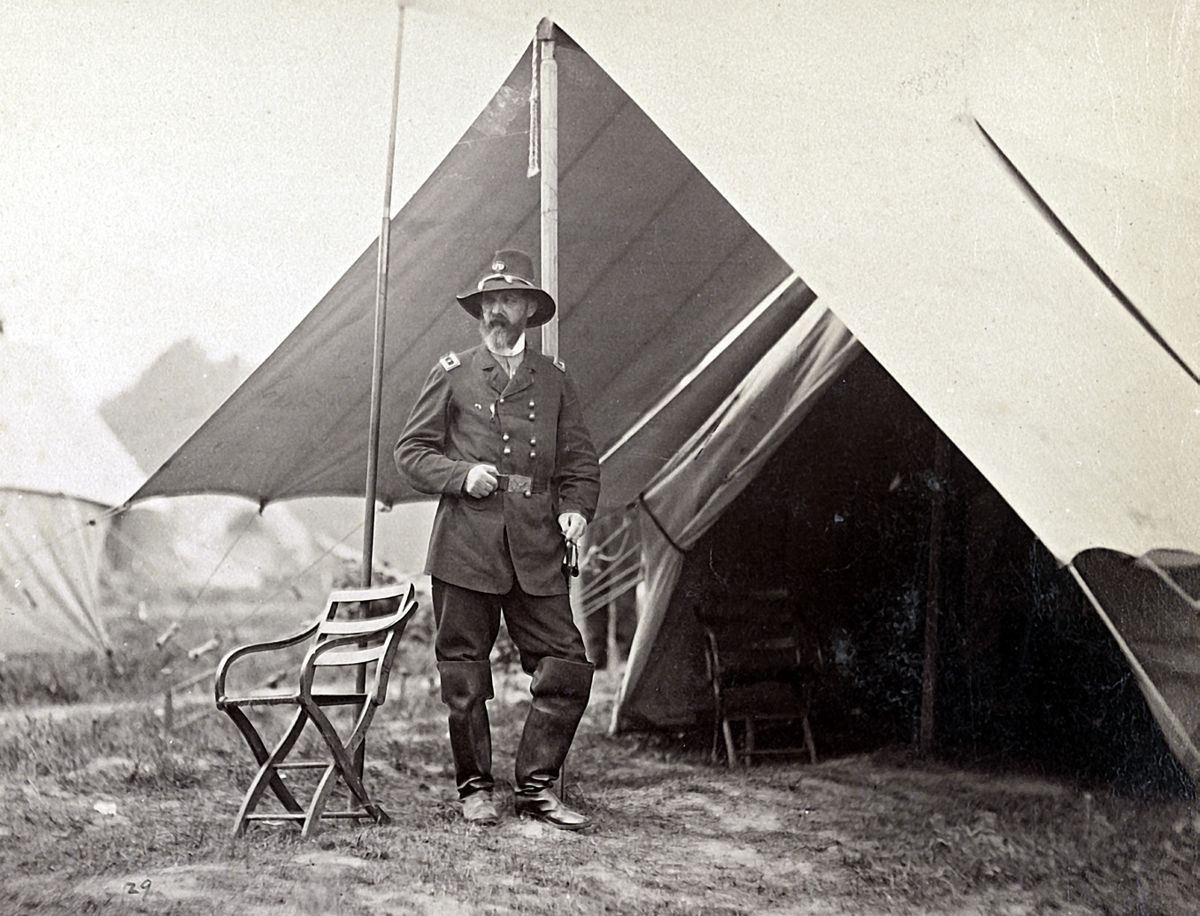
Daniel Butterfield
Major General Daniel A. Butterfield, General Meade’s aide-de-camp, played a crucial role in drafting and distributing the Pipe Creek Circular. Butterfield was the primary officer responsible for putting Meade’s plan outlining the Union Army’s potential fallback position along Pipe Creek into written form. Meade wrote out his defensive strategy and gave it to Butterfield, who then
Daniel Adams Butterfield. (Library of Congress)
wrote the official orders for the circular. Butterfield was responsible for ensuring that the language of the circular accurately reflected Meade’s intentions and could be communicated effectively to the corps commanders. Butterfield was also responsible for preparing the circular for distribution to the Union corps commanders. Although the circular was written and some copies were sent out, the sudden engagement at Gettysburg meant it needed to be fully distributed or implemented. Butterfield’s testimony was that he told Meade it was essentially an order to retreat, which would be bad for morale, and that he had broached the subject with General Hancock on his arrival at Meade’s headquarters at Taneytown at 11 a.m., suggesting to Hancock that it had not yet been issued. Meade may well have been surprised that Butterworth had not yet sent out the order. Meade berated Butterfield that morning, and it has been surmised that it was for this delay. In any case, there is clear evidence news from the Gettysburg front was received within an hour or two of 11 a.m.. Meade sent messages to General Halleck indicating that the situation had changed by 1 p.m.
John Reynolds
General John Reynolds was the Union commander at Gettysburg the morning of July 1. Meade respected and trusted him greatly, making him the Left Wing Commander. As fate would have it, Gettysburg was exactly where General Lee eventually assembled the ANV. Meade had given Reynolds, the man he had full confidence in, independence to do what he thought warranted. Reynolds commanded the I Corps and, as a wing commander, also had operational control of the XI and III Corps. Meade wanted Reynolds’
opinion as to whether the ground in front of (north) and west of Gettysburg was optimal for giving battle while expressing doubts about the east side of the town. The orders to Reynolds were likely written at the same time as the circular, and Reynolds never received either. On June 30, Meade had given Reynolds the option to fall back if he thought that best, even though both his letter and official orders were to advance on Gettysburg with the I and XI Corps. Some have interpreted these communications to mean that if Reynolds found Lee, then the battle would be joined. Others dissent, saying that Meade had sent Reynolds there with no specific order, and at least one modern writer thought that Reynolds had brought on the battle on his own. The night before the battle, both Reynolds and General O.O. Howard received myriad reports by scouts, residents, and, of course, Buford the night before. Reynolds informed Meade whose headquarters was in Taneytown, Md., around midnight, that Hill was massing at Cashtown. Early in the morning of July 1, they received a response from Meade, giving them orders to advance to Gettysburg and telling them that Longstreet was located around Chambersburg and Ewell near Carlisle. Buford’s position and Reynold’s advance on July 1 were a reconnaissance in force primarily intended to identify Lee’s location. It is taken for granted that Reynolds did not receive the Pipe Creek Circular before he was killed at approximately 9:15 a.m. on July 1. If Butterfield had not sent the order until after 11 a.m., then Reynolds could not have seen it. Moreover, it would be speculative to understand how either Reynolds or Buford might have understood the two orders, one to advance and one to fall back, simultaneously. Buford is known to have pointed out Cemetery Ridge to Reynolds. The heights at the south part of town were ultimately the best position for a Union defense. Reynolds ordered Buford to resist as long as possible to keep the Rebels out of the town. He then sent word to his corps to hurry. He sent couriers to Meade and his division commanders about what was going on. We do know that the courier he sent to Meade, Captain Weld, told Meade that a stout defense was underway. Reynolds had three options: Deploy into a defensive position near Emmitsburg, occupy the high ground south and southeast of Gettysburg, or occupy the ridges northwest of town. Reynolds decided to place his corps on the march and ordered the other two corps to Gettysburg. Another possibility is that Reynolds was organizing a fighting retreat, the correct modern terminology being a covering force action/advance guard operation, consistent with Meade’s Pipe Creek Circular. Wittenberg’s analysis of Buford’s tactics were those of a covering force action, in which space is traded for time; Buford traded three ridges creating enough time for Reynolds and his I Corps to come up. This would not have been Buford’s tactical approach if he had been following the circular, which he hadn’t received. At about 1 p.m., word of Reynold’s death or severe wounding reached Meade. Hancock observed that Meade now “felt the matter was being precipitated very heavily” and that he would have to decide soon if he would advance to fight at Gettysburg or implement the circular. Meade recognized that leaving the headquarters himself to reconnoiter would be unwise since, any movement to Pipe Creek then would be delayed. Instead, he sent Hancock to Gettysburg and to report on the best tactical approach.
Henry Slocum
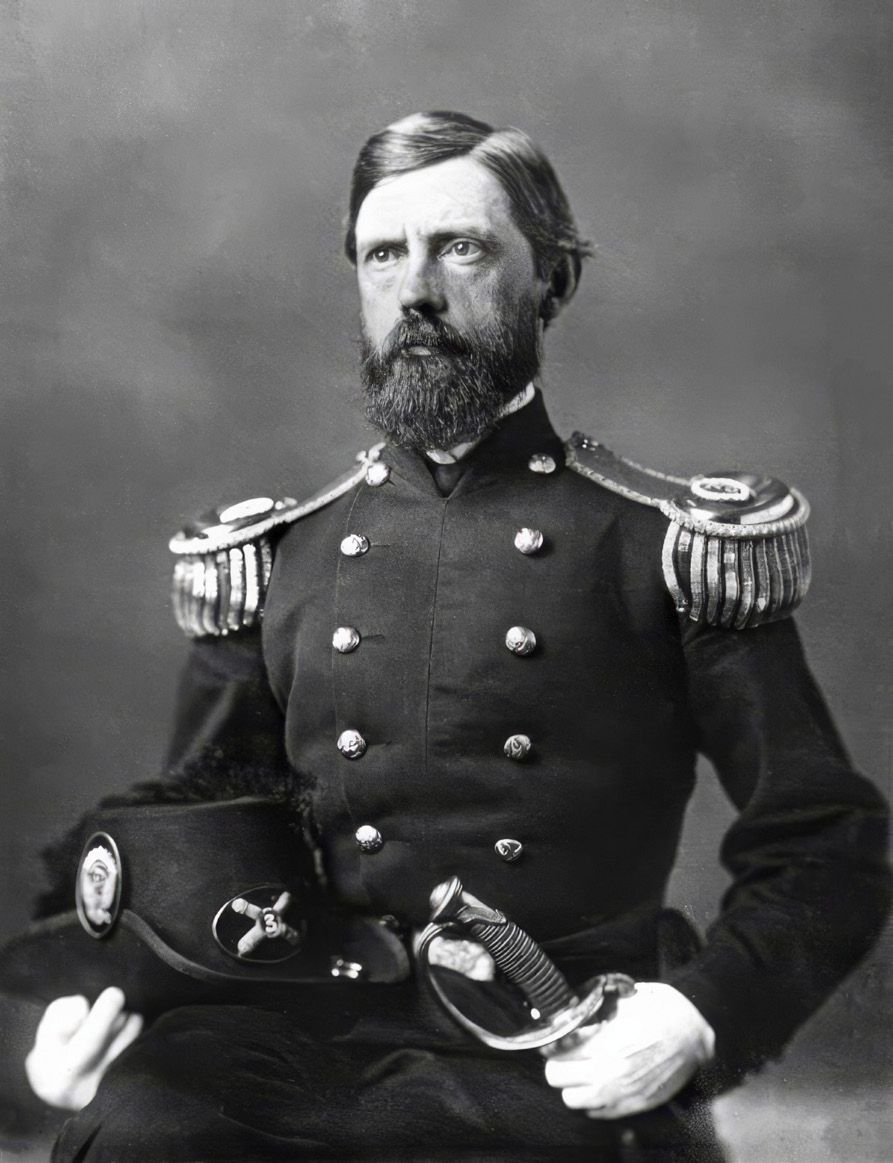
The incorrect perception that Gen. Henry Slocum did not advance to the field to lead on day 1 at Gettysburg has led to his derisive nickname, “Slow come.” Older historians claimed he delayed his arrival because he ranked Hancock and Howard, and he did not want to take responsibility for a battle that was going badly. Another version of this canard is that the sounds of battle were not audible from his position. Neither of these stories is true, even fireworks in Gettysburg are easily audible in Two Taverns. The allegations that he failed to come to assist General Howard’s XI Corps in a timely way are inaccurate. Slocum immediately dispatched the First Division of his corps to Gettysburg upon hearing the first news of the fighting. General Slocum’s First Division commander, Brig. Gen. Alpheus S. Williams verified this in late 1865. Contrary to older interpretations, Slocum’s actions showed initiative, as he was never ordered to make these arrangements and acted despite the Pipe Creek Circular, which was received by Slocum at 1:30 p.m., and ordered Slocum “halt your command where this order reaches you.” In fact, Slocum arrived on the battlefield, marching from Two Taverns on the Baltimore Pike, about five miles southeast of the battlefield, late in the afternoon on July 1. As the ranking general on the field, Slocum commanded the Union army for about six hours until Meade arrived after midnight.
Maj. Gen. Henry W. Slocum. (Library of Congress)
Slocum took responsibility and performed admirably at Gettysburg for those hours. Slocum held the Union right from Culp’s Hill to across the Baltimore Pike. His successful defense of Culp’s Hill was crucial to the Union victory at Gettysburg. Slocum thought he was in command of the right wing, III and II Corps, while Williams was only the temporary XII corps commander. Williams convinced Meade to leave a brigade on Culps Hill instead of moving them. This saved the position that evening when the Confederate left wing attacked. Williams led two days of hard fighting on the Union extreme right but received no official credit. Since Slocum was late turning in his report, Meade had already submitted his report to the War Department.
Culps Hill
Ewell’s cautious approach and lack of explicit orders from Lee contributed to his decision not to attack immediately. Lee’s order has been criticized because it left too much discretion to Ewell. Numerous historians and proponents of the Lost Cause movement, most prominently Jubal Early, despite his own reluctance to support an attack at the time, speculated how the more aggressive Stonewall Jackson would have acted on Ewell’s orders if he had lived, and how differently the second day of battle would have proceeded with Confederate artillery on Cemetery Hill, commanding the length of Cemetery Ridge and the Federal lines of communications on the Baltimore Pike.
Military authorities and historians routinely conclude that Culp’s Hill would not have been easy to capture on July 1. Ewell has been blamed for not aggressively pursuing the Union line on Cemetery Hill and Culp’s Hill, which left the Union on high ground. Stephen W. Sears has suggested that Slocum would have retreated to Pipe Creek and withdrawn the Army of the Potomac, although that would have been a dangerous movement under pressure from Lee.
III. The Aftermath: The Joint Committee Investigation Meade’s leadership during the Battle of Gettysburg is widely praised. He successfully organized his forces and made critical decisions that ultimately led to a Union victory. His tactical positioning and defensive preparations were crucial in repelling Confederate attacks. While Meade’s leadership at Gettysburg demonstrated his ability as a competent general, opinions on his overall performance during the Civil War vary among historians and military experts. A great deal of the bias against Meade originated in the Congressional investigation after Gettysburg. The impression that Grant was brought east to supervise Meade and held him in contempt is false but emanates from these events. Although the battle was a great Union victory, the perception that he allowed Lee to escape afterward was widespread, though inaccurate. The Joint Committee on the Conduct of the War, chaired by Radical Republican Sen. Benjamin Wade of Ohio, took up the matter. General Meade faced months of Congressional hearings to ascertain if he had harmed the cause by men who themselves had nearly lost the battle in an effort to keep anyone from looking at their mistakes. They were successful in their quest. Meade’s political enemies included Butterfield, Abner Doubleday, Joseph Hooker, Alfred Pleasonton, and Daniel Sickles. Sickles deliberately disregarded Meade’s orders about positioning his III Corps, which led to that corps’ destruction and put the entire army at risk. Radical Republicans in the Joint Committee on the Conduct of the War, some of whom like Thaddeus Stevens were former Know Nothings and hostile to Irish Catholics like Meade’s family, suspected that Meade was a Copperhead. Sickles testified to the committee that Meade wanted to retreat from Gettysburg. None of this was accurate or had anything to do with what happened in the battle. General Daniel Sickles and Maj. James A. Butterfield provided testimony after the war that portrayed Gen. George Meade in a more negative light concerning the Battle of Gettysburg, specifically suggesting that Meade may have been reluctant to engage in battle there. When Meade denied Sickles a request to return to command after he recuperated from his leg amputation, Sickles sought revenge. Butterfield actively undermined Meade in cooperation with Sickles. Although the battle was a great Union victory, Sickles and Butterfield testified to the Joint Committee on the Conduct of the War that Meade vacillated and planned, as early as July 1, to retreat from Gettysburg, thus damaging his reputation. Butterfield’s chief evidence for this assertion was the Pipe Creek Circular that Meade had his staff prepare before it became apparent there would be a battle at Gettysburg.
Daniel E. Sickles. (Library of Congress)
In February 1864, Sickles and Butterfield went before the Joint Committee on the Conduct of the War, a highly influential committee dominated by Radical Republicans. They gave distorted testimony that Meade had handled the army ineptly at Gettysburg; that the Union army had won a great victory despite Meade. Notably, Sickles alleged that on the battle’s second day, Meade had been a coward, eager to retreat rather than fight. General Sickles claimed that he had taken the initiative to move his forces forward to a more favorable position on the battlefield, deviating from the original Union defensive line established by Meade. This action by Sickles was controversial and led to criticism and debate about its impact on the battle. This master of spin re-directed his defense of his actions and destruction of III Corps to make it appear that he had saved the battle and that Meade had wanted to retreat.
Sickles’ Testimony
General Sickles had a personal dispute with Meade following the Battle of Gettysburg, largely because of Sickles’ controversial decision to move his III Corps forward from its assigned position on July 2, 1863, led to heavy casualties. The tension carried into post-war discussions. Sickles had personal reasons to criticize Meade, particularly after Meade criticized his insubordination during the battle. By undermining Meade’s decisions, Sickles could deflect blame for his own actions that led to heavy losses. Sickles later testified that he received the circular on the morning of July 1, which was one reason it had been assumed that the circular went out early. But at least one re-interpretation has suggested that this recollection tended to show Meade in a bad light: that he was ready to retreat even before the battle had begun.
Butterfield’s Testimony
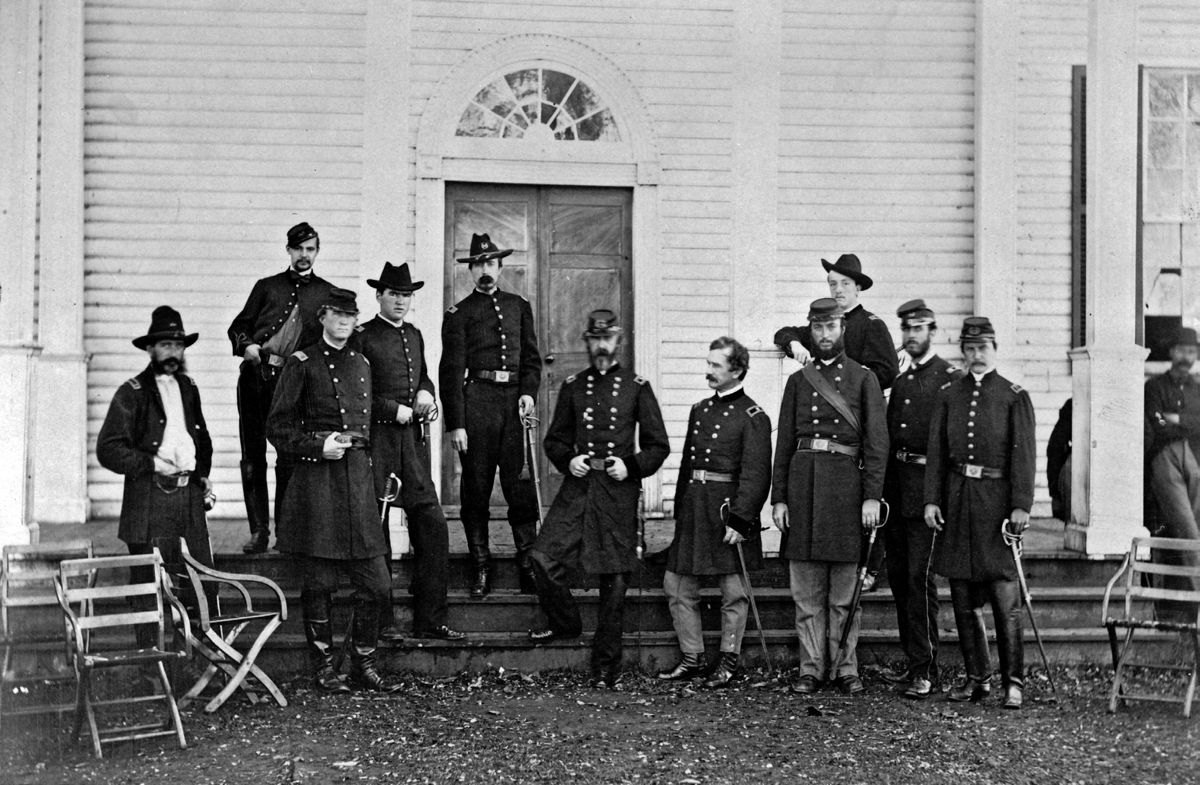
Major General Butterfield also testified before the same committee, echoing Sickles’ sentiment. Butterfield claimed that Meade expressed intentions to retreat to Pipe Creek, even as the battle unfolded. According to Butterfield, Meade allegedly said that he didn’t want to fight at Gettysburg and wanted to withdraw to a better defensive position. This claim reinforced the narrative that Meade had to be “forced” into the fight at Gettysburg. Butterfield had been closely associated with Meade’s predecessor, Gen. Joseph Hooker, and his testimony may have reflected loyalty to Hooker and dissatisfaction with Meade’s leadership. Butterfield had a strained relationship with Meade, which likely colored his testimony. Butterfield, a close friend of Sickles’ and Hooker’s, falsely testified about the claimed July 2 order to retreat. Sickles elevated his attack on Meade when he (or a close associate) penned an anonymous article by “Historicus” in the March 12, 1864, edition of The New York Herald, the nation’s largest newspaper. Historicus condemned Meade’s handling of Gettysburg while praising the brave and brilliant Sickles. The article claimed Meade had ordered his chief of staff, Maj. Gen. Butterfield, to prepare an order to retreat on July 2, the battle’s second day. The Historicus piece set off a firestorm, and stories of Meade’s alleged inadequacies appeared in papers nationwide.
Abner Doubleday’s Testimony
Major General Abner Doubleday supported Sickles’ egregious claims by testifying that Meade had played favorites in command assignments. Doubleday in particular was bitter that Meade had ignored army seniority and not promoted him to command of the I Corps after its commander, Maj. Gen. John Reynolds was killed early on July 1. Meade instead chose Maj. Gen. John Newton as Reynolds’ replacement. Although Sickles and Butterfield testified that Meade was reluctant to fight at Gettysburg, these claims are often seen as biased and not fully aligned with the broader evidence of Meade’s leadership during the campaign. Grudgingly, Senator Benjamin Wade found insufficient evidence to support claims that Meade had ordered the AoP to retreat from Gettysburg. However, the damage to Meade’s reputation was permanent.
Benjamin Wade of Ohio and Senator Zachariah Chandler of Michigan, demanded Lincoln dismiss Meade even before he had an opportunity to testify. President Lincoln declined to order a Court of Inquiry. The president wanted Meade fighting Confederates, not a fellow general.
Bibliography • • • •
• • •
• • •
Harry W. Pfanz, Gettysburg: The Second Day. University of North Carolina Press, 1987. Gettysburg – The First Day. Chapel Hill, 2010. Edwin B. Coddington, The Gettysburg Campaign: A Study in Command. Charles Scribner, New York, 1968. Kent Masterson Brown, Meade at Gettysburg. A Study in Command. University of North Carolina Press, Chapel Hill, 2021. Eric J. Wittenberg, The Devil’s to Pay: John Buford at Gettysburg. Savas Beatie, El Dorado Hill, CA, 2014. Stephen W. Sears, Gettysburg. Houghton Mifflin Company, New York, 2004 Anthony N. Nicastro, “Why Gettysburg, An Analysis of the Command Decisions and Intelligence Failures That Led to Gettysburg.” Gettysburg Seminar Papers. https://www.npshistory.com/series/symposia/gettysburg_seminars/10/essay4.pdf Robert Himmer, “A Matter of Time: The Issuance of the Pipe Creel Circular. Gettysburg Magazine, issue 46, pages 12-19. https://en.wikisource.org/wiki/George_G._Meade%27s_Pipe_ Creek_Circular https://smithsonianassociates.org/ticketing/attachments/251577/1/pdf/Gettysburg-Documents
Dr. Lloyd W. Klein is a Clinical Professor of Medicine in the Cardiology Division of the University of California,
San Francisco. He is a nationally recognized cardiologist, clinical investigator, and lecturer with over forty years of experience and expertise in managing myocardial infarction and individual tailoring of coronary revascularization strategies. He is also an amateur historian who has published extensively on the Civil War. His particular interests
Brig. Gen. Abner Doubleday. (Library of Congress)
Conclusion
Most modern historians agree that, while the Pipe Creek Circular shows Meade’s strategic caution, it does not indicate that he was unwilling to fight at Gettysburg. Meade moved decisively once the battle began, and there was no evidence he intended to retreat during the heat of battle. The testimonies of Sickles and Butterfield are often viewed as being influenced by personal grievances and political motives rather than an accurate reflection of Meade’s intentions. This controversy would seem to be easily resolved on its merits. The problem was the politics of this situation. Radical Republicans on the committee wanted several outcomes from these hearings. It was no secret that the Joint Committee’s Radical Republicans desperately wanted “Fighting Joe” Hooker back in command of the Army of the Potomac. The committee’s leaders, Chairman Senator
CIRCULAR HEADQUARTERS ARMY OF THE POTOMAC Taneytown, July 1, 1863 From information received, the commanding general is satisfied that the object of the movement of the army in this direction has been accomplished, viz, the relief of Harrisburg, and the prevention of the enemy’s intended invasion of Philadelphia, &c., beyond the Susquehanna. It is no longer his intention to assume the offensive until the enemy’s movements or position should render such an operation certain of success. If the enemy assume the offensive, and attack, it is his intention, after holding them in check sufficiently long, to withdraw the trains and other impedimenta; to Withdraw the army from its present position, and form line of battle with the left resting in the neighborhood of Middleburg, and the right at Manchester, the general direction being that of Pipe Creek. For this purpose, General Reynolds, in command of the left, will withdraw the force at present at Gettysburg, two corps by the road to Taneytown and Westminster, and, after crossing Pipe Creek, deploy toward Middleburg. The corps at Emmitsburg will be withdrawn, via Mechanicsville, to Middleburg, or, if a more direct route can be found leaving Taneytown to their left, to withdraw direct to Middleburg. General Slocum will assume command of the two corps at Hanover and Two Taverns, and withdraw them, via Union Mills, deploying one to the right and one to the left, after crossing Pipe Creek, connecting on the left with General Reynolds, and communicating his right to General Sedgwick at Manchester, who will connect with him and form the right. The time for falling back can only be developed by circumstances. Whenever such circumstances arise as would seem to indicate the necessity for falling back and assuming this general line indicated, notice of such movement will be at once communicated to these headquarters and to all adjoining corps commanders. The Second Corps now at Taneytown will be held in reserve in the vicinity of Uniontown and Frizellburg, to be thrown to the point of strongest attack, should the enemy make it. In the event of these movements being necessary, the trains and impedimenta will all be sent to the rear of Westminster. Corps commanders, with their officers commanding artillery and the divisions, should make themselves thoroughly familiar with the country indicated, all the roads and positions, so that no possible confusion can ensue, and that the movement, if made, be done with good order, precision, and care, without loss or any detriment to the morale of the troops. The commanders of corps are requested to communicate at once the nature of their present positions, and their ability to hold them in case of any sudden attack at any point by the enemy. This order is communicated, that a general plan, perfectly understood by all, may be had for receiving attack, if made in strong force, upon any portion of our present position. Developments may cause the commanding general to assume the offensive from his present positions. The Artillery Reserve will, in the event of the general movement indicated, move to the rear of Frizellburg, and be placed in position, or sent to corps, as circumstances may require, under the general supervision of the chief of artillery. The chief quartermaster will, in case of the general movement indicated, give directions for the orderly and proper position of the trains in rear of Westminster. All the trains will keep well to the right of the road in moving, and, in case of any accident requiring a halt, the team must be hauled out of the line, and not delay the movements. The trains ordered to Union Bridge in these events will be sent to Westminster. General headquarters will be, in case of this movement, at Frizellburg; General Slocum as near Union Mills as the line will render best for him; General Reynolds at or near the road from Taneytown to Frizellburg. The chief of artillery will examine the line, and select positions for artillery. The cavalry will be held on the right and left flanks after the movement is completed. Previous to its completion, it will, as now directed, cover the front and exterior lines, well out. The commands must be prepared for a movement, and, in the event of the enemy attacking us on the ground indicated herein, to follow up any repulse. The chief signal officer will examine the line thoroughly, and at once, upon the commencement of this movement, extend telegraphic communication from each of the following points to general headquarters near Frizellburg, viz, Manchester, Union Mills, Middleburg, and the Taneytown road. All true Union people should be advised to harass and annoy the enemy in every way, to send in information, and taught how to do it; giving regiments by number of colors, number of guns, generals’ names, &c. All their supplies brought to us will be paid for, and not fall into the enemy’s hands. Roads and ways to move to the right or left of the general line should be studied and thoroughly understood. All movements of troops should be concealed, and our dispositions kept from the enemy. Their knowledge of these dispositions would be fatal to our success, and the greatest care must be taken to prevent such an occurrence. By command of Major-General Meade: S. WILLIAMS, Assistant Adjutant-General MEMORANDA HEADQUARTERS ARMY OF THE POTOMAC July 1, 1863 So much of the instructions contained in the circular of this date, just sent to you, as relates to the withdrawal of the corps at Emmitsburg should read as follows: The corps at Emmitsburg should be withdrawn, via Mechanics-town, to Middleburg, or, if a more direct route can be found leaving Taneytown to the left, to withdraw direct to Middleburg. Please correct the circular accordingly. By command of Major-General Meade: S. WILLIAMS, Assistant Adjutant-General