
This & That CSS Florida: early Trials and Tribulations
By Gould Hagler · Originally published November-December 2025 · pp. 44–46
& I
This & That
CSS Florida: Early Trials and Tribulations n a recent issue, I wrote of the final days of the CSS Florida and the diplomatic row which followed the ship’s capture by a Federal warship in a neutral port. This time we will go back to the beginning, when the Florida was built and first took to the seas. This was no easy task. Getting the job done required some clever deception, steely determination, much boldness, and a large dose of luck. Under Stephen Mallory, the Confederate Secretary of the Navy, the South developed a multi-pronged strategy to deal with a far superior foe. Much depended on innovative technologies. Ironclads were built to protect Confederate ports and inland waterways. Numerous navigable rivers, highways into the very vitals of the Confederacy, were seeded with torpedoes1 capable of destroying any Federal ship trying to steam upstream. Everyone knows about the Hunley, which claimed the first warship in history to be sunk by a submarine. Small surface torpedo boats were also used against the blockade. Commandos were formed to attack vulnerable enemy ships lingering too near the coast. The final component of the Confederacy’s strategy was commerce raiding on the high seas. The CSS Florida, next
CSS Florida. (NH 1320)
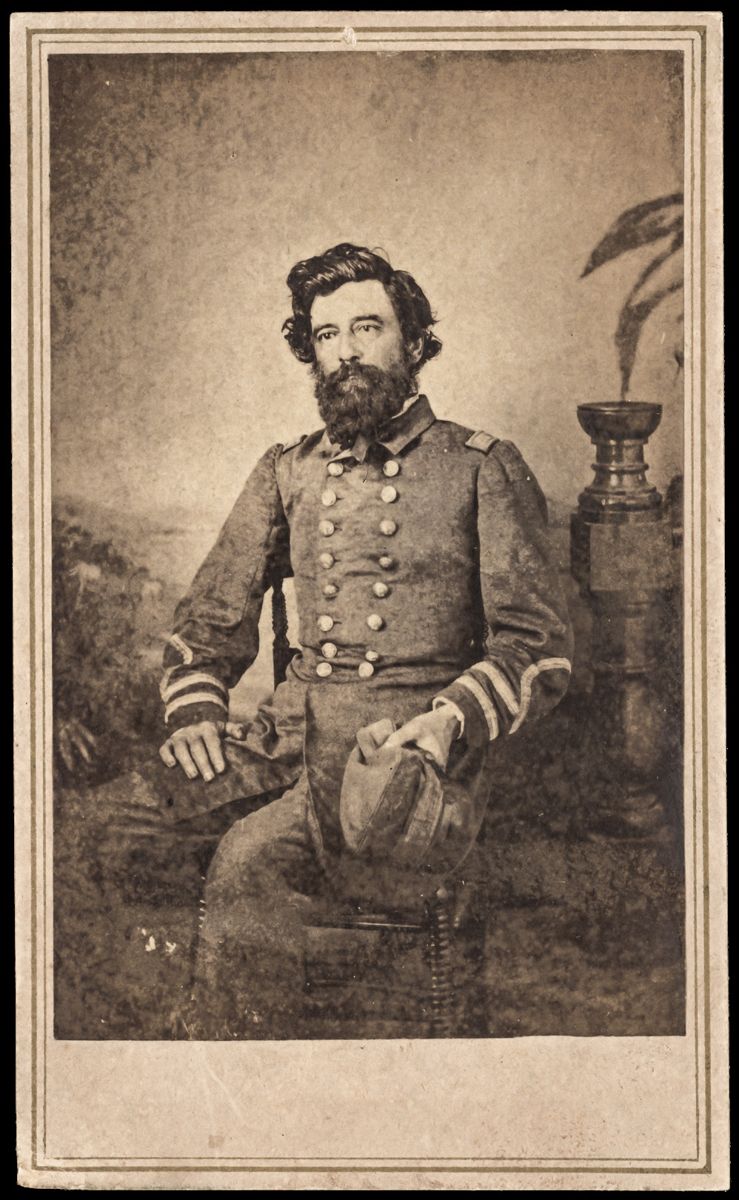
to the CSS Alabama, was the most famous Confederate warship preying on merchant vessels flying the flag of the United States. James Dunwoody Bulloch led the Confederates’ effort to have these commerce raiders built in Britain. In June 1861, Bulloch contracted with two Liverpool firms to build the ship and her engines. Built according to the design for a Royal Navy screw-sloop built in the same yard, the 185foot long, 700-ton vessel, under the cover name Oreto, was ostensibly intended for buyers in Palermo. Bulloch carefully navigated around the British neutrality laws and did all he could to conceal his activities from watchful U.S. officials. By October, Ambassador Charles Francis Adams had become suspicious of the Oreto and her supposed destination. The ambassador’s efforts to convince British authorities to impound the Oreto were unsuccessful. There were no armaments on board, and the ship’s papers were in order. The authorities permitted the Oreto to sail in late March 1862. She was captained by a British master mariner and, according to her papers, bound for Palermo. On board was one John Low, a “passenger” according to the documents. Somehow, the papers failed to indicate that Low was an officer in the Confederate Navy. Lt. John Newland Maffitt was assigned to take command of the vessel when she reached her real destination, the Bahamas. Born in 1818, Maffitt served in the U.S. Navy from the age of 13 until his resignation in May 1861. He had a distinguished career and rose to the grade of lieutenant.2 Maffitt took command in May. In Nassau U.S. authorities again tried to have the vessel seized by the British. This caused a delay, but in August, the Oreto sailed and managed to evade a pursuing U.S. warship. Maffitt retired to a quiet anchorage where he met a ship carrying the arms meant for the CSS Florida, as the ship was christened when it was commissioned at sea. The small crew, 22 men and a few officers, far below a full complement of 130, labored mightily to transfer the eight heavy guns, tons of ammunition, and other necessities. After eight days of hard work, with the officers toiling alongside the men, Maffitt learned of a stunning oversight: the supply ship did not contain some valuable instruments and equipment critical for operating the guns. Rammers, sponges, sights, locks, beds, and quoins were all missing. The Florida was effectively unarmed. More trouble followed. Three members of the crew fell ill with yellow fever. Soon, half the men were stricken. Maffitt headed for Cárdenas, on the island of Cuba. The ship’s executive officer, Lt. John Stribling, headed overland for Havana, where he found a doctor, a Georgian, willing to serve as the ship’s surgeon. Stribling also managed surreptitiously to recruit eight sailors and four stokers to help man the ship. Maffitt himself contracted the fever and was gravely ill for ten days. Surviving, but significantly weakened, he continued to command the Florida. On September 1, he headed the ship for Havana, slipping out of Cárdenas past a Federal ship watching the harbor. In Havana, Maffitt was unable to recruit more crewmen because of Spanish neutrality. The Florida sailed for Mobile, 650 miles distant, across a sea patrolled by Federal ships whose captains knew the Florida was in the area and toward a harbor blockaded by more Federal ships. On September 4, having so far avoided detection, the still-weak Maffitt, with his undermanned and unarmed ship, arrived at Mobile Bay. Because of the ship’s deep draft, a nighttime run through one of the two narrow inlets was not an option. Flying a British flag and steaming directly at the closest of three Federal warships, Maffitt briefly confused his enemy. The Florida passed by this first ship, the Oneida. He bluffed by showing the barrels of his worthless guns and steamed on. The Federals opened fire, but skillful maneuvering lessened the impact of the enemy’s broadsides. The damaged raider, with her superior speed, outran her pursuers and reached the protection of Fort Morgan’s guns. Fifteen months after Bulloch contracted for the ship’s construction, and after a 161-day voyage from Liverpool, Maffitt had brought his ship to safety. Despite the myriad challenges and misfortunes, the Florida was in a Confederate port where repairs could be made and essential equipment and provisions procured. Good to go, right? Well, not quite. First, because of the yellow fever on board, the ship was quarantined for a month. When the work began, it was difficult and tedious. Because of the ship’s draft, she had to be anchored some distance from the port. Everything needed for the cruise had to be put on a boat at the dock and transferred to the Florida in deep water. Machinery on board in need of repair had to be dismantled, transported to the harbor, then transferred back to the Florida after the repairs were made. In the Confederacy, there were acute shortages of everything needed to wage war. Obtaining what was needed—from crewmen to ordnance supplies, from materials for the repairs to coal for the boilers—was a huge challenge. Back in Richmond Sec. Mallory was growing impatient. On December 30, before the repair and refitting were finished, he relieved Maffitt of command, apparently believing that the delay was unwarranted. Adm. Franklin Buchanan, who commanded the Mobile Squadron, went to The admiral was familiar with the difficulties faced by Maffitt and wrote Mallory. He explained that the delay was not due to any negligence or inefficiency on Maffitt’s part. Buchanan also conferred with Pres. Davis, who was in Mobile at the time. The president telegraphed the secretary. Maffitt was reinstated.3 The repairs were soon completed. In January 1863, a now-recovered Lt. Maffitt, with a full crew, competent officers, and eight Blakely guns, was ready to embark. To reach the open sea, he first had to get past the tight Federal blockade. After a five-week wait for favorable conditions, the Florida took advantage of a heavy storm and steamed past the blockaders and into the Gulf. In the 20 months between this stormy beginning and the ship’s capture on Oct. 7, 1864, the CSS Florida raided Federal commerce. In two cruises, the first under Maffitt and the second under Lt. Charles Manigault Morris, the raider took 37 prizes. Three of the prizes were themselves put into service as commerce raiders, which together added 23 more prizes to the tally. Maffitt was promoted to the grade of commander in May 1863. He captained the Florida until February 1864, when, suffering from ill health, he turned the ship over to Morris.
He returned home the following summer. After a brief stint in command of the ironclad CSS Albemarle, protecting the Roanoke River, Maffitt took up blockade-running. Commanding the CSS Owl, he achieved limited success in the face of the Federals’ ever-tightening blockade. The Owl left Wilmington with a load of cotton in late December. With a cargo of supplies, Maffitt returned to Cape Fear and docked at Fort Caswell. There, he learned that the Federals’ capture of Fort Fisher had closed the port at Wilmington. Moving south toward Charleston, Maffitt found the harbor bottled up by an impenetrable screen of blockaders. Ultimately, the Owl reached Galveston, where her cargo was unloaded on May 5. The Surveyor of Port Galveston collected $222.15 in import duties, possibly the very last tariff collected by the Confederate States of America. Maffitt sailed to England and turned the ship over to Confederate agents in Liverpool. For a time, he commanded a British merchant ship plying the South American trade. He returned to North Carolina in 1868. He died in 1886.
Gould Hagler is a retired lobbyist living in Dunwoody, Ga. He has been a regular contributor to CWN since 2016. He can be reached at gould.hagler@gmail.com.
Sources:
A History of the Confederate Navy by Raimondo Luraghi, 1996; The Life and Services of John Newland Maffitt by Emma Martin Maffitt, 1906 (https://civilwarnavy.com/wp-content/uploads/2020/06/Maffitt_TheLife-and-Services-of-John-Newland-Ma.pdf); various online sources. Bill Dyer reviewed the text to make sure I made no landlubber mistakes in describing these events.
Endnotes:
What were called “torpedoes” then are now called “mines.” Among his other duties during his time in the U.S. Navy, Maffitt commanded a ship whose mission was to suppress piracy and the slave trade. In 1858, his ship intercepted a slaver bound for Cuba. Maffitt took the ship, the crew, and the wretched human cargo to Charleston. The crew was tried but acquitted. The surviving captives (approximately 300 of the original 450) were returned to Africa on a U.S. ship. One must wonder about their ultimate fate. Wherever they landed must have been far from their homes in a land strange to them. This short-lived dismissal strained Maffitt’s already difficult relationship with Mallory. When both men were officers in the Old Navy. Mallory headed the Naval Retiring Board, whose charge was to rid the peacetime Navy of superfluous officers. Maffitt learned “through the public prints” that he had been placed on the furlough list by the Board. He appealed and was reinstated. Luraghi wrote that the 1862 dismissal “revived ancient grudges.” The proceedings of the appeal are reproduced in the biography of Maffitt written by his widow, published in 1906. The transcript www.PasadenaCWRT.org fills over 60 pages.
We Offer FREE Monthly Lectures on the History of the American Civil War Check Out Our Website for Meeting Details & Speakers BECOME A MEMBER TODAY!
Visit Our YouTube Channel for Past Presentations