
Emerging Civil War A Visit to the Battle of Franklin Battlefield
By Chris Mackowski · Originally published March-April 2025 · pp. 46–49
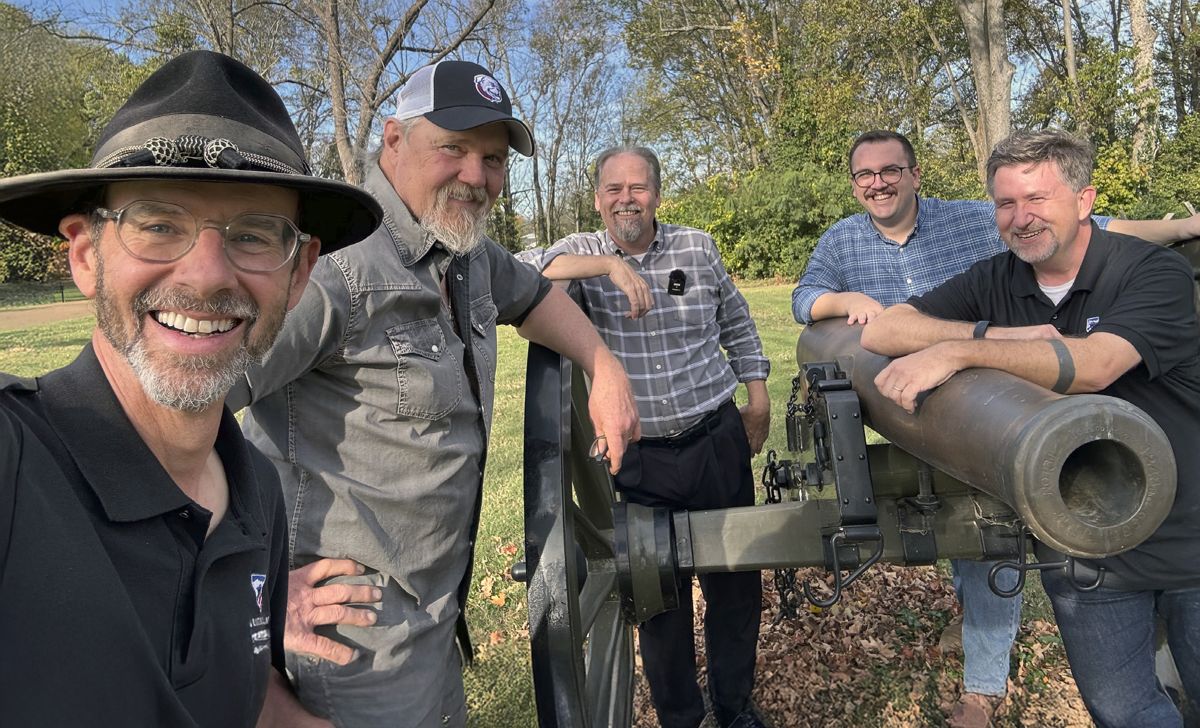
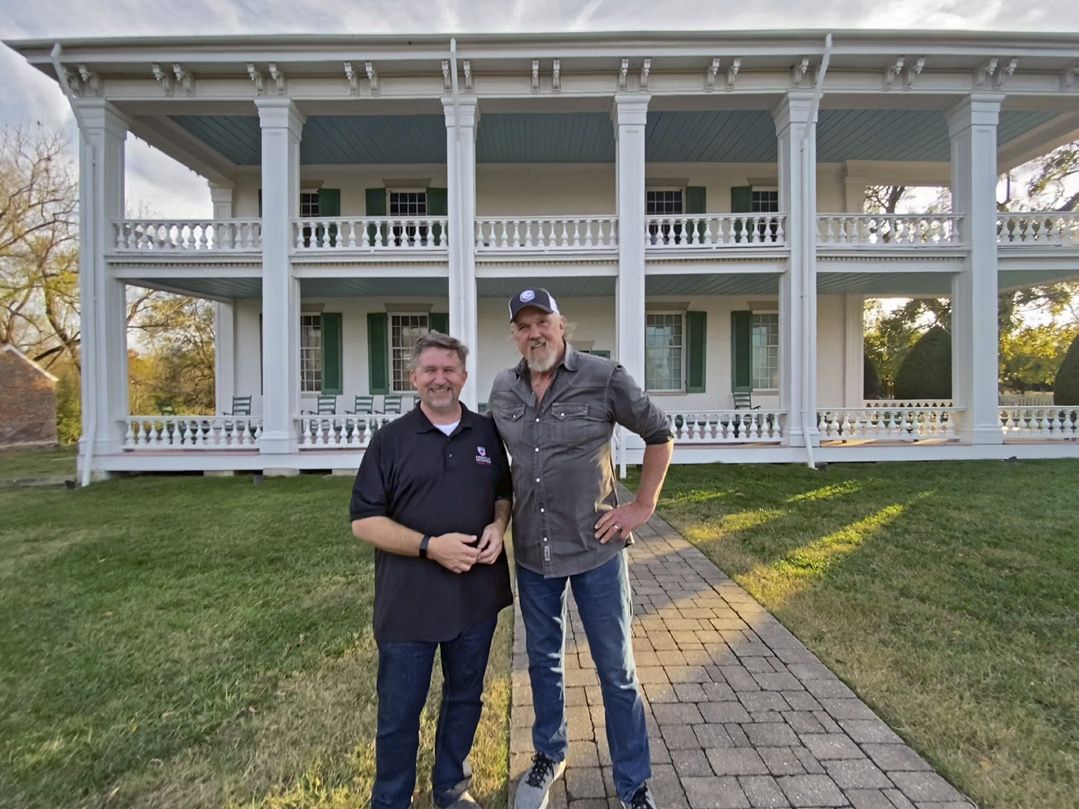
T Battle of Franklin race Adkins is a mountain of a man—stoic as a mountain, too. Standing by the cannon near the Carter Cotton Gin, he surveyed the ground with eyes that could see across 160 years. The country music legend had joined us at Franklin, Tennessee, for a short series of videos for the American Battlefield Trust commemorating the 160th anniversary of the Battle of Franklin. Garry Adelman and I were there as hosts, joined by Eric Jacobson and Joe Ricci from the Battle of Franklin Trust (BOFT). BOFT’s curator, Bailey Kuyat, brought out a few artifacts from the battle to show off. Trace, a huge proponent of battlefield preservation, “huge” in both senses of the word, had come by to hang out and share his observations. (Garry Adelman)
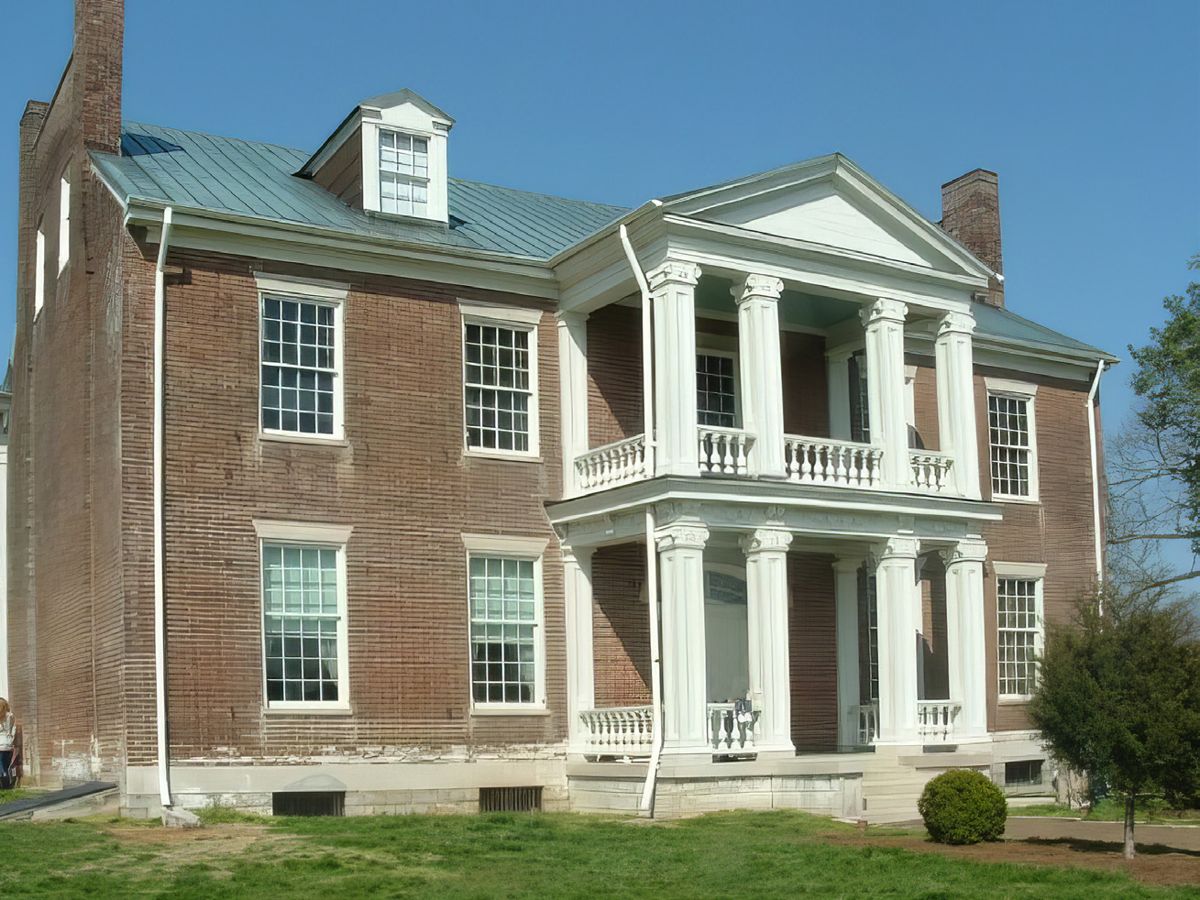
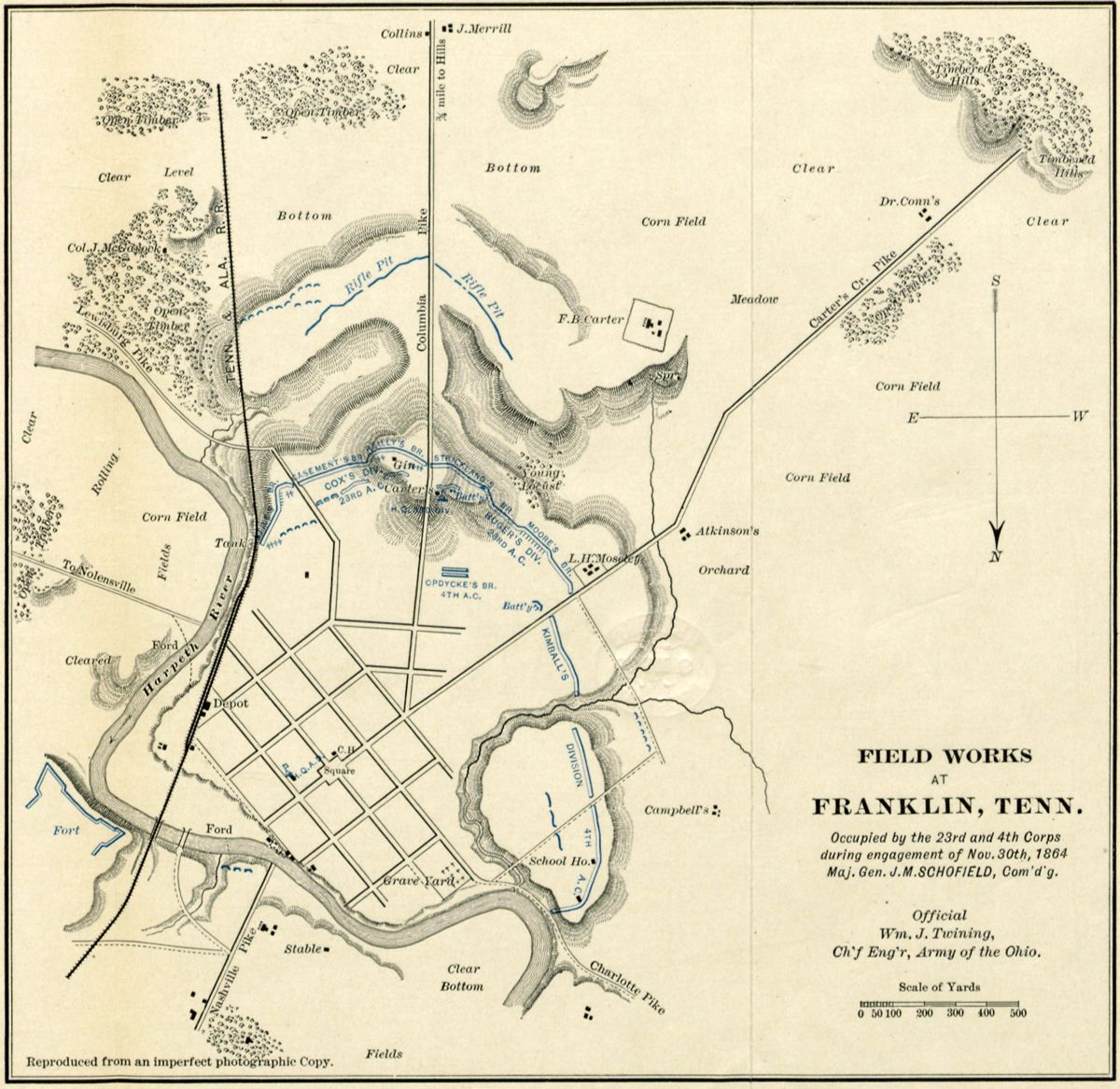
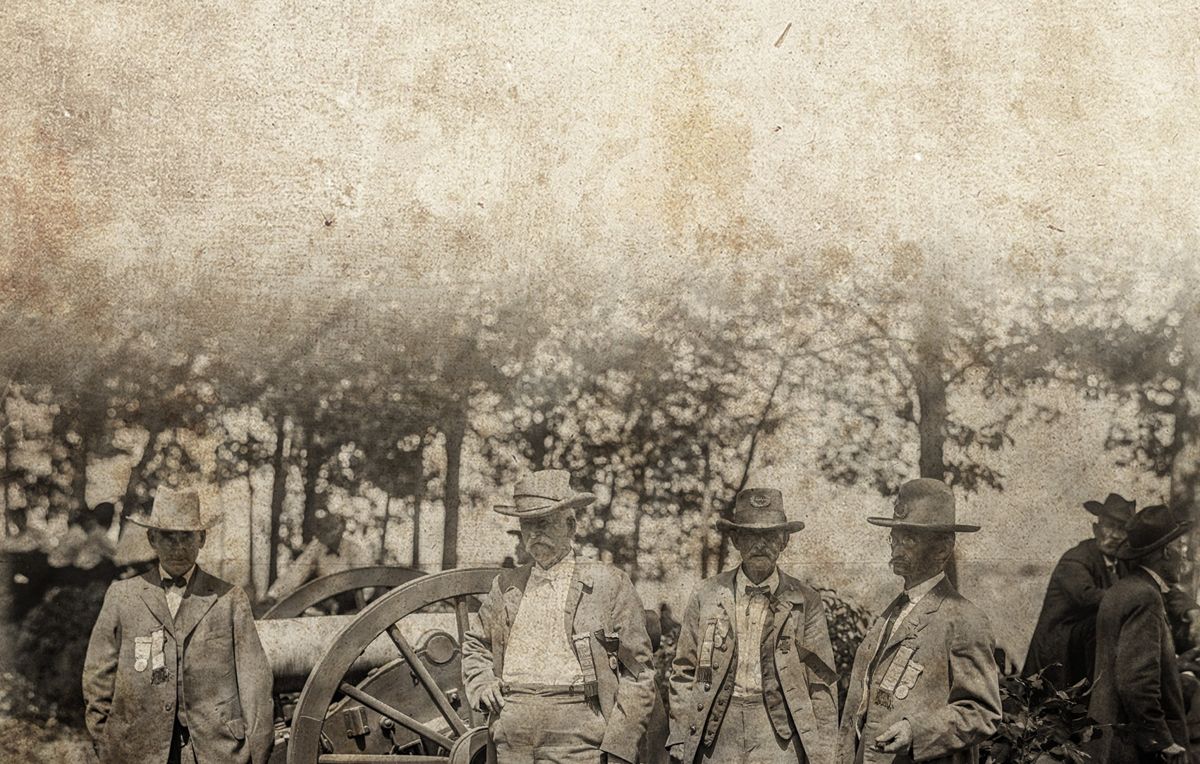
“I’m so pleased and proud of what they’ve done here,” Trace said. He speaks in a deep grizzly voice with a laidback manner. “And they just keep reclaiming more of this battlefield. It’s just getting better and better every year. Every time I come back, something here has improved.” Franklin is one of the most fabled of Civil War battles, with its doomed late-day charge by John Bell Hood’s bedraggled army and the death of six Confederate generals, including the “Stonewall of the West,” Patrick Cleburne. The reclamation of Franklin’s battlefield is likewise fabled, an amazing success story that includes the demolition of a Pizza Hut and the restoration of a small park around the unearthed foundation of the Carter Cotton Gin. The Carter family’s property sat at the center of the U-shaped Federal position, with its flanks protected on the Harpeth River. But the property also became central to Franklin’s story because of the Confederate breakthrough that occurred there, dramatically told in the bullet-holed walls of the Carter farm’s outbuildings. The farm also became the site of one of the war’s most powerful human interest stories. Twenty-four-year-old Tod Carter of the 20th Tennessee Infantry had grown up on the farm. During the battle, he was mortally wounded not far southwest of the property. “His father had to go find his son,” said Eric, the CEO of BOFT. “And to them, it wasn’t a battlefield, it was their home. And he found him, and they brought him home, and he sat helplessly as his son passed away about 36 hours later.” The war, Eric reminded us, wasn’t just about the men who died but the loved ones they left behind, a story the Carter House historic site tells so poignantly. Eric, who’s been at Franklin for two decades, has a gift for conveying the human experience of the war and conveying it back to the big sweeping “whys” and the “what does this all means.” He has devoted considerable thought to why this all matters, so to hear him share the benefit of all that experience and wisdom was a remarkable treat. When he gets into his groove, it’s a bit amazing to stand next to him and watch him go. Joe, too, is always a privilege to be on the field with. I’ve had the privilege, once up on a time, of doing a day-long bus tour of Spring Hill with Joe, where he showed a mindboggling command of details and a great sense of humor for sharing them. As we shot our videos, he showed that same command and humor. He’s an “emerging voice” in the field who makes me say, Wow. “All that with no notes and no drink of water,” he joked after we wrapped for the day. The obvious stops at Franklin are the Carter House, Carnton Plantation and the McGavock Cemetery, the downtown square, the SCV-owned Winstead Hill. But Eric and Joe took us to a hidden gem as part of our trip, too, just off Meadowlawn Drive, tucked behind Adams Street, named for the Confederate brigadier killed in the area. Trace had a great-great-great grandfather, Thomas Durkin Williams, in the 15th Mississippi, Company E, which fought at Franklin. They served in Loring’s Division, in Adams’s brigade, and swept right across the ground we stood on. Walking in the footsteps of his ancestor was a first for Trace on this battlefield. It was a profound experience for him, he told us, and a sublime one for us to share with him. Adams was shot down leading his men. “His death, everybody saw it on both sides,” Eric told us. A woodcut image on the wayside sign showed Adams’s horse straddling the works, but Eric told us it was probably romanticized. “His body was found outside the works,” he explained. “The color guard opened up, blasted him off the horse, and the horse just kept going and hit the works.” Several accounts were written about the event, but after the fact, and some by men who weren’t present. One who
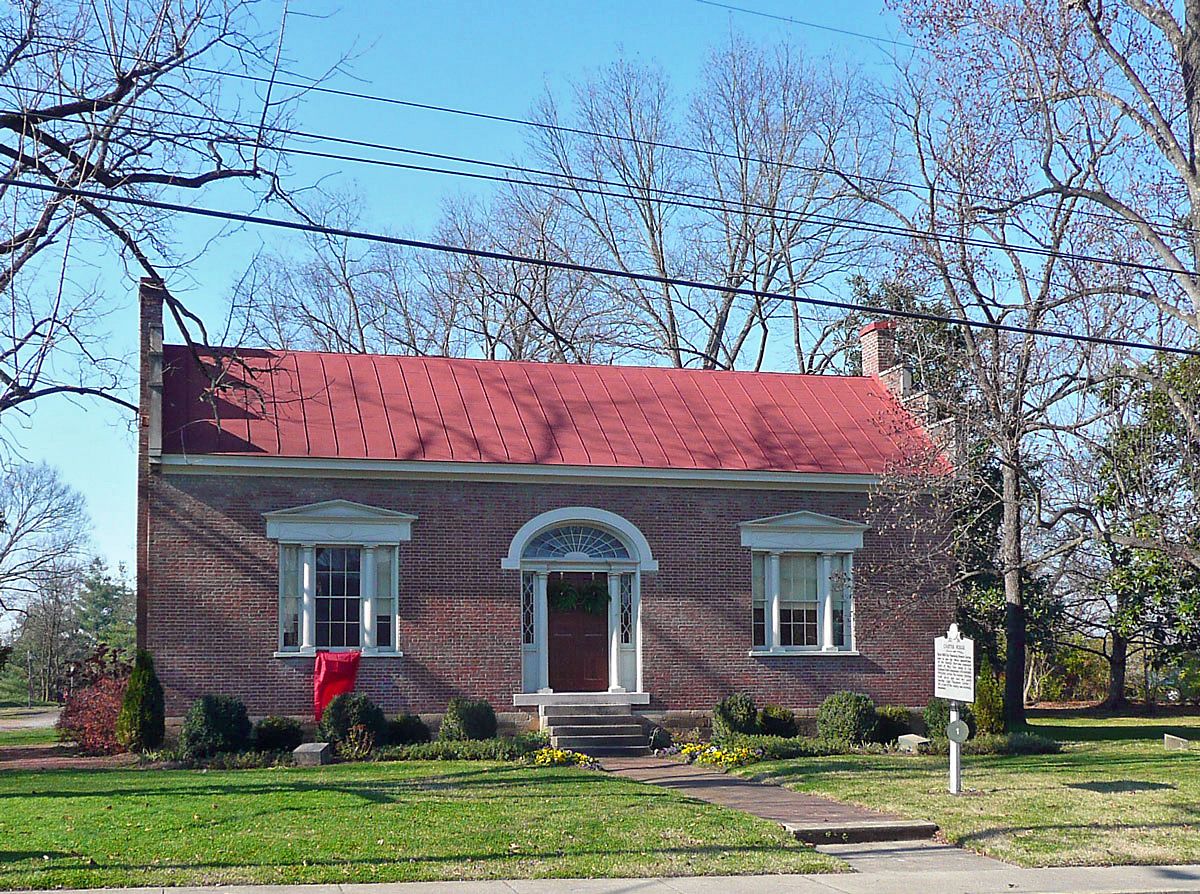
Carter House, Franklin, Tenn. (Photo by Hal Jespersen)
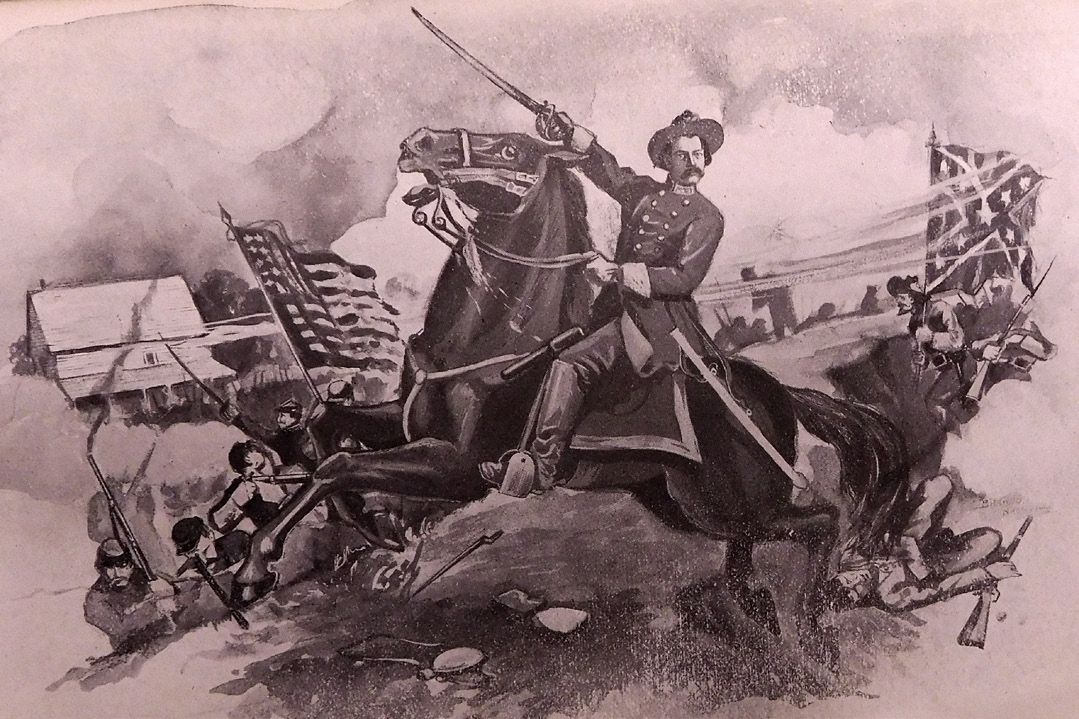
The death of Brig. Gen. John Adams was the most visible of the six Confederate generals killed or mortally wounded at Franklin. (Emerging Civil War)
was, Lt. Col. Edward Adams Baker of the 65th Indiana, wrote that “General Adams rode up to our works and, cheering his men, made an attempt to leap his horse over them. The horse fell upon the top of the embankment and the general was caught under him, pierced with [nine] bullets.” After the repulse of the assault, Federals went outside the works to tend to Adams. “It is the fate of a soldier to die for his country,” the general said before expiring. The story of Franklin is filled with such episodes, which seem to straddle the border between history and Shakespearean tragedy. “I can reconcile the romance and the history,” Trace told me. “I like the lore and some of the myth that surrounds this battle, but I don’t know that it’s so far-fetched that it can’t be backed up with some history.” Trace had a number of ancestors who served in the Confederate army. Learning about them when he was a kid hooked him on the Civil War. “I haven’t read a work of fiction in fifty years,” he told me. Instead, he has voraciously read history books, with an emphasis on the Civil War. He’s been a strong champion for Civil War preservation and a great friend to the Trust for years, and the experience of being on a battlefield still visibly moves him. “I have goosebumps every time I come here,” he said. When I return to a battlefield I’ve visited before, I always hope to walk away with something new, and this trip to Franklin did not disappoint. As a historian and storyteller, I’m always trying to learn more, and I’m always anxious to find ways for one craft, history, to influence the other, storytelling. Franklin will always be fertile ground for both.
For more on how you can help preservation efforts at Franklin, check out the Battle of Franklin Trust at www.boft.org or the American Battlefield Trust at www.battlefields.org. And of course, don’t forget to join us online at www.emergingcivilwar.com!
9am to 4pm / $10 • Early Buyer 8am / $25 • Free Parking 1,000’s of Civil War Treasures! Plus! Revolutionary War • Spanish-American War Indian Wars • Mountain Men • Bowie Knife Collector Arms • Fur Traders • World Wars I & II
Join the Crew!
Famous Civil War Quotes answer key
Stephen Crane, The Red Badge of Courage Shelby Foote, The Civil War: A Narrative William Faulkner, The Sound and the Fury Abraham Lincoln Nathan Bedford Forrest Robert E. Lee If you missed it, Walt Whitman head back to page 7 Oliver Wendall Holmes to test your knowledge! Frederick Douglass Ulysses S. Grant