
America Battlefield Trust
Originally published March-April 2025 · pp. 14–15
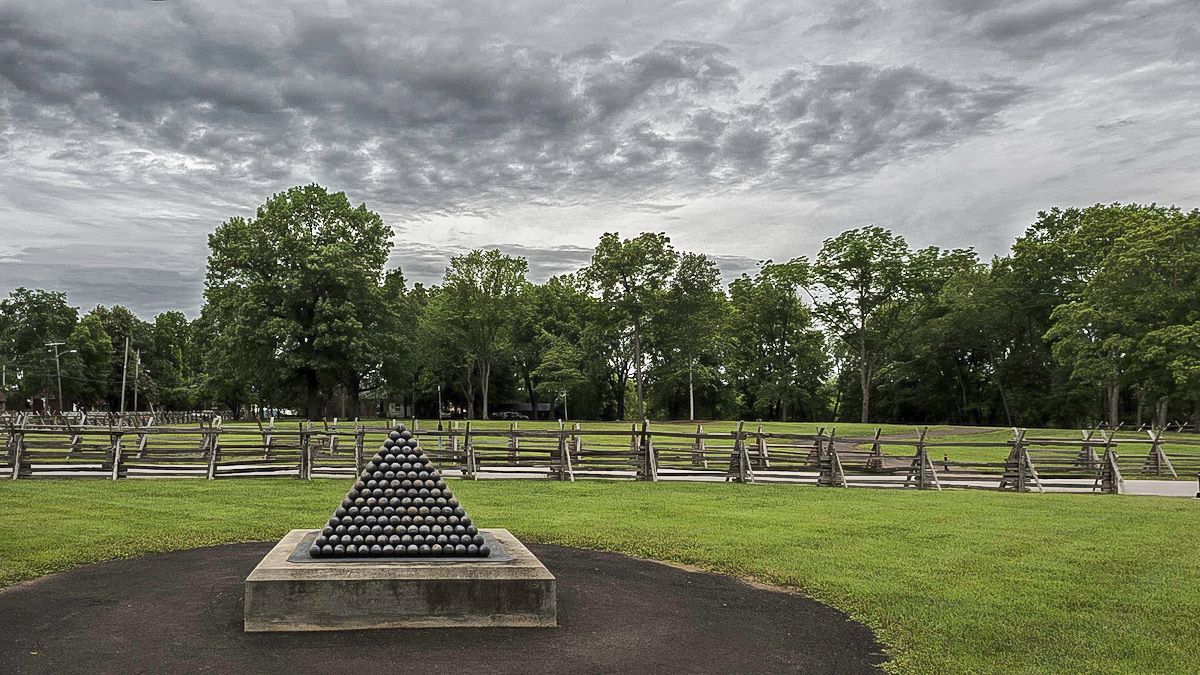
Trust Appeals Prince William Digital Gateway Rezoning Decision In December, the Trust and nine local residents appealed the Prince William Circuit Court’s October 31 demurrer ruling to the Virginia Court of Appeals, seeking to block the Prince William Digital Gateway Project. The case challenges the rezoning votes for 2,100 acres approved by the outgoing Prince William County Board of Supervisors in December 2023. The appeal cites multiple legal violations in the approval process, including lack of required information about the proposed development; inadequate public notice and hearings; unlawful waivers of key analyses, submissions and approvals; failure to consider key environmental and historical facts; and unlawful delegation of rezoning power to the data center developers by not requiring they identify which portions would be put to what uses. Shortly after the appeal was filed, the Virginia Joint Legislative Audit Review Committee (JLARC) released a landmark study analyzing the impact of the data centers across the state. The report highlighted issues such as energy and water consumption and the shifting of infrastructure costs to utility ratepayers, but it largely neglected the impact on historic resources, a topic it was explicitly tasked with addressing. The Prince William Digital Gateway project has drawn significant opposition from preservationists and residents concerned about the overall impact on the region. For more information, visit www.battlefields.org/speakout/digital-gateway-threatens-overwhelm-manassasbattlefield.
Preservation Milestone at Franklin Battlefield
On the 160th anniversary of the Battle of Franklin, the Trust joined Volunteer State preservationists to celebrate a significant land acquisition. Franklin’s Charge, Inc., a local non-profit organization, acquired a 0.63-acre property on Columbia Avenue with the intent of demolishing modern structures and transferring the land to the City of Franklin for incorporation into the Carter Hill Battlefield Park. Since 1996, efforts led by the Trust, local groups like Franklin’s Charge, and the Battle of Franklin Trust have reclaimed 182 acres of hallowed ground, valued at $22.89 million. The latest acquisition will connect previously protected sections of the battlefield, further enhancing the site. The $5.03 million transaction was funded through a partnership of organizations and agencies. Federal and state contributions included a $950,000 grant from the American Battlefield Protection Program and $957,000 from the Tennessee Civil War Sites Preservation Fund. The Trust contributed $600,000, while the City of Franklin and local partners provided $2.3 million. To mark the anniversary, the Trust released two new educational videos. One offers a guided tour of the battlefield led by expert historians. The other, featuring country music star Trace Adkins, recounts the journey of his ancestor Thomas Durkin Williams, who fought at Franklin with the 15th Mississippi Regiment.
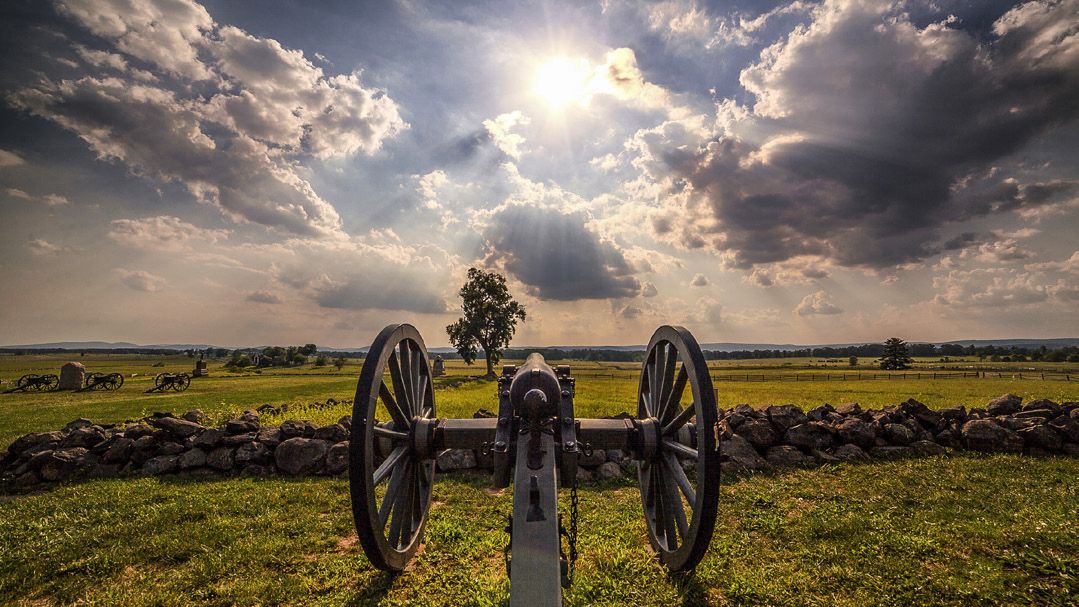
Senate Passes Federal Battlefield Preservation Initiatives In late December, the U.S Senate passed the American Battlefield Protection Program Enhancement Act (H.R. 3448), a bipartisan reform measure folded into the Expanding Public Lands Outdoor Recreation Experiences Act (EXPLORE Act, H.R. 6492). Backed by 67 Senators and Members of Congress, the legislation advances the National Park Service’s efforts to protect historic battlefields. Since its establishment in 1999, the American Battlefield Protection Program (ABPP) has helped preserve more than 35,000 acres of battlefield land across 20 states. The program has helped preserve sites such as the Revolutionary War battlefields of Bennington, N.Y., and Kettle Creek, Ga., and the Civil War battlefields of Gettysburg, Pa., and Glorieta Pass, N.M. Through matching grants, the program acquires historically significant land from willing sellers. The legislation strengthens ABPP through several practical modifications: (1) allows non-profits and tribes to directly apply for ABPP grants, in addition to state and local governments; (2) expands eligibility of Battlefield Restoration Grants so they may be used to restore battlefield lands protected by state, local, and tribal governments; (3) clarifies eligibility of identified Revolutionary War and War of 1812 battlefield lands for acquisition matching grants; and (4) creates a process for utilizing recent archaeological findings, technological advancements, and authoritative research to determine the historic scope of battlefields, and help preserve battlefield lands currently considered ineligible for funding. Introduced in May 2023 by Representatives Stefanik and Connolly, co-chairs of the Congressional Battlefield Caucus, the bill was unanimously passed in the House in November 2023. It later became part of the EXPLORE Act, which received House approval in April 2024. The House Committee on Natural Resources, led by Rep. Westerman, and the Senate Committee on Energy and Natural Resources, chaired by Sen. Manchin, played key roles in advancing the legislation.
Nearly 93 Acres Transferred to Mill Springs National Monument The Trust has transferred nearly 93 acres of historic battlefield land to Kentucky’s Mill Springs National Monument. The Trust’s cumulative work at Mill Springs helped create the critical mass necessary to see it inaugurated as a unit of the National Park System in 2020. The Battle of Mill Springs, fought on January 19, 1862, saw Union forces repel a Confederate surprise attack in Pulaski County, Kentucky. The clash, marked by brutal close quarters fighting and dense fog, forced Confederate troops to retreat into Tennessee. The battle marked a turning point for Union morale during the war’s early years. Preservation efforts began in 1992 with the establishment of the Mill Springs Battlefield Association (MSBA). The Trust soon joined the initiative, working alongside the
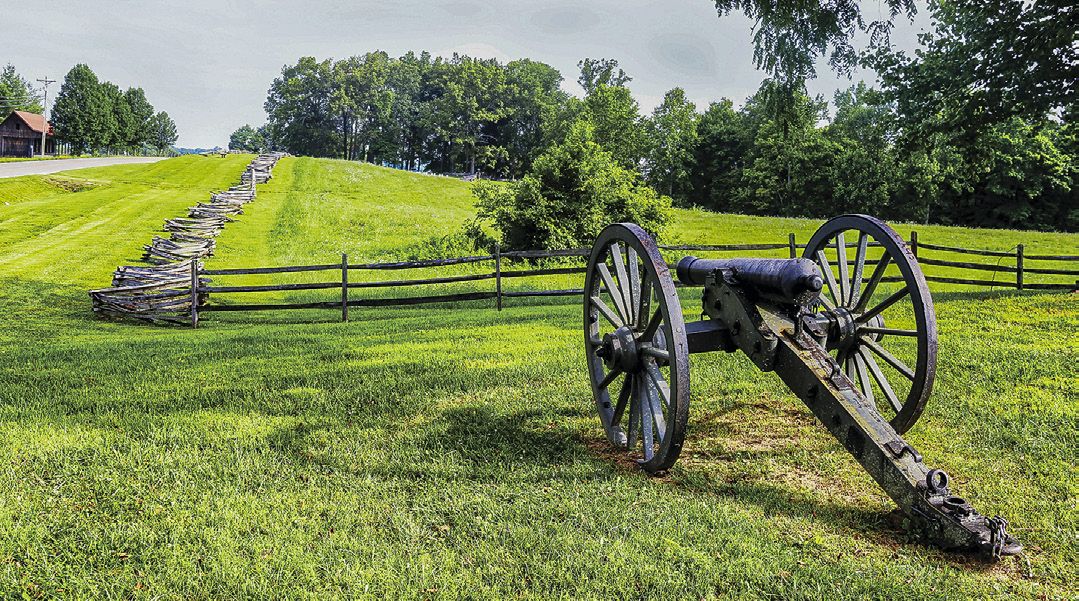
MSBA, local leaders and government partners. To date, these collective efforts have helped permanently protect more than 550 acres of battlefield land. An October 2020 ceremony in Nancy, Ky., cemented the preservation legacy when Mill Springs Battlefield National Monument officially became part of the National Park System thanks to support from Congressman Harold Rogers and U.S. Senator Mitch McConnell as well as the U.S. Department of the Interior, the National Park Service, MBSA and local leaders. The latest transfer represents a critical piece of land that makes up the core battlefield and marks the place where the Confederate advance was stopped, and the tide of battle shifted to the Federals under Gen. George Thomas.
For Battle of Nashville 160th, More Acreage at Fort Negley Protected
In December, the Trust announced that Fort Negley in Nashville, Tenn., has grown with the addition of 2.36 acres of preserved land, thanks to a $9.5 million collaborative effort. The expansion protects key acreage adjacent to the existing park, a UNESCO Site of Memory. The Trust acquired the property on the Bass Street side of the fort through a partnership involving federal and state grants, nonprofit leadership, and municipal support. Funding included a $4.1 million federal grant from the National Park Service’s American Battlefield Protection Program, $2.3 million from the Tennessee Civil War Sites Preservation Fund (TCWSPF), administered by the Tennessee Wars Commission, a division of the Tennessee Historical Commission, State Historical Preservation Office and a $3 million investment from Metro Nashville, along with a donation from the previous landowner. This acquisition aligns with Metro Nashville’s $12 million phase one Fort Negley Master Plan, which aims to safeguard cultural resources and improve visitor experience at the existing park. This marked the second major effort for the TCWSPF in last year’s autumn for a site related to the Franklin-Nashville Campaign following a $957,500 grant toward a cornerstone parcel near the Commission’s Carter House State Historic Site in Franklin.