
Riddick’s Folly Embraces Cordial Civil war Era Letter
By Bob Ruegsegger · Originally published January-February 2025 · pp. 30–33
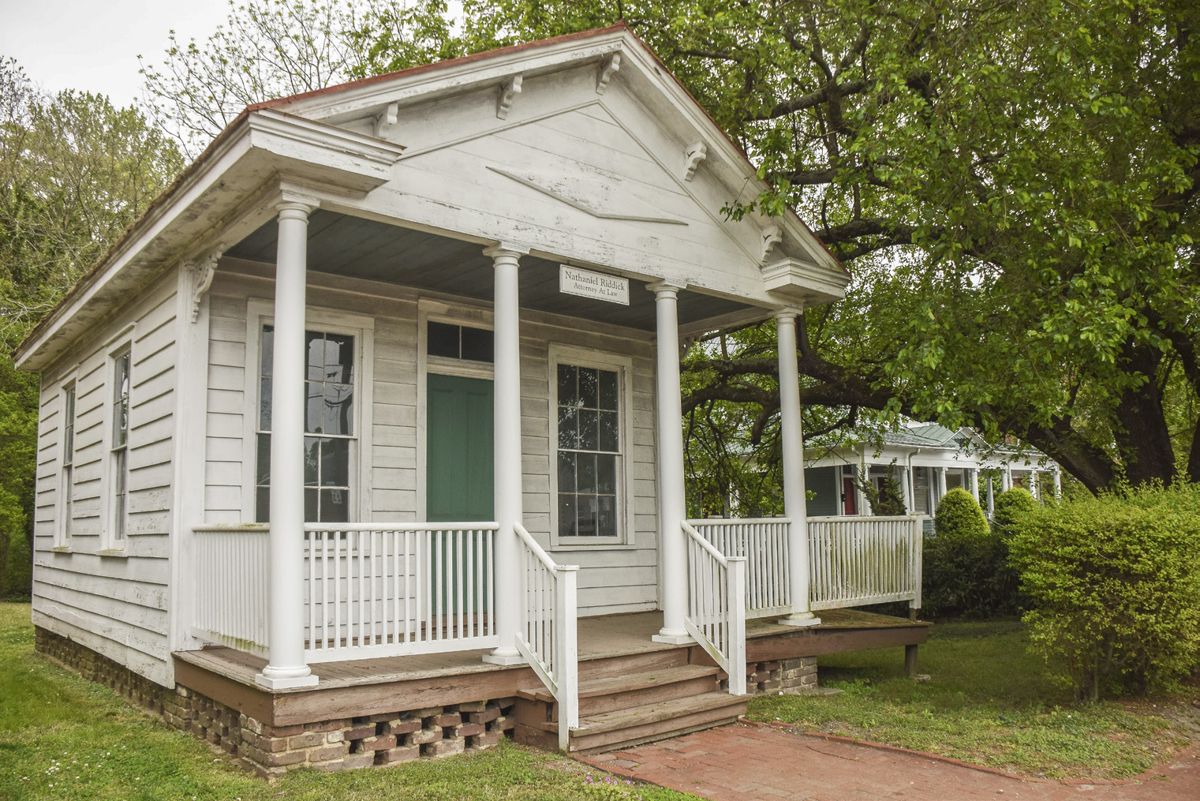
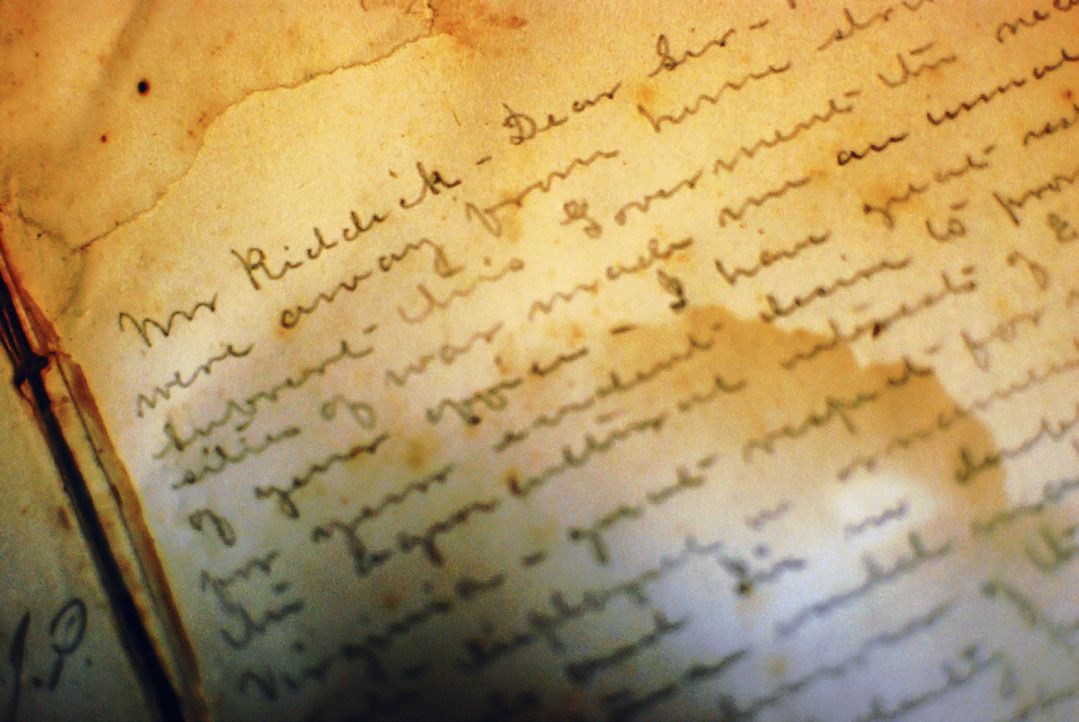
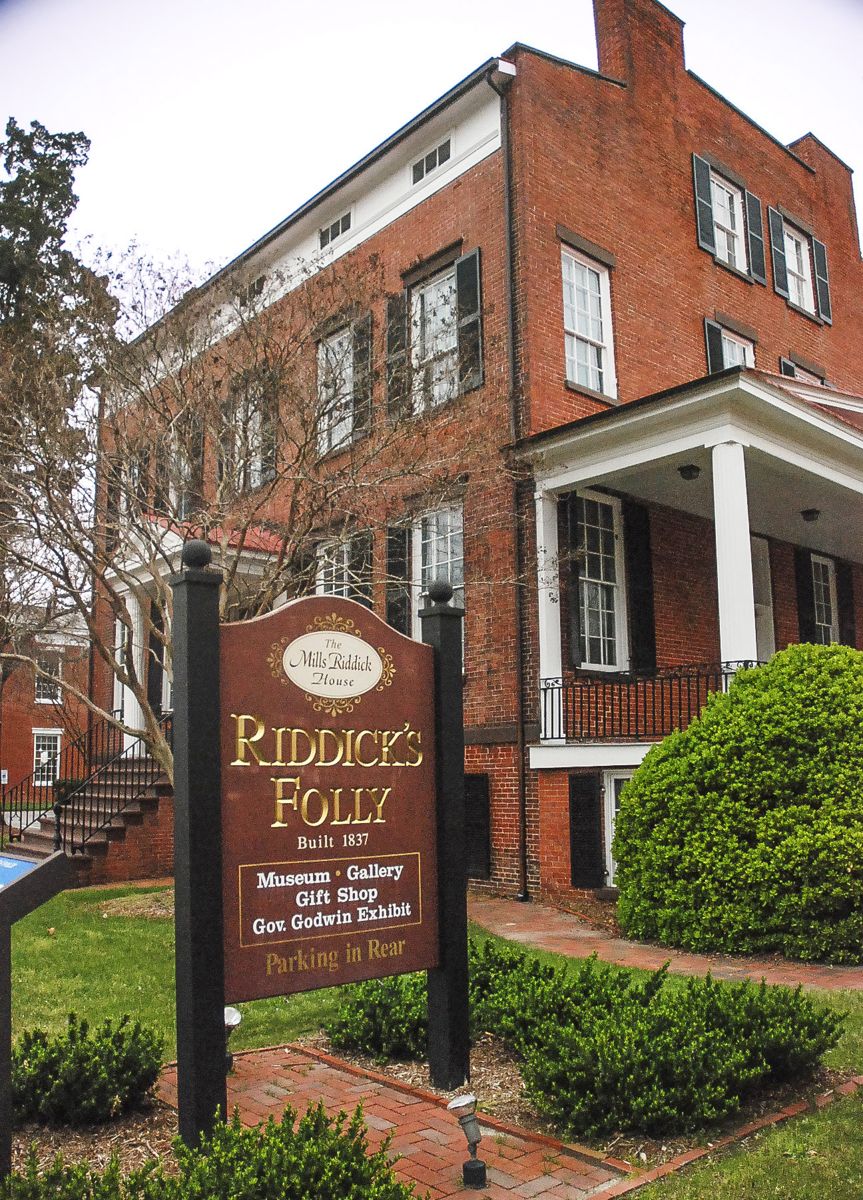
When Mills Riddick’s ostentatious twenty-oneroom mansion with sixteen fireplaces was completed in 1839 next to the Nansemond County Courthouse, his neighbors mocked the flamboyant edifice as “Riddick’s Folly, “perhaps out of envy. By the time the American Civil War, or the War of the Rebellion, arrived, Mills Riddick was already resting in eternal peace. His son, Nathaniel Riddick, had inherited his father’s estate and the family fortune. Suffolk was strategically important because railroad lines, main roads, and the Nansemond River passed through the town on the edge of the Great Dismal Swamp. In the spring of 1862, Union troops, the 1st New York Mounted Rifles, commanded by Col. Charles Dodge, arrived in Suffolk. Within a year, Suffolk had become a Union stronghold in southeastern Virginia. Maj. Gen. John Peck commanded Union forces in Suffolk. When threatened by 25,000 Confederate troops commanded by Lt. General James Longstreet during the spring of 1863, Peck positioned Union forces in a large defensive ring surrounding the town. Nathaniel Riddick’s pretentious mansion served comfortably as headquarters for General Peck and his command staff. “That’s when Nathaniel Riddick and his wife fled to Petersburg,” said Lee King, the director-curator of Riddick’s Folly Museum. Longstreet’s mission was to forage in the area, gathering supplies for the Confederate armies, and capture Suffolk if possible. Longstreet was also charged with protecting Richmond and supporting Lee’s Army of Northern Virginia. In an attempt to seize the Union-held outpost, Longstreet decided to lay siege to the town. Longstreet’s efforts to capture Suffolk were unsuccessful, and he withdrew his troops. Suffolk remained in Union possession throughout the remainder of the Civil War. “When they left, they took 85 to 90 percent of what was in the building. As far as we know, we only have one original doorknob. They took the rest,” said Lee King. “The Riddicks came back to a completely looted home.” Nathaniel Riddick’s law office, in a separate, single-story building next to the looted mansion, fared better than his home. It seems Riddick’s elegant furnishings were more attractive to looters than his law books. On the inside cover of one book in Riddick’s law office, The Acts of the Virginia Assembly Passed 1855-56, Amos M. Thayer left a cordial message for Nathaniel Riddick. Curator Lee King has memorized Lt. Thayer’s pleasant note to Mr. Riddick and routinely offers to recite Thayer’s comments for Riddick’s Folly visitors during house tours. “We know A.M. Thayer was a signal officer for the Union troops,” said King. “He wrote this letter in the front of one of Nathaniel’s law books, and he left it behind for him to read.” It reads: This single-story building adjacent to Riddick’s Folly represents Nathaniel Riddick’s law office. The original building was torn down in 1883 after Riddick’s death.
“Mr. Riddick—Dear Sir—Whilst you were away from home striving to subvert this Government, the necessities of war made me an inmate of your office. I have great respect for your evident desire to promote the agricultural interests of Eastern Virginia, great respect for the taste displayed in ornamenting your grounds, and I’ve no doubt that a better acquaintance would make me a more admiring of the talents which you evidently possess. But whilst I am no abolitionist, I must confess that I believe the cause in which you are engaged is decidedly wrong. We shall see, however. I hope to meet you on friendly terms in more peaceful times and enjoy you socially.” It was signed: “A. M. Thayer, Signal Officer, U.S.A.” Thayer left the book with the note on the inside cover open on the desk in Riddick’s law office. Riddick’s family members confirmed that he read the cordial inscription. There is no record of Nathaniel Riddick’s reaction to Thayer’s note. While Thayer directly acknowledged their political differences, he seemed, based on an appreciation of Riddick’s “evident” good taste, to believe that the two might enjoy each other socially in more peaceful times when the current political unrest was resolved. Thayer characterized himself as an inmate in Riddick’s home due to the war. “Thayer almost apologized for what the Union and Confederate troops were doing,” said King. “As he said, ‘I hope to meet you on friendly terms.’
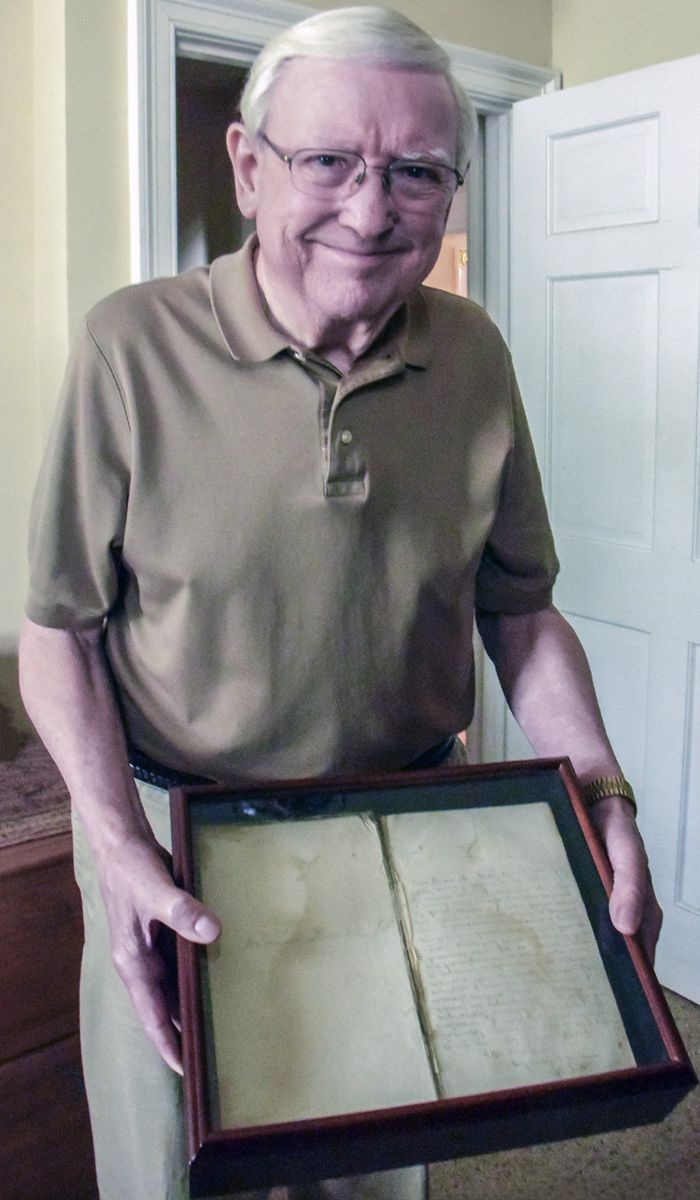
They never did meet, as far as we know.” After the war, Lt. Amos Madden Thayer became a U.S. Circuit Court judge. Nathaniel Riddick also served as a judge following the war and as mayor of Suffolk. Riddick died in his law office in 1882. As for the book with the cordial inscription, it was purchased at a yard sale in Suffolk for the grand sum of fifty cents by Marion Watson, a local historian and author, who knew the historic value of the tome with the personal message. When Riddick’s Folly became a house museum, the volume was donated to the museum. “If you wanted to know something about the history of Suffolk, you wanted to see Marion Watson,” said Lee King. “She left the book with the historical society, and the historical society let us have it from Marion.” Today, the prized book is locked in a small glass and wooden case to protect it. Thayer’s handwritten note has faded with time but is still clearly legible. “The book is priceless to Riddick’s Folly Museum because of the letter’s contents, who it was written to, and the book it was written in,” said King. “It was one of Nathaniel’s law books. This may not be a treasure anywhere else, but it is here.”
Bob Ruegsegger’s assignments frequently take him to historic sites throughout Virginia, the Mid-Atlantic, and the Southeast. His favorite haunts include sites within
Virginia’s Historic Triangle—Jamestown, Yorktown, and Williamsburg. Bob served briefly in the U.S. Navy. He is a retired educator and has been an active newspaper journalist for over 25 years.
The South’s Oldest Military History Show
ADMISSION: ADULTS $10 (2 day pass $15) • CHILDREN 12 & UNDER FREE QUALITY RELICS FROM THE AMERICAN REVOLUTION - VIETNAM ERA
FOOD TRUCKS • LIVE MUSIC & MORE ! BOOKS DOCUMENTS CANNONS ANTIQUE BOTTLES
March 7 & 8, 2025 Friday 1-6 PM • Saturday 9-5 PM
LANDERS CENTER
I-55 at Church Rd, EXIT 287, Southaven, MS 38671 15 minutes from Downtown Memphis
WEAPONS CURRENCY UNIFORMS HISTORIANS & SPEAKERS