
“Playing War!” Sham Battles During and After the Civil War
By Jonathan A. Noyalas · Originally published January-February 2025 · pp. 58–67
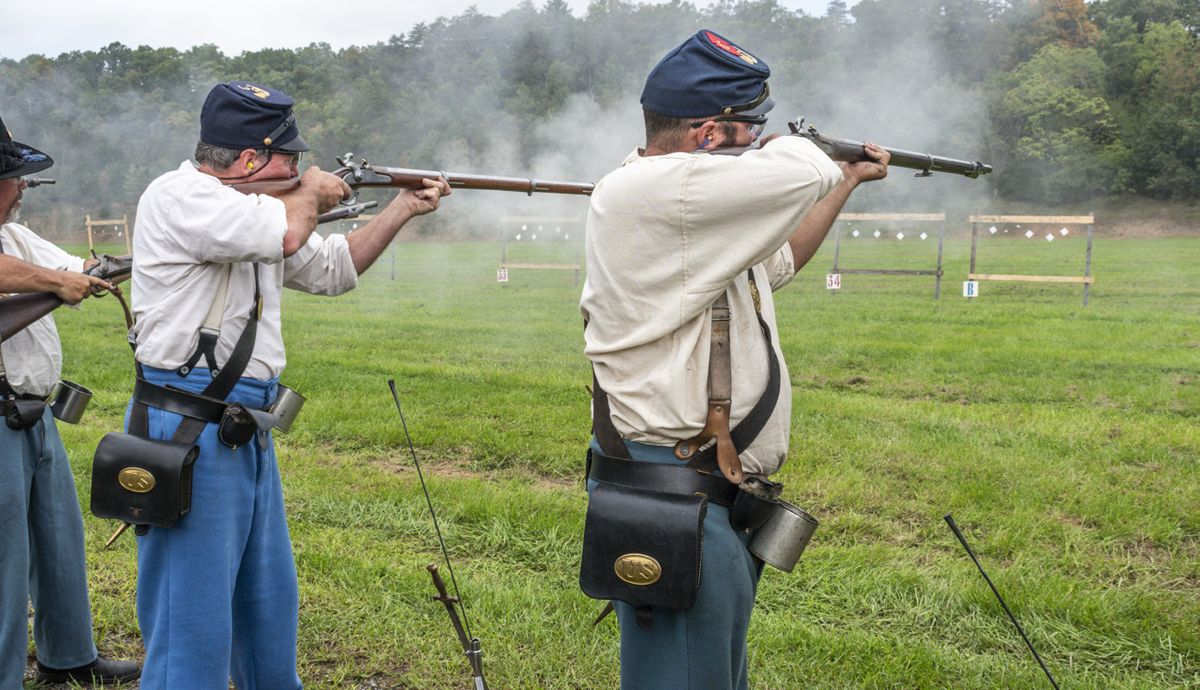
Seven soldiers in Union uniforms reenacting a battle scene. (Library of Congress)
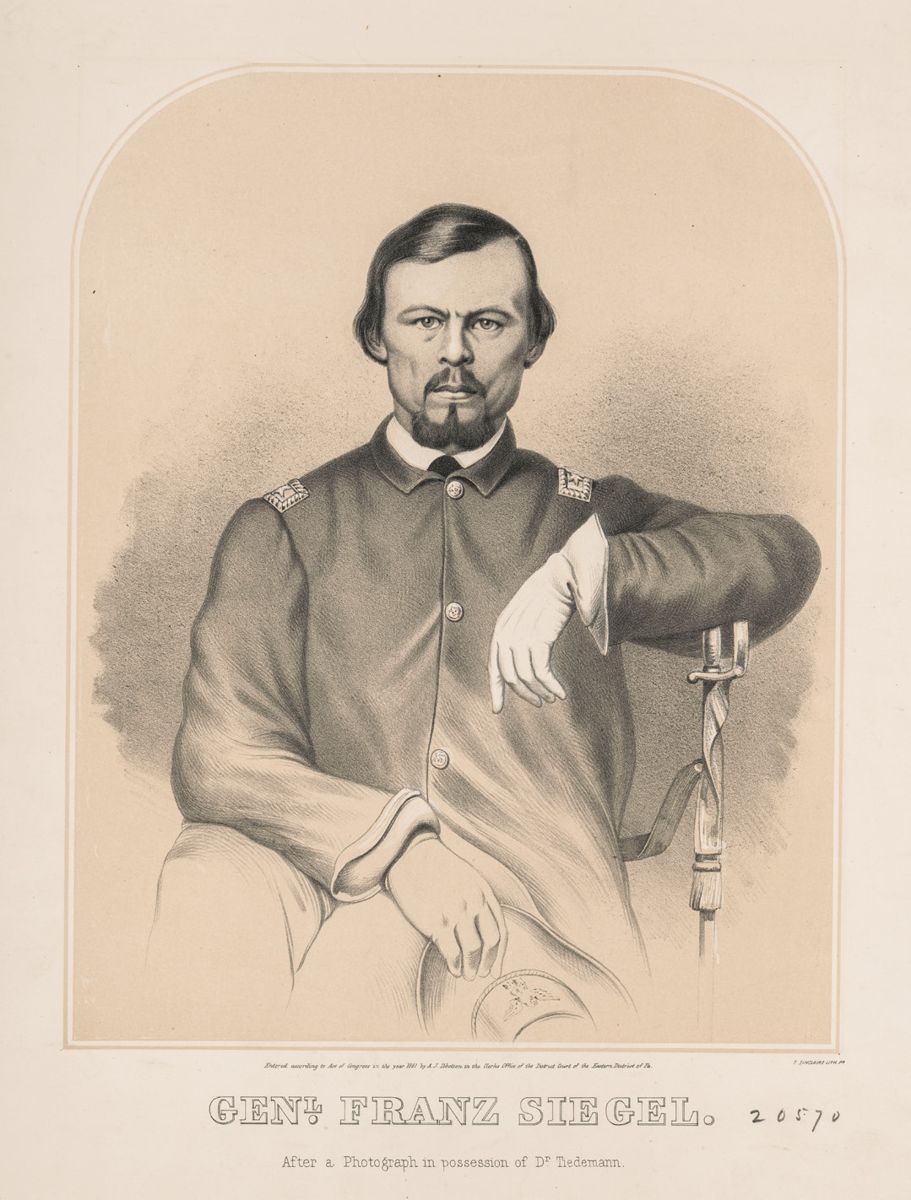
Shortly after reveille sounded in the camps of Union General Franz Sigel’s army south of Winchester, Virginia, the morning of May 6, 1864, the commander of the Thirty-Fourth Massachusetts, Colonel George Wells, placed himself “on the sick list.”1 When the regiment’s second in command, Lieutenant Colonel William Lincoln, checked on Wells, Lincoln found the regiment’s commander dejected. Wells, according to Lincoln, had “lost all interest in it and the service” and instructed Lincoln to take the “Regiment and do with what you please.”2 Wells’s depressed spirit stemmed not from illness, which Lincoln believed Wells “feigned,” but resulted from Sigel’s gross mismanagement of a sham battle the previous day.3 During the mock engagement, which Sigel hoped would build cohesiveness in his command, he ordered the ThirtyFourth Massachusetts forward as skirmishers. In addition to forgetting about Wells’s regiment once it advanced out of sight, Lincoln believed that the artillery Sigel ordered to signal the regiment’s advance would have caused casualties had live rounds been used. “How fortunate for us that this was playing war! And the guns unshotted! As otherwise our loss would have been fearful,” Lincoln explained.4 Others similarly criticized Sigel’s handling of the sham battle on May 5 and the following day. “It was the funniest… farce ever witnessed anywhere… There was never anything seen half so ridiculous,” explained the 116th Ohio’s Lieutenant Colonel Thomas Wildes.5 While the two days of sham battles in Winchester, a place that had experienced much real combat by the spring of 1864, extinguished, as Wildes explained, the army’s “respect” and “confidence” in Sigel, Union and Confederate officers believed sham battles were “the ultimate level of training.”6 Officers on both sides believed sham battles were necessary to aid volunteer troops in understanding how to move on a battlefield and to acquaint recruits with the sounds of the battlefield. Captain Thomas Carter, a Confederate artillerist, wrote to his wife, Susan, on December 29, 1861, that a sham battle “does good—accustoms… men to the confusion of fire.”7 Cavalrymen believed the replication of the din of battle was beneficial not only for soldiers but also for horses. A trooper in the Twelfth New York Cavalry, who participated in a sham battle near New Bern, North Carolina, on October 1, 1863, explained that in addition to drilling “the men in the more perfect use of arms,” mock engagements made “the horses more acquainted with the noise of battle.”8
ntry.
Maj. Gen. F ranz Sigel’s mishandlin sham battle g of s in Winches ter, Virginia early May 18 , in 64, eroded the confiden of many of h ce is subordin ates. (Libra of Congress ry )
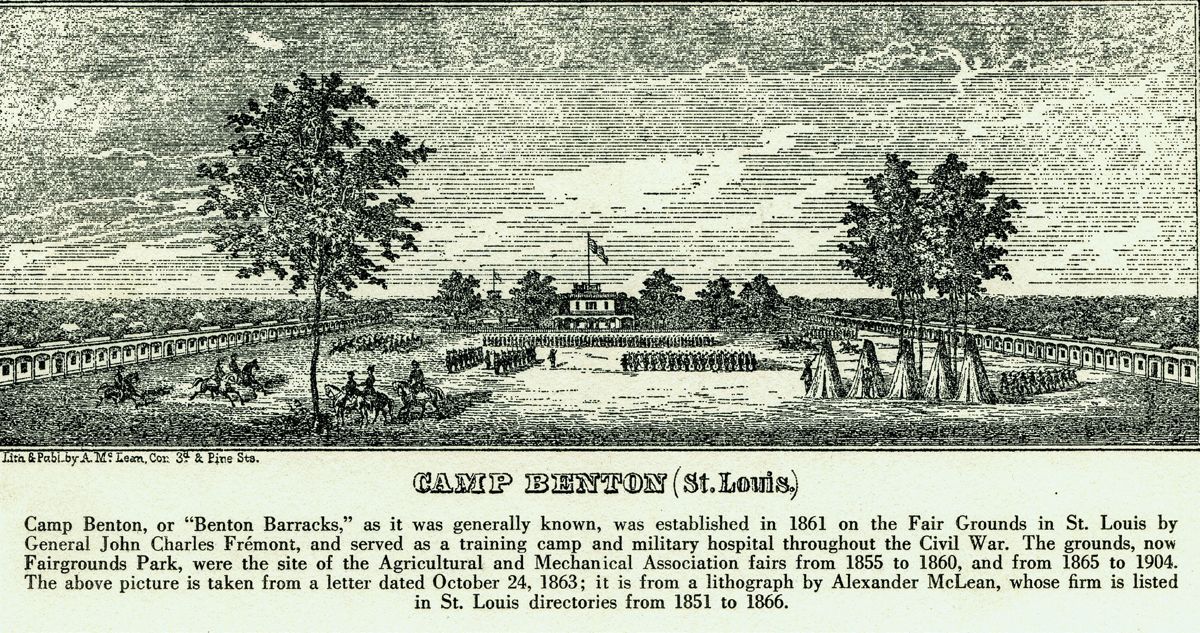
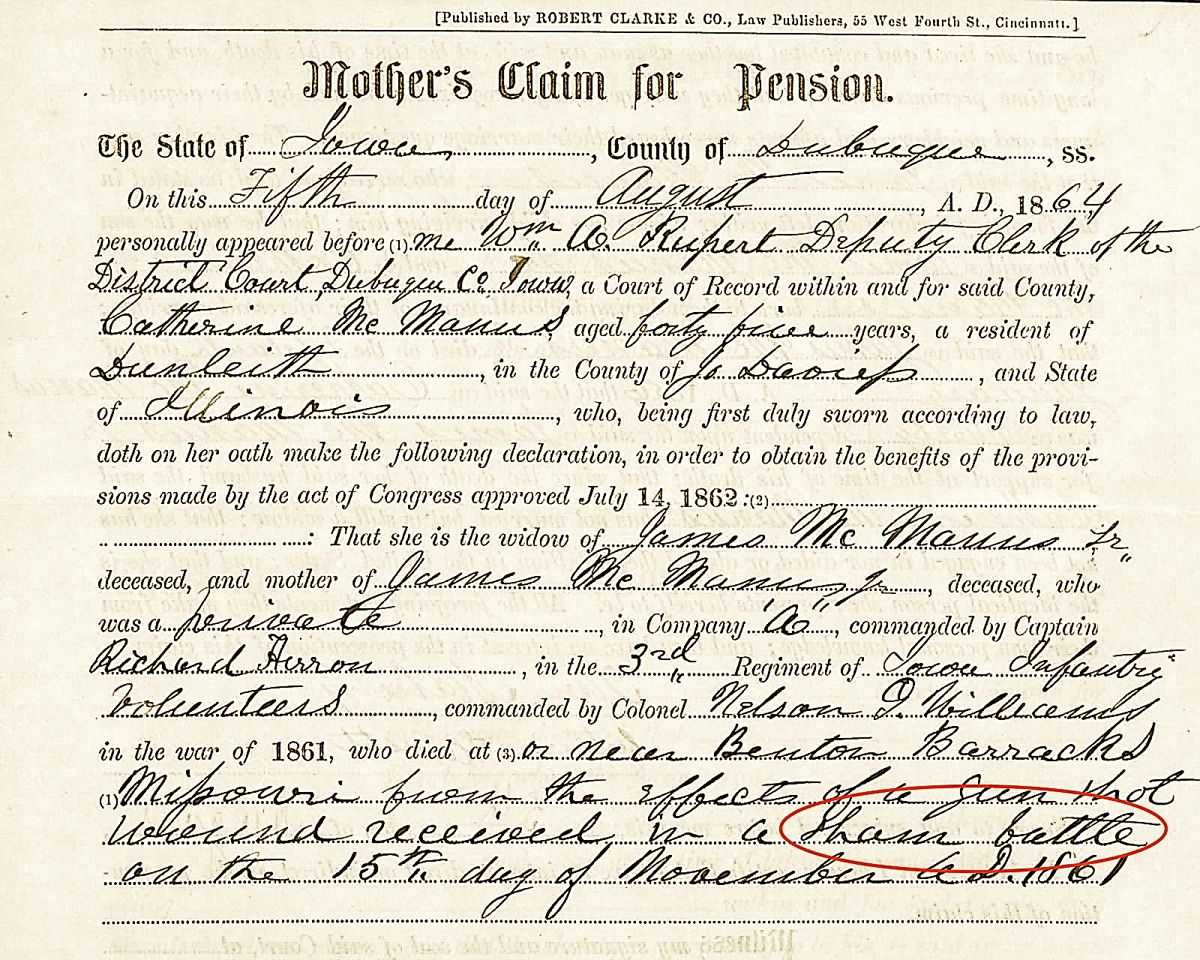
President Abraham Lincoln’s call for 300,000 volunteers in the summer of 1862, demonstrated to a newspaper correspondent that those troops were “now prepared to enter the field.”11 Despite their benefits, sham battles came with risks. Letters, diaries, and regimental histories are filled with chronicles of various misfortunes. For example, during a sham battle in northern Virginia in late November 1861, Corporal James E. Manser, 40th New York Infantry, “was wounded in the cheek by the wadding from a musket, which ruptured the skin and lacerated the flesh.” Manser, a comrade recalled, carried a “plainly visible” scar for the remainder of his life.12 During another mock engagement involving a portion of the Army of the Potomac “south of the Potomac” that same month, a trooper in Colonel Max Friedman’s Fifth Pennsylvania Cavalry was “severely injured” when his horse threw him during the regiment’s “charge… on a fancied column of… infantry.”13 Carelessness during a mock battle at Benton Barracks in St. Louis, Missouri, resulted in the death of Private James McManus. A native of Ireland, McManus enlisted in the Third Iowa Infantry on May 18, 1861.14 During a sham fight on November 15, 1861, a comrade behind McManus, while the regiment was, as First Lieutenant Phineas Crawford explained, “moving on the double quick” shot McManus “in the back of the head.”15 Caught in the moment’s excitement an unidentified Iowan behind McManus loaded a live round instead of one of the eight blank rounds issued to the soldiers. The bullet, according to one observer, “took the top of his head off.” McManus died within “fifteen minutes Confederate artillerist Captain Thomas Carter of being struck.”16 McManus’s mother, Catherine, received thought sham battles useful. (Wise, The Long Arm a monthly pension of $8 because of her son’s death. She of Lee, 1915) collected that pension until she died in 1890.17 Private McManus’s death, coupled with the death of “a horse” While poorly managed sham battles, such as Sigel’s, and other soldiers “slightly wounded,” ended all “mimic could demoralize troops, well-orchestrated ones could battles” at Benton Barracks.18 inspire confidence and strengthen esprit de corps. A sham Whether soldiers believed sham battles useful or not battle in Kentucky during during the conflict, in the January 1862, prompted war’s aftermath, veterans Second Lieutenant George who found it difficult W. Landrum, Second Ohio to shift from life as a “CAUGHT in the moment’s Infantry, “to think we can soldier to a civilian used EXCITEMENT an unidentified whip twice our weight in sham battles to ease the Rebels.”9 transition. 19 The earliest IOWAN behind MCMAN US Furthermore, mock sham battles occurred loaded a LIVE round instead of engagements could display just months after General one of the eight BLANK rounds the progress of the unit’s Robert E. Lee surrendered issued to the SOLDIERS. The development. After Union at Appomattox. On June 2, BULLET, according to one General William F. Smith 1865, Ohio, Indiana, and observer, “TOOK THE TOP OF conducted an hour-long Missouri troops in Colonel sham battle with his division Morton Hunter’s Brigade, HIS HEAD OFF.” McManus outside Washington, D.C., waiting to be mustered out DIED withing “fifteen minutes in the autumn of 1861, of service in Lexington, of being STRUCK.” a journalist believed Kentucky, staged a battle. the “highly creditable” First Sergeant Jacob conduct of Smith’s brigades Allspaugh, 31st Ohio, noted “showed” that the division in his diary that “for an hour “has rapidly progressed in discipline and efficiency.”10 the noise and yells as each party charged were kept up.”20 Nearly one year later, a sham battle in Indianapolis, While some historians characterized moments such as this Indiana, that involved 8,000 Hoosiers raised as part of as “shenanigans,” historian Brian Matthew Jordan, arguably Louis, Missouri, Benton Barracks was the scene of numerous sham battles until Private McManus’s death. (Missouri Historical Society, https://mohistory.org/collections/item/P0084-0571)
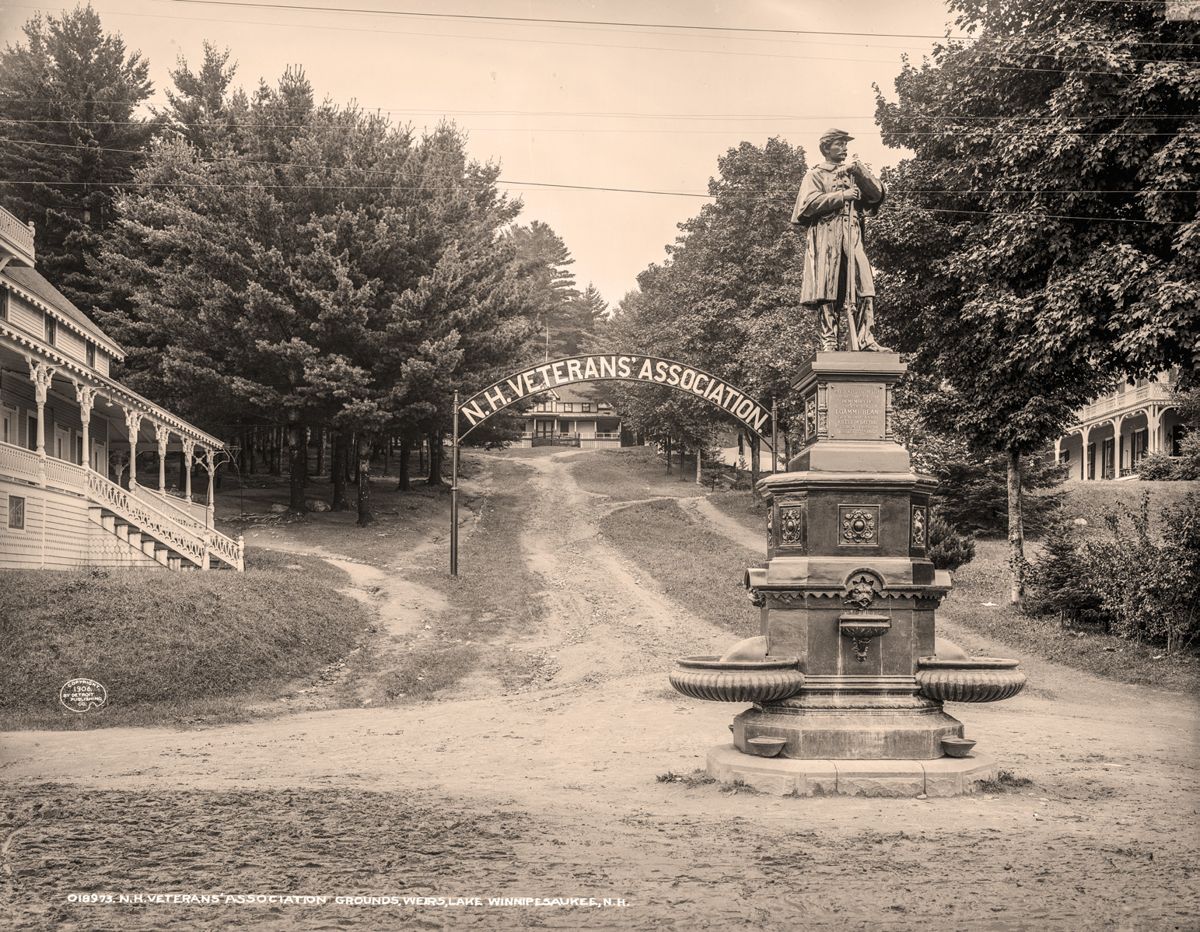
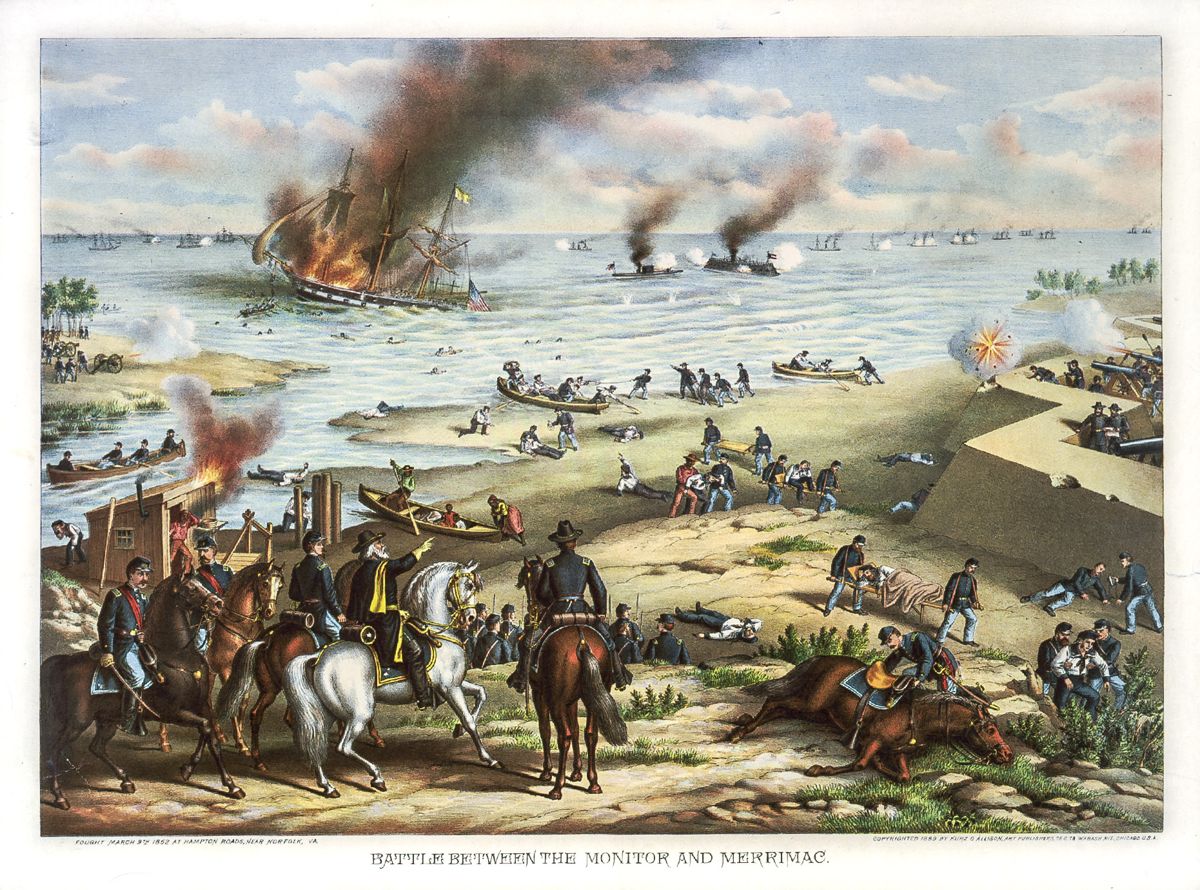
for the Omaha Daily Bee reported that “the smooth grassy prairie” furnished “an admirable substitute for the placid waters… the sham battle ships were startling models of their famous namesakes… they most effectually recalled the great naval battle at Hampton Roads.”25 Critical to the realism of any sham battle, regardless of the organizers’ creativeness, was ensuring that the mock engagements portrayed Union and Confederate soldiers. Sham battles hosted by members of the Grand Army of the Republic frequently compelled some of its members to don “nondescript gray and butternut uniforms.”26 During a recreation of the assault on Fort Donelson at the autumn 1883 gathering of the Grand Army of the Republic in Keokuk, Iowa, William Buss, a veteran of the 15th Iowa Infantry wounded in the neck at Corinth, Mississippi, in 1862, commanded the “Confederates.”27 Although deemed necessary to portray Confederate soldiers, some Union veterans, particularly those who served in black regiments, understandably loathed the idea. In mid-September 1889, when members of the three Grand Army of the Republic posts in Harrisburg, Pennsylvania, organized a sham battle “for the benefit of its relief fund,” organizers proposed that the members of the David R. Stevens Post, No. 520, comprised entirely of black Union veterans, serve “as Johnnies.”28 Members of the Stevens Post, as a correspondent reported, “indignantly refused to serve in that capacity even in fun.” Fearful of how this might create tensions among Grand Army veterans in the city, white veterans from Harrisburg’s other posts “compromised” and portrayed Confederate soldiers.29 Confederate veterans, too, hosted sham battles, often utilizing local military units to portray Union units. When Confederate veterans in Texas organized a sham battle in conjunction with the March 10, 1908, national fat stock show in Fort Worth, they asked “Texas National Guardsmen” to portray Union troops. In addition to refusing to outfit themselves in Union blue, the veterans demanded the National Guard troops not carry the United States flag. A Confederate veteran, identified simply as Captain Daniel, informed a reporter for the Associated Press that they “would not participate if the militia used the American flag” as they “stopped” shooting at the “Stars and Stripes… in 1865.”30 An unidentified Union veteran wrote that that decision was “commendable in the highest degree” and “shows an unexpected consideration for the Image 6: In the spring of 1885, 30,000 spectators reportedly gathered emblem of our country.”31 on the grounds of the New Hampshire Veterans Association in Weirs, Sham battles in the postwar for a sham battle. (Library of Congress) era came with risks as they had the foremost expert on the postwar lives of Union veterans, asserted that these mock engagements “masked profound reservations among veterans about their aptitude for life beyond the battlefield.”21 While sham battles might have provided veterans, as one recalled, an opportunity to smell “the sulphurous” odor “of conflict,” it did not take long for veterans to realize that these mock engagements, since they attracted large crowds of spectators, could be used as fundraisers to support veterans, war widows, and orphans.22 As one example, in the spring of 1885, approximately 30,000 civilians gathered for a sham battle in Weirs, New Hampshire, the location of an annual gathering of New Hampshire veterans. The mock fight reportedly “enlivened” the “proceedings.”23 Particularly appealing were those events that offered something beyond clashes between infantry and artillery in an open field. For example, the reunion of Nebraska’s Grand Army of the Republic in Grand Island in September 1882, which, according to one correspondent, attracted “at least 30,000” spectators, featured a recreation of a Union naval assault against Fort Sumter. The mock attack, which occurred on land instead of water, featured “a huge wooden structure made to resemble” the USS Monitor. A pair of mules propelled the vessel as it fired shells at the fort. One correspondent reported that it “presented a very natural appearance steaming around the fort and sending shell after shell which exploded over the rebel works with such perfection that many old soldiers pulled down his [sic] head, fearing a piece was after him.”24 Several years later approximately 100,000 returned to Grand Island to watch a recreation of the clash between ironclads. A correspondent during wartime. During a mock engagement organized by the Grand Army of the Republic’s Department of New Jersey in the summer of 1883, thirteen veterans, a journalist reported, “were wounded severely enough to require surgical attendance.”32 During a sham fight the following month at a reunion of the Grand Army of the Republic in Davenport, Iowa, veteran Peter Wiehl’s hand was “torn off” by an explosion. Additionally, Wiehl’s right eye was “shot out, and his arm and face terribly mangled.”33 At a sham battle organized by Confederate veterans in Troy, Alabama, in the summer of 1885, one veteran, as a correspondent reported, “had both hands blown off and one arm broken above the elbow while loading a cannon.”34 Some veterans thought the dangers sham battles presented outweighed any benefits. One Union veteran believed after witnessing a sham battle in Michigan in the summer of 1882 that as entertaining as they might be for spectators, sham battles minimized the battlefield’s horrors and war’s tragic realities. When a reporter from Detroit asked if the sham battle was “lacking” anything, the veteran replied sharply: “yes, a few things. The dead and wounded are missing.”35 The absence of the dead and dying, some veterans believed, romanticized war and made combat appear, as one veteran wrote, ‘fun.’36 While it is impossible to deny that sham battles did not fully emulate the grimness of Civil War battlefields, the reality is nothing could. Despite their drawbacks, some veterans thought mock engagements offered a valuable glimpse of war’s harshness to generations who did not witness it. Perhaps no veteran conveyed this more clearly than Milton Stewart, the Grand Army of the Republic’s Department of Kansas commander in 1885. Stewart, who during the conflict served in the Fourth and Thirteenth West Virginia Infantry, explained to his comrades on the eve of the state’s 1885 annual reunion in Topeka that sham battles would “encourage the rising generation to witness this drama” and “form so just a conception of the awful[ness]… of a real battle.”37 Endnotes
William S. Lincoln, Life with the Thirty-Fourth Mas. Infantry in the War of the Rebellion (Worcester, MA: Press of Noyes, Snow & Company, 1879), 264. 2. Ibid. 3. Stephen D. Engle, Yankee Dutchmen: The Life of Franz Sigel (Baton Rouge: Louisiana State University Press, 1993), 179. 4. Lincoln, Life with the Thirty-Fourth, 263. 5. Thomas F. Wildes, Record of the One Hundred and Sixteenth Regiment Ohio Infantry Volunteers in the War of the Rebellion (Sandusky, OH: I.F. Mack & Bro., 1884), 83-85. 6. Wildes, Record of the One Hundred and Sixteenth, 85; Earl J. Hess, Civil War Field Artillery: Promise and Performance on the Battlefield (Baton Rouge: Louisiana State University Press, 2023), 51. 7. Graham T. Dozier, ed., A Gunner in Lee’s Army: The Civil War Letters of Thomas Henry Carter (Chapel Hill: University of North Carolina Press, 2014), 84. 8. The Buffalo Daily Republic (Buffalo, NY), October 8, 1863. 9. George W. Landrum to Mrs. Obed J. Wilson, January 15, 1862, quoted in Gerald Prokopowicz, All for the Regiment: The Army of the Ohio, 1861–1862 (Chapel Hill: University of North Carolina Press, 2001), 54. 10. The Burlington Free Press (Burlington, VT), November 23, 1861. 11. The Philadelphia Inquirer, October 4, 1862. 12. Fred C. Floyd, History of the Fortieth (Mozart) Regiment, New York Volunteers (Boston: Stanhope Press, 1908), 106. 13. The Charleston Mercury, November 29, 1861. 14. James McManus, Third Iowa Infantry, Compiled Service Record, National Archives and Records Administration, Washington, DC. Items from One of the most popular scenes for artists to recreate in the Civil War’s this repository hereafter cited aftermath was the clash between the USS Monitor and CSS Virginia. The as NARA. popularity of that battle, depicted in this illustration published by Kurz & 15. James McManus, Third Iowa Allison in 1889, prompted Grand Army of the Republic Posts to recreate Infantry, Claim for a Mother’s the fight imaginatively. (Library of Congress) Pension, NARA. 1.
-
Jonesboro Gazette (Jonesboro, IL), November 30, 1861. 17. James McManus, Third Iowa Infantry, Claim for a Mother’s Pension, NARA. 18. The Morning Democrat (Davenport, IA), November 30, 1861; S.D. Thompson, Recollections with the Third Iowa Regiment (Cincinnati, OH: Published by the Author, 1864), 171. 19. Brian Matthew Jordan, Marching Home: Union Veterans and Their Unending Civil War (New York: Liveright, 2014), 20-21. Jordan also notes that veterans utilized other means to emulate the sound of battle including placing percussion caps or friction primers on railroad tracks. 20. Ibid., 21-22; Jacob Allspaugh Diary, June 2, 1865, Harrison Allspaugh Diaries, 1861–1865, University of Iowa Special Collections, Iowa City, IA. 21. Jordan, Marching Home, 21-22. 22. James Marten, Sing Not War: The Lives of Union and Confederate Veterans in Gilded Age America (Chapel Hill: University of North Carolina Press, 2011), 131-132; Jordan, Marching Home, 67-68. 23. The National Tribune, May 20, 1886. 24. Ibid., September 16, 1882. 25. Omaha Daily Bee (Omaha, NE), May 17, 1891. 26. The National Tribune, May 20, 1886. 27. Ibid., October 18, 1883; William W. Belknap, History of the Fifteenth Regiment, Iowa Veteran Volunteer Infantry (Keokuk, IA: R.B. Ogden & Son, 1887), 208, 599. 28. The National Tribune, September 26, 1889. The other two Grand Army of the Republic Posts in Harrisburg were J.F. Hartranft Post
-
-
No. 58 and Colonel Seneca Simmons Post No. 116. “Historical Summary of Grand Army of the Republic (GAR) Posts by State, Pennsylvania,” www.garrecords.org. The National Tribune, September 26, 1889. Ibid., February 27, 1908. Ibid. Ibid., September 13, 1883. Ibid., October 4, 1883. Ibid., August 20, 1885. Ibid., July 8, 1882. Marten, Sing Not War, 132. The National Tribune, September 3, 1885; Portrait and Biographical Album of Sedgwick County, Kan. (Chicago: Chapman Bros., 1888), 400-401.
Jonathan A. Noyalas is a history professor at Shenandoah University and director of McCormick Civil War Institute. He is the author or editor of sixteen books including most recently “The Blood-Tinted Waters of the Shenandoah” (Savas Beatie).
WHERE SC MILITARY HISTORY COMES TO LIFE. If you’re really interested in the Civil War, the South Carolina Confederate Relic Room and Military Museum is filled with things that actually were THERE, on the field of battle and back on the home front — swords, rifles, pistols, and flags. Our collections and live programs cover all of our state’s extensive military history, from the Revolution to the present. Learn more at crr.sc.gov.
crr.sc.gov 803.737.8095
301 Gervais Street • Columbia, SC
160th BATTLE OF AIKEN!
160th Anniversary of Sherman’s March through the Carolinas! FOR 31 YEARS, THOUSANDS OF SPECTATORS TRAVEL BACK IN TIME TO EACH BATTLE OF AIKEN FESTIVAL! Saturday Feb. 22nd & Sunday Feb. 23rd. Rain or Shine! Our 31st Anniversary! Bring the kids and see history come alive! Feel the cannons thunder! Hear the muskets roar! See the cavalry charge!
WILL CAROLINA STOP GENERAL SHERMAN’S MARCH?