
This & That Governing Arkansas in the Civil War
By Gould Hagler · Originally published September-October 2024 · pp. 26–28
& R
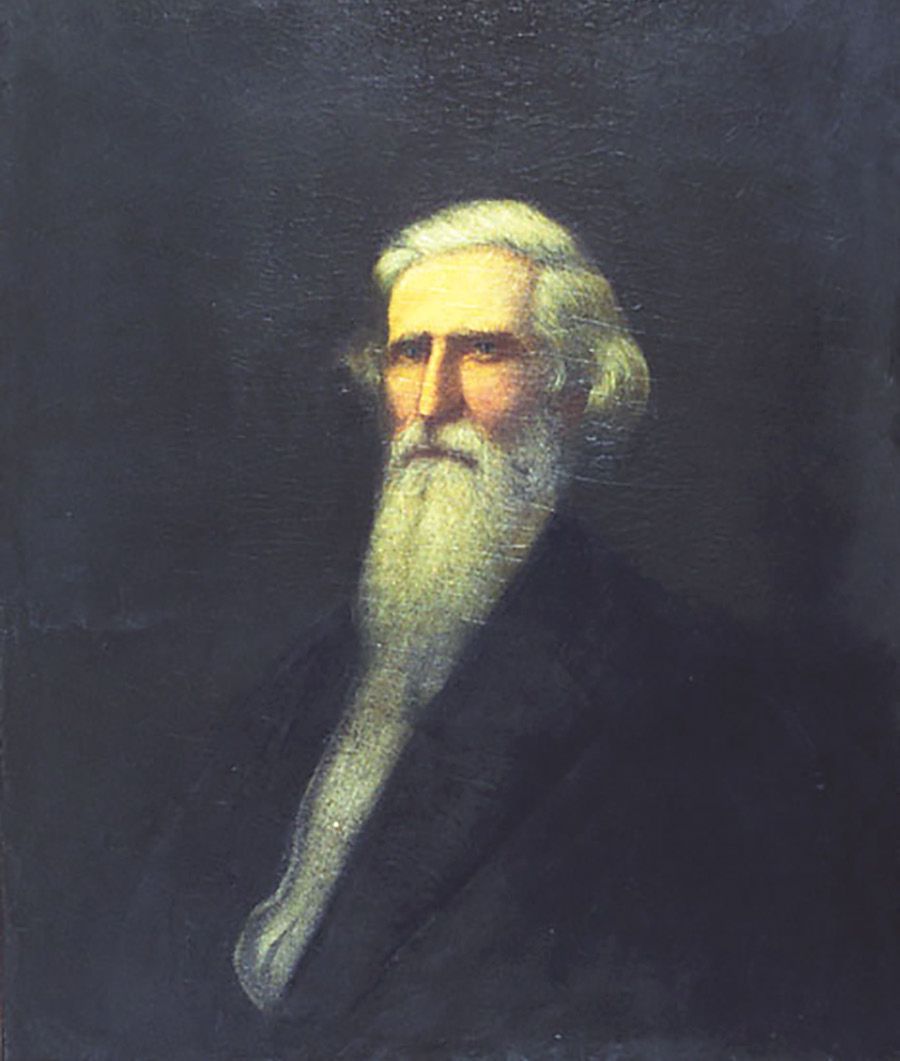
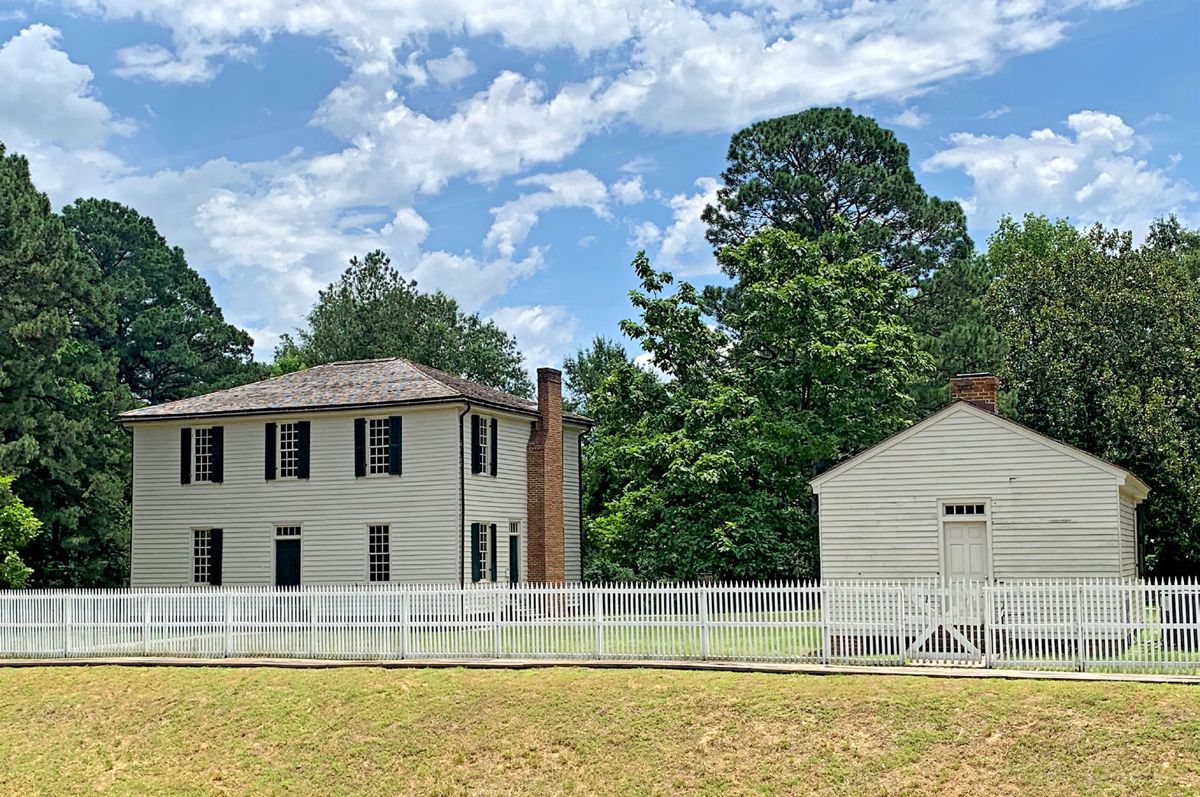
Governing Arkansas in the Civil War This & That By Gould Hagler elatively little is written about Arkansas’ role in the Civil War. It was a small state, and though a considerable percentage of Arkansas’ men served in the Southern armies, their numbers added only modestly to the Confederacy’s total. The few battles fought in the state were not large-scale affairs and the books devoted to them would not occupy a great deal of shelf space. Furthermore, while there are exceptions, few of its generals gained fame in the conflict. Similarly, the state’s governors are not as well-known as some of their counterparts to the east. There were three—two secesh and one tory, if I may employ the terminology those on one side would use for those on the other. This column will tell their stories and, I hope, illustrate the nature of the Civil War in this remote state. To quote The History Guy, whose mini-lectures I sometimes watch on YouTube, “It is history that deserves to be remembered.” We begin with Henry Massie Rector, a native of Kentucky who moved to Arkansas in 1835 at the age of 19. Rector was not the first of his clan to immigrate to the new state. His relatives, in fact, were part of its governing elite, “The Family,” as the political machine was known. Rector was a lawyer, with interests in banking and farming. He served in the General Assembly and held other political positions during the 1850s. In 1859 he was elected to a seat on the state’s Supreme Court where, according to the Encyclopedia of Arkansas, “his Henry Massie Rector. (Courtesy rulings were singularly inept.” of the Arkansas Secretary of Rector had a falling out with the machine, ran against its candidate for State’s Office and the Old State governor in 1860, and prevailed. He took the oath of office in November for House Museum) what he thought would be a four-year term. More on that below. Rector was a strong advocate for secession. In his first address to the General Assembly he declared that the election of Lincoln was invalid and proclaimed that Arkansas was therefore independent. While many others favored secession, no one accepted the idea that the governor could remove Arkansas from the Union just by saying it in a speech. The matter instead was put to a convention chosen by the voters. In March 1861, the delegates met but did not vote to secede, deciding instead to put the question directly to the people. Events overtook this plan, however. When the Confederates fired on Fort Sumter, Lincoln called upon the states for troops to subdue the “combinations too powerful to suppress” by civil courts or Federal marshals. Governor Rector replied with a defiant refusal, declaring that the people of Arkansas would “defend to the last extremity their honor, lives and property against Northern mendacity and usurpation.” The convention met again and in May voted to secede. The defiant governor would play only a short-lived role in the drama which was to follow. His political enemies undermined his authority as commander-in-chief by creating a state military board to oversee preparations for war. Furthermore, his term was cut short by a new constitution which provided for an election in 1862. After his loss in this go-round, Rector resigned. He sought a commission in the Confederate army but failed. He then joined the Arkansas Reserve Corps, where he served as a private until the end of the war. Rector’s successor was Harris Flanagin, originally from New Jersey, who settled in Arkansas in 1839. Flanagin taught school, practiced law and speculated in real estate. A Whig, he served two terms in the General Assembly in the 1840s. He was largely absent from the political scene in the next decade but returned as a delegate to the secession convention in 1861. He was “a reluctant secessionist,” according to the Encyclopedia of Arkansas, but after Lincoln’s call for troops he voted to secede. Commissioned a captain, he commanded a company of the 2nd Arkansas Mounted Rifles and later assumed command of the regiment when its colonel was killed in battle. While Flanagin was away soldiering, his name was put forth as a candidate to challenge Rector in the gubernatorial election. His supporters campaigned while he served in the army. He won by a large margin against the erratic and unpopular incumbent, who, in the closing weeks of his term, issued a proclamation threatening to secede from the Confederacy. Flanagin left the army and took the oath of office in November 1862. The new governor was supportive of conscription, and in that respect was more cooperative with Richmond than his predecessor. The Confederate authorities did not return the favor, however, as his attempts to gain more resources to defend Arkansas were unsuccessful. His efforts to raise state troops also bore little fruit. In August 1863, as the Federals advanced toward Little Rock, Flanagin and his government fled to Washington, 120 miles to the southwest, where they remained in exile for the duration. While many Arkansas men in the Confederate army battled east of the Mississippi, their state suffered enormously. Much of the state was a lawless no man’s land, reached neither by Flanagin’s ineffective and resource-starved government nor by the Federal troops which occupied some areas north of the Arkansas River. Conditions worsened as the war continued. Many people lost hope in the Confederate cause and longed for peace. Flanagin himself believed the war was lost. We now turn to the Tory governor, Isaac Murphy. He, like his secesh counterparts, was an immigrant, moving to Arkansas from his native Pennsylvania in 1834, the year before statehood. Murphy was mainly a Governor Harris Flanagin. teacher and did some lawyering on the side. In politics he was a Democrat, but he opposed the powerful political machine. After Fort Sumter and Lincoln’s call for troops, Murphy was one of the five delegates to the secession convention who voted against leaving the Union. Unlike the other four, after the vote was taken and the matter settled, he adamantly refused to change his vote as a symbolic show of solidarity. Murphy at first continued to live at his home in Huntsville but his neighbors’ hostility ultimately forced him to relocate to the safety of Missouri. There he organized an Arkansas regiment to fight for the Union. In August 1863 he returned to Little Rock with the Federal army as Flanagin’s government moved out. The following March he won election to head the Unionist state government. The Official Records contains documents from early 1865 that are informative about the final months and days of the war in Arkansas and the activities of Murphy and Flanagin at this stage. These documents shed light on the conditions that existed as prospects for a Confederate victory faded away and as Arkansas transitioned back into the Union. On February 9 a committee of men from Fort Smith, on the western border of the state, sent a resolution to President Lincoln, “from the loyal citizens of this city.” The whereases of the resolution recounted the miserable condition of the people Hempstead County’s 1836 Courthouse, used as the State Capitol by in the area, plagued by “guerrillas Gov. Flanagin’s government-in-exile. The smaller building is the and other lawless persons.” reconstructed Clerk’s Office. (Photo by Josh Williams, Park Curator, They begged for “temporary Historic Washington State Park)
and speedy succor in the days of their adversity.” The resolution was forwarded to Lincoln with the endorsements of Governor Murphy and three Federal brigadier generals. Later that month Representative James Orr of Marion County wrote Governor Murphy that “Several counties in Northwestern Arkansas have been almost depopulated in consequence of the withdrawal of U.S. troops from that section of the state. Those persons are now in Missouri, and have left their property to be destroyed by the numerous bands of guerrillas that infest that country.” Orr sought permission to raise troops, five companies of men from these loyal counties. The presence of these troops, with material support from the Federal army, would enable the destitute refugees to return and cultivate their land. As in the Fort Smith case, the request was endorsed by high-ranking Federal generals. On May 23, 1865, five Unionist citizens of Ashley County, near the southeast corner of the state, wrote Murphy to advise him that all the local offices were “filled with rebels of the deepest dye.” These officials had invited “a band of Missouri thieves” to establish headquarters in the county seat of Hamburg. These men were “stealing and plundering the Union people of all they possess.” The citizens pleaded for help and expressed their hope that the counties in the region could “be organized and officered by true Union men.” Murphy’s reply is not recorded in the OR. With very little money and control over very little territory, Governor Flanagin was unable to do much governing. However, some of his activities late in the war are of interest. On May 13, 1865, he participated in a conference with Gen. E. Kirby Smith in Marshall, Texas, along with the governors of Louisiana, Missouri, and Texas. Smith wished to confer with what civil authorities he could gather to seek advice as to the best course of action. Armies further east had surrendered, but Smith questioned whether it would be honorable to surrender an army which had not been defeated and, indeed, was under no immediate threat from Federal forces. The terms suggested by the four governors were terms for peace, not a surrender of an army. In effect the governors called for a return to status quo ante bellum. The Federal general to whom these terms were presented wrote in his report that “At all times I declined entertaining their various propositions.” With Smith’s army melting away, and his own chief-of-staff signing a surrender document on May 26, the angry general had no choice but to endorse his subordinate’s action. He signed the surrender on June 2. The terms were essentially the same as those accepted by Lee at Appomattox. Flanagin knew the situation and could not have been at all surprised at the reaction to the governors’ proposals. “As far as I know,” he wrote on May 22, “there is not a man of ours in arms in this state.”* With no Confederate forces still flying the flag, he proposed a course of action by which Arkansas would return to the Union. He dispatched a threeman delegation to deliver the proposal to Maj. Gen. J.J. Reynolds in Little Rock. Flanagin wanted to convene the General Assembly to repeal the ordinance of secession, then adjourn. Local officials under his administration would remain in place,
&
as would those under Murphy’s administration. Flanagin would resign and Murphy would continue in office. This proposal was perhaps more realistic than what the governors had recommended on May 13, but was not at all acceptable to the Federal authorities. Reynolds agreed to meet with the delegates “only as private citizens, divested entirely of any official character.” He rejected their proposals. He said that “the rebel Legislature would not be permitted to assemble.” Should any members attempt to do so they would “be seized as prisoners.” He refused to give any assurance that he would not make a movement into southern Arkansas, as Flanagin had proposed, but he agreed with Flanagin’s view that such an operation was “unnecessary from a military point of view, as the few soldiers left in Arkansas were deserting every day, and all would do so if let alone for a short while.” He did state that he would not arrest Flanagin unless ordered to do so. In his report he referred to Flanagin as “Mr. H. Flanagin,” not as “Governor Flanagin.” Reynolds arranged to send for the state’s records as soon as they were collected, and agreed that “Mr. Flanagin” could deliver them to Little Rock in person, as Flanagin had specifically requested. As Reconstruction began under Lincoln’s Ten Percent Plan, Murphy remained governor. However, his effectiveness was greatly diminished after the 1866 election, when a coalition of Democrats and former Whigs won a majority in the General Assembly. The lenient plan of Reconstruction was soon replaced by the harsher Congressional Reconstruction, and Arkansas was placed under military rule. The state was readmitted to the Union on June 22, 1868. Murphy left office on July 2, giving the keys to the newly elected governor, former Union Gen. Powell Clayton. Federal troops continued to occupy the state until 1870. Murphy went home to Huntsville, where he resumed his former occupations, farming, and the law. He died in 1882. Flanagin too went home, to Arkadelphia, and to his law practice. He was a delegate to the 1872 Democratic National Convention and was also a delegate to the convention which drafted the state’s 1874 Constitution. He died in 1874. Henry Massie Rector, late governor and private in the Arkansas Reserve Corps, lived in Little Rock until his death in 1899. *Flanagin’s statement is an exaggeration, but only a slight one. Brig. Gen. M. Jeff Thompson commanded the Sub-District of North Arkansas, but his troops were no longer interested in fighting and could not be compelled to do so. Thompson surrendered them on May 25 and June 5. Some 5,000 showed up for the proceedings. Many others just went home. Sources: Encyclopedia of Arkansas, https://encyclopediaofarkansas.net; OR, Ser. 1, Vol. 48, Pts. 1 and 2.
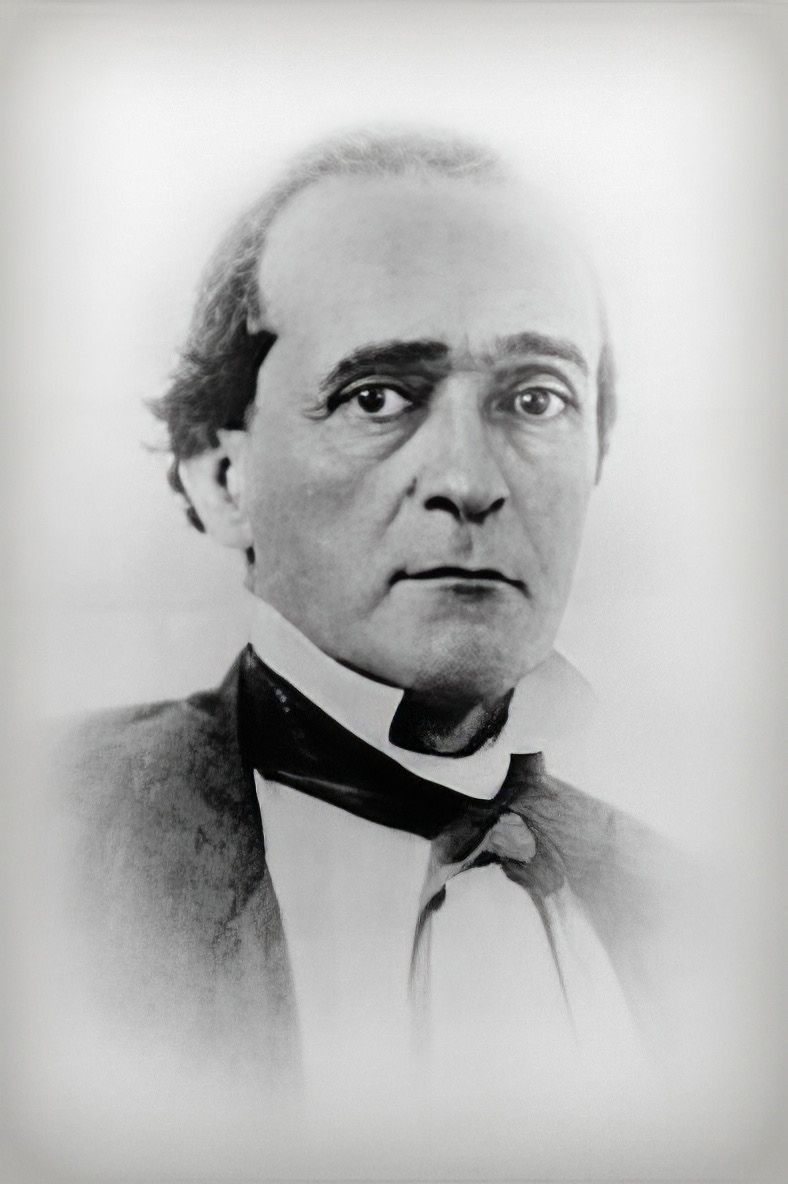
Gould Hagler is a retired lobbyist living in Dunwoody, Ga. He has been a regular contributor to CWN since 2016. He can be reached at gould. hagler@gmail.com.