
“The Place...Shall Be Destroyed by Fire”
By Jonathan A. Noyalas · Originally published September-October 2024 · pp. 18–25
“The Place…Shall be Destroyed by Fire”: General David Hunter and the
Newtown Burnings, Spring 1864 By Jonathan A. Noyalas
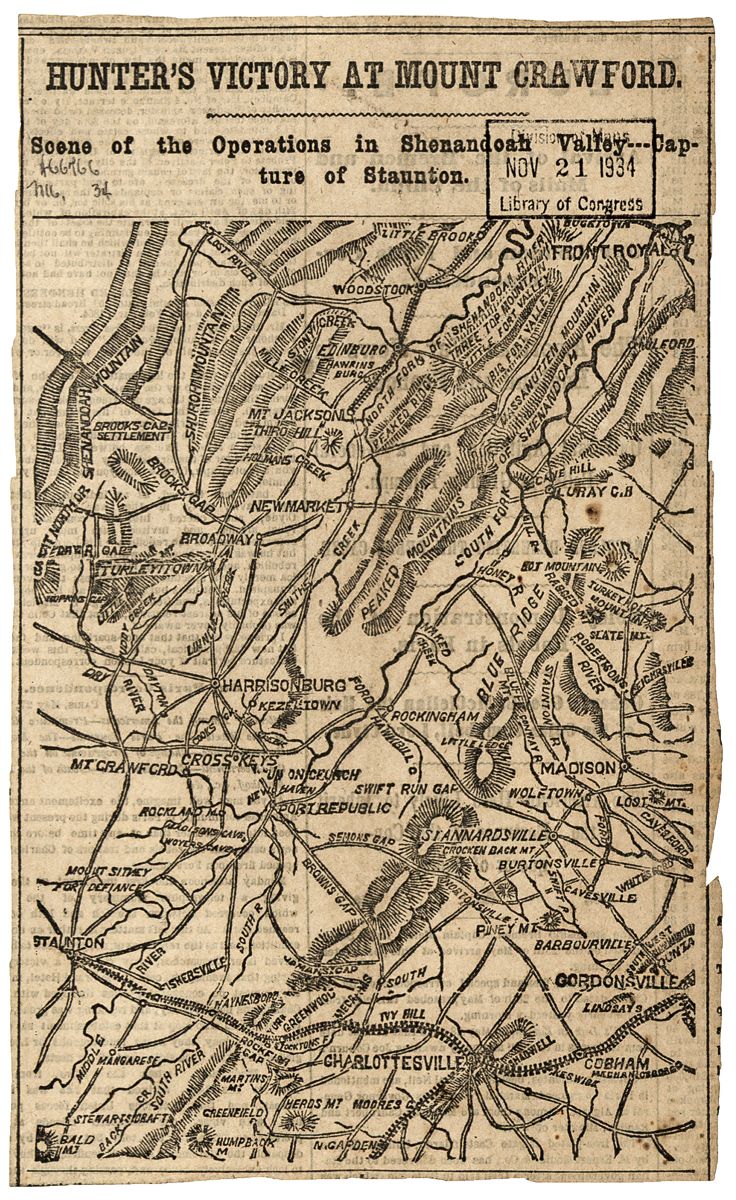
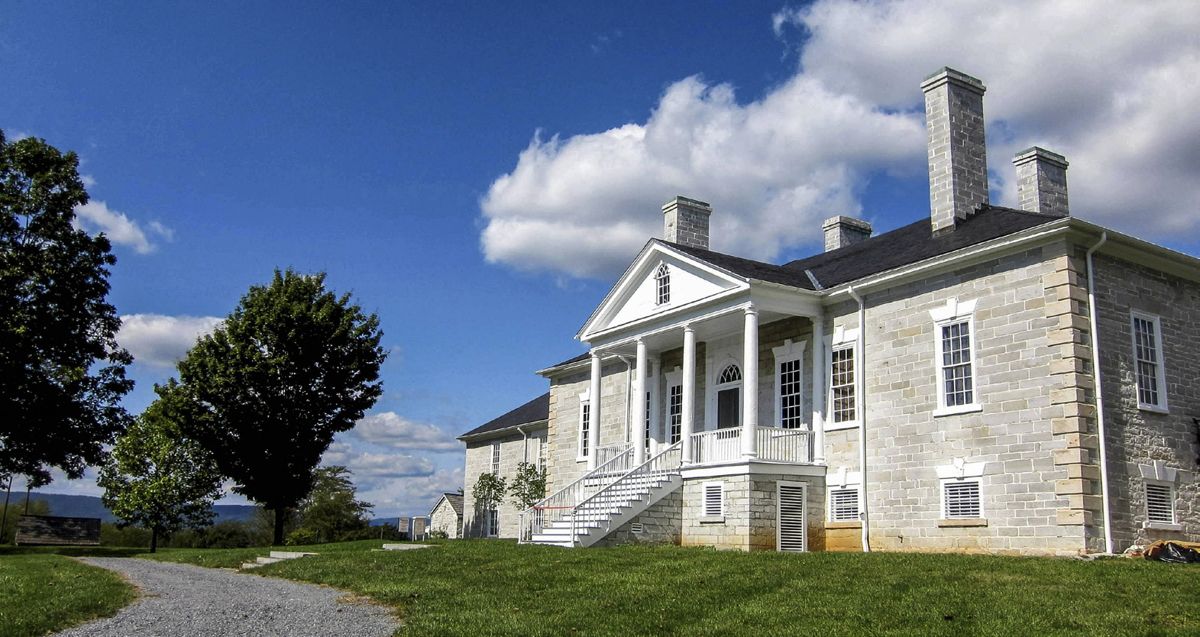
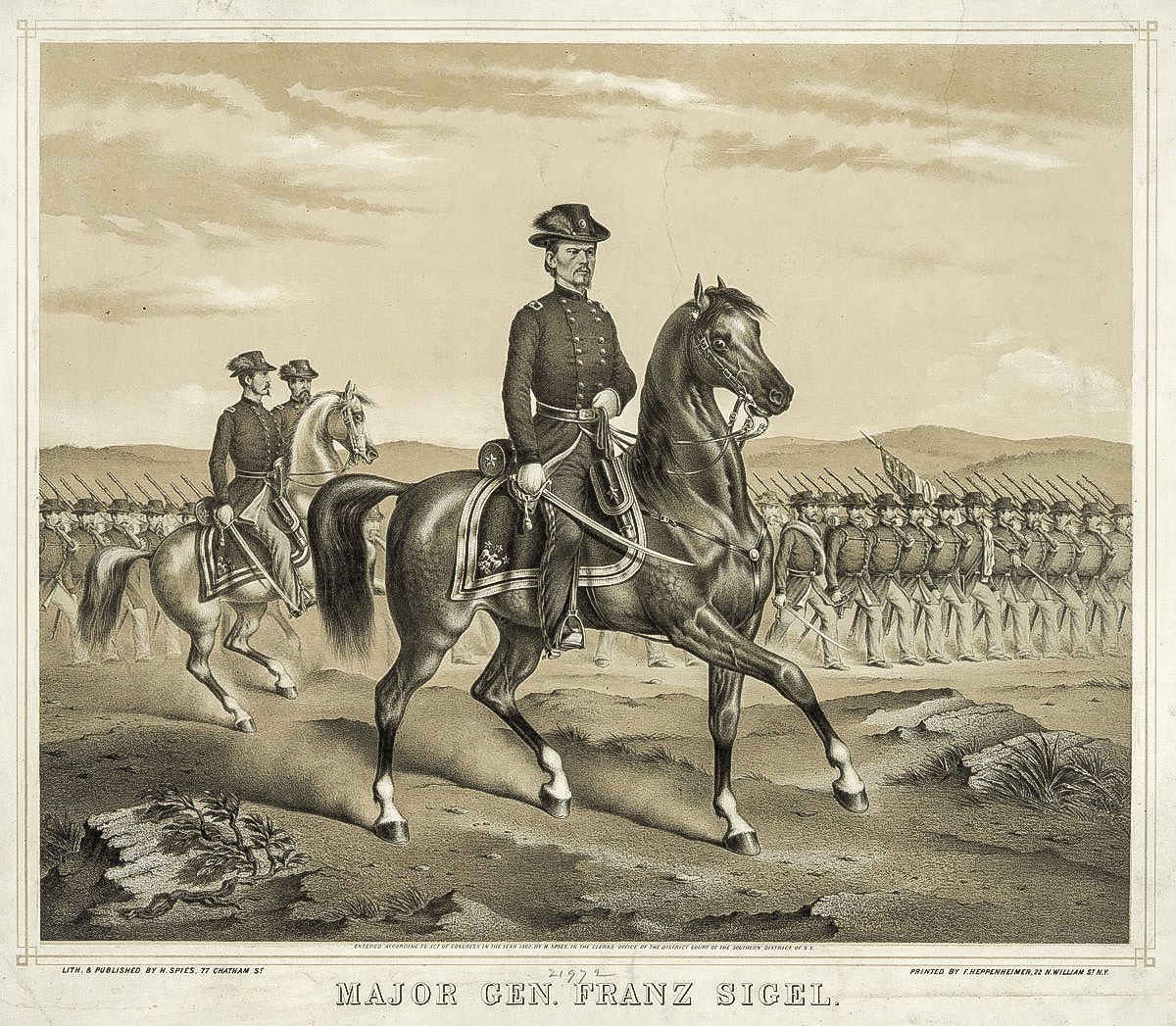
On the evening of May 21, 1864, Colonel David Hunter Strother, a Shenandoah Valley native and a member of Union general Franz Sigel’s staff, stood on the front porch of Belle Grove and contemplated why failure incessantly plagued Union forces in the Shenandoah Valley, including six days earlier at the Battle of New Market. Strother confided to his diary that night that he “was thoroughly disgusted… and yearning for the quiet and peaceful companionship of my family.” Believing Sigel possessed “no capacity to fight with troops in the field” Strother considered petitioning Sigel for “leave to retire to” his native Martinsburg, West, Virginia.1 While Strother contemplated his future a group of officers approaching on horseback distracted him. In the dim light, Strother could not see faces, but could clearly “saw the triple buttons of a major general.” As Strother walked down the steps to meet the group the major source [Staunton], and if Sigel can destroy the road there, general’s face came into focus—it was Strother’s cousin, it will be of vast importance to us,” Grant wrote to General Major General David Hunter.2 Henry Halleck on May 17.3 Late that night Halleck shared the Although Sigel was defeated at New Market, General in unfortunate news with Grant that Sigel was “already in full Chief Ulysses S. Grant hoped he might regroup and push retreat” north toward Strasburg. Halleck explained bluntly south to Staunton, the Confederacy’s most significant that Sigel “will do nothing but run.”4 If Grant hoped to wrest logistical base in the Shenandoah Valley, and destroy it. the strategically vital Shenandoah Valley from Confederate “The enemy is evidently drawing supplies largely from that control he recognized Sigel needed to be replaced. While Grant quipped that “anyone else” would be a marked improvement over Sigel, he supported President Abraham Lincoln’s and Secretary of War Edwin Stanton’s recommendation to replace Sigel with Hunter.5 From the moment Hunter arrived at Belle Grove he discovered numerous deficiencies within his new command, the Department of West Virginia. Although troubled by a great deal, including officers he believed incompetent, Hunter’s paramount concern was silencing Confederate partisans and bushwhackers. 6 While regarded by some Confederate Belle Grove plantation, most associated with the Battle of Cedar Creek, sympathizers as “chivalric served as Sigel’s and Hunter’s headquarters in the late spring of 1864. paladins, or knights errant,” (Wikimedia Commons) Hunter and his command viewed
Confederate partisans, such as John Singleton Mosby and Harry Gilmor, as an “utterly cowardly gang of horse and chicken-thieves, highway robbers, grand and petty larcenists, that the Lord… ever permitted to disgrace the noble calling of the soldier.”7 Rather than employ a strategy that directly targeted Confederate partisans, Hunter fashioned an aggressive policy aimed at the region’s Confederate civilians. Hunter understood that Confederate civilians provided critical logistical support, refuge, food, and information, that permitted Confederate partisans to operate. “Without the countenance and help given to them by the rebel residents of the valley, they could not support themselves for a week,” Hunter wrote.8 Three days after Hunter took command he issued a circular to Confederate sympathizers throughout Frederick County, Virginia, that blamed Confederate civilians for all the ills inflicted by partisans on Union forces. “It is from you and your families and neighbors that these bandits receive food,
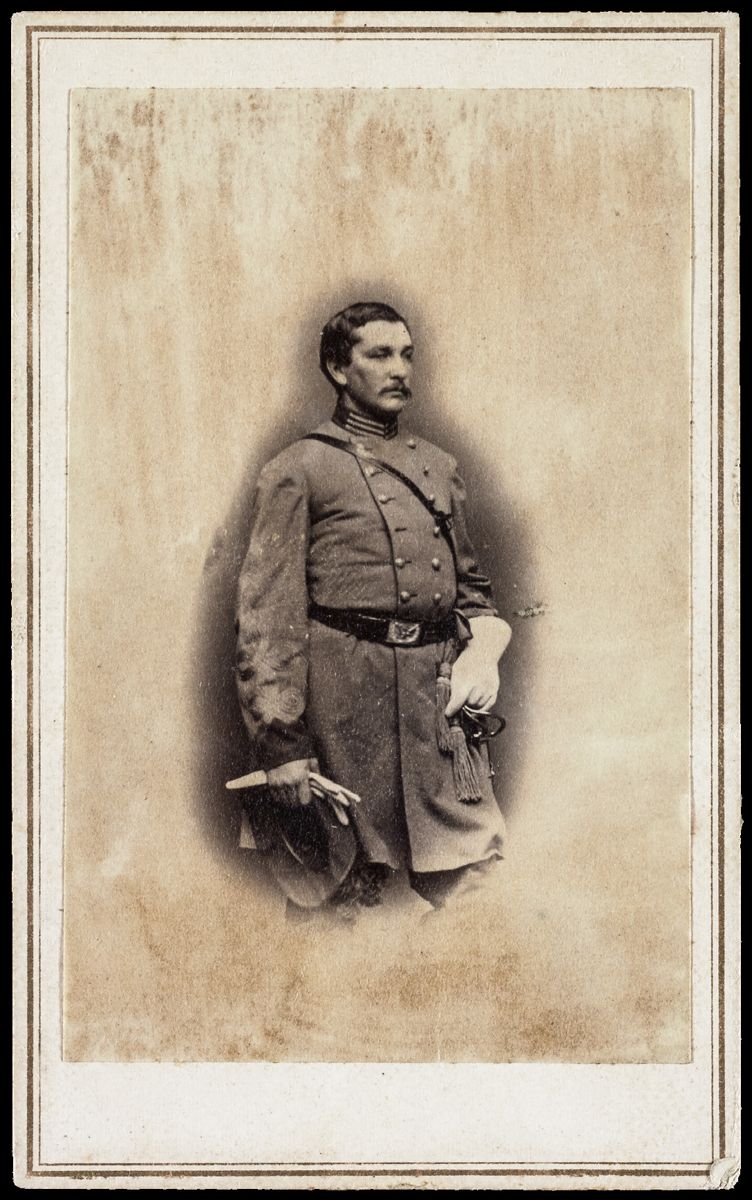
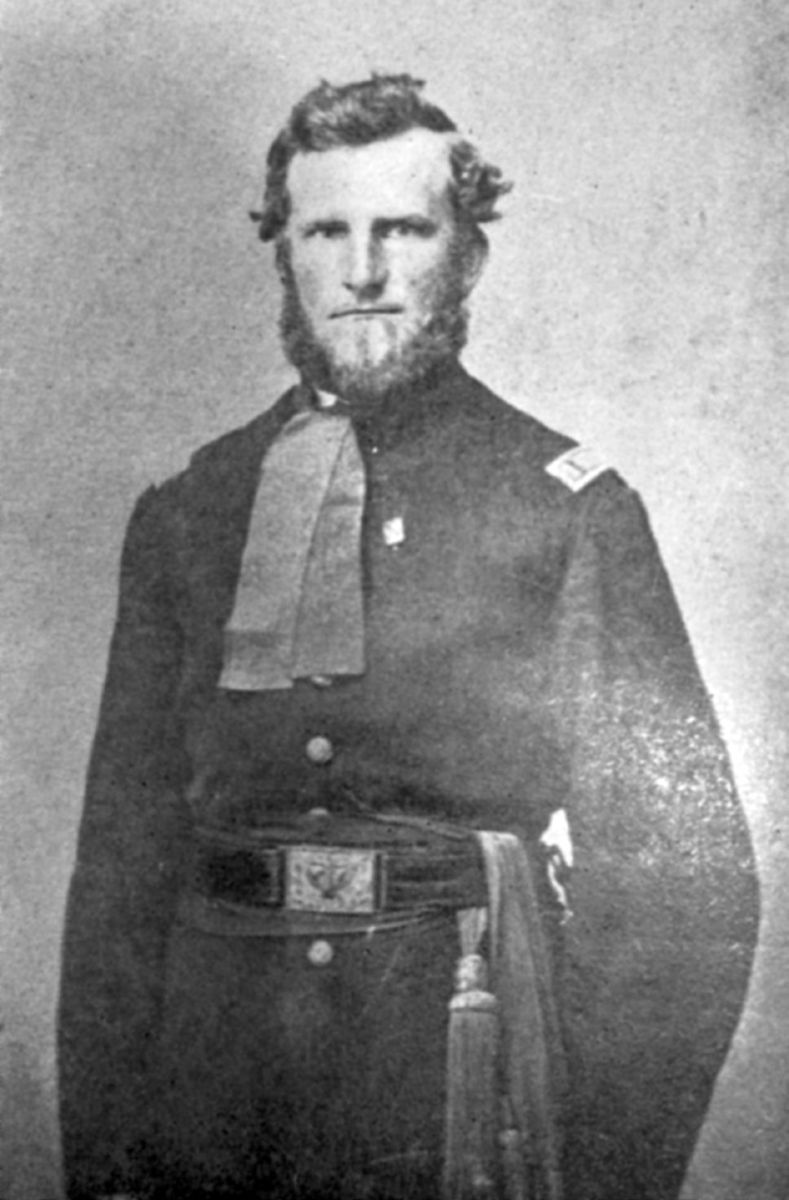
Major General David Hunter. (Library of Congress)
clothing, ammunition and information; and it is from their secret hiding-places in your houses, barns and woods, that they issue on their missions of pillage and murder,” Hunter explained.9 To curtail the “bandits,” Hunter directed that in the case of any attack on a Union wagon train or soldier “the houses and other property of every secession sympathizer residing within a circuit of five miles from the place of outrage, shall be destroyed by fire.” Additionally, Hunter threatened that “all public property jayhawked or destroyed by these marauders, an assessment of five times the value of such property will be made upon the secession sympathizers residing within a circuit of ten miles around the point at which the offence was committed.”10 On the day Hunter issued the order three bushwhackers attacked a Union wagon train passing through Newtown (present-day Stephens City). They cut the horses loose, abandoned a wagon on Valley Pike, and fled north toward Winchester. Hunter responded by ordering Major Timothy Quinn, First New York Lincoln Cavalry, to burn three homes on May 25. The first was the location where, Hunter believed bushwhackers rendezvoused regularly, the home of Benjamin Harman. Next, Hunter targeted the home of slave trader Dolph White. The third structure Hunter condemned was the “house from which our train was fired upon last night.”11 At the time Hunter issued the order he could not precisely identify where the attack occurred. However, after Quinn discovered the abandoned Union wagon in front of Reverend John Wolfe’s residence, Quinn concluded this is where the attack must have occurred and ordered Wolfe’s home burned. Although the wagon stood in front of Wolfe’s home, the attack did not occur there, but several blocks south in front of the Steele residence located on the Valley Pike’s west side. Before the Lincoln Cavalry’s arrival, a free black man from Newtown, Ed Banks, discovered the wagon and attempted to take it for his use. Without horses or any other assistance, Banks attempted to move the wagon and hide it. However, after manhandling it north for several blocks Banks tired and parked it in front of Wolfe’s residence. While fortuitous for the Steele family, it condemned Wolfe’s home.
Nobody was present in the house when Quinn’s troopers entered and started “pouring oil all over the furniture.” After Mary Walls, who lived a short distance away, learned from a man she enslaved, Henry, that “the Methodist Parsonage… was surrounded by Yankees,” she bolted to Wolfe’s home and attempted to stop Quinn’s cavalrymen. She tried to save a handful of items. As flames consumed the house Wolfe arrived and tried to save some of his “books and papers.”12 In the aftermath of the burnings Confederate civilians in the area fretted for their safety. The Shenandoah Valley’s Unionists, however, felt little sympathy. One Frederick County Unionist confided to her journal: “We think it exactly right. If persons will harbor these outlaws, they must expect the consequences.”13 Following the burnings, four of Newtown’s male citizens requested a meeting with Hunter to explore what the community’s residents could do to avoid future destructive
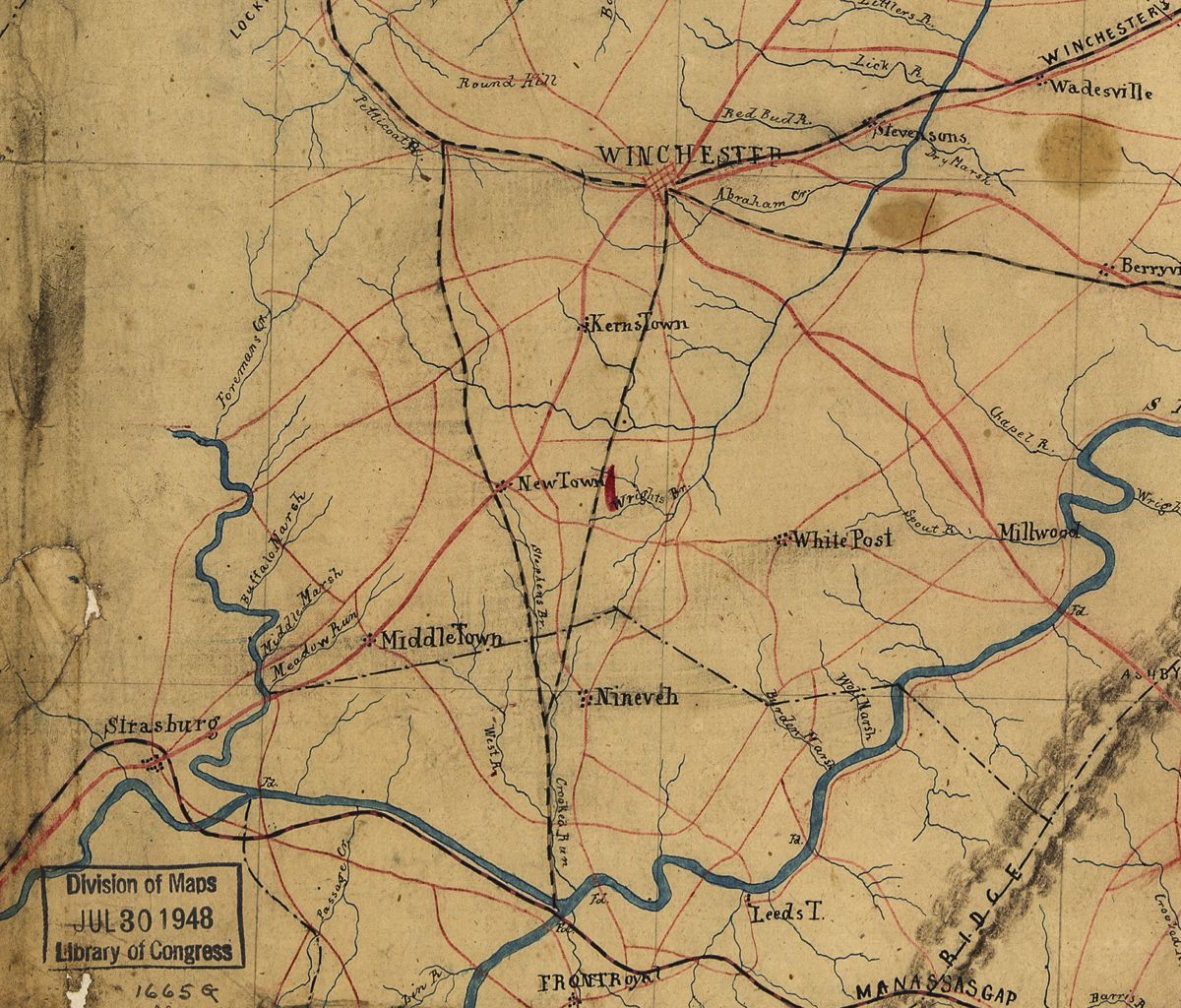
Detail of map prepared by Jedediah Hotchkiss showing Newtown, circled in white, and vicinity. (Library of Congress)
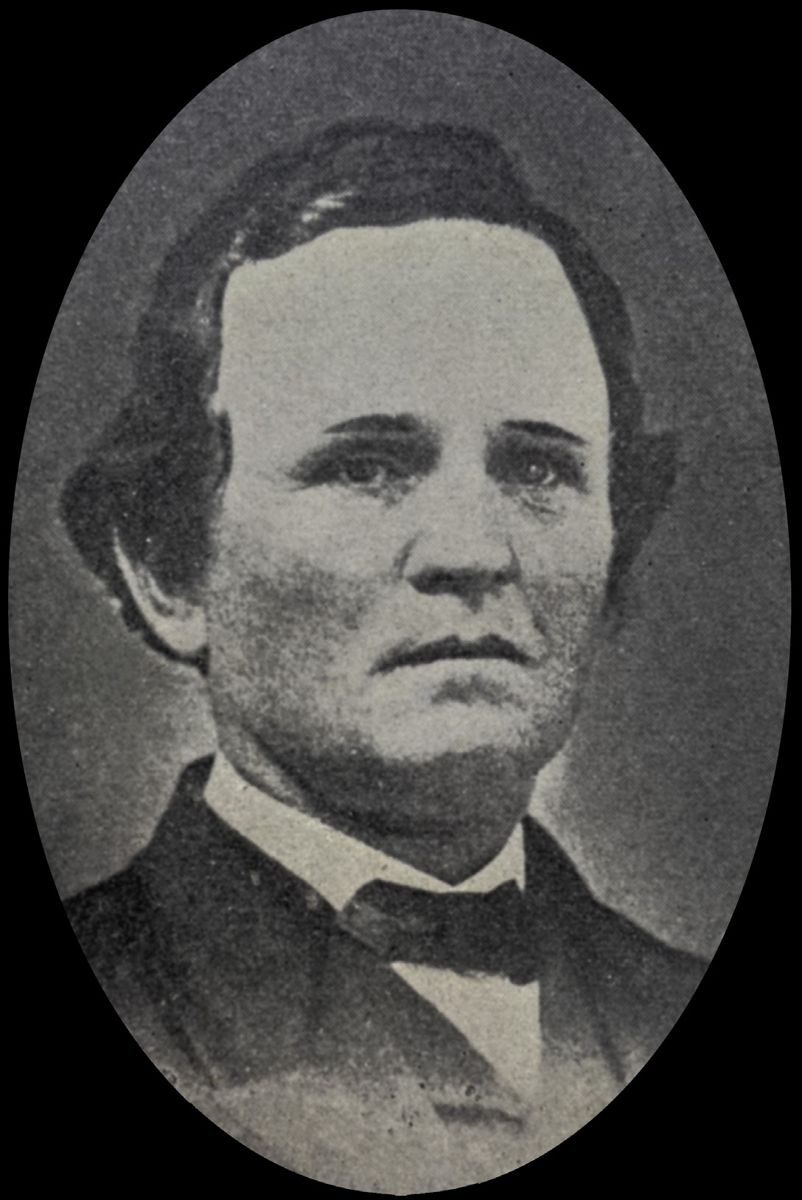
retaliation. Hunter sent Strother to speak with them. When Strother met with them on Middletown’s outskirts he informed them that they could safeguard their property by refusing to assist partisans, provide Union authorities with information about Confederate activities, turn in bushwhackers, and reveal the identity of civilians who supported irregulars.14
After all Wilson owned had been transformed into an ash heap the Pennsylvanians bound her hands, tied her to a lead rope attached to a horse, and proceeded south to Hunter’s headquarters at Belle Grove. As the cavalrymen started south a torrential “downpour” began. A few miles into the journey one of the troopers looked at Wilson, exhausted, defeated, bedraggled, and soaking wet, and implored his comrades to stop. “Boys, I can’t stand any more of this, what if this was your mother,” the Pennsylvanian exclaimed. The cavalryman untied Wilson, placed her on his horse, and carried her the remaining distance to Middletown.18 When Wilson arrived in Middletown she “thanked the soldier and told him at least she had found one Yankee who had a little bit of feeling for an old woman.”19 When Wilson reached Hunter’s headquarters he required her to take an oath of allegiance which demanded she “faithfully support, protect and defend the Constitution of the United States, and the union of States.”20 Once Wilson swore the oath Hunter set her free with nothing but the clothes on her back.21
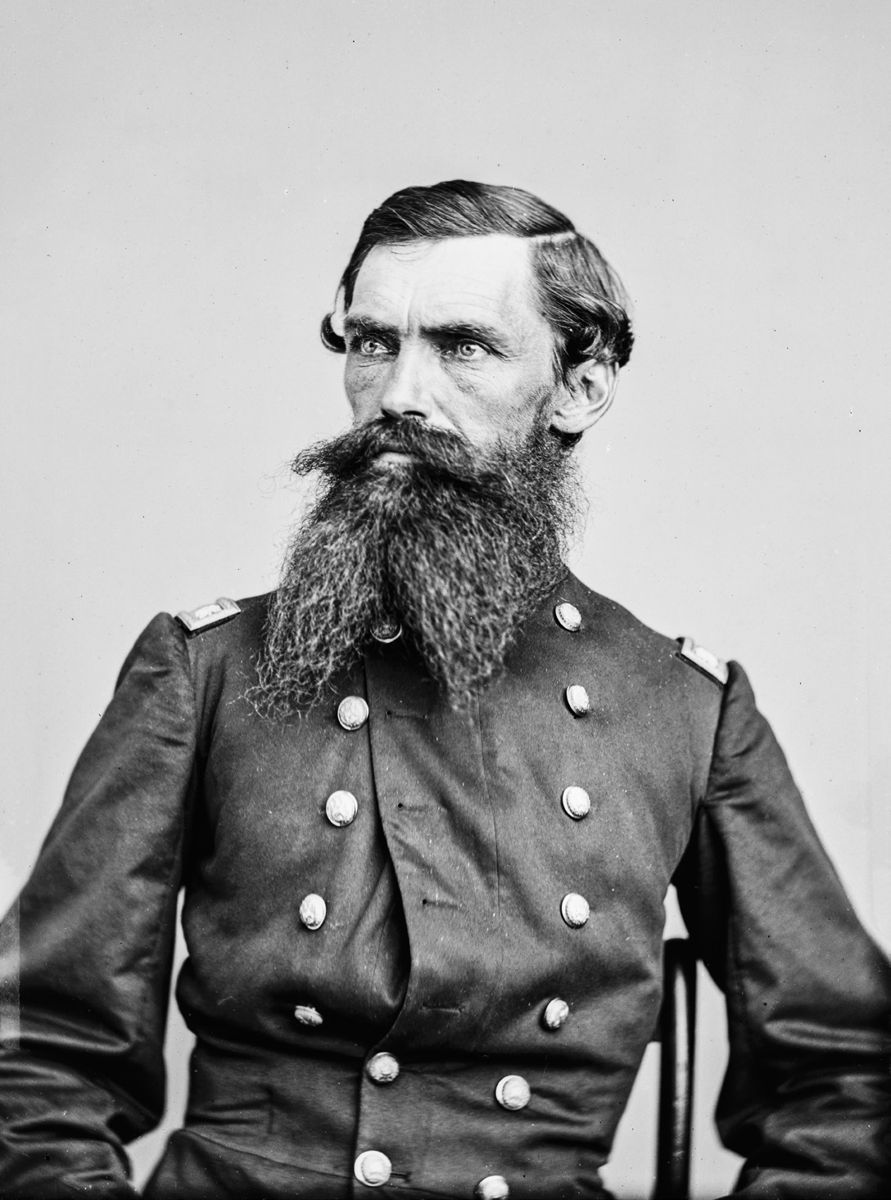
Colonel David Hunter Strother. (Library of Congress)
Once Strother finished speaking, Newtown’s representatives informed him that Mary Wilson, a sixtyyear-old widow, regularly allowed bushwhackers to gather at her home. After Hunter received this information he charged Wilson with “feeding and harboring guerillas” and ordered a detachment of the 20th Pennsylvania Cavalry to arrest Wilson and burn her home.15 When the troopers arrived at Wilson’s residence they found her “in the yard making soap.”16 Shortly after the Pennsylvanians arrived they discovered that Wilson rented the house. Since Wilson did not own the building the cavalrymen decided to spare the house, but remove Wilson’s belongings and burn them in the street. Initially, as the troopers emptied the home’s contents, Wilson reasoned the troopers did this to save her possessions. So deeply moved by what she thought was a great act of kindness Wilson aided in the effort. Wilson quickly realized how mistaken she was when the Pennsylvanians tied her to a rocking chair and forced her to watch the flames consume all she owned.17
While disclosing Wilson’s support for bushwhackers provided a sense of confidence among Newtown’s residents that Hunter would spare their community any further vengeance, that feeling rapidly dissipated on May 29. That day 53 Confederates commanded by Colonel Harry Gilmor attacked 16 Union wagons guarded by 83 men of the 15th New York Cavalry on the community’s southern outskirts near Stephens Run.22 Gilmor had been tracking this wagon train since it left Martinsburg the previous day. On the afternoon of May 29, Gilmor’s men hid in a body of woods south of Kernstown and watched the wagon train pass. Although it did not have an infantry escort, only cavalry, Gilmor suspected infantry might be in the wagons “ready to give us a broadside.”23 Gilmor believed it best to let the wagons pass, continue south, and when the train entered Newtown “charge them in the rear [and] stampede the wagons.”24 After the wagons passed through Newtown some of the community’s inhabitants fretted for the town’s safety when they spied Gilmor’s men riding south. Newtown’s Confederate civilians understood that if Gilmor attacked, Hunter would seek fiery retribution. While citizens agonized about the prospect of what might happen Eliza Kern Steele aimed to stop Gilmor. Steele, whose home would have been burned on May 25 had it not been for Ed Banks’s exploits, pleaded with Gilmor to not attack.25 Gilmor ignored Steele’s appeal and struck the Union wagon train, commanded by Colonel Augustus Root, on Newtown’s southern outskirts near Dr. Thornton McLeod’s limestone home. Although Gilmor recalled that Root’s troopers “stood their ground manfully” on the high ground surrounding McLeod’s property, efforts to resist Gilmor’s attack proved futile and Root withdrew south.26 About one mile south of Newtown, Root encountered troops from Colonel Cyrus
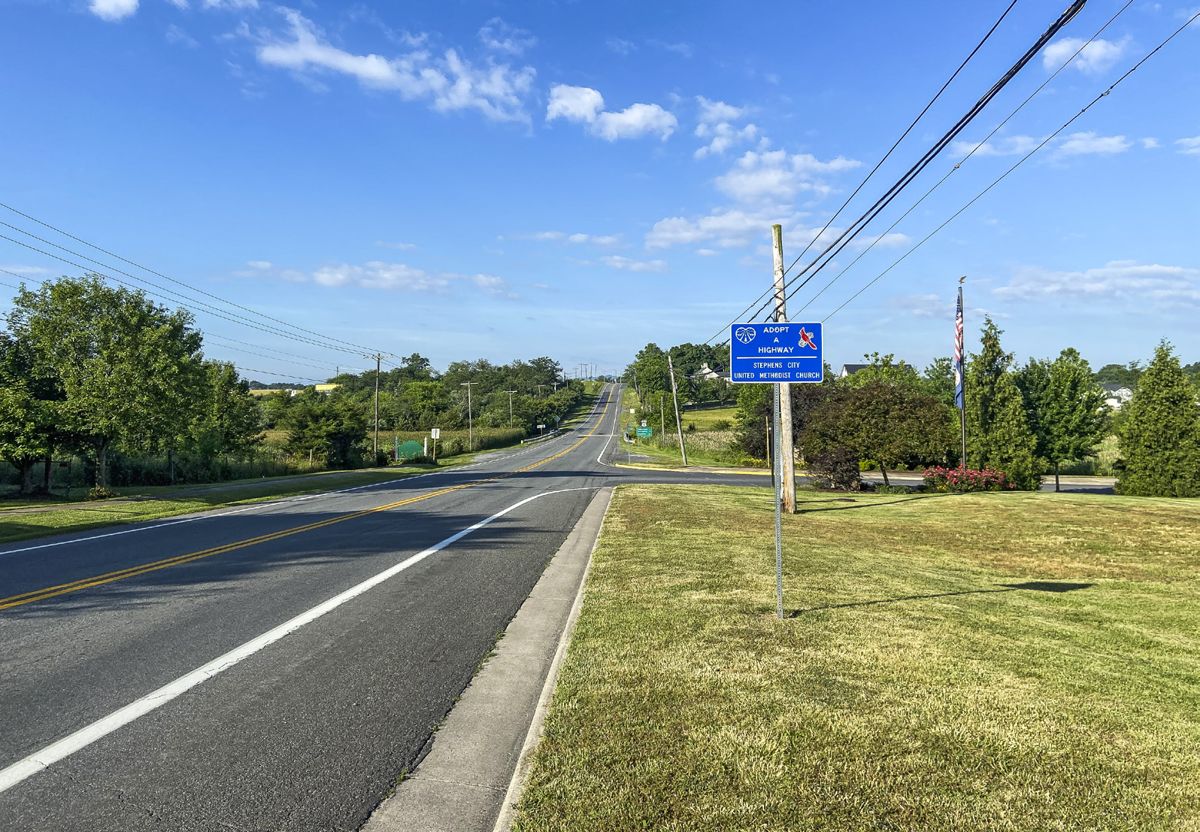
Reasoner’s 160th Ohio Infantry. With assistance from Reasoner, Root thought he might be able to reverse the day’s fortunes and salvage some of the wagons’ contents. Reasoner’s Buckeyes, a hundred-day regiment, moved “forward at double quick,” but by the time they arrived the wagons were, as Captain Simeon Siegfried remembered, engulfed in flames “burning… in the street.”27 Some Newtown residents believed Gilmor’s attack would leave them ‘houseless before to-morrow night.’28 This was more than Gilmor “could bear.” To discourage retaliation from Hunter, Gilmor sent a “communication to General Hunter” that stated he “held thirty-five men and six officers as prisoners … would take them to a secure place in the Blue Ridge and upon receiving intelligence that he had carried out his threat… would hang every one of them.” Gilmor also posted his threat on the wall of Samuel Hull’s Store located on the east side of the Valley Pike, less than one mile from where the attack occurred.29 Hunter seethed when he learned of Gilmor’s attack, one that resulted in eighteen casualties, including the death of Captain R.H. Brett, and the destruction of federal property.30 On May 30, Hunter sent a dispatch to Major Timothy Quinn ordering him to “detail” from his “command 200 men… to proceed to Newtown… for the purpose of burning every house, store, and out-building in that place.” Hunter directed the New Yorkers to spare “the churches and the houses and out-buildings of those who are known to be loyal citizens.”31 Quinn sent 200 troopers commanded by Major Joseph Stearns. Stearns’s detachment, encamped nearly forty miles south of Newtown near Rude’s Hill, began its northward journey on May 31. Although Stearns kept the mission’s objective a secret some men surmised, as they bivouacked that evening on Newtown’s outskirts, that they were being sent to Newtown to burn it. One of Stearns’s subordinates, Lieutenant William Beach recalled that the New Yorkers “suspected that the purpose of this expedition was to burn the town.”32 While rumors circulated throughout Stearns’s camp, Newtown’s residents braced for the worst. When they learned of the New Yorker’s proximity to town citizens frantically, as one resident remembered, “rushed to their homes and commenced… burying” valuables. Annie Frank, one of the town’s inhabitants, reportedly put on six of her dresses to spare them. Ella Weaver packed clothes into a basket and hid them “in an outbuilding, ready to grab up at a moment’s notice.”33 As Stearns’s cavalry Modern-day view of the area where Gilmor attacked the Union wagon train trotted into Newtown on the on May 29, 1864. (Photograph by Jonathan A. Noyalas)
While the New Yorkers believed they acted justly, Stearns and his subordinates feared Hunter’s wrath. Indeed, Hunter fumed with indignation when he learned of Stearns’s refusal to carry out the order. Although Hunter might have wished to chastise Stearns, David Hunter Strother came to Stearns’s defense. Strother eventually convinced his chief that “Stearns was right.”38 Although Newtown avoided complete annihilation on June 1, the destruction that occurred there during the final week of May foreshadowed much greater devastation in the Shenandoah Valley in the coming months. Additionally, threatening destruction of civilian property as a way to combat Confederate partisans sobered the Shenandoah Valley’s Confederate sympathizers to the reality, as one Frederick County inhabitant wrote, that the spring of 1864 marked the advent of “another era in our war life.”39
Endnotes 1.
morning of June 1 it seemed clear that they wanted no part in destroying the town. Lieutenant Beach wrote that the command appeared “more like a funeral procession than a marching army.” The scene of the community’s “old people and children… standing in the doorways with an expression of mute helplessness on their faces” deepened their despondency. One regiment veteran remembered that as they entered Newtown the cavalrymen’s hearts “beat with more trepidation than when going into battle.” Fully aware that his command did not want to “obey” Hunter’s “orders to burn,”34 Stearns and his officers “consulted and decided to disobey.”35 Stearns of course knew he could not depart Newtown without taking some sort of action. He decided to have the community’s inhabitants “take an oath of allegiance to the Union” and therefore “spare the town.” The New Yorkers administered the oath at Hull’s Store. Taking the oath, in the estimation of Newtown’s inhabitants, seemed a small price for protecting their homes and property. One resident noted: “Word was sent to the citizens to come to Mr. Hull’s and take the oath. We complied with this request.”36 Although Gilmor believed that the threat he made saved Newtown, Stearns claimed ignorance of Gilmor’s ultimatum. One of Stearns’s subordinates explained that “Major Stearns and his officers knew nothing of this threat… They had made up their minds before reaching Newtown, that they would not obey the orders to burn.”37
Cecil D. Eby, Jr., A Virginia Yankee in the Civil War: The Diaries of David Hunter Strother (Chapel Hill: University of North Carolina Press, 1989), 229-230. Ibid., 231. O.R. ser. 1, vol. 37, pt. 1, 475. Halleck to Grant, May 17, 1864, quoted in John Y. Simon, ed., The Papers of Ulysses S. Grant (Carbondale: Southern Illinois University Press, 1982), 10: 460. O.R. ser. 1, vol. 37, pt. 1, 492. Clay Mountcastle, Punitive War: Confederate Attacks and Union Reprisals (Lawrence: University Press of Kansas, 2009), 121. Charles Graham Halpine, Baked Meats of the Funeral (New York: Carleton, Publisher, 1866), 336. General David Hunter, “In the Field, Valley of the Shenandoah, May 24, 1864,” quoted in New York Times, June 3, 1864. Ibid. Ibid. O.R. ser. 1, vol. 37, pt. 1, 528. William D. Wintz, ed., Civil War Memoirs of Two Rebel Sisters (Charleston, WV: Pictorial Histories Publishing, 1989), 37. Julia Chase Diary, May 24, 1864, Chase Papers, Stewart Bell Jr., Archives Room, Handley Regional Library, Winchester, VA. New York Times, June 3, 1864. Eby, A Virginia Yankee, 236. Wintz, Civil War Memoirs, 38. Ibid.; Eby, A Virginia Yankee, 236. Linden A. Fravel, ed., “Between the Lines: The Civil War Diaries, Letters and Memoirs of the Steele Family of Newtown/Stephens City, Va., 1861 to 1864,” 150, Unpublished manuscript current as of 1/19/2003, Newtown History Center, Stephens City, VA. Wintz, Civil War Memoirs, 38. Roy P. Basler, ed., The Collected Works of Abraham Lincoln (New Brunswick, NJ: Rutgers University Press, 1953), 7: 54. Wintz, Civil War Memoirs, 38; Eby, A Virginia Yankee, 236. O.R. ser. 1, vol. 37, pt. 1, 161. Harry Gilmor, Four Years in the Saddle (New York: Harper and Brothers, 1866), 162. Ibid., 163. Fravel, “Between the Lines,” 150. Gilmor, Four Years, 163. Jim Leeke, ed., A Hundred Days to Richmond: Ohio’s “Hundred
Days” Men in the Civil War (Bloomington: Indiana University Press, 1999), 65. Gilmor, Four Years, 166. Ibid., 166-167. O.R. ser. 1, vol. 37, pt. 1, 161. Ibid., 557. William H. Beach, The First New York (Lincoln) Cavalry (New York: The Lincoln Cavalry Association, 1902), 355. Fravel, “Between the Lines”, 157-158. Beach, First New York, 356. Ibid., 356. Fravel, “Between the Lines,” 158. Beach, First New York, 356. Eby, A Virginia Yankee, 241. Eloise C. Strader, ed., The Civil War Journal of Mary Greenhow Lee (Winchester, VA: Winchester-Frederick County Historical Society, 2011), 366.
Jonathan A. Noyalas is a history professor at Shenandoah University and director of its McCormick Civil War Institute. He is the author or editor of sixteen books including most recently “The Blood-Tinted Waters of the Shenandoah” (Savas Beatie).