
Vision and Valor The War Through Women’s Eyes
By Juanita Leisch Jensen · Originally published November-December 2024 · pp. 14–17
Vision and Valor
The War Through Women’s Eyes
By Juanita Leisch Jensen
“Funded by Faith”
The previous articles in this “Vision and Valor” series have focused on hundreds of thousands of women, whose names are known only to God, who made crucial and significant contributions to military operations in the Civil War. This article interrupts that pattern to focus on one woman, Mrs. Harrison Gray Otis, who procured and personally distributed crucial and significant support to hundreds of thousands of soldiers.
The research that resulted in this article started with curiosity, not about Mrs. Harrison Gray Otis, but with curiosity about her name appearing on artifacts.
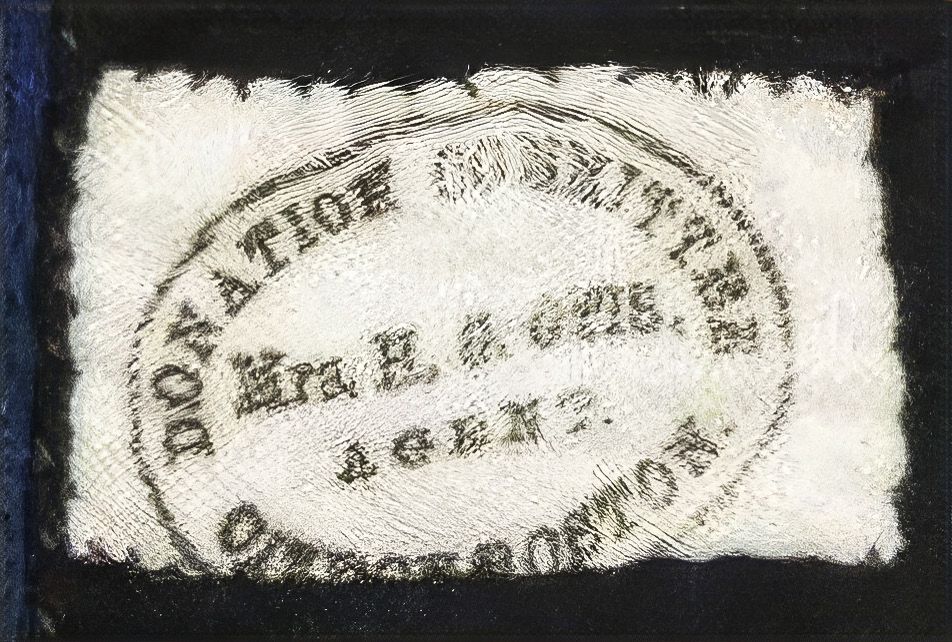
The first artifact is a large red and blue woolen poncho. It is made of blue wool flannel with red wool binding, and has a hood permanently affixed at the neck. While mimicking the basic shape of the waterproof or rubberized ponchos used by soldiers, it does not mirror any federal or state uniform regulations in either its pattern or fabric, and a search for photographs of Civil War soldiers wearing similar garments has been unsuccessful. The only clue to the origin of this poncho comes from a cotton twill label sewn into the poncho with the inscription “Donations Committee, City
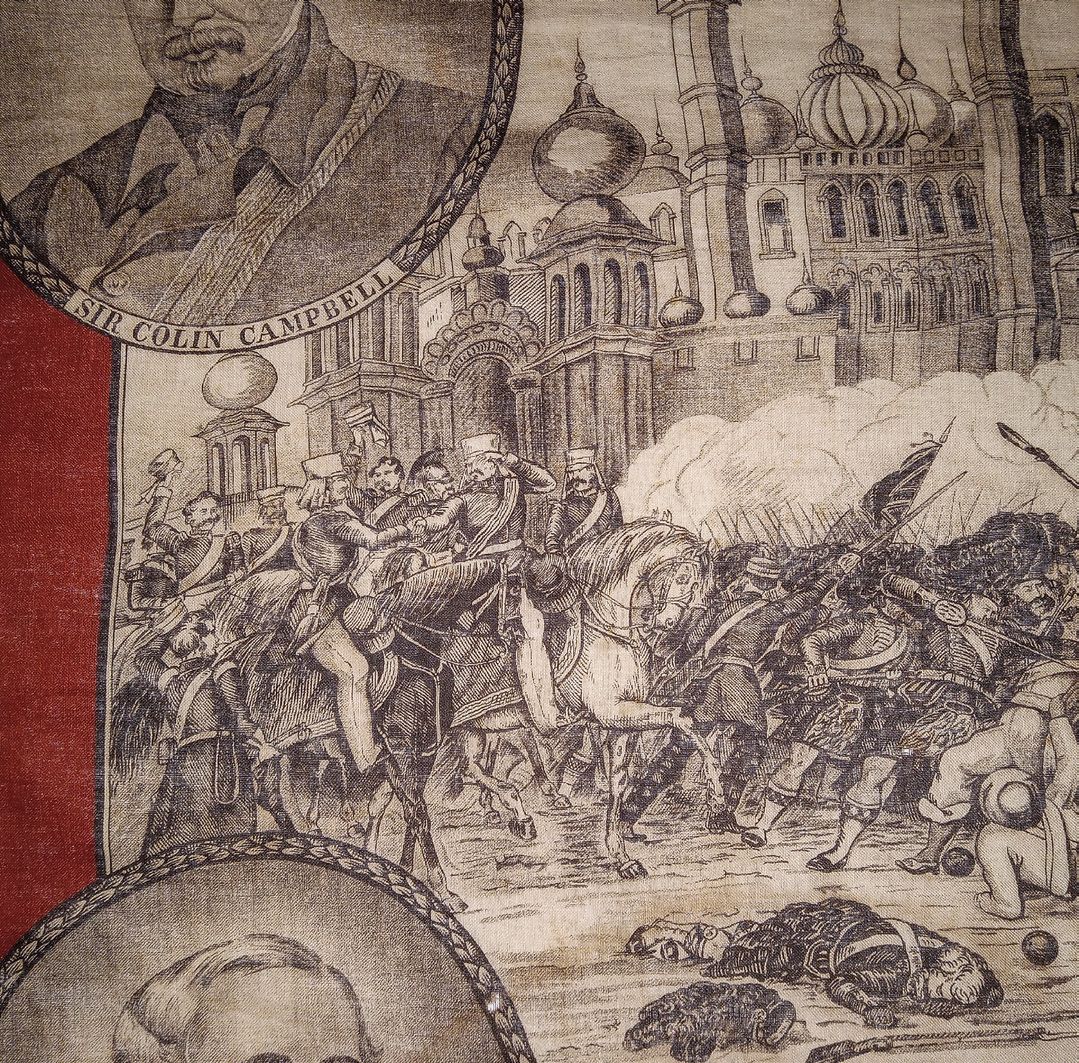
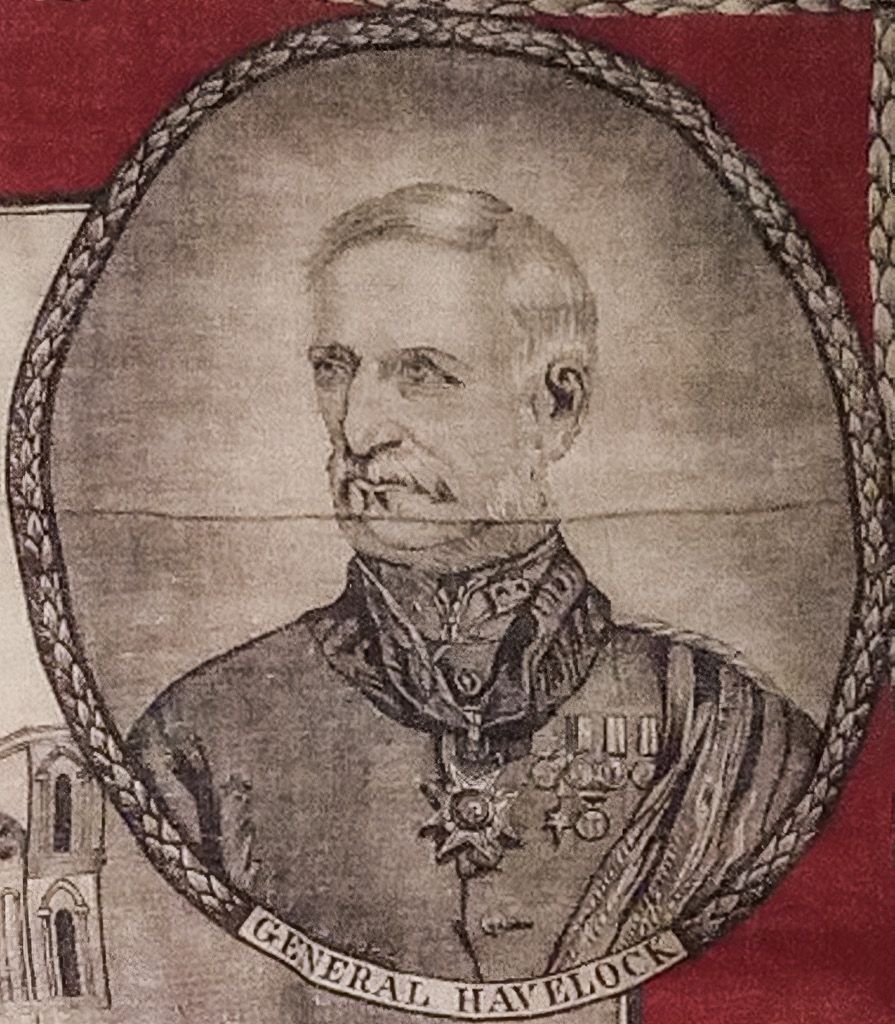
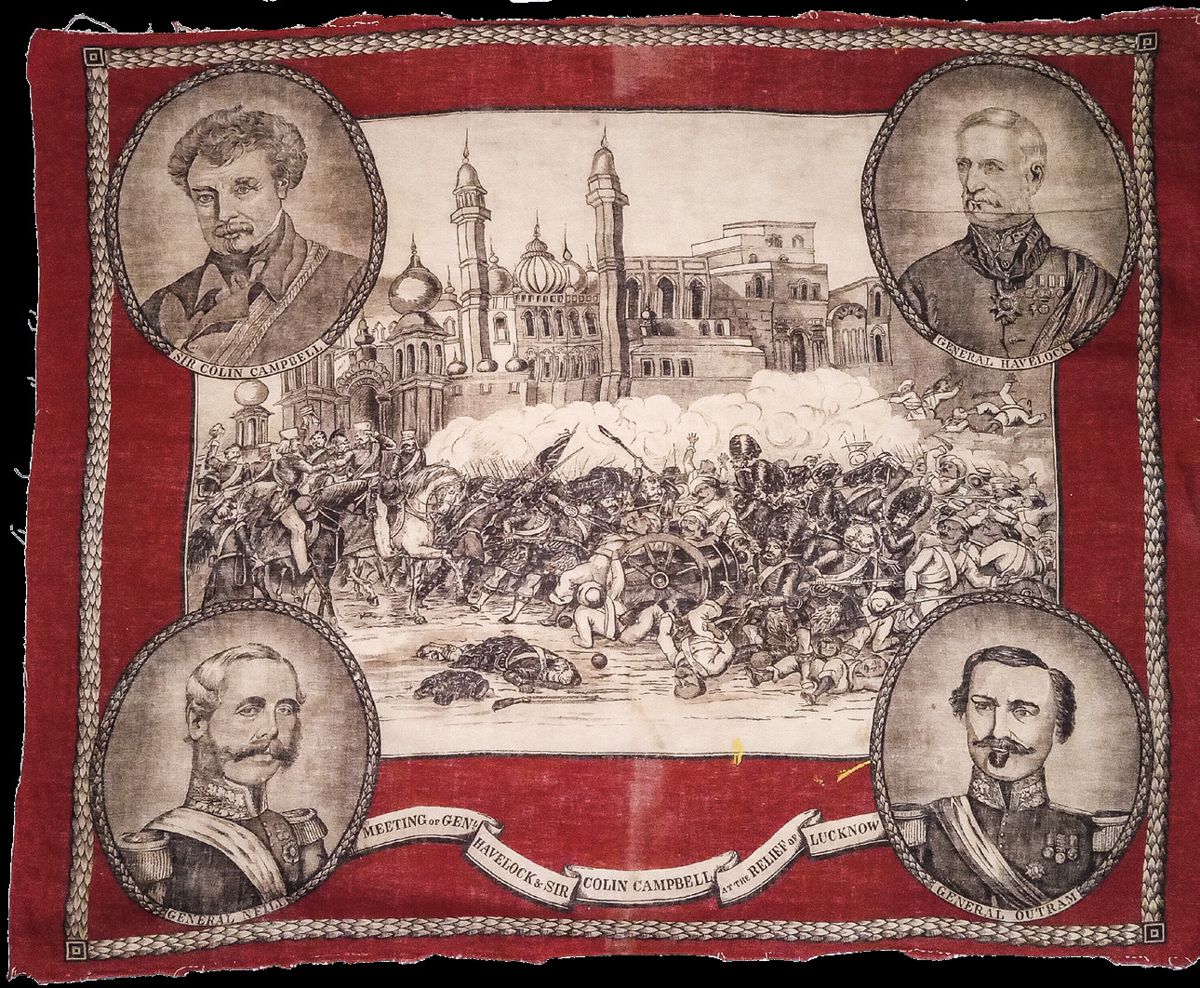
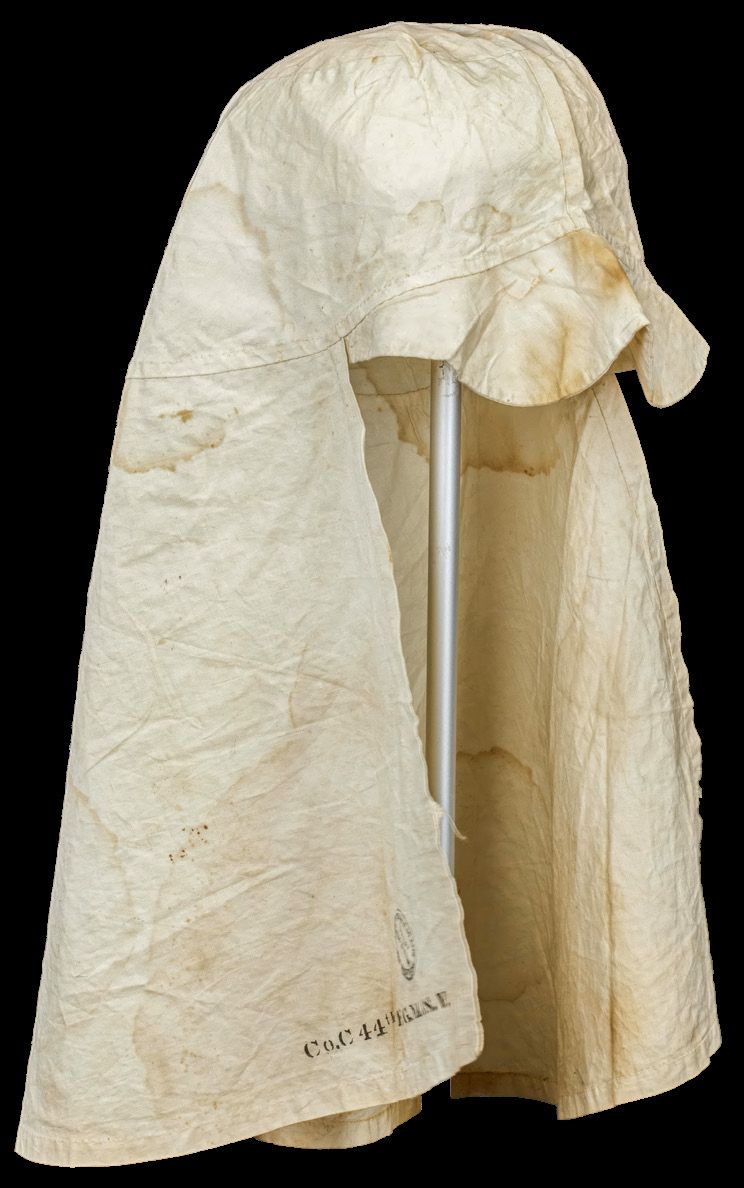
The second artifact is a cotton havelock. Havelocks are cotton cap covers with extensions at the sides and back to protect the neck from sun. They were worn over, and took their shape from, kepis. Havelocks had a long history of use by the British Army and are reportedly named for Sir Henry Havelock who served with the British Army in Burma, Afghanistan, and India. He was knighted for his successful relief of Lucknow in 1857.
While not included in U.S. (or C.S.) Army uniform regulations, havelocks were manufactured and widely distributed, at the outset of the Civil War.
In the Civil War, havelocks were unpopular and were quickly discarded as soldiers found them unbearably impractical in the humidity-enhanced hot weather of Virginia campaigns. While existing havelocks from the Civil War are rare, there is one that has not only a regimental marking (Co. C, 44th Reg. Mass. Vols.), and a family history (of ownership by Francis (Frank) Fitz, who served in the 44th Infantry Regiment, Massachusetts Volunteer Militia) but also the “Donations Committee, City of Boston, Mrs. H. G. Otis, Agent” mark seen on the poncho.
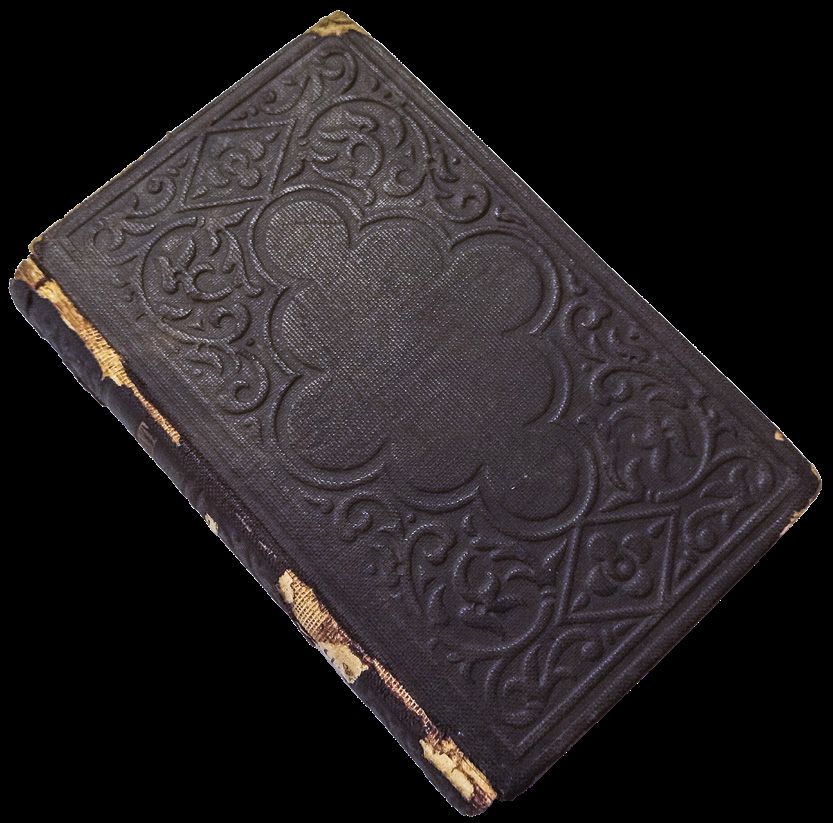
The third artifact is a New Testament published by the American Bible Society in 1862. Like the poncho and havelock, it is stamped “Donations Committee, City of Boston, Mrs. H. G. Otis, Agent.”
While a small number of Civil War garments bear the mark of a donor organization, the markings in these three artifacts are unusual because they identify both a charitable organization and an individual acting for that organization. I began my research on this wondering why the City of Boston Donations Committee included Mrs. Otis’ name on its label. I ended my research marveling that Mrs. Otis included the City of Boston on her labels.
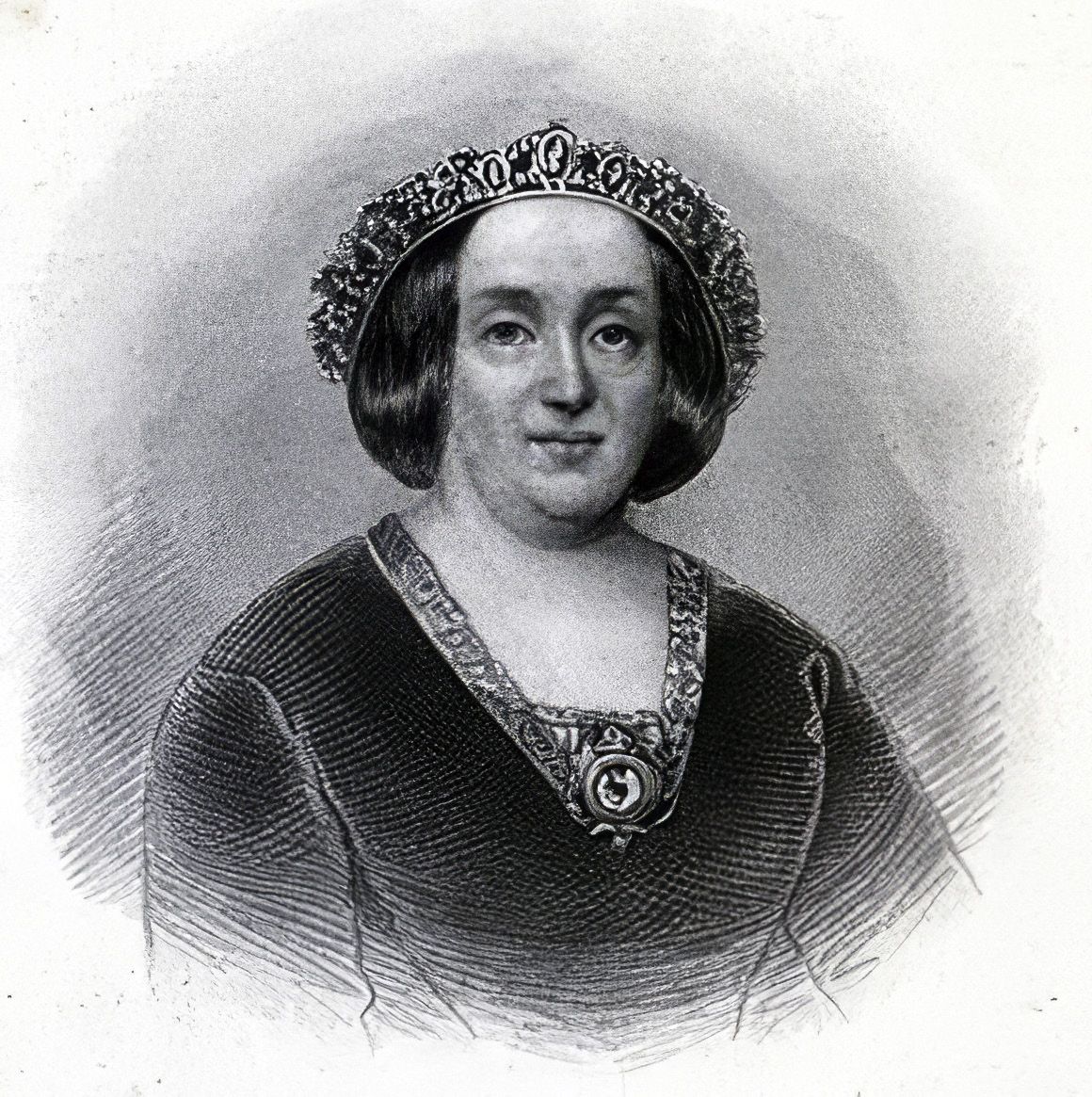
At the outset of the war, the City of Boston decided it should have a depot for its soldiers to procure items not issued, (or not issued in sufficient quantities) to suit their needs. The City Council might have chosen a banker, a businessman, or a politician to lead this effort. They chose someone who was none of these things, and who ended up being all of them, and more. They chose as their ‘agent’ Mrs. Harrrison Gray Otis, prominent wife of a former mayor of Boston. Mrs. Otis was a published author (of a novel, The Barclays of Boston). She had been a supporter of efforts to raise money for the Bunker Hill Monument, and to purchase and save Mount Vernon.
Among the many women involved in these efforts, Mrs. Otis was an overachiever. According to the official web site for Historic Mount Vernon, “Women organized special events, many tied to Washington’s birthday or the Fourth of July, where guests paid for a festive meal, concert, or a grand ball. One such ball, hosted by Mrs. Harrison Gray Otis … was attended by 10,000 people.”
The decision to select Mrs. Otis—or any woman—as the city’s agent was not without controversy, which Mrs. Otis countered by noting in one of her annual reports that “volunteers have been supplied not only with substantial, well-made clothing, … but with many … articles … which could only have been provide by womanly kindness and forethought.” After agreeing to run a depot for Boston soldiers, Mrs. Otis expanded her mission to providing “a constant distribution of … useful articles, … to the comfort and welfare of the troops, as well as sick, suffering, and dying soldiers in their tents, hospitals, and home.” She expanded her mission even beyond soldiers to include helping those they left behind by collecting and distributing used clothes which she referred to as “All sorts of half worn garments for soldiers’ families.”
Her efforts were lauded by both military and political leaders. William H. Osborne, author of The History of the Twenty-ninth Regiment noted that when Captain Tyler of the 29th Regiment received orders to leave for the seat of war before a single member of his command possessed a uniform, “The first person called upon was Mrs. Harrison Gray Otis, who furnished them with a large number of useful articles …”
The Mayor of Boston honored Mrs. Otis in his 1862 inaugural address for her “…prudent and efficient management of this department of our military affairs … while an hundred thousand useful articles have been distributed to soldiers and the hospitals and thousands of dollars paid for sewing and other female labor, the whole has been derived from voluntary offerings, and not from the City Treasury.”
When William Schouler, Adjutant-General of the Commonwealth of Massachusetts wrote his History of Massachusetts in the Civil War, he dedicated it to Mrs. Harrison Gray Otis.
For four years, from 1861 to 1865, Mrs. Otis found funding, organized, managed, and ran a depot collecting and distributing items of use to soldiers. Clothing depots run by the military generally issued caps, coats, trousers, shirts, drawers, socks and shoes … and little else. Mrs. Otis’ depot distributed a great variety of items. The following is a compiled list of items specifically enumerated in her 1862, 1863, and 1865 annual reports: bed-gowns, blankets, chocolate, cocoa, coffee, comforters, corn-starch, coverlids, drawers, dressing-gowns, dried & preserved fruits, handkerchiefs, liquors, mittens, molasses, night-gowns, pillows, pocket handkerchiefs, provision-bags, cotton and woolen shirts, sleeping caps, slippers, socks, soldiers’ bags, spices, sugar, tapioca, tea, towels, vegetables of all sorts, and wine, as well as and “every variety of hospital garments and stores”, and of course testaments, prayer books, and tracts. We know that her reports do not list everything she distributed, as neither ponchos nor havelocks appear on the lists.
She began, too, helping discharged soldiers, even paying hotel bills when they needed lodging, until a soldiers’ home was established in Boston.
Mrs. Otis was undoubtedly cognizant of the popular suspicion that gifts given for soldiers did not always reach them. She attributed much of the success of her program to her practice of personally handing out items which, she believed, made soldiers more inclined to care for the items they received.
In the four years of operating the depot, she reported distributing over half-a million items by her own hands. Mrs. Otis noted that if a box came in well packed and ready for shipment, she simply counted the entire box as a single item.
Mrs. Otis’s reports emphasized that she distributed goods to soldiers from other states than Massachusetts when they came to Boston. Primarily, however, the depot operated for the benefit of soldiers in Massachusetts regiments, especially those from Boston. She demonstrated that this included any and all such soldiers: It was both news-and note-worthy when Governor Andrews promoted the formation of a regiment of Irishmen. It was a period in which “No Irish Need Apply” was not only the common but the expected attitude in Mrs. Otis’ social circles. Yet Mrs. Otis very publicly presented the Irish troops with a flag. In this show of support for the “Irish Brigade,” Mrs. Otis may have been signaling that the depot she ran would provide support to Irish soldiers.
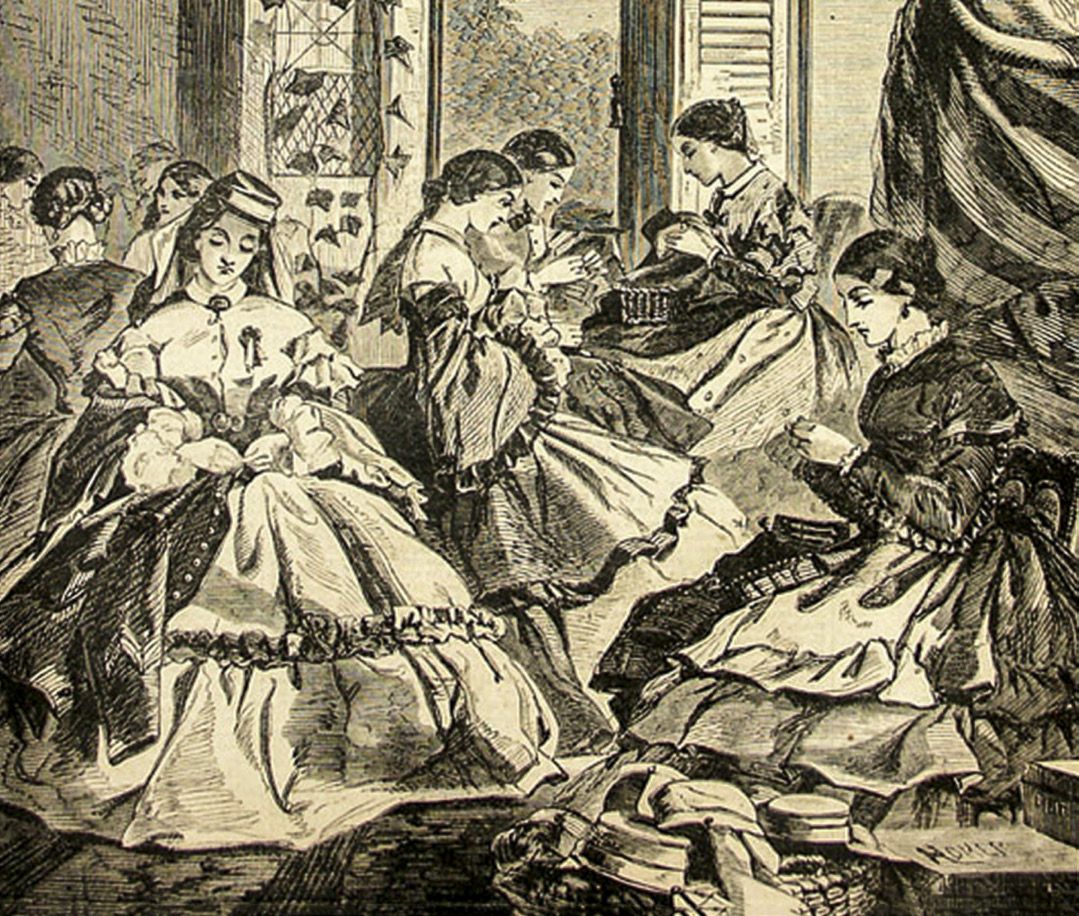
Mrs. Otis’ managerial skills included obtaining voluntary support from individuals and organizations throughout the Boston community. As she noted, “The thousands who have worked in this city of Boston and the state of Mass. were, one and all, volunteers who came eagerly, and have steadily labored and given money an efforts for their soldiers.”
Notices published in Boston area newspapers announced that Mrs. Otis had secured cloth and sought seamstresses to sew it into garments for soldiers, and also announced and thanked individuals and organizations for their contributions. Mrs. Otis also issued colorful certificates which featured signatures so large they invite handwriting analysis.
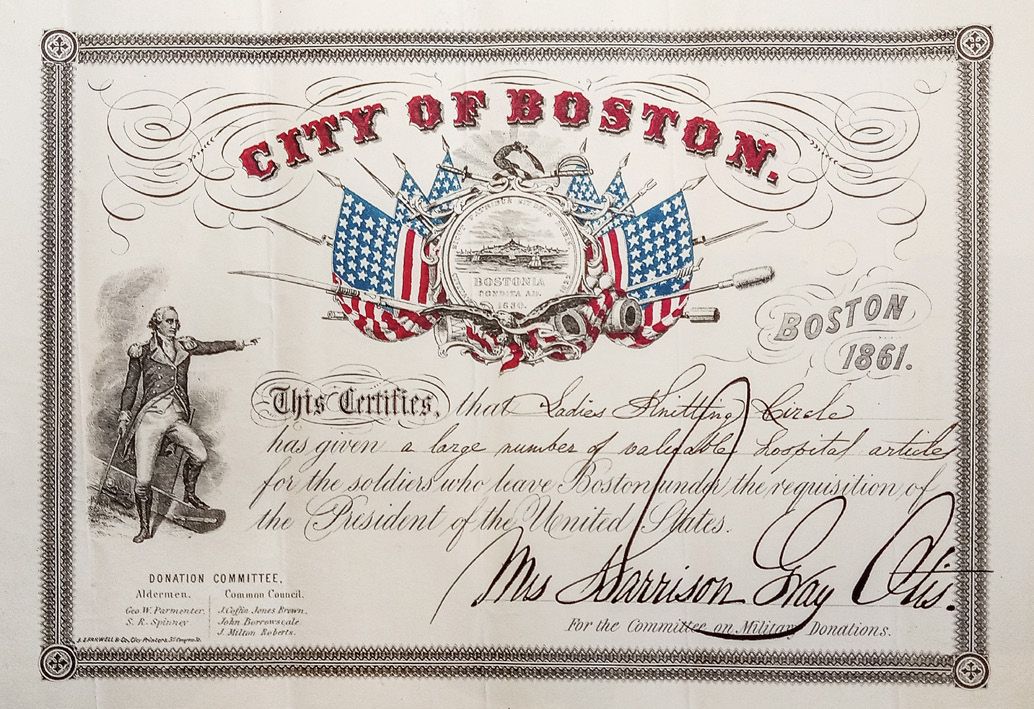
Mrs. Otis acknowledged in her annual reports that Dr. Tyler employed ladies of his McLean Asylum in Somerville in making and finishing large quantities of garments, and she especially acknowledged the Massachusetts Bible Society, which donated testaments that were distributed, along with prayer books and tracts.
In assuring the Massachusetts Bible Society that their donated testaments were reaching their destinations, Ms. Otis related a story of a corporal with six soldiers, who, accompanied by a drummer-boy, went to bathe in a river near Boston. Observing the little fellow carefully concealing under a pile of leaves at the foot of a tree, something very precious, their curiosity was aroused and they questioned him. The boy replied it was an article he very much prized and always carried with him wherever he went; they laughed… whereupon he knelt, and … exhibited a testament, saying that Mrs. Otis had given it to him, and begged him to preserve it. Mrs. Otis concluded her story by noting that the next week the corporal and his six men all came to the house, asked for and received testaments.
Ultimately, perhaps the most remarkable feature of Mrs. Otis’ operation was the means by which she funded it. She strictly adhered to a system of not asking for a cent or other aid in any shape or manner, and further noted that the City Council, in the four years of the war, was asked for, and provided, no funding. Instead, according to Mrs. Otis, the depot operated on the “Bank of Faith” which, while tested, never faltered, but rather prospered under “Divine Providence.”
Juanita Leisch Jensen is a nationally known speaker, writer, researcher (and avid collector) of subjects related to civilians and the Civil War. She authored two books: Who Wore What: Women’s Clothing, 1861-65, and an Introduction to Civil War Civilians.
Blue wool poncho with Donations Committee label was formerly in the collection of John Henry Kurtz. (Author’s Collection)
This battle scene includes British soldiers wearing havelocks. This Commemorative handkerchief was apparently produced between the Relief of Lucknow and the knighting of General Havelock as it is titled “Meeting of Genl Havelock and Sir Colin Campbell at the Relief of Lucknow” (emphasis added). The upper right corner features a portrait of General Havelock. Stenciled on the havelock is “Co.C 44th REG. MASS. V.” and the Donations Committee stamp.
This testament is one of many distributed by Mrs. Otis. (Author’s Collection)