
The Graphic War Annie Powell and the
By Salvatore Cilella · Originally published November-December 2024 · pp. 30–33
The Graphic War An n i e P ow e l l an d Th e G reat S e a l o f t h e Co n f e de r acy By Salvatore Cilella The Graphic War highlights prints and printmakers from the Civil War discussing their meaning and the printmaker or artist’s goals.
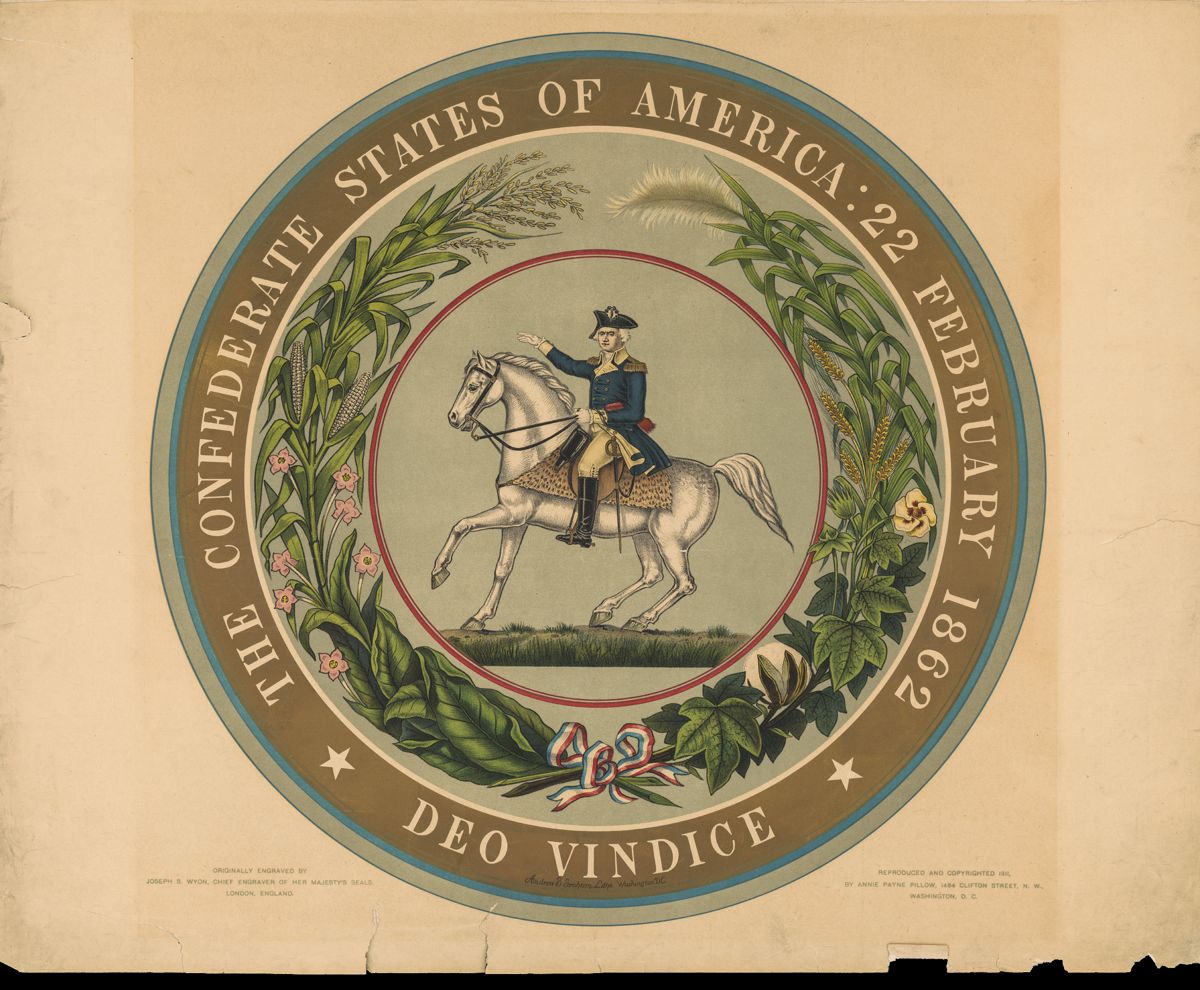
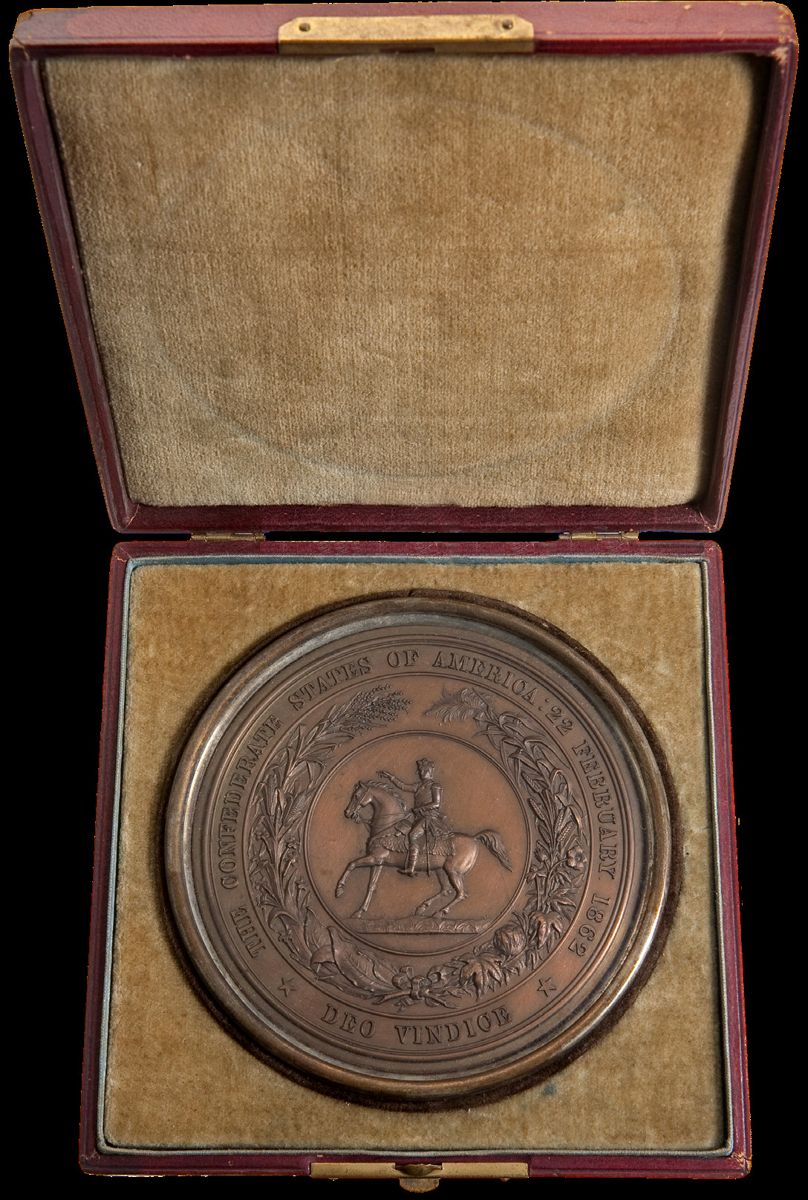
Annie Payne Pillow is an enigmatic figure. Very little is known of her, and what information we have is problematic to say the least. Annie was born May 16, 1879. She was the daughter of Gideon Johnson Pillow, (1806–1878) the goat of the battles of Fort Henry and Donelson in 1862. Gideon was a lawyer by trade, an 1827 graduate of the University of Tennessee, and law partner of James K. Polk. He was an unsuccessful candidate for vice president in 1852 and 1856. Polk appointed him a brigadier of volunteers and subsequently to major general and he was wounded twice during the Mexican War. When the Civil War started, he was awarded a star in the Provisional Army of the Confederacy. With little military training and experience he became second in command at Fort Donelson in February 1862. As Grant’s victory appeared imminent, Floyd passed command to Pillow, who passed it on to Simon B. Buckner while the “heroic” team of Floyd and Pillow took “French leave” leaving Buckner to surrender.1 Almost instantly, the major players issued their versions of what happened at Henry/Donelson and as other issues became more pressing, Pillow adamantly refused to admit failure. He was suspended by Jefferson Davis. “Relinquishing command to a subordinate rather than fighting it out or surrendering the command himself, and the ill-timed order for retreat at the moment of victory, on the fifteenth were the two grievous errors by Pillow,” according to historian B.F. Cooling. Officials in Richmond wished that Pillow would just quietly retire to his home in Columbia, Tennessee.2 His questionable leadership skills were questioned once again when, still in the Confederate Army, “Pillow commanded a brigade of Tennessee soldiers during the last day of Stones River. The division commander, Maj. Gen. John C. Breckenridge, was infuriated when he found Pillow hiding behind a tree instead of leading his men.”3 After the war, he went into law practice with former Tennessee Governor Isham Harris. What slight evidence we have of Annie Payne Pillow involves the Great Seal of the Confederacy and her efforts to rehabilitate her father’s notorious war record. The lithographic print of the seal features a center image of George Washington, mounted on a horse wearing his military uniform, facing left. Washington is surrounded by “a border comprised of plants representing the agriculture of the South, cotton, tobacco, corn, wheat, sugar cane, and rice, and the text forming the outer rim with the motto ‘Deo Vindice’ at bottom.” The print is signed on stone at bottom center. Printed at lower left is the inscription “Originally engraved by Joseph S. Wyon, Chief Engraver of Her Majesty’s Seals, London, England.” Printed at lower right: “Reproduced and copyrighted 1911, by Annie Payne Pillow1464 Clifton Street, N.W., Washington, D.C.” The print includes a facsimile of a note of authenticity by ‘Allan G. Wyon, Medallist and Engraver to His Majesty the King of England. 25th April 1912’ in which he stated “that I found the reproduction to be a careful and accurate reproduction of the Great Seal.” In the Library of Congress accompanying the print is a statement from Wyon in which he certified “that the Great Seal of the Confederate States of America was engraved” originally by [his] “uncle Joseph S. Wyon, and that an original impression of the seal is in [his] studio, it being the practice of our house to preserve proof impressions of all seals executed by us during the past 70 years.” Wyon went on to affirm that “the reproduction of the “Great Seal of the Confederate States, 1861–1865, made and copyrighted by Annie Payne Pillow in 1911 has been carefully compared by me with the above-mentioned proof impression of the Great Seal in my studio, and that I found the reproduction to be a careful and accurate reproduction of the Great Seal.” Wyon dated his letter April 20, 1912.4 The lithographer, Andrew B. Graham, (1845–1909), a native of Washington, D.C., and the owner of his own firm of the same name, found success in lucrative government contracts. He died of “brain fever” in his D.C. residence September 9, 1909. Some of his work was republished posthumously until 1917, and the firm was active until at least the early 1920s.5 The United Confederate Veterans took up the cause, advertising Annie’s fund raising strategy in the Confederate Veteran. Encapsulating in one brief paragraph, the paper wrote: “Miss Annie Payne Pillow has undertaken by the sale of a line reproduction of the great seal of the Confederate States, ‘beautifully done in gold and ready for framing,’ to erect a modest monument at the unmarked grave of her father, Gen. Gideon J. Pillow. Those who cherish the memory of General Pillow and the complete sacrifice of his great wealth to the South in the sixties will at least sympathize with Miss Pillow’s undertaking. The great seal of the Confederate States would be a valued souvenir; and as all profit of the undertaking will he applied to this noble object; it would seem most worthy of attention. Orders for this reproduction of the great Seal of the Confederacy should be sent to Miss Annie Payne Pillow, Room 160, War Department, Washington. DC. The price is $1.”6 Annie published a 32-page pamphlet on the reproduction of the Great Seal as a lithograph and in an introduction, she explained the “Purposes of the Lithograph Reproduction.” It was a rambling rant and discourse on the Lost Cause. The seal was a reminder of the valor and determination of the Southern people “who as a great and enlightened nation, bravely met and gallantly fought the invaders of their soil” losing all except their honor. Reproducing the Great Seal as a print, Powell hoped to keep alive the “deathless dead” and
“fearless patriots” and preserve the notion that “the sacred cause for which they fell” would never perish.7 It is unknown if Annie’s fundraising was successful. Her father died (October 8, 1878) before she was born (May 10, 1879) and was initially buried in Arkansas but he was later moved to Memphis’s Elmwood Cemetery in 1884. It is well marked today. According to one source Gideon died of yellow fever in Memphis. According to Annie, her father “died from [the] re-opening of [an] agonizing wound received in Battle of Chapultepec, Mexican War.”8 Annie married late in life, 1920 and met a mysterious end. A certificate of death issued in Falls Church, Virginia, November 10, 1944, was issued for Mrs. Annie Payne Gross, age 65, widow of Ivan Gross (who also died in 1944) and daughter of Gideon J. Pillow of Tennessee and Mary Eliza Dickson of Louisiana. The death certificate revealed that the cause of death was “Massive Hemorrhage; gangrenous ulcer of the left leg, elephantiasis.” What’s more intriguing, enigmatically scrawled across the certificate are the words, “Coroner’s Case.”9 She is buried in Fort Lincoln Cemetery, Brentwood, Maryland, just outside Washington. A check of that cemetery’s “residents” reveals no Annie Payne Powell Gross.
Endnotes 1. 2.
Ezra Warner, Generals in Gray: Lives of the Confederate Generals, 241. Benjamin Franklin Cooling, Forts Henry and Donelson: The Key to the Confederate Heartland, Knoxville: University of Tennessee Press, 1987, 264-265. Civil War Biography, Gideon J. Pillow, American Battlefield Trust, https://www.battlefields.org/learn/biographies/gideon-jpillow. Library of Congress, https://www.loc.gov/resource/ppmsca.38461. Geographicus Rare Antique Maps, https://www.geographicus.com/P/RareMaps/grahamandrewb. Confederate Veteran, Vol. XIX, January 1911, 367. Pillow, Great Seal, 7. The remainder of Annie’s pamphlet gave a history of the original Seal’s development and adoption by the Confederate Congress, and the subsequent trail after the war. Annie Payne Pillow, The Great Seal of the Confederate States of America (1861–1865), self-published, ca. 1912. Hereafter, Pillow, Great Seal. https://www.findagrave.com/memorial/151693390/annie_paynegross.
Letter of authentication. (Library of Congress)
After 43 years in the museum field, Cilella devotes his time to collecting American prints and maps and writing. He has written extensively on Emory Upton: Upton’s Regulars: A History of the 121st New York
Volunteers in the Civil War (Kansas, 2009); a two-volume Correspondence of Major General Emory Upton, (Tennessee, 2017), received the 2017–2018 American Civil War Museum’s Founders Award for outstanding editing of primary source materials. He edited Upton’s love letters 1868-70 to his wife–Till Death Do Us Part (Oklahoma, 2020), and The Memoirs of Dewitt Clinton Beckwith of Upton’s Regulars (McFarland, 2023).