
Misleading History: N-SSA 149th Nationals
By Jeff T. Giambrone · Originally published July-August 2024 · pp. 18–21

Disturbing the Slumbering
Hornet’s Nest The Attack on the Stockade Redan at Vicksburg By Jeff T. Giambrone
On May 22, 1863, the Stockade Redan was the scene of some of the bloodiest fighting of the entire Vicksburg campaign. Sergeant George Powell Clark, a member of the “Harper Reserves,” Company C, 36th Mississippi Infantry, was at the redan that day, and years later he wrote a detailed account of what he witnessed:
“There was a continual sharp shooting, skirmishing, and mingled feelings of dread and awe, we await the shock artillery firing kept up until about 10 a.m. on the 22nd of the coming conflict with fingers on the triggers of of May, at which time we could plainly see that another our muskets, ready to send the hurtling messengers of attack would be made on our works. For the space of death into the devoted band. We had not long to wait, perhaps a half hour there was complete silence all along for soon we heard an officer, with the voice of Stentor both lines. Not a shot was heard, not a man was seen in our giving the word ‘forward.’ Their scurried ranks came front during the short space and the experienced soldier pouring over the hill and rushed right on our works. knew that it was the calm A withering fire of that precedes the storm. musketry, grape, canister Soon blue columns were and shells greeted them seen advancing four lines as they came in sight, “Everything was deep in front of Fort Hill. and men fell like grass We knew from all the before the reaper, lying AS Still as death, indications that this was on the ground thick as except the wild tumultuous going to be a desperate the ‘autumnal leaves beating of thousands assault, and we nerved that strew the brooks in of hearts, as with ourselves for the shock. Vallombrosa.’ One peculiar feature of Here, now, the mingled feelings of this advance was that a eyewitness could have dread and awe…” large number of men came seen war in all its awful in front bearing rails on sublimity and grandeur. their shoulders. This will Many years have elapsed be explained in its proper since that stormy day; for place. As on the 19th they these lines are penned on halted just behind the hill for a short rest, before disturbing the 18th day of May, 1897, liking only four days on the slumbering hornet’s nest that lay behind our frowning being 34 years since the one of which I am writing, but line of earthworks. all those scenes come before my imagination as if it had Everything was as still as death, except the wild only been yesterday. tumultuous beating of thousands of hearts, as with But to return, what of the men bearing the rail? As I
have said they were in front and of course received the first shock from the tempest of shot and shell that was hurled into their ranks. It seemed that the pitiless storm swept away half of their ranks at the first fire. But others would gather up and bear them on, only to share the same fate. Their battle flags were often seen to go down, but in a moment was soon seen fluttering in the breeze, as other hands bore them on toward the flaming crest of the hill in their front. Their lines wavered not, though hundreds fell in front of Fort Hill, and the rail bearers reached the ditch in front of the fort, bridged it, crossed over to the fort and planted their colors on our breastworks in several places.”
Then began a fierce struggle for the possession of the fort. A regiment of Missourians was in reserve just in rear of the position occupied by our regiment, and when the stars and stripes were planted upon our works and the fierce struggle going on, their officers could not hold them back, but they came rushing without orders to our assistance. The Federals seeing this reinforcement coming to our aid, wavered and were completely repulsed. Their dead and wounded covered the ground over which they had so gallantly moved to the attack. (Reminiscence and Anecdotes of the War for Southern Independence by George Powell Clarke, pages 101–102).
Union soldiers assaulting the Vicksburg Defenses. (Vicksburg National Military Park)
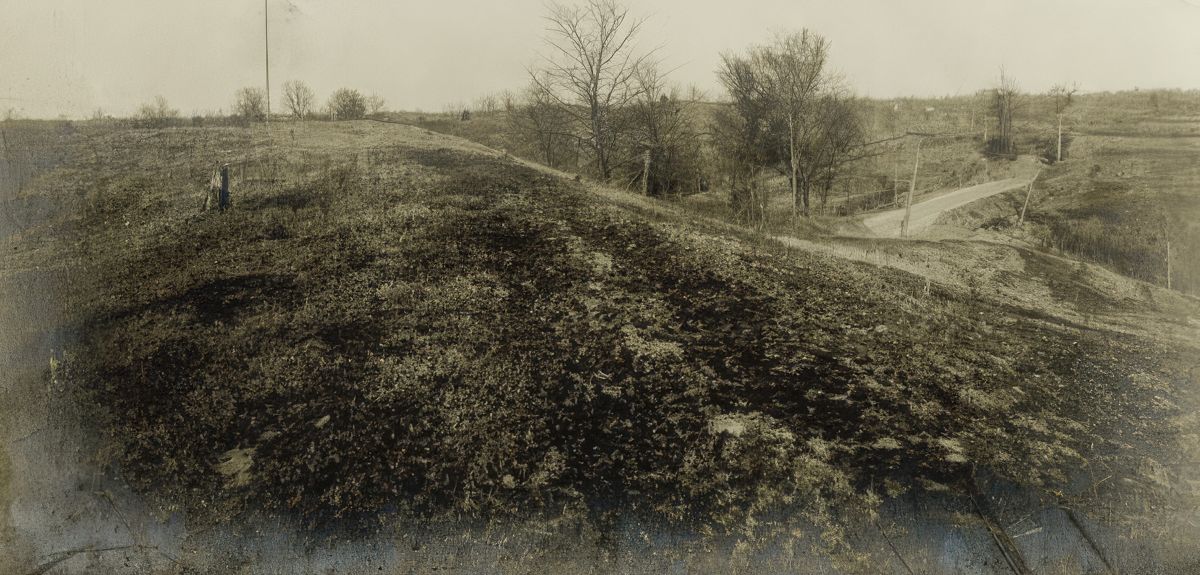
View of the Stockade Redan taken in the late 19th or early 20th Century. (Series 573, Vicksburg National Military Park Photographs, Mississippi Department of Archives and History)
The violence done at the Stockade Redan forever marked that land as a place of death and destruction. For decades after the battle the citizens of Vicksburg were finding lead
and iron reminders of the May 22nd assault on the fort. I found the following article about this very subject in a 1904 Vicksburg newspaper:
“WAR RELICS UNEARTHED CLAVER’S SQUAD FINDS PLENTY OF SHOT AND SHELL Yesterday morning while the forces under Mr. W.A. Claver were at work, grading the portion of the cemetery, or as known to the old soldiers, the grave yard road, they unearthed a quantity of siege relics. They were found at the north side of the cross road facing the stockade redan, and somewhat to the east of Confederate avenue, and Capt. Rigby has no doubt that they are Union relics. Among the other things found in the bank were one 12 pounder shrapnel, one 12 pounder solid shot, one conical shell 20 pounder solid shot, one old spade minus handle, a cartridge box plate, several pieces of cast iron pipe, a set of
cartridge box tins, a quantity of minie balls, and what appeared to be a quantity of human bones. Just at about that point Capt. Rigby states that the two contending lines were nearer together than almost any other point, and the casualties were the heaviest. There were mines and counter mines and no doubt the relics found yesterday were covered during an explosion. It is probable when the forces begin the work of restoring the batteries and mounting guns many more of the like will be found.” (The Vicksburg Herald, May 28, 1904, p. 5.)
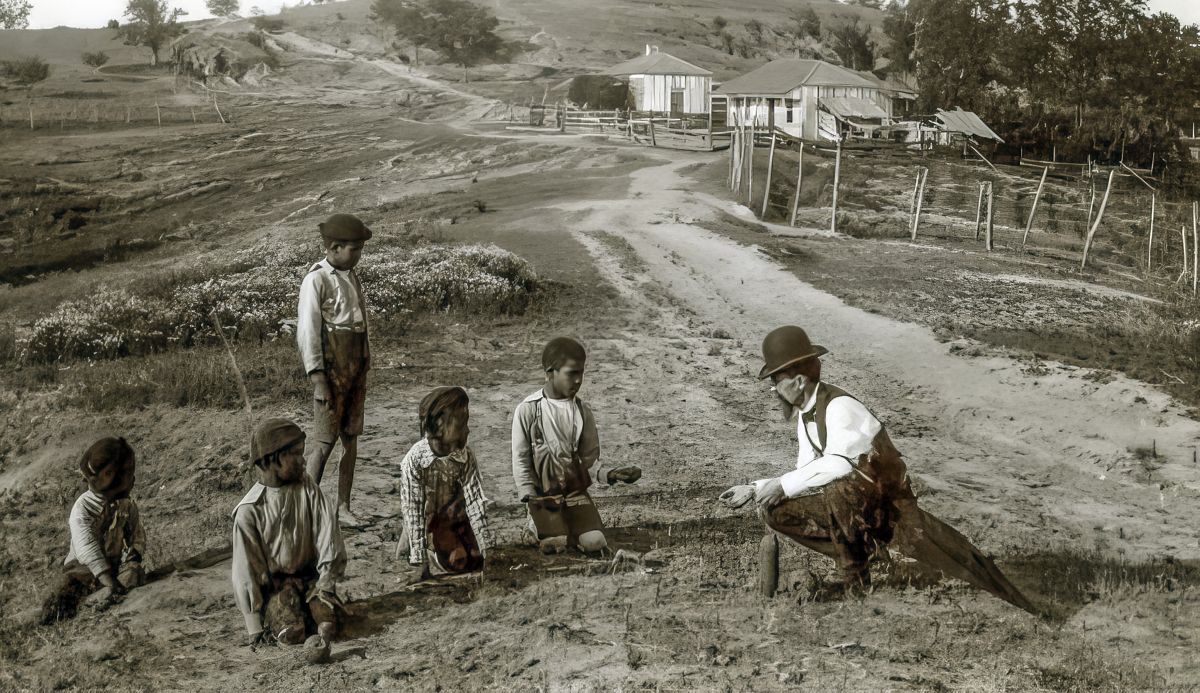
Scene from the Vicksburg National Military Park, late 19th or early 20th Century. Note the man kneeling has several artillery projectiles at his feet. (Series 573, Vicksburg National Military Park Photographs, Mississippi Department of Archives and History)
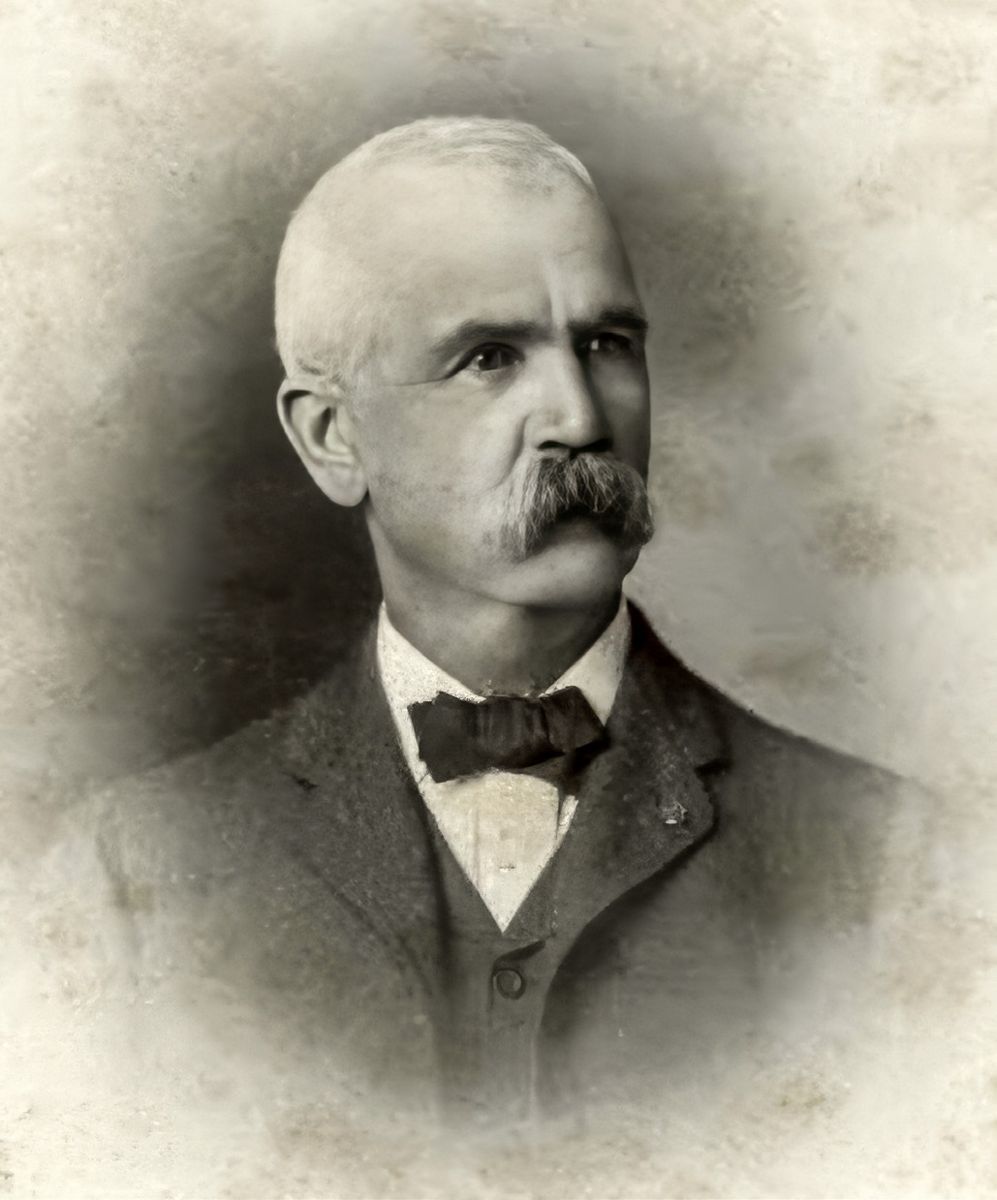
Captain William T. Rigby served in Company B, 24th Iowa Infantry during the siege of Vicksburg. After the war, he served as a commissioner and later chairman of the Vicksburg National Military Park. (National Park Service)
Jeff T. Giambrone is a native of Bolton, Miss., and grew
up near the Champion Hill Battlefield. He has a B.A. in
history from Mississippi State University and an M.A. in history from Mississippi College. He has published four books: Beneath Torn and Tattered Flags: A Regimental
History of the 38th Mississippi Infantry, CSA, Vicksburg and the War, which he co-wrote with Gordon Cotton, An Illustrated Guide To The Vicksburg Campaign & National Military Park, and Remembering Mississippi’s Confederates. In addition, Giambrone has authored articles for The Artilleryman Magazine, North South Civil War Magazine, Military Images Magazine, North South Trader’s Civil War Magazine, and The Civil War Monitor.
Photographs from the Original Article

Captions and credits appear in the article text as originally printed.