
Living History Association Brings Tidewater Maritime History to Military Through the Ages
By Bob Ruegsegger · Originally published May 2023 · pp. 30–32
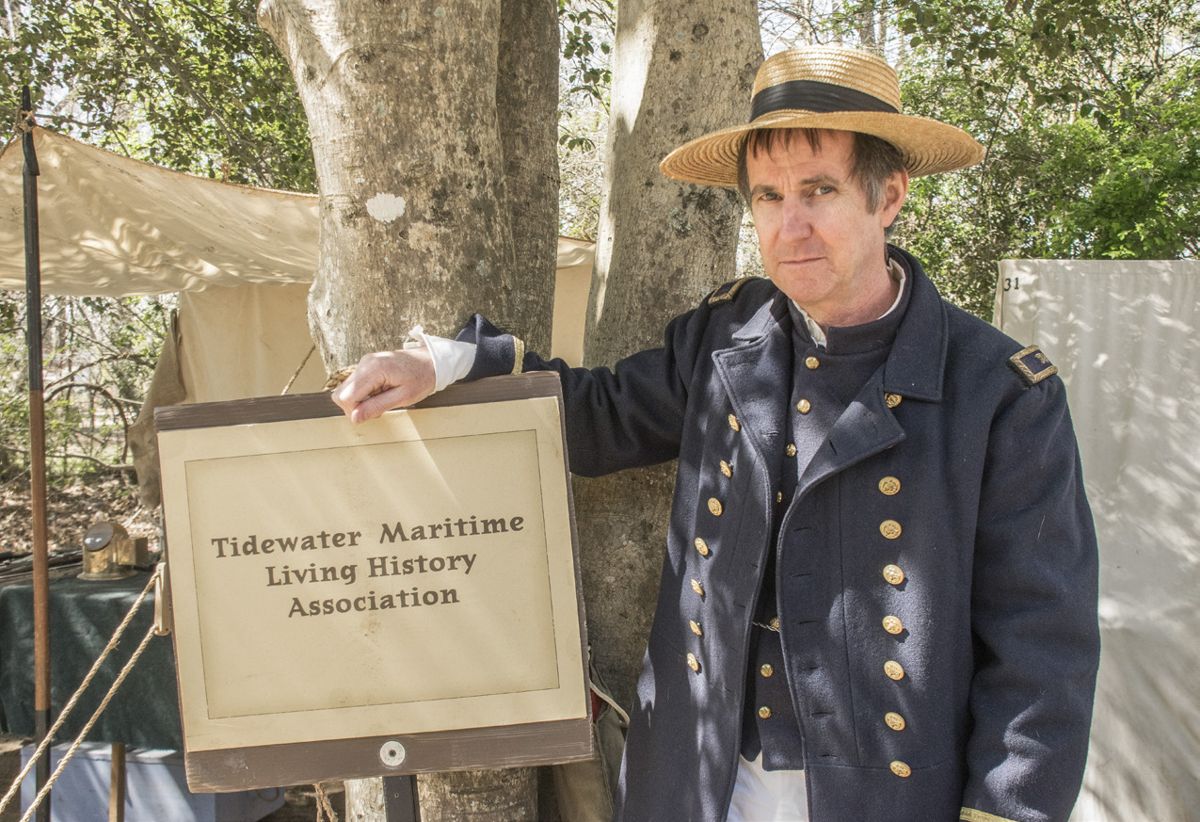
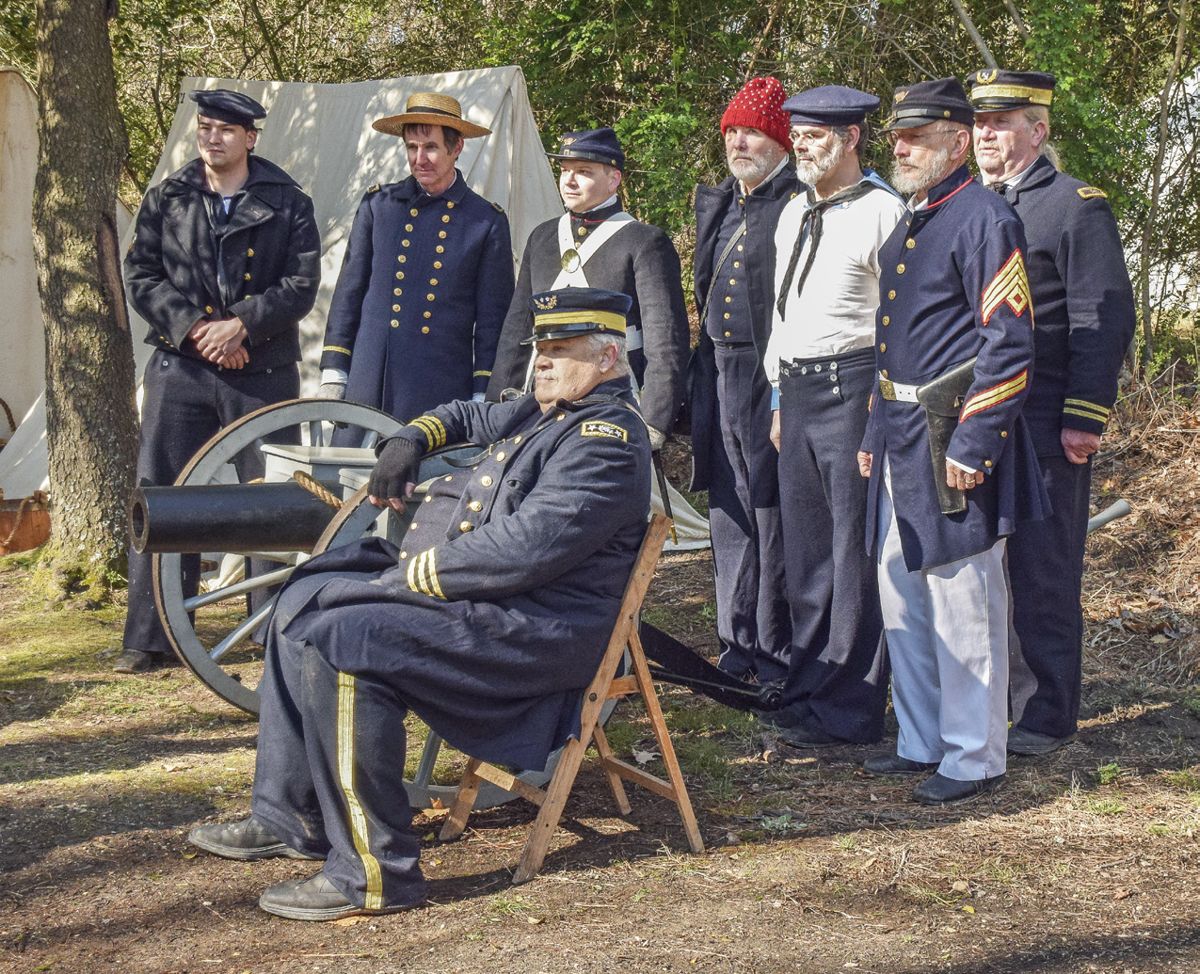
When it comes to accurately explaining and depicting maritime history, the Tidewater Maritime Living History Association ranks as one of the premier organizations in the MidAtlantic region. Over the years, they have portrayed the crew of the USS Monitor at the Monitor Center at the Mariners’ Museum in Newport News aboard the reconstructed vessel adjacent to the museum. Sailors of the TMLHA have contributed in the Battle of Plymouth battle re-enactment aboard replica steam launches at the Port of Plymouth Museum on the Roanoke River in North Carolina. TMLHA has also engaged visitors with living history displays at the Portsmouth Naval Shipyard Museum during a USCG Eagle port visit and during Makers Fest. “TMLHA always offers excellent displays on nineteenth century naval history,” observed Ross Patterson II, curator of the Portsmouth Naval Shipyard Museum. “Visitors have always been engaged via their educational activities, displays of accurate reproduction equipment, and through the immense knowledge of TMLHA members.” Most recently, the TMLHA participated in the annual Military Through the Ages program at Jamestown Settlement in Williamsburg. They frequently win blue ribbon awards for their depth of knowledge, degree of accuracy, and expertise regarding nautical history, particularly during the mid-nineteenth century in the Hampton Roads area. Allen Mordica, a retired Coast Guard officer, co-founded the unit and continues to pilot the organization through the annual shoals of living history presentations, battle reenactments, and maritime related educational events. “The Tidewater Maritime Living History Association has been around for twenty-three years now,” said Mordica. “Our whole charter is to give an accurate yet positive view of sailors, their lives, their culture, and their activities aboard ship in peace and war,” he said. “We do that through demonstrations as we’re doing today. We will go to battle recreations, reenactments we would call them.”
Over the years, TMLHA has earned its share of blue ribbon awards at Military Through the Ages.
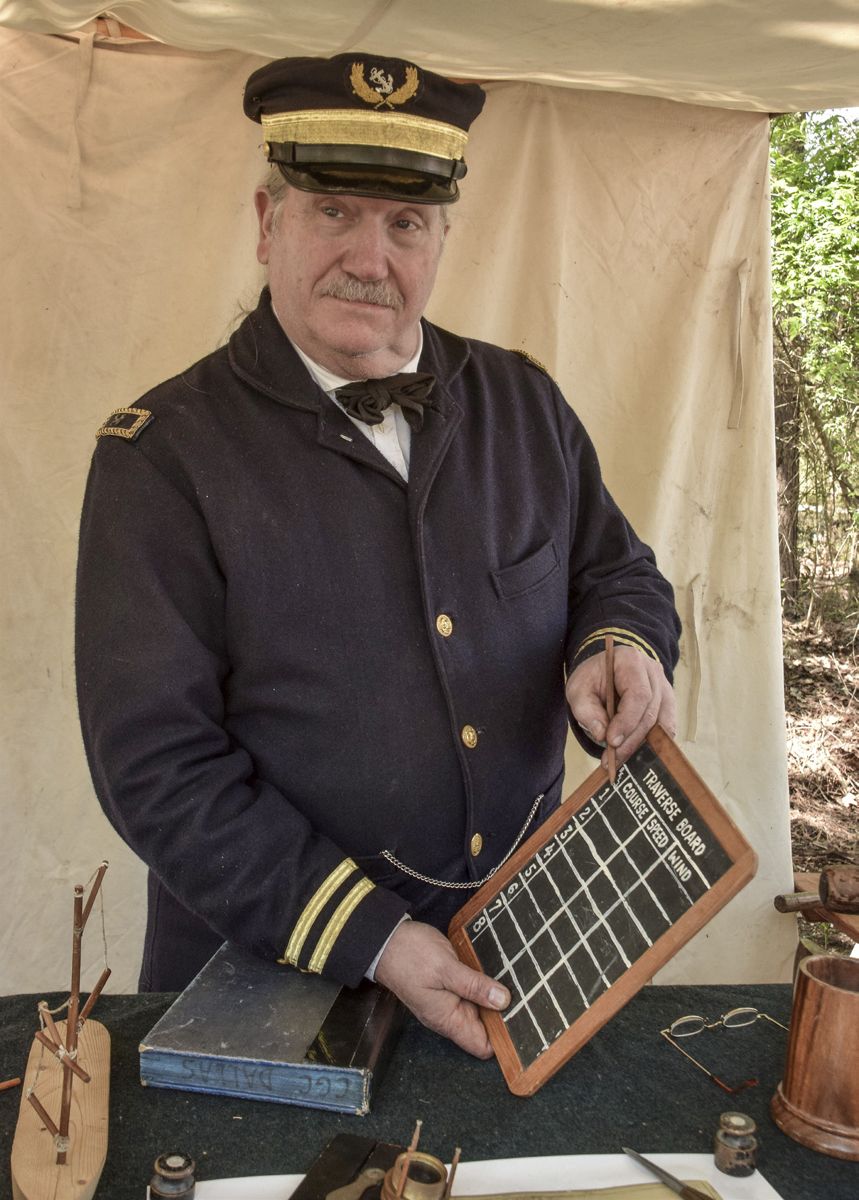
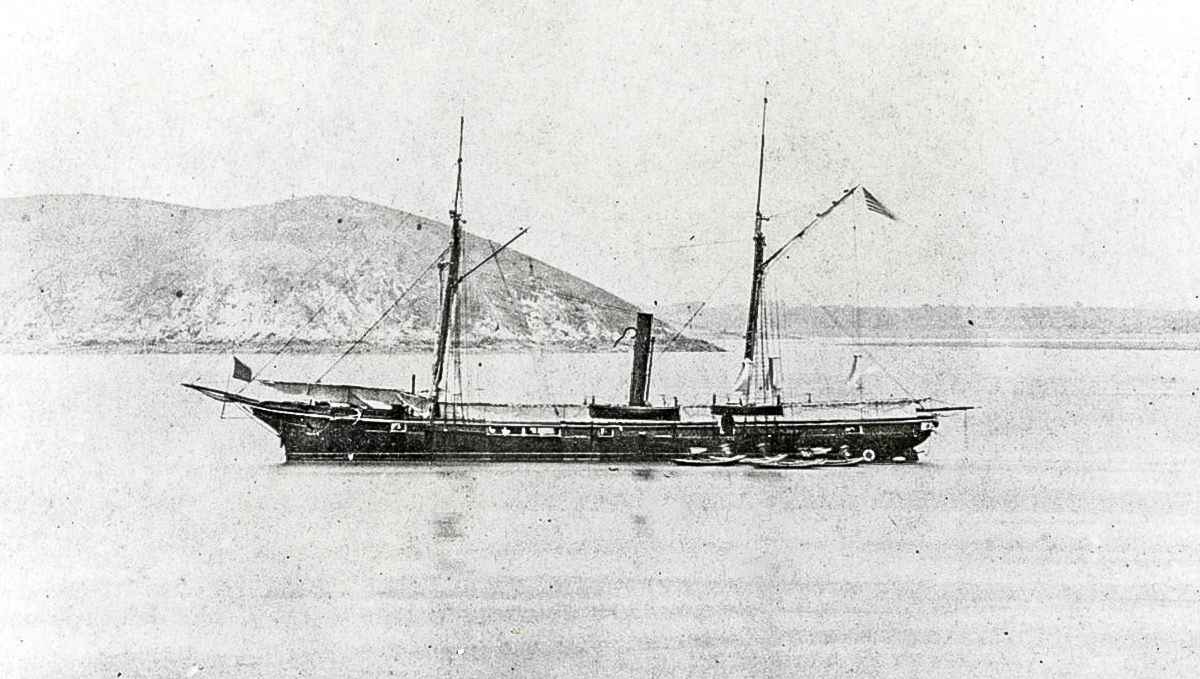
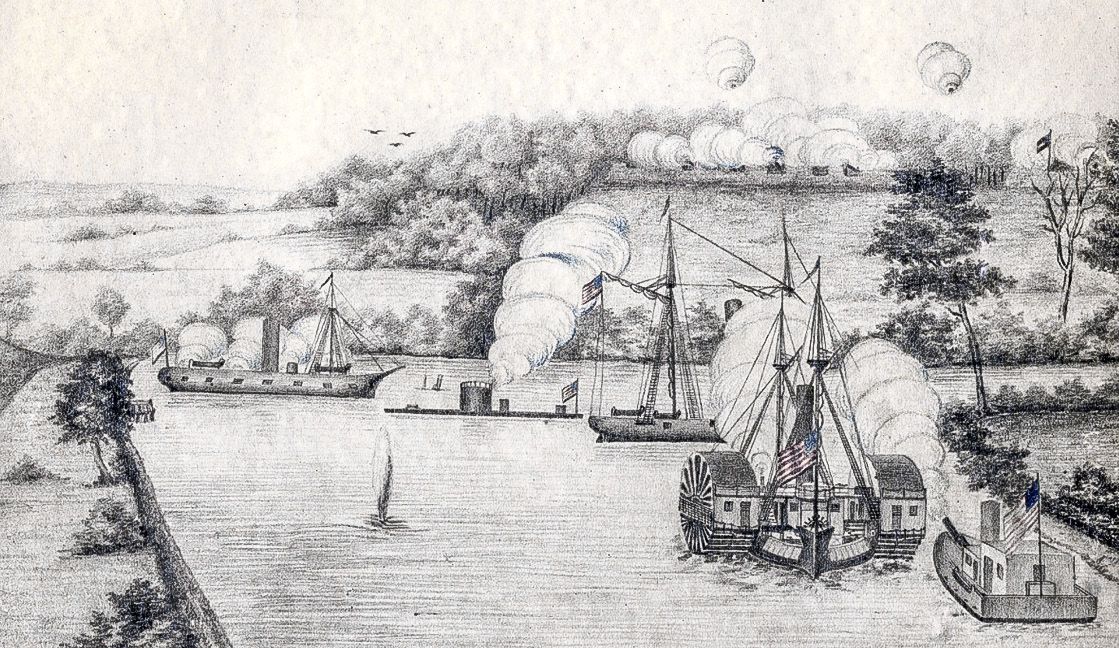
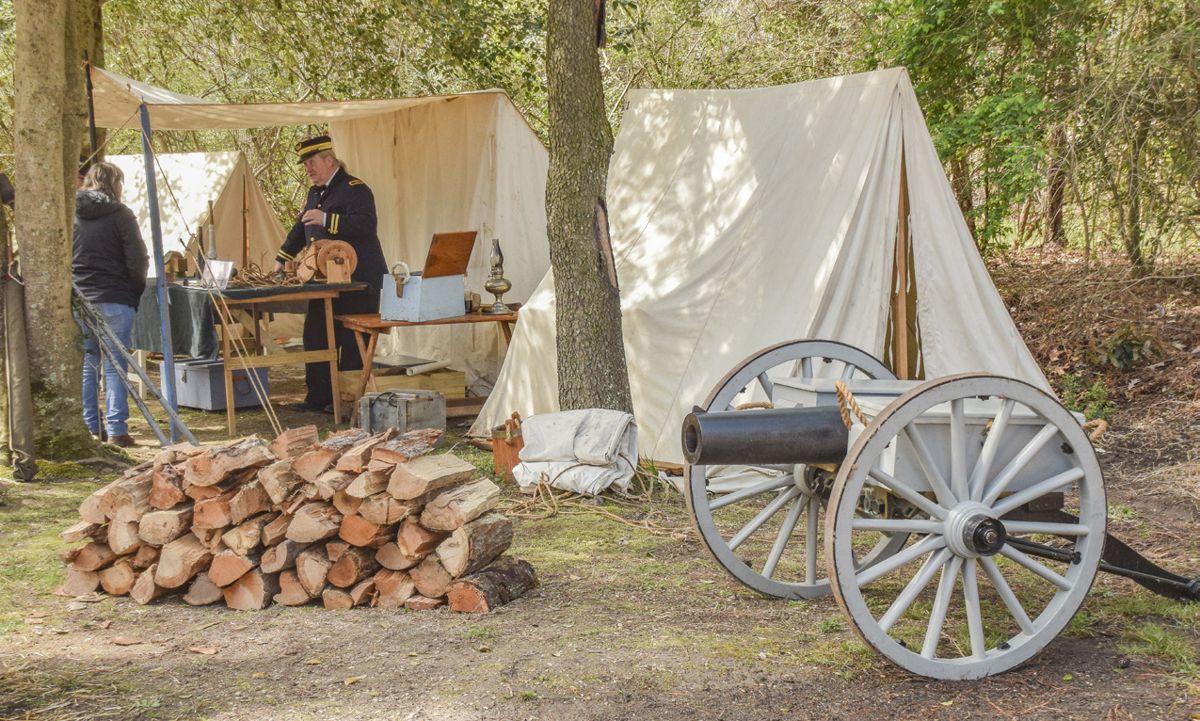
Mordica and his crew generally shy away from battle reenactments. He believes there’s a social stigma in calling someone a re-enactor. There’s a negativity to it according to Mordica. “What we do is more educational. We’re here to teach the public. The people seem to eat this up. They love to learn more about the lives of sailors,” explained Mordica. “Virginia is a maritime state. America is a maritime nation. The history of our country is wrapped strongly around the nautical world.” While most living history groups choose a specific regiment, tribe, or ship to portray all the time, ad nauseum, the members of TMLHA found the prospect of invariably depicting a particular vessel too limiting. At the Mariners’ Museum, they depicted the crew of the famous ironclad USS Monitor. While presenting a living history program at the Hampton Roads Naval Museum, they might portray the crew of the flagship USS Minnesota. “Today we are representing the crew of the USS Aroostook, an Unadilla-class steam powered patrol boat that operated on the James River,” said Mordica. In 1862, the Aroostook anchored at Jamestown and sent a landing party ashore, where we’re standing right now, to destroy an abandoned Confederate gun battery and magazine,” explained Mordica. “ The USS Aroostook was assigned to the small Union flotilla on the James River commanded by Commander John Rodgers on the ironclad flagship USS Galena. The USS Port Royal also served on the task force. Following the Battle of Hampton Roads and the destruction of the CSS Virginia, the diminutive Union flotilla added the ironclad USS Monitor and the US Revenue Steamer E. A. Stevens to the force. The Federal flotilla steamed up the James River to attack Fort Darling at Drewry’s Bluff, a virtually impregnable Confederate obstacle between Federal forces and Richmond. The Union attack on Fort Darling failed. Confederate gunners from the scuttled CSS Virginia helped repel the Federal naval attack from Drewry’s Bluff. Kurt Eberly regularly participates in the Military Through the Ages event with the TMLHA. He enjoys setting up camp and doing the two-day event. Jamestown Settlement provides the living history units with a meal on Saturday night as well as supplies such as firewood, straw, and water. “In the spring of 1862, the Union flotilla was formed to accompany McClellan’s army as it moved up the Peninsula,” said Kurt Eberly who portrayed the ship’s paymaster during the MTA event. “The flotilla was protecting his flank and also clearing the river of any Confederate torpedoes, craft, or gun emplacements on both sides of the river,” explained Eberly.
“The USS Aroostook destroyed the Confederate installations here on Jamestown Island. We’re representing (the crew of) a ship that operated right here during the war.” As paymaster, Eberly’s primary duties included buying supplies for the ship and paying the sailors. Paymaster Eberly handled the money and dealt with the contractors and buying the food for the crew. Union sailors were paid in greenbacks. A sailor/ seaman was paid eighteen dollars per month, five dollars better than the army according to Eberly. The preparation and service of food were essential elements of daily navy life aboard ship and ashore. Cook Eric Jeanneret of the TMLHA offers camp visitors an enlightening look at Union navy mess service and food preparation during the midnineteenth century. “We’re representing the USS Aroostook (The Old Rooster). She was a 90-day wooden steam gunboat. She sailed in the James River with the Monitor. She actually put men ashore on Jamestown Island,” said Jeanneret, a retired Navy veteran. “We’re representing a landing party that came ashore to destroy
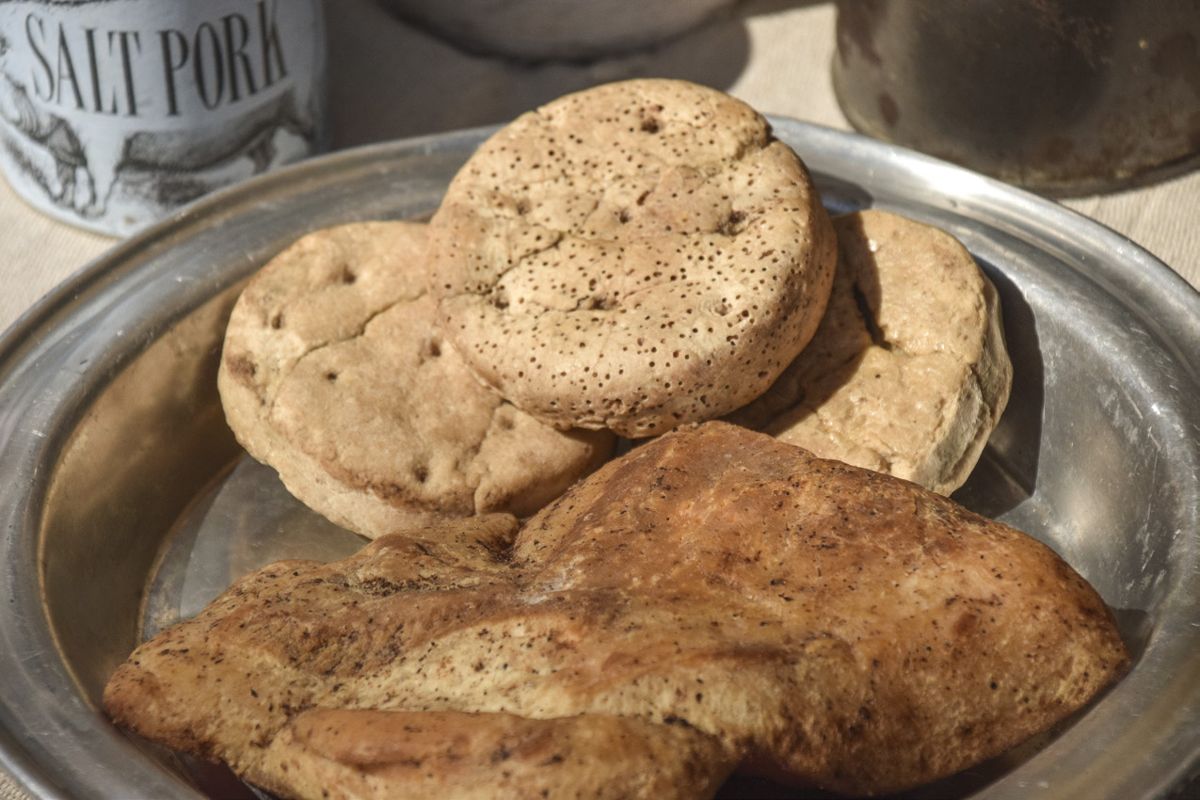
CivilWarNews.com Confederate property.” Food typical of U.S. Navy fare during the War Between the States is spread out on the exhibit table before Jeanneret. Salt pork, sea biscuit, and beans were staples, the standard rations, for the enlisted men and were provided at government expense. Officers paid for their own food and their fare varied appreciably from the bland diet of the crew. “Sailors complained, but they always complain. Really, the food wasn’t that bad. The officers did eat very well,” said Eric Jeanneret. “A lot of times the officers’ fare was thought of as being as good as a hotel meal ashore.” An assortment of canned foods, peaches, lobster, pork and beans,
Canned foods including lobster, pork and beans, and peaches were available aboard US Navy ships during the Civil War.
Union Jack Sardines were canned by Jeanneret & Koch in Cleveland, Ohio.
milk, added variety to the crew’s generally insipid diet. According to Jeanneret, Van Camp’s pork and beans have been around since 1861. An Indianapolis merchant discovered that baked beans and tomatoes made a good meal. He began canning the pork and beans and selling the tasty mixture to Union troops as they went off to war. Borden’s condensed milk has been available in cans since the 1850’s. “One of the more unusual canned foods is canned lobster. Lobster, back then, was not regarded as the delicacy that it is today. It was actually thought of as a trash food,” said Jeanneret. “It was said that lobster, as a food, was only fit for convicts and sailors. One of the reasons we know lobster as a delicacy today is the canning process.” In the U.S. Navy, sailors could generally count on getting three meals a day. Sailors were also provided a “spirit ration,” rye whisky with lemon juice and sugar had replaced rum. When the “spirit ration” was officially terminated in September 1862,

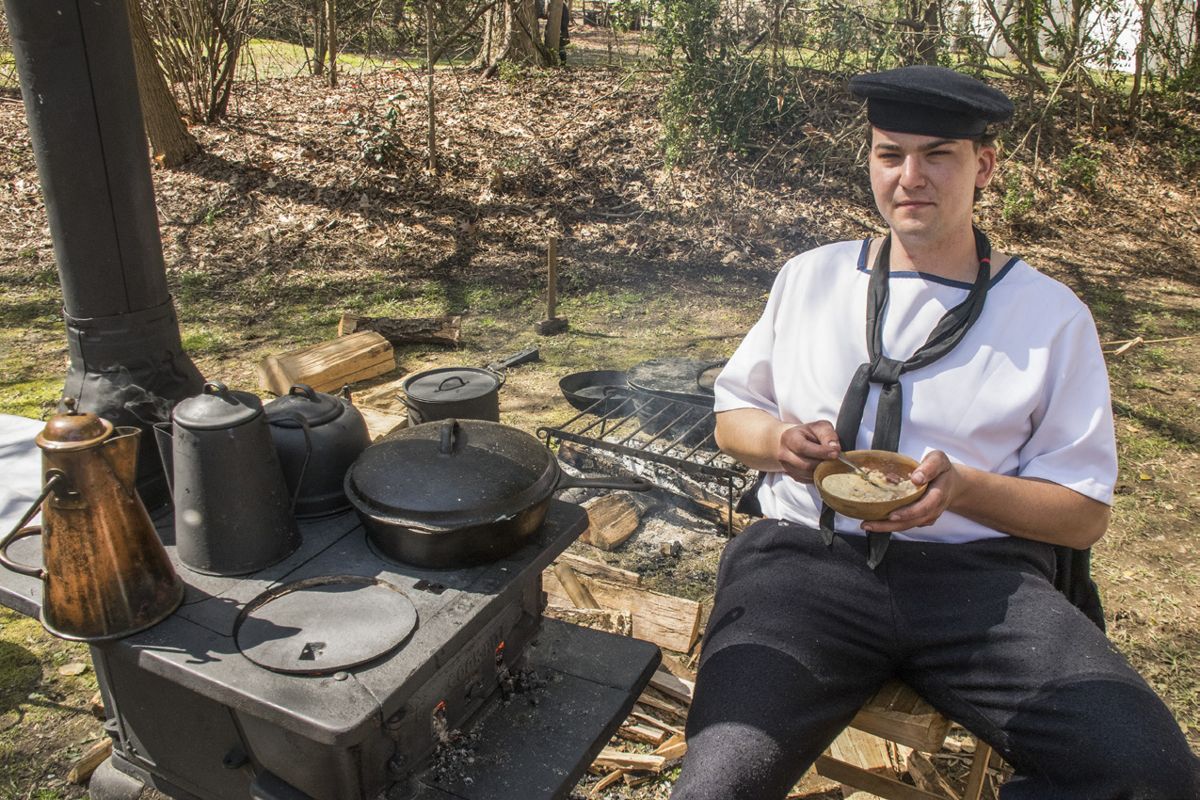
Eric Jeanneret enjoys a bowl of bean soup prepared by his assistant cook on a wood-fired box stove.
Union sailors were paid an extra nickel at day to temper the resentment. “We’ve got a coffee grinder and coffee beans. We’ve got a pot of coffee brewing right now. We can drink coffee all day,” said Jeanneret. “The crackers are known as sea biscuits. The Army calls it hardtack. Hardtack is normally square and it comes in a crate. Sea biscuit is round and comes in a barrel.” Nearby, Connor Jeanneret, Eric’s son, is preparing a pot of bean soup for the enlisted crew. Officers will enjoy a threecourse meal, first course, oyster soup; main course, fried steak and ale; dessert, ice cream and bread pudding. They’ll also have a choice of beverages, including apple cider, spiced wine, or coffee. “Food was being prepared on what was called a launch stove. It was a box stove that could be easily transported on a ship’s launch since two sailors could handle it. They’d bring it along on shore parties to cook on,” said Connor Jeanneret, the unit’s assistant cook. “This style of stove came about in the 1840’s. It’s wood-fired. I’ve finished preparing the enlisted meal of bean soup and sea biscuit.” During the Civil War, the Marine Corps’ primary contribution was serving aboard ships assigned to blockading squadrons and operating in river flotillas. Chris Johnson, a living historian and active-duty Coast Guardsman, portrays a Marine assigned to the USS Galena.
Chris Johnson portrayed a U.S. Marine assigned to the USS Galena during the operations around Drewry’s Bluff.
“The Galena was the flagship of a flotilla operating on the James River. She turned broadside to Fort Darling at Drewry’s Bluff and was basically a sitting duck,” said Johnson. “There were obstructions in the river that she couldn’t pass. She was hit four to six times.” Although the Galena was technically an ironclad, the iron was too thin and easily breached. One of the shots from Fort Darling penetrated the hull and eliminated a Navy gun crew. The Marines who had been taking out sharpshooters on the river banks crewed the gun and continued firing at Fort Darling. “One of those Marines, Corporal John Mackie, was awarded the Congressional Medal of Honor,” noted Johnson. “That was the first time a Marine was awarded the Medal of Honor.” Homer Lanier is the visitor experience manager with the Jamestown-Yorktown Foundation, the organization that sponsors the annual MTA event at Jamestown Settlement. “The Tidewater Maritime Living History Association is very squared away when it comes to presenting their history and their material culture, all the things they bring with them,” said Lanier. “Their uniforms are spot on as they would have been during the time of the American Civil War. They are an excellent group. They are historians who are genuinely excited to share their expertise.” Bob Ruegsegger is an American by birth and a Virginian. His assignments frequently take him to historic sites throughout Virginia, the Mid-Atlantic, and the Southeast. His favorite haunts include sites within Virginia’s Historic Triangle— Jamestown, Yorktown, and Williamsburg. Bob served briefly in the U.S. Navy. He is a retired educator and has been an active newspaper journalist for the last twenty years.