
In the Footsteps of Early Battlefield Visitors
By Tim Talbott · Originally published May 2023 · pp. 12–13
Of Brompton on Marye’s Heights, early battlefield visitor Isaac Moorhead wrote that “all over the house and grounds are marks of shot and shell.” (Library of Congress)
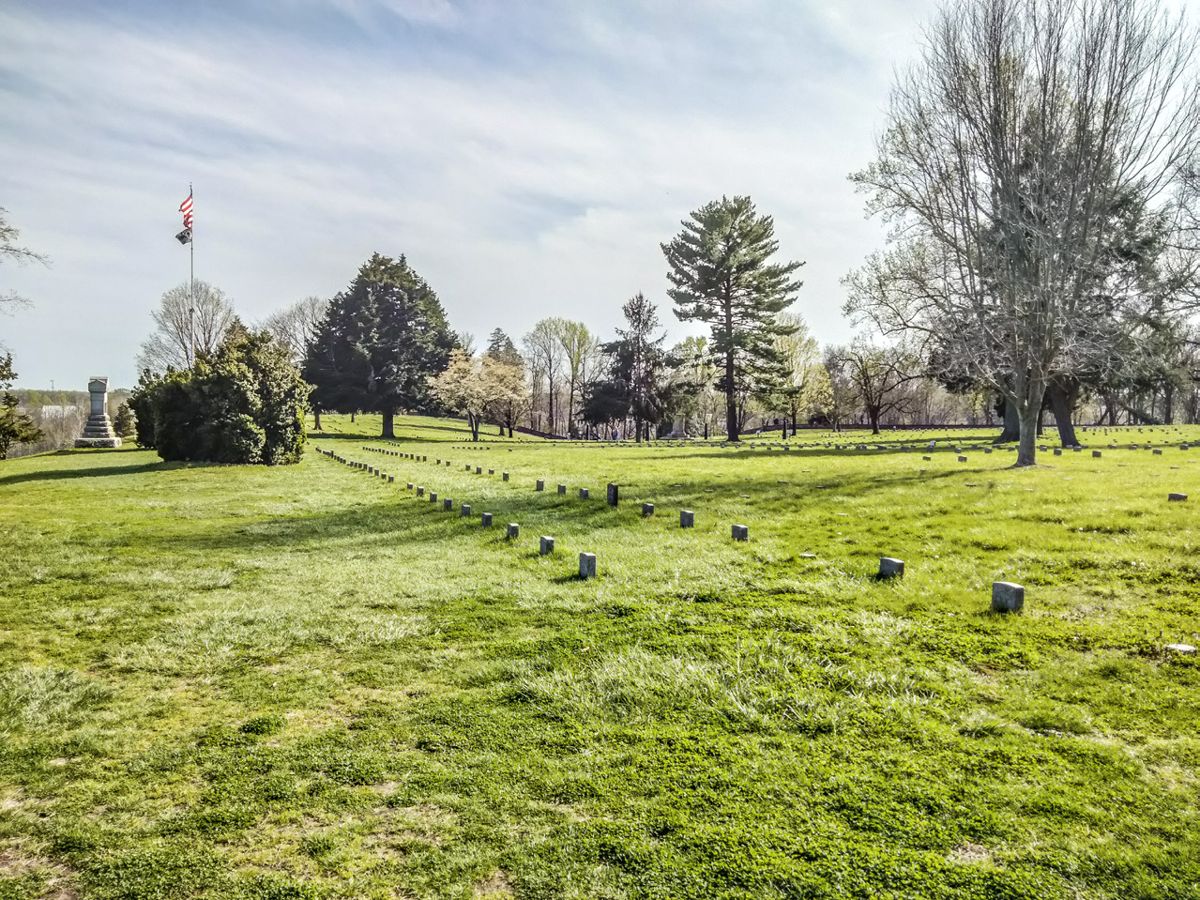
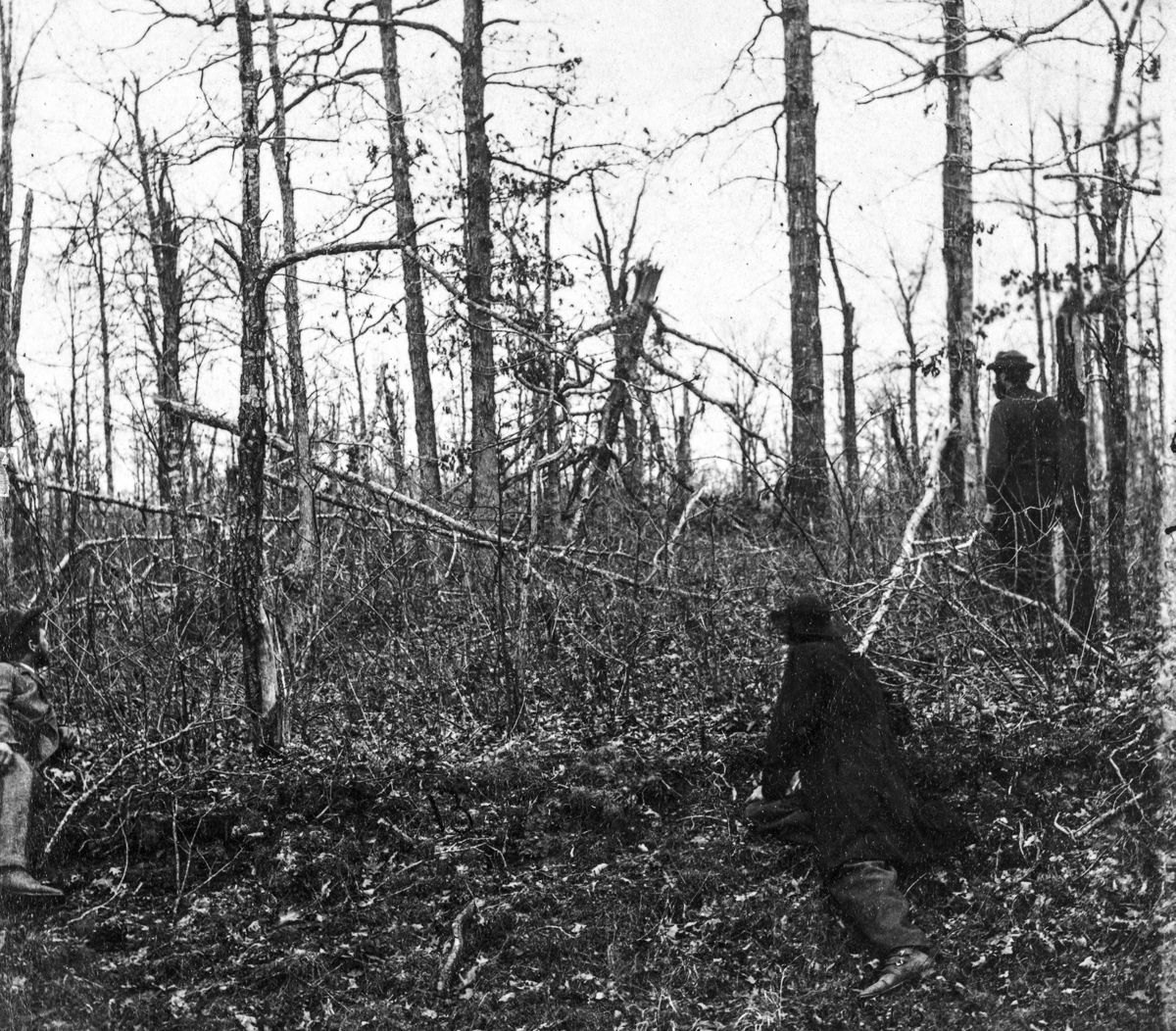
In the Footsteps of Early Battlefield Visitors By Tim Talbott Central Virginia Battlefields Trust preserves area battlefield land partly to ensure that future generations of learners will have the opportunity to see these fields and forests in a state closely resembling their appearance at the time of the Civil War. The visitors who came to the area’s battlefields a few short years after the fighting ended did not have to contend with most modern visual and auditory intrusions coming from the paved roads, utility lines, and automobiles that we benefit from, yet at times disdain, today. Those first battlefield sightseers got a true firsthand look at the landscape. Their eyes observed the debris of battle still remaining on the fields, the damage to buildings and the environment, and the then on-going reinterment process, all of which evidenced the hard fighting that occurred. Fortunately, some of those first battlefield visitors left vivid accounts of what they saw. Being that their battlefield treks came so soon after the war, they certainly experienced things we never will, but learning about their visits can add significantly to our modernday encounters with battlefields. In the spring of 1868, Erie, Penn., resident Isaac Moorhead accompanied David B. McCreary, a former lieutenant colonel in the 145th Pennsylvania Infantry, to the Fredericksburg and Chancellorsville battlefields. The historical significance of this area was not lost on Moorhead. He noted that, “It is a little singular that so many battles of the war should have been fought in this county of Spottsylvania— the two Fredericksburgs, Chancellorsville, the Wilderness and the battle of Spottsylvania Court House.” Moorhead’s companion, McCreay, who had fought at Fredericksburg and Chancellorsville, served as interpreter. Morehead explained that McCreary “pointed out all the positions, went over the details of the battle on this part of the field in a thrilling and impressive manner.” While on the Fredericksburg battlefield the visiting duo met “a man who had fought against us at this point and who corroborated all” that McCreary had related to Moorhead “of the bravery of our men in this unequal and hopeless contest.” Moorhead and McCreary stopped at the millrace, brickyard, Marye’s Heights, and Willis Hill, all notable landmarks to McCreary. On Marye’s Heights at Brompton, there was still visible evidence of the battle: “all over the house and grounds are marks of shot and shell. We reached the crest … occupied by the Washington Artillery under Col. Walton. What a position! No marvel the Confederates had it their own way. It was mere target practice for them,” Moorehead observed. They also visited the emerging National Cemetery, “hallowed as the resting place of thousands upon thousands,” and observed the work of reinterments from the area’s battlefields as it went on. While at the National Cemetery, the men “raised the lids on some of the boxes and saw the skull, the bones, some tattered blue rags, socks, a mat of hair—nothing more.” Moorhead stated that, “Great care is taken in collecting these remains to preserve all the marks upon the boards at the heads of the fallen ones… .” The following day, the two visitors went to the southern end of the Fredericksburg battlefield, noting where Gen. Meade “made a splendid fight,” and where Maj. John Pelham “immortalized himself with a single gun.” Chancellorsville was their next stop. On the way, they spied Salem Church, where “the entrenchments and marks of shot and shell showed us Sedgwick’s extreme point of advance.” Moving on, they came to a row of earthworks where McCreary had become a prisoner of war. “The earthworks were still quite complete, although somewhat washed by rain. They lay directly across the road, and extended on either side into the deep woods.” Nearby “Remains of uniforms, cartridge boxes, canteens, haversacks and some human bones lay in the trenches.” All around them, “Dead branches were hanging on all the trees, and all the [trunks] of them were scarred with shot and shell.” During a brief stop, while they used the earthworks for a place to sit, McCreary, who fought as part of the II Corps, related his Chancellorsville memories. Around them were numerous Confederate graves “marked with head and foot stakes, the pencil tracings obliterated and a tangle of second growth covering them.” Moorhead “cut a hickory walking stick that had grown right out of the breast of some brave fellow… .” On they wandered to the Chancellor House ruins. Moorhead apparently thought Chancellorsville was a bit of a misnomer, as he wrote, “There was no village here, nothing but this one house.” Standing on the front porch steps, Moorhead painted a picture with his words. “An open plain all about the house in every direction, then a dense, dark mass of jagged and stunted pines and scrub oaks as close together as it is possible for them to grow… .” Roads radiated around the house. They “faced a road leading to Catherine Furnace,” the Turnpike and Orange Plank Roads ran to Fredericksburg to the left, “to the right, and near Melzi Chancellor’s [Dowdall’s Tavern] (which is about a mile west,)” the roads split again. Before moving on, Moorhead picked up a round musket ball. Continuing to travel west, they stopped at Rev. Melzi (Tim Talbott)

Chancellor’s house for a visit. He was not home, but Mrs. Chancellor invited them in. Above the fireplace were images of Gen. Lee, Gen. Jackson, and Jefferson Davis. Moorhead noted that this house was Gen. O.O. Howard’s headquarters before Jackson’s May 2, 1863, flank attack swept (Library of Congress)
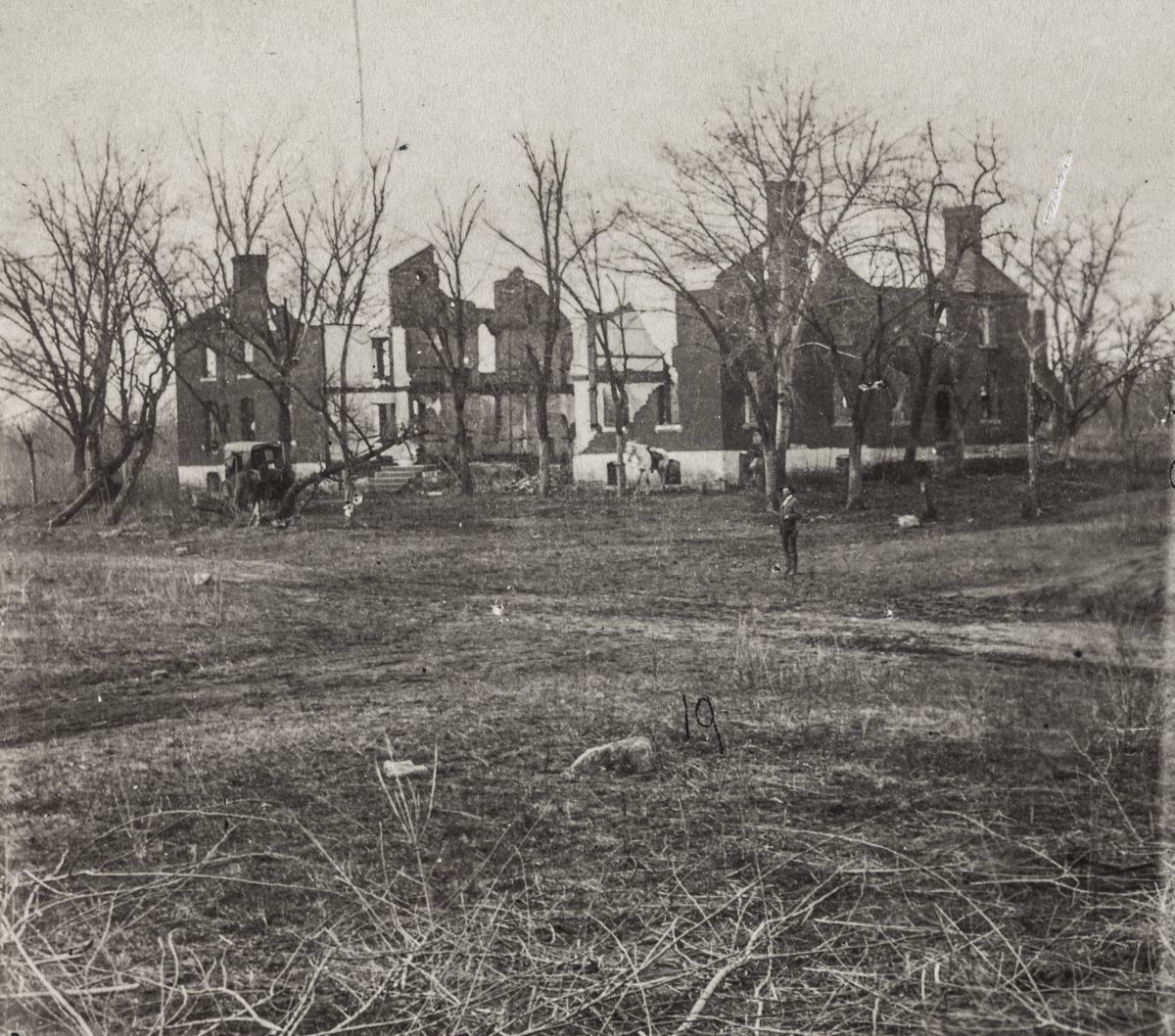
CivilWarNews.com Howard’s XI Corps eastward. “Mrs. Chancellor spoke well of General Howard’s kindness and courtesy,” Morehead wrote, and he was “much pleased with the lady-like bearing of Mrs. Chancellor.” After leaving Mrs. Chancellor, they took “a moment to look at the Wilderness Church across the road and further west.” They then “passed back to the spot where Jackson was wounded.” Traveling south they headed toward Catherine Furnace, and in doing so they wound up their sightseeing with a ride through “the scene of the principle fighting” on May 3, 1863. By taking a virtual tour with early battlefield visitors, we can still see some of sights they saw: Marye’s Heights, Willis Hill, the National Cemetery, Pelham’s Corner, Meade’s breakthrough, Salem Church, the Chancellor House ruins, Catherine Furnace, and the area of Rev. Chancellor’s farm; places that could have been wiped out by development if not for action from groups like CVBT, the National Park Service, and the American Battlefield Trust, who stepped in to save them. In reading early battlefield visitors’ accounts we can also live vicariously through them to do things like talk to Confederate veterans, see reinterment work at the National Cemetery, pick up a musket ball, and chat with Mrs. Chancellor. Through their accounts, we see a much different battlefield than we see through the fighting soldiers’ eyes, or our own modern perspective. CVBT has helped save over 1,100 acres at Fredericksburg and Chancellorsville.
Tim Talbott is the Chief Administrative Officer with the Central Virginia Battlefields Trust.
The mission of CVBT is to preserve land associated with the four major campaigns of: Fredericksburg, Chancellorsville, Mine Run, and the Overland Campaign, including the Wilderness, and Spotsylvania Court House. To learn more about this grassroots preservation nonprofit, which has saved over 1,700 acres of hallowed ground, please visit: www.cvbt.org.