Aquia Landing and the RF&P Railroad
By Paul T. Scott · Originally published March 2023 · pp. 14–15
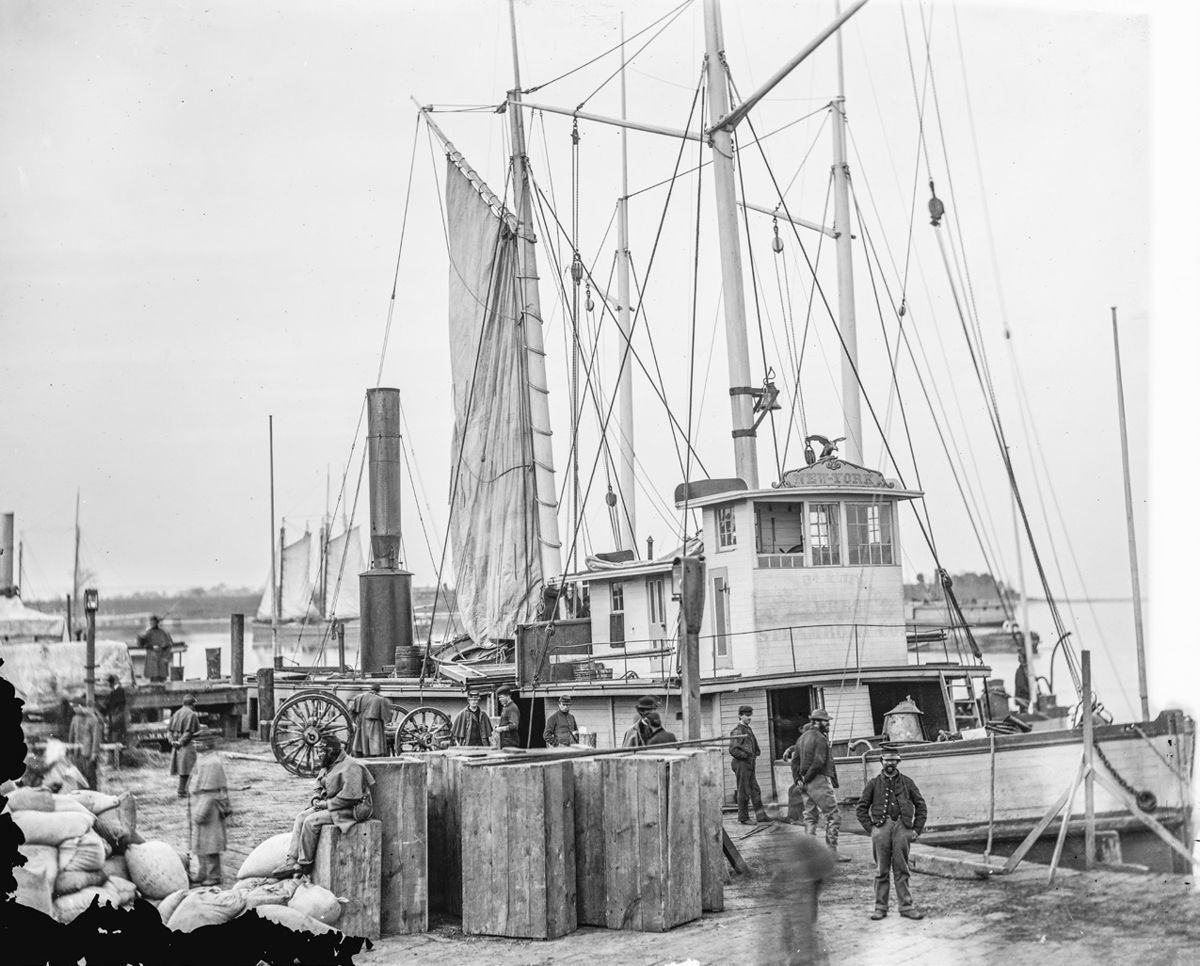
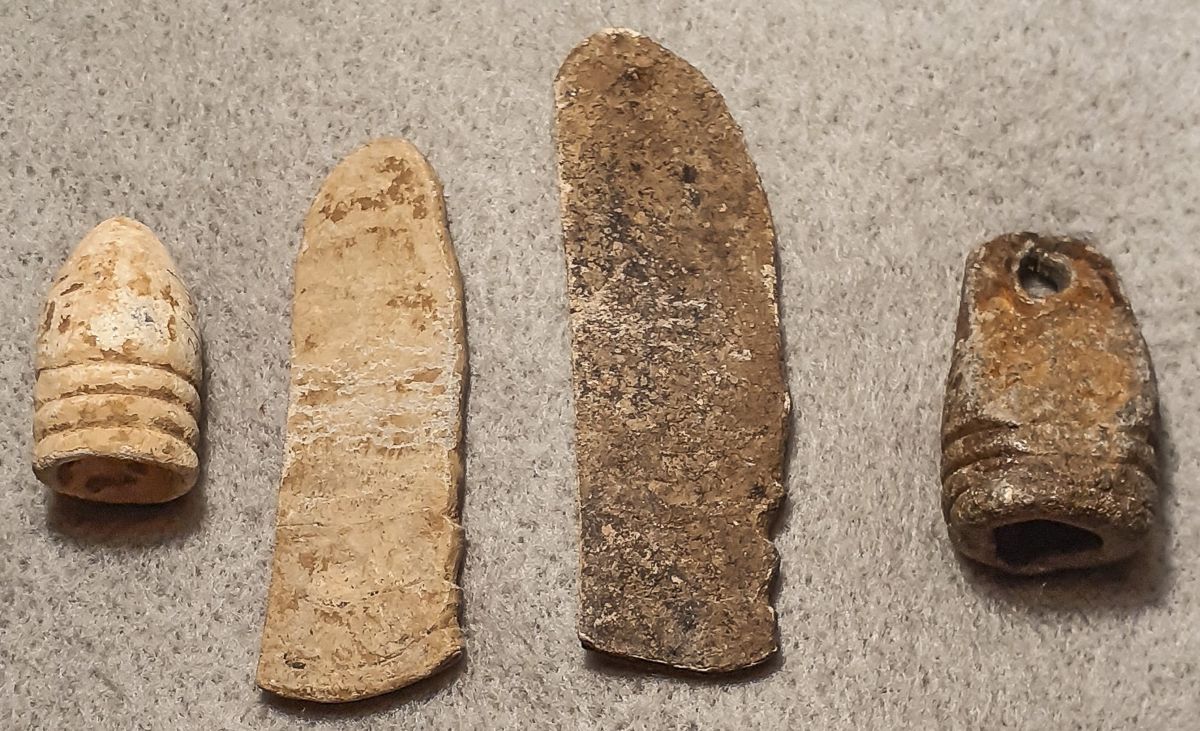
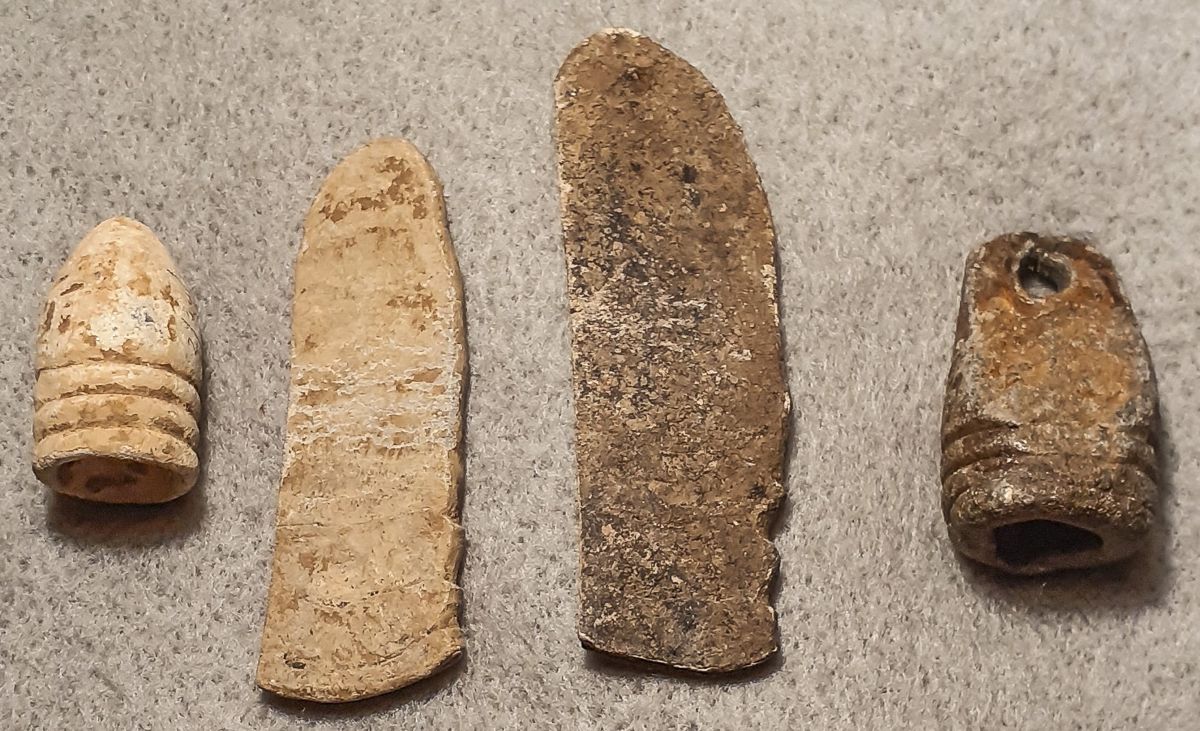
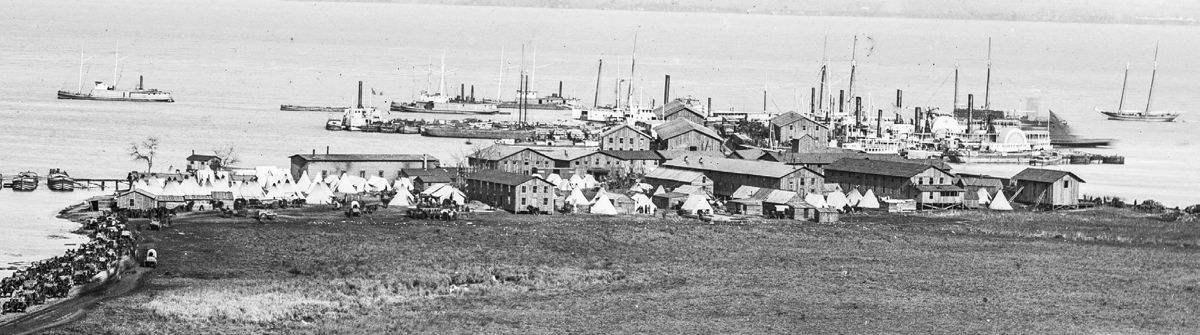
Today, Stafford County, Va., has a serene waterfront park again known as Aquia Landing after having been named Aqua Po in a 1960 naming contest. The name Aquia Creek comes from the Indian name “Quyough” meaning “the place of the gulls.” Calm breezes wash the beaches as swimmers and sunbathers enjoy the good life. The park is on a peninsula formed where Aquia Creek flows into the Potomac River about thirty-five miles south by water from Washington, DC. Today’s calm belies the prewar and wartime activities there. Less so now, but in the years after the Civil War up through the 1950’s, one could see the remnants of pilings from wharves that once were partial building foundations, scattered railroad spikes, and carved and flattened Minié balls lost or discarded by soldiers stationed there. During the first half of the 19th century and before, travel between Richmond and Washington was a laborious and long prospect. It took days, not hours, due to inclement weather, muddy roads, and breakdowns of stagecoaches and commercial wagons. Passenger service and business trade were difficult. Long sought was a shorter way to the nation’s capital. The most efficient modes of travel were by steamboat and railroad. The Richmond, Fredericksburg & Potomac Railroad Company was chartered as a stock corporation on February 25, 1834, by special act of the General Assembly of Virginia. Construction of the rail line occurred in stages. The first rails were laid from Richmond to South Anna, then to Fredericksburg, then to Aquia Creek where the line terminated on the Potomac River. Wharves were built at this new Aquia Landing for steamboats. The rail cars were pulled by steam engine locomotives using high pressure steam to a cylinder with a large piston stroke. These steamboats carried passengers and commerce to and from Washington. The Washington and Fredericksburg Steamboat Company serviced the wharves at Aquia Landing. In 1845, the RF&P purchased one-half of the company’s stock, and later renamed it the Potomac Steamboat Company. In 1854, the RF&P made extensive repairs to the Aquia Landing wharves and erected a covered way from the steamboat landing to the rail cars. By 1861, the RF&P owned 11 locomotives and four steamboats, indicating the success of its commercial and passenger rail services. Upon Virginia’s secession from the Union on April 17, 1861, the four steamers of the Potomac Steamboat Company in Washington (the Powhatan, Mt. Vernon, Baltimore, and Maryland) were seized by the United States government. With the loss of its steamboats, the RF&P could no longer service the passenger or commercial trade on the Potomac River. To protect Aquia Landing, Virginia took possession of the RF&P property and dispatched Fredericksburg’s own 30th Virginia Infantry to hold and protect the rails and wharves from capture by the Federals. The defenders constructed artillery redoubts on the heights above Aquia Creek. On the morning of May 31, 1861, Union gunboats arrived; an attempted landing was repelled by Confederate cannon fire. During the spring 1862 Peninsula Campaign, General George McClellan moved his army toward Richmond, causing the Confederate forces at Aquia Landing to withdraw down the rails toward Fredericksburg. Fearing the wharves and buildings on Aquia Creek would fall into enemy hands, the Confederates burned them as well as the bridges over Accokeek Creek, Potomac Creek, and the Rappahannock River. Confederate forces then remained in Fredericksburg to protect the rail lines going south to Richmond. To join the campaign against Richmond from the north, Major General Irvin McDowell would have to rebuild the rail line between Aquia and Fredericksburg. So, in April of 1862, Secretary of War Edwin M. Stanton retained the services of railroad engineer Herman Haupt, to rebuild the wharves, buildings, and tracks. What Haupt found were charred ruins and three miles of bare rail bed pointing south. The road bed was softened by spring rains and the bridges over the creeks and river had been thoroughly destroyed. They also would have to be rebuilt. Haupt was a graduate of West Point, who upon graduation started a career in railroad construction specializing in bridge design and building. He became the Pennsylvania Railroad’s chief engineer, moving on to more challenging tasks suitable to his engineering skills. He was 45 years old when the Civil War began and had a stellar reputation in the railroad industry. Haupt became the Superintendent of the Construction Corps of the United States Military formed specifically for the Aquia undertaking. Since no corps existed at the time, Colonel Haupt made do with a small crew of railroaders with three companies of soldiers. They used hand tools and labored under all weather conditions. Working day and night, Haupt and his men were able to lay about one mile of track per day. After rebuilding the docks and track at Aquia, he supervised building bridges over Accokeek Creek and Potomac Creek. President Lincoln famously described the bridge over Potomac Creek as being built of “beanpoles and cornstalks.” All this was accomplished by June of 1862. The bridge over the Rappahannock River to Fredericksburg was not rebuilt until after the War. Hence, the amphibious assault by Union forces over the Rappahannock River on December 13, 1862. In August, however, General Ambrose E. Burnside, Commander of Union forces at the time, became overly concerned that Confederate forces may retake Aquia Landing and disrupt the supply line from Aquia Creek. Although General Lee never attempted to take the rail lines north of the city, Burnside unwisely ordered the destruction of the wharves and buildings and the lines. Haupt described these losses as nothing short of “vandalism.” Haupt was also furious at the destruction of his personal pride, the doubletracked wharves he had designed for unloading box cars at Aquia Creek. Speculation has it that with so much material and cost, there was much waste in military commerce. Burnside may have felt it was more of settling shortages and accounts. Thus, such waste became hidden to history with no accounting during his command. With the Battle of Fredericksburg looming, Burnside needed the ability to move large numbers of troops and massive amounts of military supplies. So, on November 18, 1862, now a Brigadier General,
Hand hewned sharp end of a piling from Aquia Landing wharf.
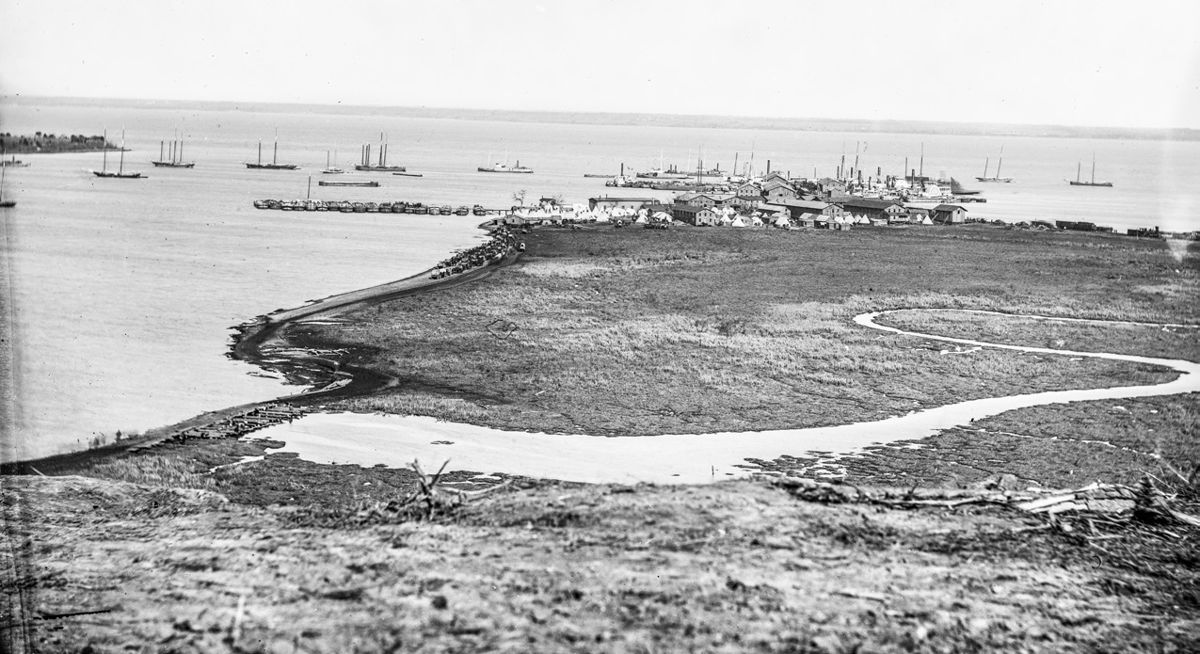
Haupt and his Construction Corps again began repairing the RF&P. Haupt discovered that the damage done by Burnside’s soldiers in August was more easily repaired than that done by the Confederates in April. By this time, the United States Military Railroad Construction Corps was experienced and by hiring civilians, the wharves were soon repaired and track restored. The high bridge across Potomac Creek was replaced with a truss structure. During this time, thousands of enslaved people took the opportunity to ride the rails and steamboats north to freedom. Due to the heavy military engagements around Fredericksburg and thereafter westward at Chancellorsville, the Wilderness, and Spotsylvania Courthouse, war supplies came south; the wounded were evacuated north. As a result, there was very heavy traffic at the Aquia Creek steamboat wharves. To relieve some of this traffic, a branch line was constructed that ran south about a mile and a half below Aquia Creek with extensive wharves. It was officially named Burnside’s l CivilWarNews.com Wharf, but the railroaders called it “Youbedam Landing.” After the Civil War, Youbedamn Landing was abandoned; the RF&P Railroad lines were constructed north from Brooke, Va., through Quantico, and later to Washington. Some of the Aquia Landing material was taken and used for constructing the northern rail line. . Building foundations existed for years but gradually disappeared due to weather, recycling, pilfering, and shoreline erosion. The dock planks were removed leaving hundreds of pilings exposed well into the 1960’s when the Army Corps of Engineers cut them off at the creek bottom. The pilings were a severe hazard to navigation for many years until removed. They did provide a great fishing spot where one could move a rowboat into the pilings, tie off to them, and drop a line for abundant stiff back perch. Local watermen even cut a 20foot section out next to the shore so they could move between the creek and river without going all the way around the pilings. Many a person on shore would wave frantically about the danger as the watermen and other locals would cruise through that space grinning. Presently, there are no visible pilings. There are only red danger markers at the outer extent of the pilings to warn boaters to stay clear as there may still be some the Corps missed. Built, destroyed, and rebuilt eight times, the RF&P Railroad’s Aquia Landing stands as a testament to man’s ingenuity and dogged determination. The primary source for this article was “One Hundred and Fifty Years of History Along the RF&P Railroad,” by Bill Griffin.
Paul Scott is a member of the Board of Directors of Central Virginia Battlefields Trust, Inc. CVBT is an authorized 501(c)3 organization dedicated to the preservation of Civil War battlefields. The mission of CVBT is to preserve land associated with the Campaigns of Fredericksburg, Chancellorsville, Mine Run, and the Overland Campaign including the Wilderness and Spotsylvania. For more information, see www.cvbt.org.