The Same Day in June for one Soldier in 1863 and 1864
By Carl L. Sell Jr. · Originally published June 2023 · pp. 6–8
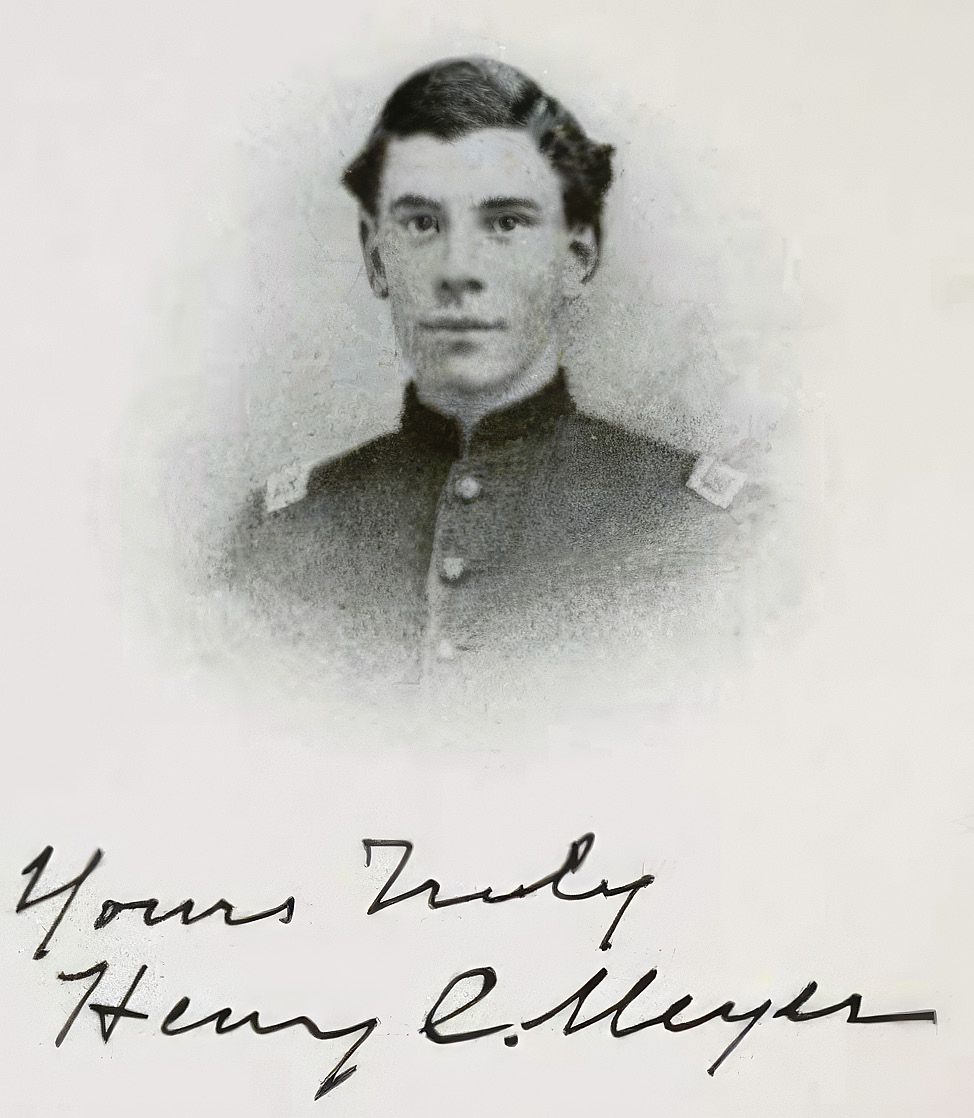
Upon hearing the Confederates had fired on Fort Sumter in April 1861, seventeen-year-old Henry Coddington Meyer immediately asked his parents for permission to join the Union Army. They refused, and it wasn’t until July the following year that Henry was able to go to war without their permission. He was eighteen and could make his own decision. When word reached him that the Union Peninsula Campaign in Virginia was going badly, Henry wanted to help. Seeing an announcement in a New York newspaper that the Harris Light Cavalry was in town seeking recruits, he found the recruiters office at the Metropolitan Hotel and signed up for three years. He informed his parents the next day and was on his way the following night. Still dressed as a civilian, Henry arrived in Washington City and checked in to the Willard’s Hotel. There he met his uncle, E.V. Price, who introduced him to General John Pope. The general had just been appointed as commander of the Army of Virginia and was staying at the hotel. The general, who was then organizing an assault on Richmond, provided Henry with a pass that enabled him to go through the Union lines and meet his regiment, the Second New York Cavalry (Harris Light). After arriving in camp at Falmouth, Va., an interesting sidelight occurred. Henry was given a horse and a uniform. A fellow member of his company decided to desert and join Mosby’s Confederate command. He offered Henry $11 for his clothes. Henry agreed, but never received the $11. The Mosby tale also was bogus as Mosby himself was a private in the Confederate cavalry at the time and didn’t establish his independent band of guerrillas until the end of 1862. Meyer’s arrival for duty coincided with General George McClellan’s retreat from the Virginia peninsula, ending one threat to Richmond at the city’s door step and Pope’s plan to attack the Confederate capital from the north. The Second New York performed rear-guard picket duty for the Army of Virginia but didn’t get close enough to hear “bullets whistle,” as Meyer put it, until Cedar Mountain. At Second Manassas, the Second New York engaged in a charge that met a sheet of fire from both the enemy and Union infantry on their right flank which assumed they were firing into a charge of enemy cavalry. Henry said in his memoirs that the charge was felt at the time to be a blunder, “one of the many from which our volunteer army constantly suffered in the early years of the war.” After Pope’s army retreated toward the defenses of Washington, the Second New York marched to Alexandria and subsequently returned to the Rappahannock River for picket duty, but was not actively involved in the Battle of Fredericksburg. In November, General McClellan was been relieved as commander of the Army of the Potomac; Major General Ambrose Burnside took over. After the defeat at Fredericksburg and a botched follow-up attack known as the “Mud March,” Major General Joseph Hooker took command. Hooker was more attuned to the importance of cavalry’s role and the horsemen were worked hard to improve their riding and fighting skills. Previously, the recruits from northern cities were no match for the southern farm boys who grew up riding horses. Meyer was “recruited” for duty as an orderly and, in December 1862, was detailed in that role to the headquarters of Brigadier
General David Gregg. Although still a private, he acted as an adjutant’s clerk on Gregg’s staff. Before the war, he had been a clerk in his uncle’s business of importing metal. On June 9, Meyer was with the Union cavalry that made a surprise attack on Jeb Stuart’s Confederate cavalry at Brandy Station. After a spirited battle with charges being made back and forth, the Union riders were “withdrawn, without molestation, across the Rappahannock, the purpose of the movement being accomplished: which was to cripple Stuart’s cavalry, to prevent his starting on a raid to Pennsylvania, which was contemplated, and also to ascertain if Lee’s army was in that area.” Meyer further stated that Brandy Station was a “great benefit to our troops engaged, in giving them experience in fighting large bodies mounted, with sabers, and added much to their confidence, as was demonstrated in later engagements.” Early in the battle, Gregg’s troopers reached the grounds around Stuart’s headquarters but were repulsed, and Meyer suffered a sabre wound to his collarbone. Fortunately, his horse jumped a fence, and he avoided capture. Later that night, when he was making up the list of division casualties, he did not enter his name because it would appear in the newspapers and “needlessly alarm my mother.” He was patched up by a surgeon and continued to ride with the division, saying his wound was painful, but not dangerous. Not long thereafter, Major General Hooker ordered Brigadier Generals Judson Kilpatrick and David Gregg to lead their cavalry to the summit of the Blue Ridge Mountains where they could observe Confederate movement in the Shenandoah Valley. They left Falmouth on the Rappahannock, crossed through the Bull Run Mountains at Thoroughfare Gap, and arrived on the outskirts of Aldie, Va., on June 17.
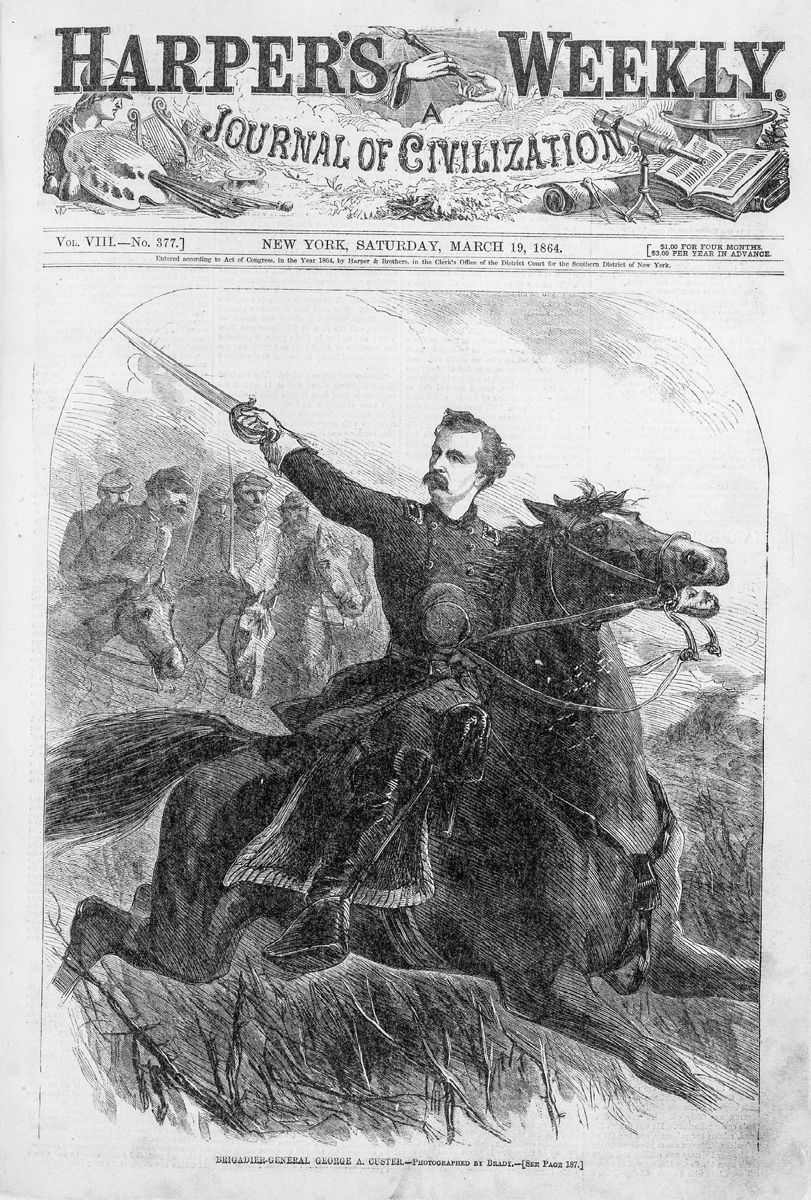
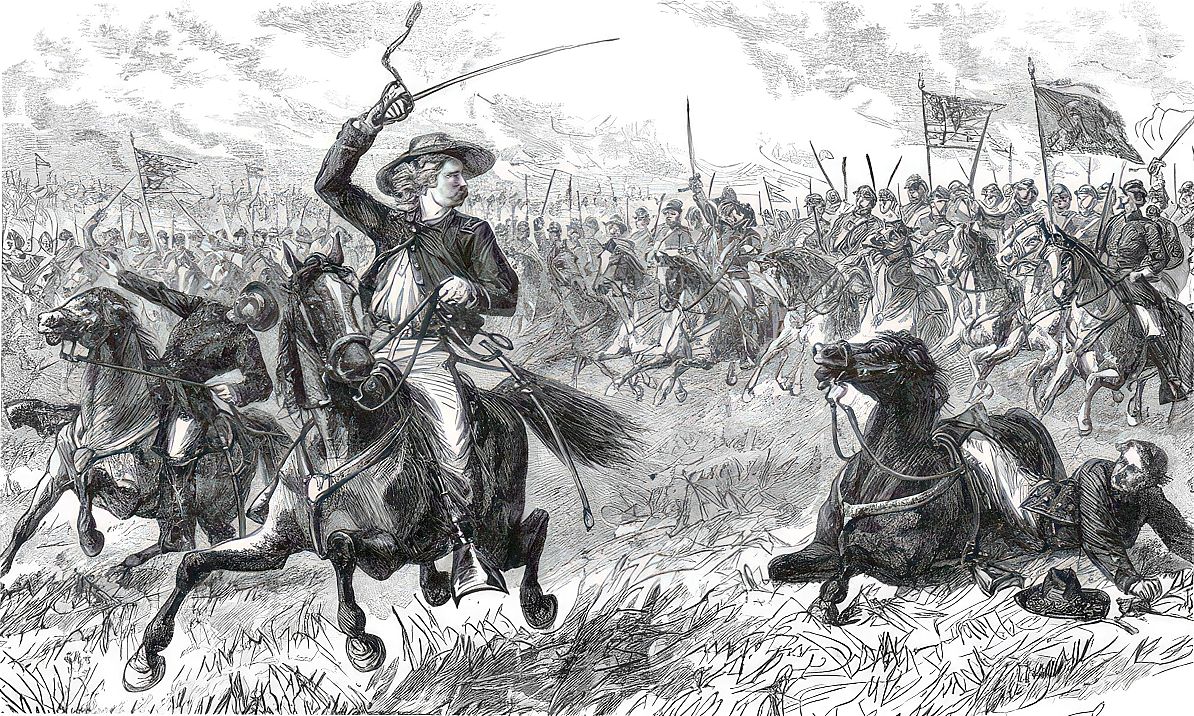
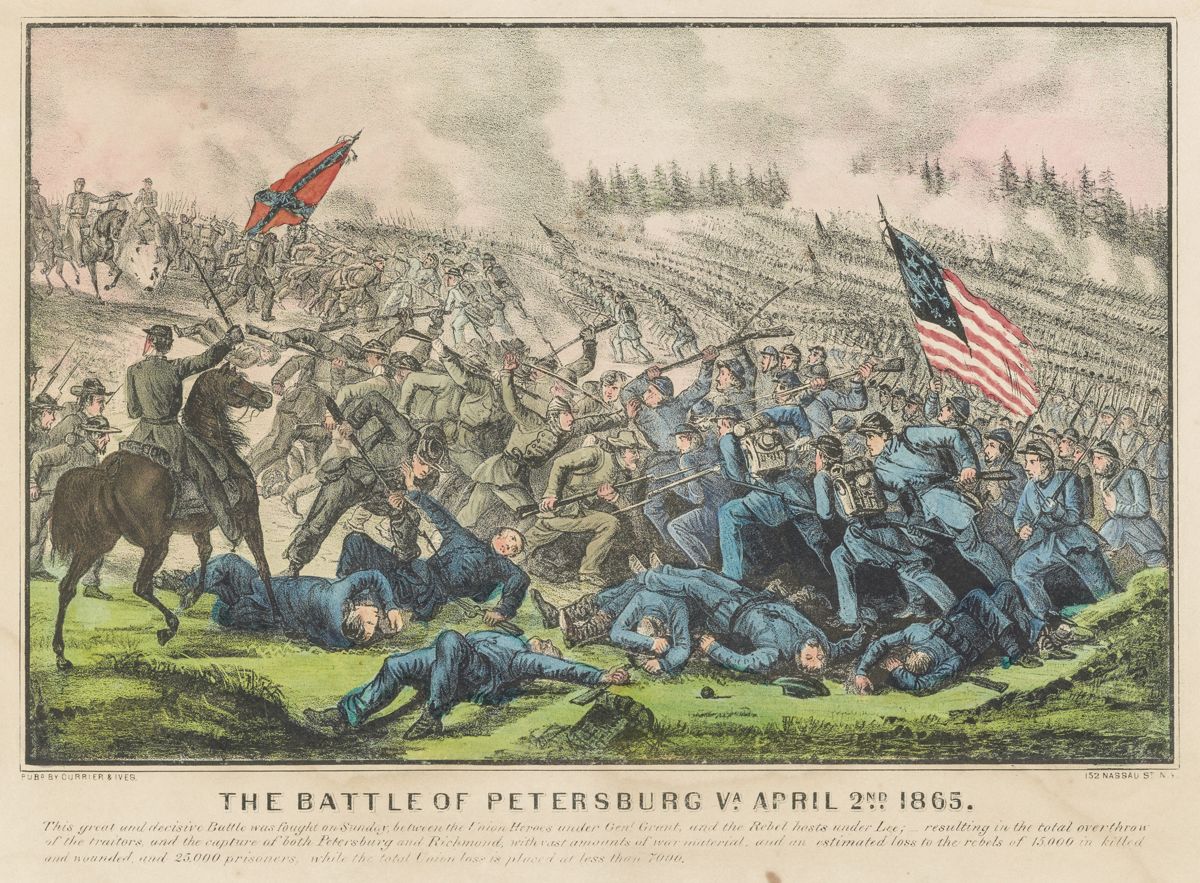
CivilWarNews.com Before entering the village, the troopers stopped at the Little River to water their horses. A bizarre incident occurred that brought laughter to all involved, including an unfortunate captain. As the troopers lined their horses on one side of the Little River, impatient and flamboyant Captain George Custer decided to go across the river and allow his horse to drink alone. After Custer’s horse had his fill, the captain urged him up the steep bank to leave the river bottom. The horse fell over backward, depositing Custer and his golden curls in the water. No one was hurt and Custer laughed along with his fellow cavalrymen. The rest of the day was no laughing matter as the Yankees suffered major casualties trying to outfight Confederates under Colonel Thomas Munford, who was assigned to screen Lee’s movements. The decisive moments came as the Confederates kept up a withering fire from the protection of stone walls along Snickersville Turnpike. There, the First Massachusetts and Fourth New York suffered devastating losses. The battle ended at night when the Confederates retired to Middleburg. Meyer, who had acted as an aide to Gregg for most of the battle, described the night after the fighting ended as a “rather blue time for us.” He recalled that his command hired wheelwrights in the town to construct coffins. As the campaign progressed, Stuart’s riders kept the Union cavalry away with murderous fire from defensive positions in Middleburg and Upperville while General Lee’s infantry moved down the valley toward Maryland. At Upperville, General Gregg’s horse was hit in the stomach by a piece of shell, with the general’s leg being grazed. The general changed horses but soon was surprised to see his wounded horse trying to keep up despite being badly wounded. At the general’s request, Meyer pulled his pistol and killed the horse. The Union riders crossed into Maryland by moonlight at Leesburg and were greeted enthusiastically at Frederick. At New Windsor, Meyer and his comrades were given items necessary for a bath, followed by a breakfast served by girls from a nearby boarding school. They rode all the way to York, Pennsylvania, before they were recalled to Gettysburg. They went via Hanover, arriving there the day after a clash involving Stuart and Kilpatrick’s cavalry. Gregg’s division was sent to guard the Federal position on Cemetery Hill. The next day, reinforced by Custer’s Brigade, Gregg’s Division fought Stuart to a standstill at East Cavalry Field, an encounter that stopped the Confederates from piercing Union defenses from the rear. By then, Custer was a brigadier general because of what Meyer called his “conspicuous gallantry.” After Gettysburg, Meyer spent his time relaying messages and information to and from General Gregg, acting as an officer although still a private. It wasn’t until he was transferred to General Kilpatrick’s staff that the oversight was corrected, and he was promoted to second lieutenant, a position he would hold until the army reached Petersburg. In early March 1864, Meyer rode with Kilpatrick as part of the ill-fated Dahlgren Raid on Richmond. Brigadier General Kilpatrick and Colonel Ulrich Dahlgren moved toward Richmond in separate attacks designed to free Union prisoners and capture Confederate leaders. The Confederates claimed the raid was designed to assassinate Confederate President Jefferson Davis and his cabinet. Federal officials denied the charge. Dahlgren was killed and the Union riders retreated. As part of the 1864 Overland Campaign, Meyer commanded troops in action at the Wilderness, Spotsylvania, and Cold Harbor, while at the same time serving as Kilpatrick’s aide. On some occasions, he delivered messages to headquarters, including those from General Grant. On others, he was in the field directing fighting against the enemy. Meyer described the crossing of the James River toward Petersburg as “two steps forward, one back” because the roads were very sandy. General Grant had hoped to attack shortly after reaching Petersburg, but the slowness of the march and Confederate reinforcements stymied the advance. Meyer was promoted to captain, skipping over first lieutenant. On June 17, the Federals advanced but were repulsed in heavy fighting. Meyer escaped the fire, but afterward noticed Lieutenant James Randall lying severely wounded between the lines, lying face down in a corn field. Meyer cleaned Randall’s face so he could breathe but had trouble carrying the wounded man. He then was struck by a ball alongside his spine. Comrades lifted Meyer and Randall to safety. Miraculously, both survived despite bullets hitting all around them. After being pulled from the line of fire, Meyer knew he had been hit but didn’t think the wound was serious. He told Lieutenant Colonel Walter Newberry that he had a “thirty-day” wound and would be back in action soon. Colonel Newberry assigned two men to help get Meyer to an aid station. There, he once more encountered Randall, again wiping dirt from the man’s face so he could breathe. Meyer was evacuated to City Point and then Seminary Hospital at Georgetown in Washington City. Although the ball was successfully removed, pieces of both the ball and cloth worked their way to the surface until June 1865. He walked with a cane for another year and was limited to clerical work and writing the rest of his life. He married and fathered two children before passing away at the age of 90 in 1935. Meyer became an advocate for improved sanitary conditions, authoring a widely acclaimed article that led to an improved sewer system. He is buried in Montclair, Essex County, N.Y. Newberry was promoted to colonel and then Brevet Brigadier General just before the war ended.
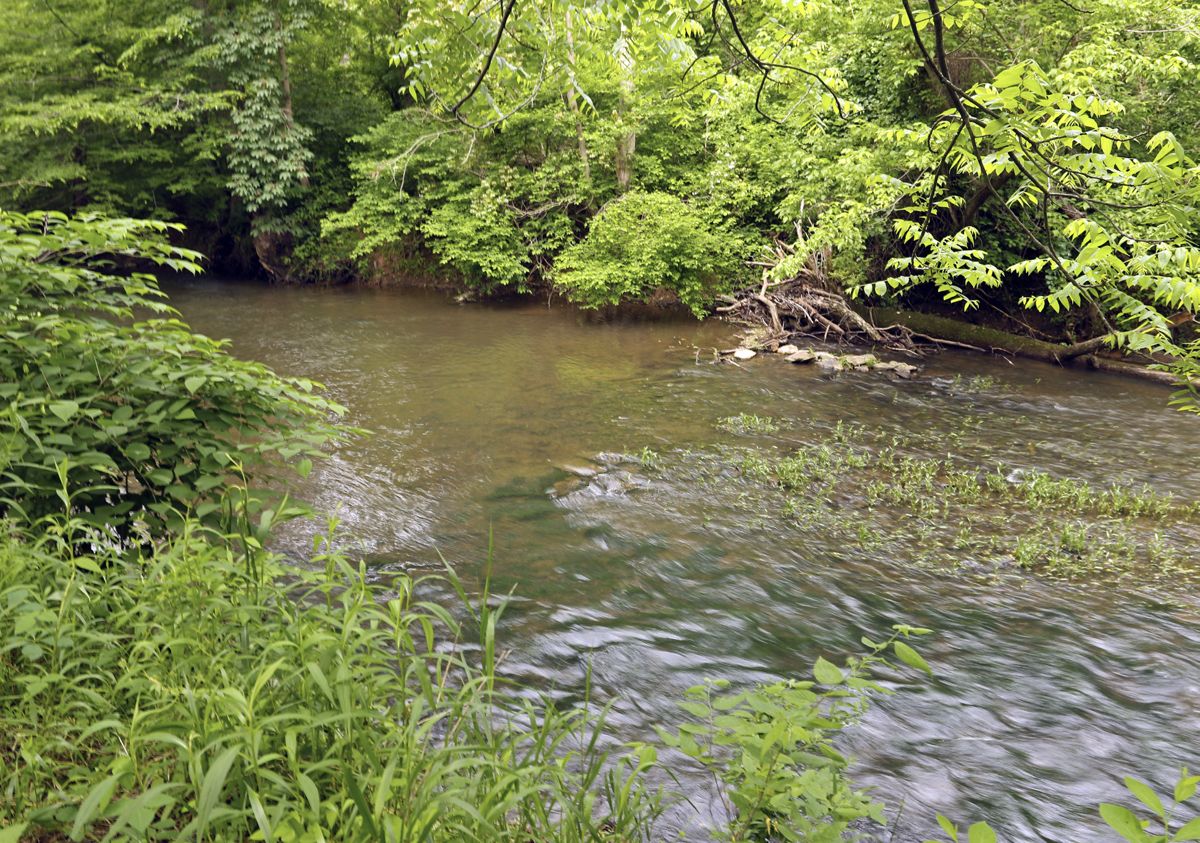
Spot where Custer fell into the Little River. (Bill Kamenjar)
Afterwards, he served as mayor of Petersburg and then moved to Chicago, where he served as postmaster before being elected to the United States Congress in 1891, but he was not a candidate for reelection in 1893. On April 11, 1893, Newberry wrote to Secretary of War Russel A. Alger recommending Meyer as a Medal of Honor recipient for his act of saving a brother officer acting well beyond his regular duty. He also cited the high position Meyer held in the scientific world as a proper person to receive such a high and distinguished honor from the government. Meyer was honored as a Medal of Honor recipient on March 29, 1899. According to Meyer, Randall was hit five times before being helped from the Petersburg battlefield. He started his long, painful road to recovery in a wagon over rutted roads to City Point. Randall was discharged as disabled on December 9, 1864. After the war, he lived on Ninth Street in Washington, D.C., while working as a bookkeeper at the Treasury Department. He died in 1893 and is buried in Phillipsburg, Orange County, N.Y. He never married. Information for this article came from Meyer’s “Civil War Experiences under Bayard, Gregg, Kilpatrick, Custer, Raulston, and Newberry.” Research by the author and genealogist Karen Connair, and research and editing by historian Ben Trittipoe. Carl Sell is a frequent contributor to the Civil War News. His book “Battle of Aldie” includes Meyer’s description of Custer’s fall into the Little River. Sell can be reached at sellcarl@aol.com or 703-971-4716.