This And That
The Chickamauga Campaign Trail
By Gould Hagler · Originally published June 2023 · pp. 20–22
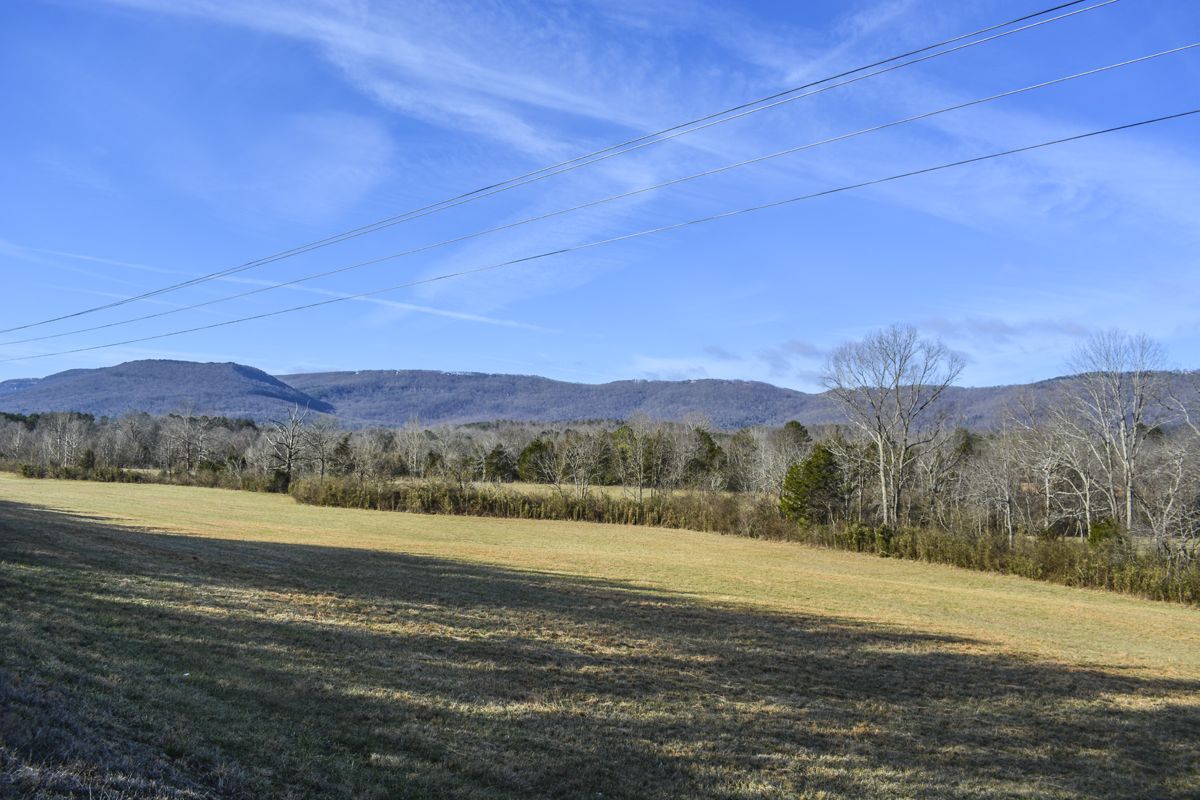
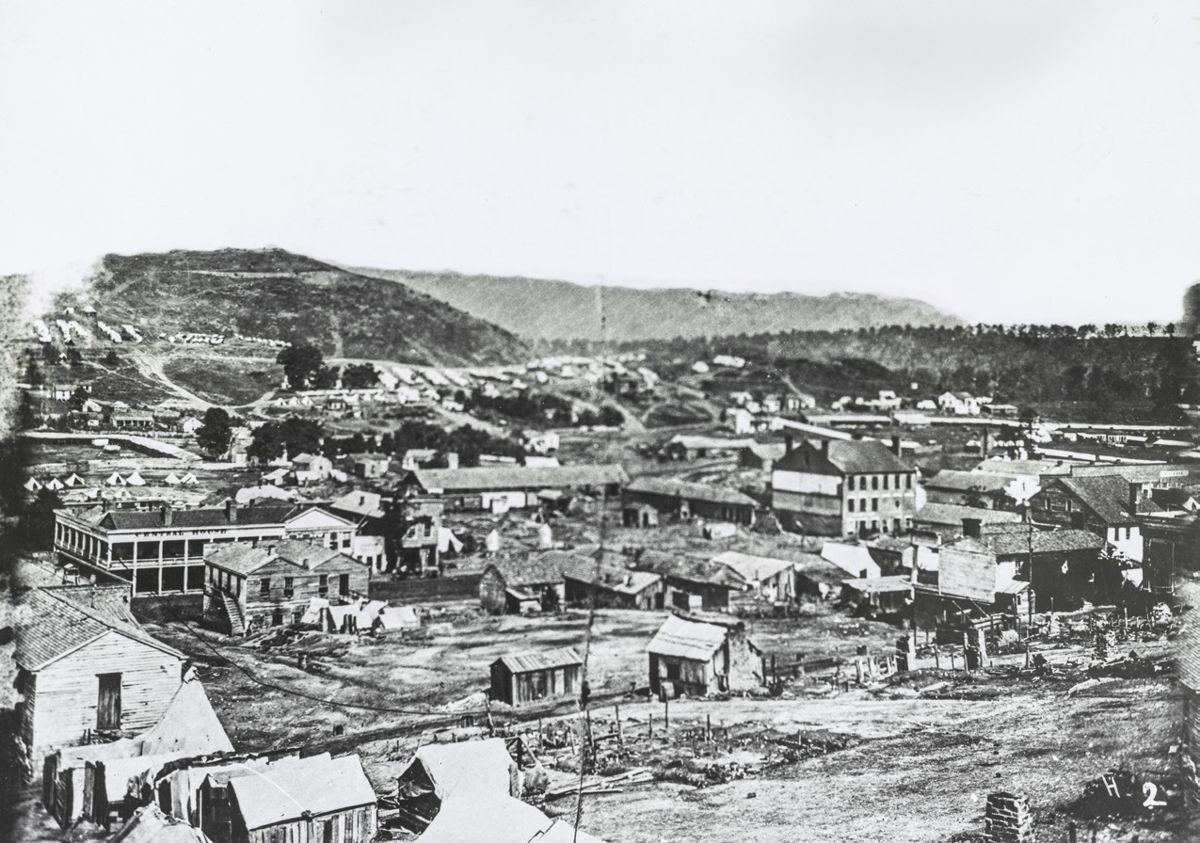
The Chickamauga Campaign Trail Until late in the Civil War’s third year, Federal forces had made no major incursions into the Confederacy’s third most populous state. Virginia had been a battleground from the start, and from early 1862 Union and Confederate forces had battled in Tennessee. However, except for some small-scale action on the coast, Georgia witnessed no significant fighting through most of 1863. That changed late in that summer, when Federal Maj. Gen. William Rosecrans’s Army of the Cumberland maneuvered into Chattanooga and beyond, forcing Confederate Gen. Braxton Bragg’s Army of Tennessee to retreat into northwest Georgia. Georgia Civil War Heritage Trails has installed a series of interpretive markers that tell the story of this campaign and its climax, the great battle fought in the valley of Chickamauga Creek on September 19 and 20. The trail begins at the GCWHT marker on the town square in Trenton, in the extreme northwestern edge of the state. On Sept. 4, Federal troops moving from Tennessee and northern Alabama began to pass through Trenton, “with an ultimate goal of capturing
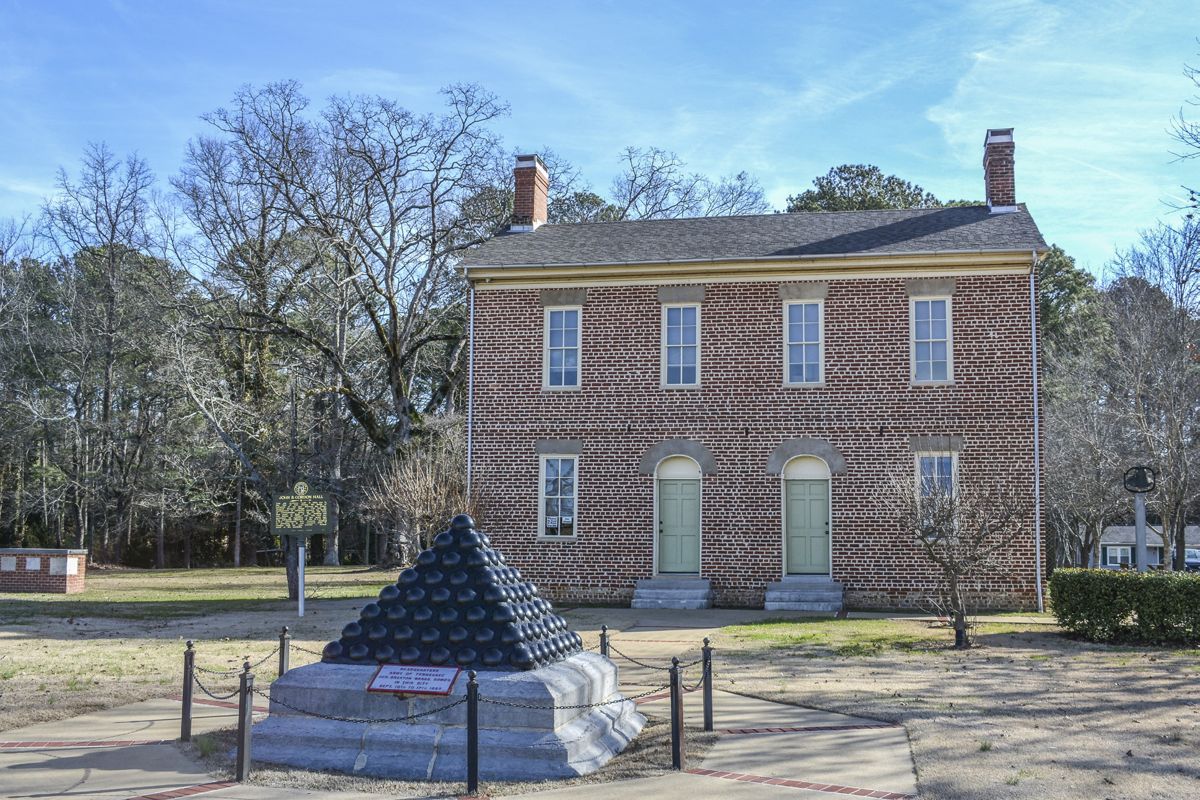
Atlanta.” Rosecrans established his headquarters here and “his men spread over all of Dade County, foraging for food and animals.” Rosecrans believed that Bragg, having evacuated Chattanooga, was in full retreat. He summoned Maj. Gen. George Thomas, commander of the XIV Corps, for a meeting to discuss “arrangements for the pursuit.” Thomas urged caution and advised Rosecrans “to consolidate his army, then spread over fifty miles.” In the following days the opposing forces marched over the area’s hills and through its valleys, the Federals moving to unite their separated columns, the Confederates trying to catch Rosecrans’s isolated units and defeat the invaders in detail. Before catching up with the armies, let’s linger in Trenton for a brief paragraph, to see what the future held for the town’s people after Rosecrans and the foragers moved on. Two months later, the Federals returned to burn mills and factories. Many townspeople then “fled to the nearby mountains and hid what belongings they could.” They suffered further when Unionists from northern Alabama and Tennessee raided in and around Trenton. Still, the proConfederate people continued to do their bit. “With most men away at war, the women and children, with the help of slaves, kept their farms going. They supported themselves plus produced a surplus for the war effort. The women met regularly to roll bandages, make uniforms, and prepare food to send to the men at the front.” Rejoining the Army of the Cumberland, we now take a scenic drive eastward over Lookout Mountain through Steven’s Gap. This was the route taken by Thomas’s corps, with the division commanded by Maj. Gen. James Negley leading the column. We descend to Davis Crossroads in McLemore’s Cove, where the GCWHT marker for this location tells of a battle that did not happen. Negley’s 4,000 men were outnumbered. He faced one Confederate force moving from the east, over Pigeon Mountain. A second force, under Maj. Gen. Thomas Hindman, was ordered by Bragg to move in from the north and trap the Federals in the narrow valley. Hindman hesitated. By the time Hindman moved, Negley recognized the danger and on Sept. 11 withdrew to the protection of Steven’s Gap. According to the marker’s text, “Timid generalship squandered an opportunity to severely damage the Federal army. General Rosecrans subsequently decided to consolidate his divided army. General Bragg would try again to strike the Federal army before it reunited at Chickamauga, but he had perhaps lost his best chance.” Our next stop is LaFayette,* in the next valley, east of Pigeon Mountain. Bragg headquartered here from Sept. 10 to Sept. 17. According to the marker at Chattooga Academy, the general “worked each day under the shade of a large oak tree in front of the school.” The marker also tells us that Bragg rode over to Davis Crossroads on Sept. 11 to “observe the activities,” i.e.,
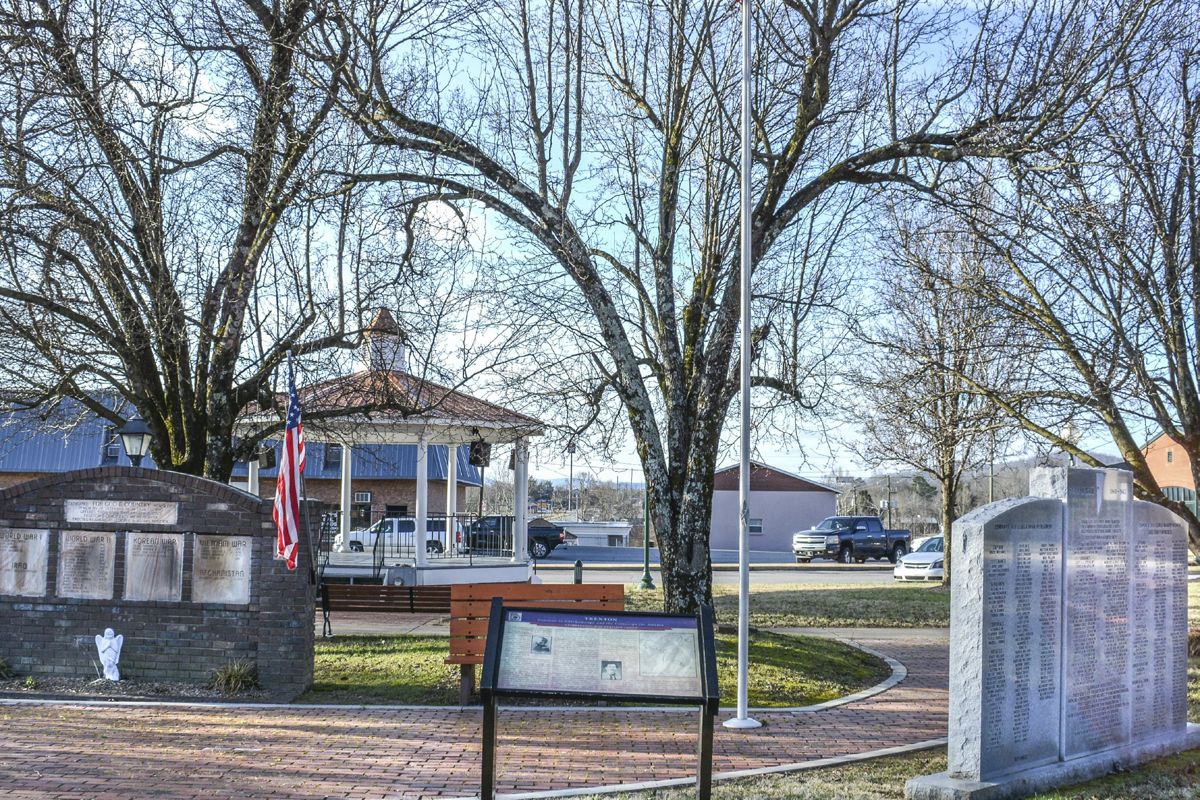
Trenton. (Gould Hagler)
Chatooga Academy. (Gould Hagler)
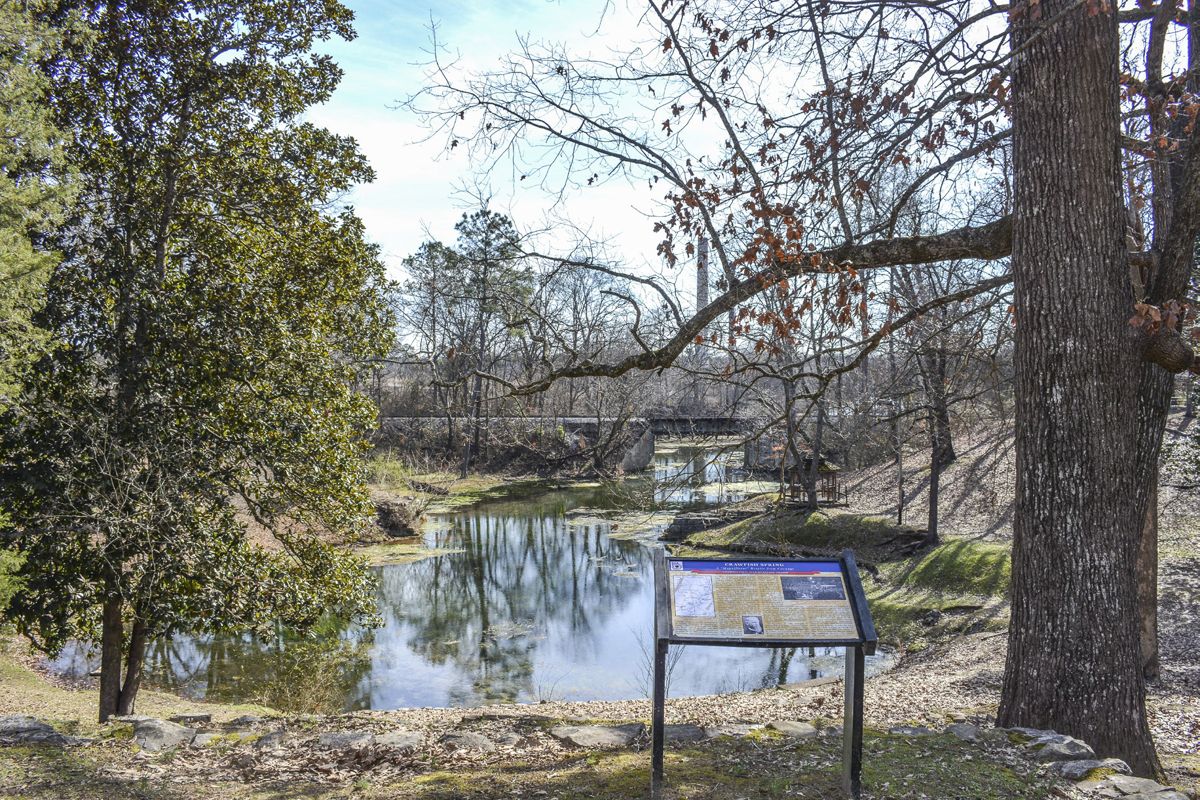
President Benjamin Harrison signed a bill establishing America’s first national military park.” The trail’s next stop is Lee and Gordon’s Mill, two miles north of Crawfish Spring. Bragg set up headquarters here on Sept. 8 and 9, after evacuating Chattanooga and before moving on to LaFayette. On the 12th and 13th, as the armies jockeyed for position, the mill witnessed heavy skirmishing. The marker explains what occurred here the following week. “As the Battle of Chickamauga raged less than two miles north of the mill on Saturday, September 19th,
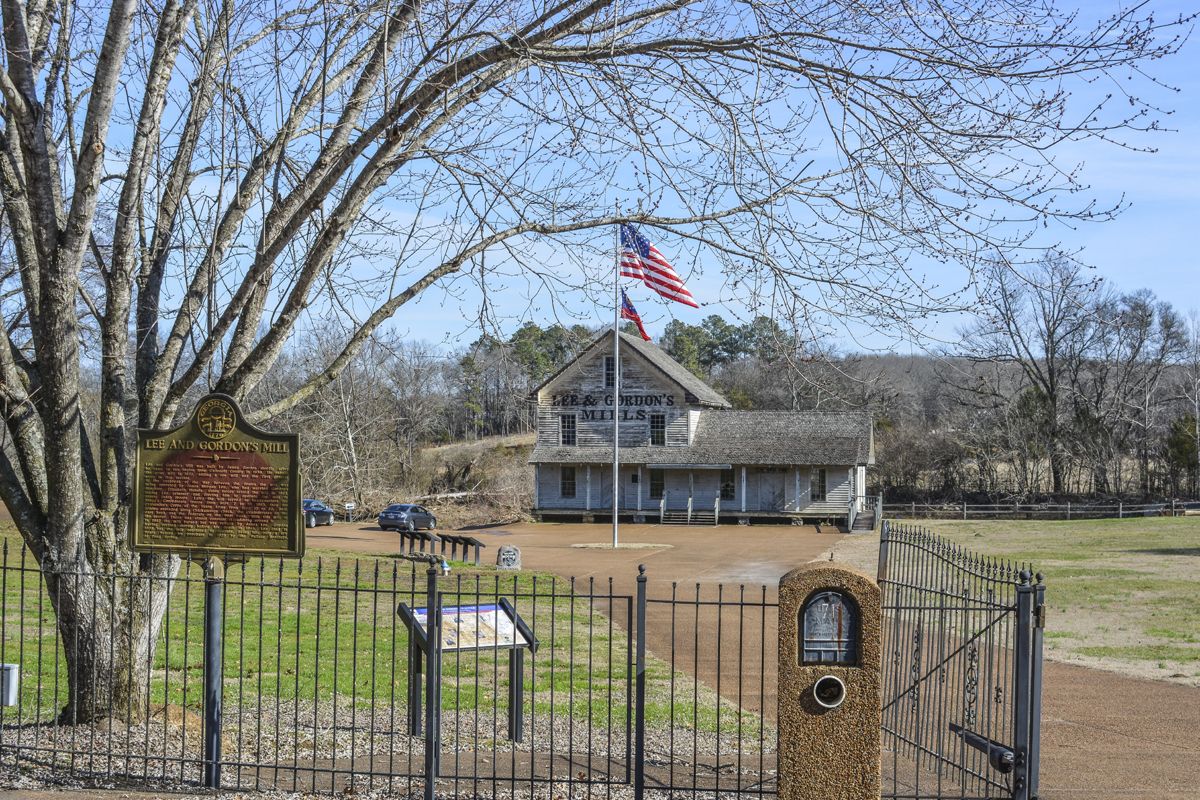
Union Brigadier General William H. Lyttle’s Brigade defeated a detachment of Confederate Major General John C. Breckinridge’s Division attempting to capture the nearby ford.” More fighting occurred here the next day. The marker quotes a Confederate soldier who had a close call with death on Sept. 20 but managed instead to take a dip in the cool waters of Chickamauga Creek. The Alabama cavalryman, fighting dismounted, wrote that “a number of us started to run across the [mill] dam; but an officer shouted ‘Get off! They are going to rake you with grapeshot!,’ and we leaped into the water like so
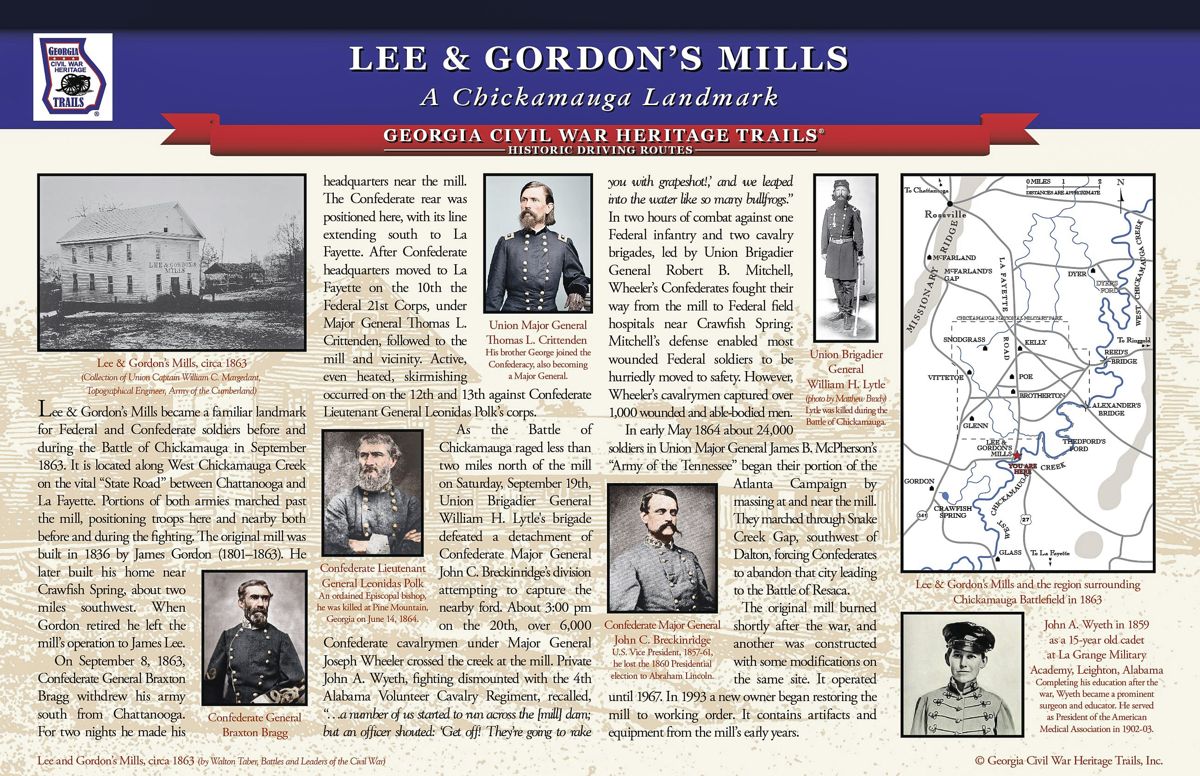
Lee and Gordon’s Mill. (Gould Hagler) the battle that didn’t happen. Wheeler captured the hospitals, The marker does not discuss the with twenty wagons of medicine controversy over the failure to and camp equipage, plus over trap Negley, but Bragg blamed 1,000 wounded Federal soldiers. Hindman, and was quite vocal The community was incorporated about it. in 1891 and named Chickamauga. Except for Bragg’s work The GCWHT marker at the under the shady oak, there was spring tells of an important no action in LaFayette during gathering held 26 years after the the Chickamauga Campaign. battle. “On September 20, 1889, “Bragg’s Oak” stood until thousands of veterans of both 1925, when it was destroyed by armies…met at Crawfish Spring lightning. in a spirit of reconciliation and The marker also tells the story friendship…. Their reunion of Chattooga Academy, built in furthered efforts already 1836. A century later it was re- underway to make the entire named in honor of Maj. Gen. battlefield a park to honor the John B. Gordon. Gordon lived courage and valor shown here in this area from an early age, in 1863. On August 19, 1890, Crawfish Spring. (Gould Hagler) but his martial exploits were in another theater of the Civil War. He served in the Army of Northern Virginia and late in the war rose to corps command. LaFayette was the site of a minor battle nine months later, during the Atlanta Campaign. In June 1864, Confederate cavalry attacked the small Federal force occupying the town. The attack was initially successful; however, as the Federals were on the verge of surrendering, a mounted infantry regiment rode to their rescue. This was a small affair, of course, nothing like the scale of the battle fought north of LaFayette nine months earlier. The trail next goes to Crawfish Spring. Before the Battle of Chickamauga, Rosecrans headquartered at the Gordon House across the road from the spring. During the dry summer of 1863, this was one of the few sources of water large enough to quench an army-sized thirst. The Federals established hospitals near the spring. Many sick and wounded, but not all, were evacuated after the battle. Cavalry under Maj. Gen. Joseph In my April column I mentioned the action at Tunnel Hill on May 7, 1864, when Federal artillery fired on the Confederates’ advance positions near the tunnel. I heard from Terry Orr, who edited and self-published the diary of George Stolp, a soldier in the Illinois battery that fired the opening shots of the Atlanta Campaign. Mr. Orr was kind enough to send a copy of the book, We Gave Them the Best We Had: The Diary of George A. Stolp, Battery I, 2nd Illinois Light Artillery. Stolp wrote that his day started early, with reveille at 3:00 a.m. After breakfast the battery moved forward “three or four miles to the little town of Tunnel Hill, where the Rebs planted two Batt.” Federal infantry drew up in line of battle. The Confederate artillery “opened on us with shell,” Stolp wrote. A few replies from the Illinois guns made things “too warm for them” and caused the Confederates to pull back. With a few shots from Confederate guns and an answer from the Federals, the campaign was underway. I always appreciate hearing from readers. Thanks, Terry, for your interest and for a copy of your book. Georgia Civil War Heritage Trails has clearly marked the route with directional signs which lead to the interpretive markers. The organization’s website (https://www.civilwarheritagetrails.org/) also contains each marker’s GPS coordinates. Brochures for the Atlanta Campaign Trail and other driving routes, available from GCWHT, contain much useful information, including excellent maps. I suggest that travelers make use of all three resources. If you use only the GPS coordinates to get from one stop to the next you will be led upon modern roads and miss much of the fun. If you are like me you will miss a sign now and then or take a wrong turn. When this happens the GPS coordinates will get you back on track. GCWHT’s address is PO Box 1864, Evans, GA 30809. many bullfrogs.” For two hours Wheeler’s 6,000 cavalrymen battled Union infantry and cavalry. The Federals were ultimately pushed back to Crawfish Spring, the site of the Federal hospitals, but the delay “enabled most wounded Federal soldiers to be hurriedly moved to safety.” As we have seen on markers in other locations, the one at Lee and Gordon’s Mill reminds the visitor that armies moved through northwest Georgia more than once. My April column discussed Maj. Gen. James McPherson’s march through Snake Creek Gap in May 1864. The tablet at Lee and Gordon’s Mill tells us that McPherson’s 24,000 men “began their portion of the Atlanta Campaign by massing at and near the mill.” From there they marched through the gap “southwest of Dalton, forcing Confederates to abandon that city leading to the Battle of Resaca.” The original mill burned shortly after the war. The building pictured here was built on the same site soon after. The mill continued to operate until 1967. From Lee and Gordon’s Mill the trail leads north through the Chickamauga and Chattanooga National Military Park. Visitors should stop briefly at the visitors center and spend as much time as possible on the battlefield. There is more here than one can learn in a lifetime. The last marker on the trail is at McFarland’s Gap. After the two-day battle, the defeated Federals retreated to the safety of Chattanooga. According to the marker here, by nightfall on Sept. 20 “more than two-thirds of the surviving Federal ‘Army of the Cumberland’ had retreated from the Chickamauga battlefield through this narrow gap in Missionary Ridge.” The battle had been lost, but with Thomas holding on until late afternoon at Horseshoe Ridge, thousands of men, in varying degrees of disorder, managed to march or stumble through the gap to the open ground on the other side. “By 3:00 pm,” the marker adds, “the Federal panic waned, as officers continued reorganizing some semblance of an army.” By the next morning “The bulk of the Federal army had reached Rossville safely, and eventually Chattanooga.” So ends the Chickamauga Campaign Trail. The Army of the Cumberland suffered a serious defeat, with some 16,000 casualties. However, the bulk of the army was safe in Chattanooga. Reinforced, and with a new commander, the Federals in Chattanooga would break out in November, and in the following spring resume their drive into Georgia. *Pronounced luh FAY it. You are in Georgia.

Gould Hagler is a retired lobbyist living in Dunwoody, Ga. He is a past president of the Atlanta Civil War Round Table and the author of Georgia’s Confederate Monuments: In Honor of a Fallen Nation, published by Mercer University Press in 2014. Hagler speaks frequently on this topic and others related to different aspects of the Civil War and has been a regular contributor to CWN since 2016. His email is gould.hagler@gmail.com.