
Finding Love In The Ruins Of War
By Joseph Wilson · Originally published July 2023 · pp. 30–32
Finding Love In The Ruins Of War By Joseph Wilson A large lead ball fired from a musket inflicted a horrific injury when crashing into the human body. All the unfortunate soldiers who suffered such a gunshot wound likely wished they had never marched off to war. James Connell might be the exception. After suffering the misfortune of a being struck by a Confederate musket ball, the Ohio native found the love of his life. Like most young men from Ohio, James Connell enlisted in the Union army after President Lincoln’s call for 300,000 volunteers to put down the rebellion. James signed on as a corporal to fight with the 124th Ohio Volunteer Infantry in September, 1862. Already 25 years old, his older age may have been a factor in entering the regiment with rank. Ohio provided the Union with a higher percentage of men from the ages of 18 to 45 than any other state. A total of 60% of eligible Ohio men joined the army to support the war effort. The Buckeye state filled 198 infantry regiments with 320,000 patriotic boys ready to serve their country after Father Abraham’s plea to save the Union. From all over the state they answered the call to arms. Mostly from northeastern Ohio, the 124th gathered at Camp Cleveland along Lake Erie to be assembled into a fighting force. All the drilling and training would serve them well in the bloody action that awaited. By January 1, 1863, the regiment was mustered into Federal service.
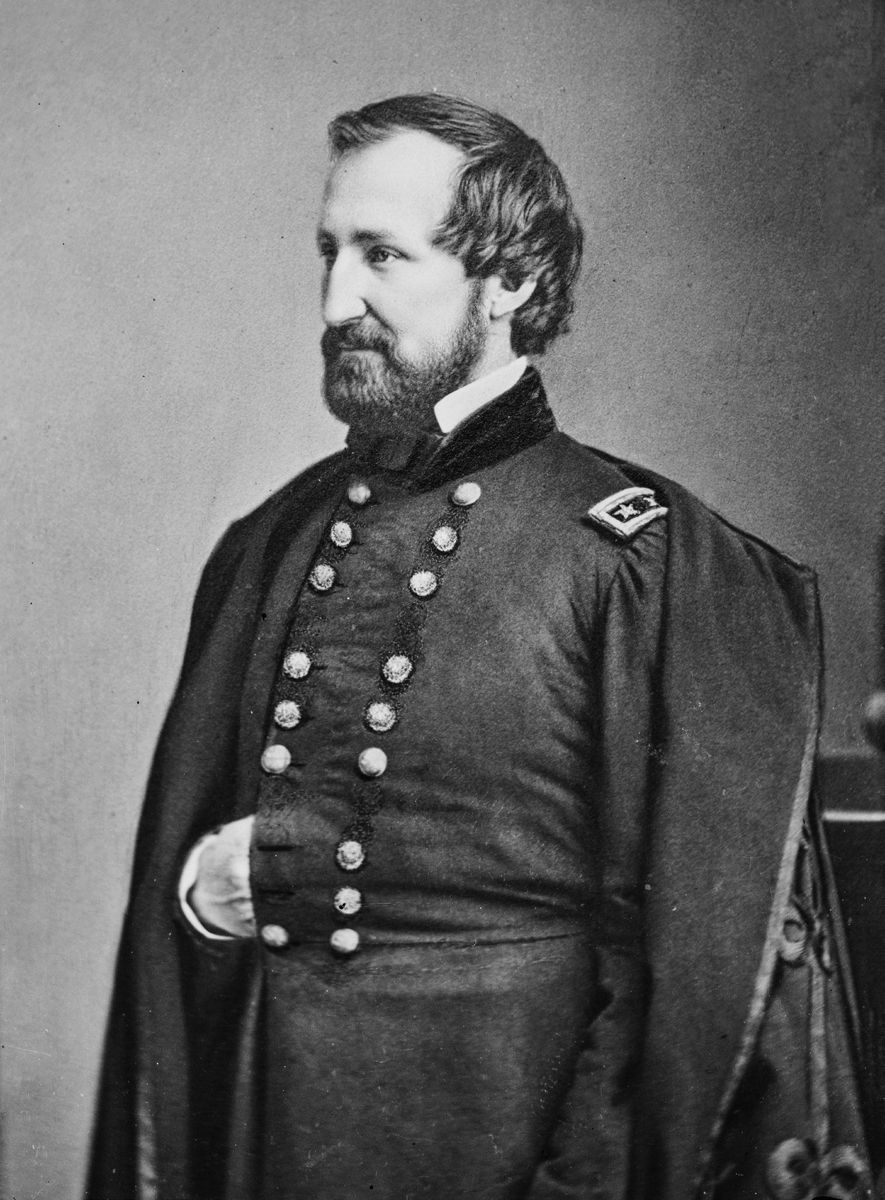
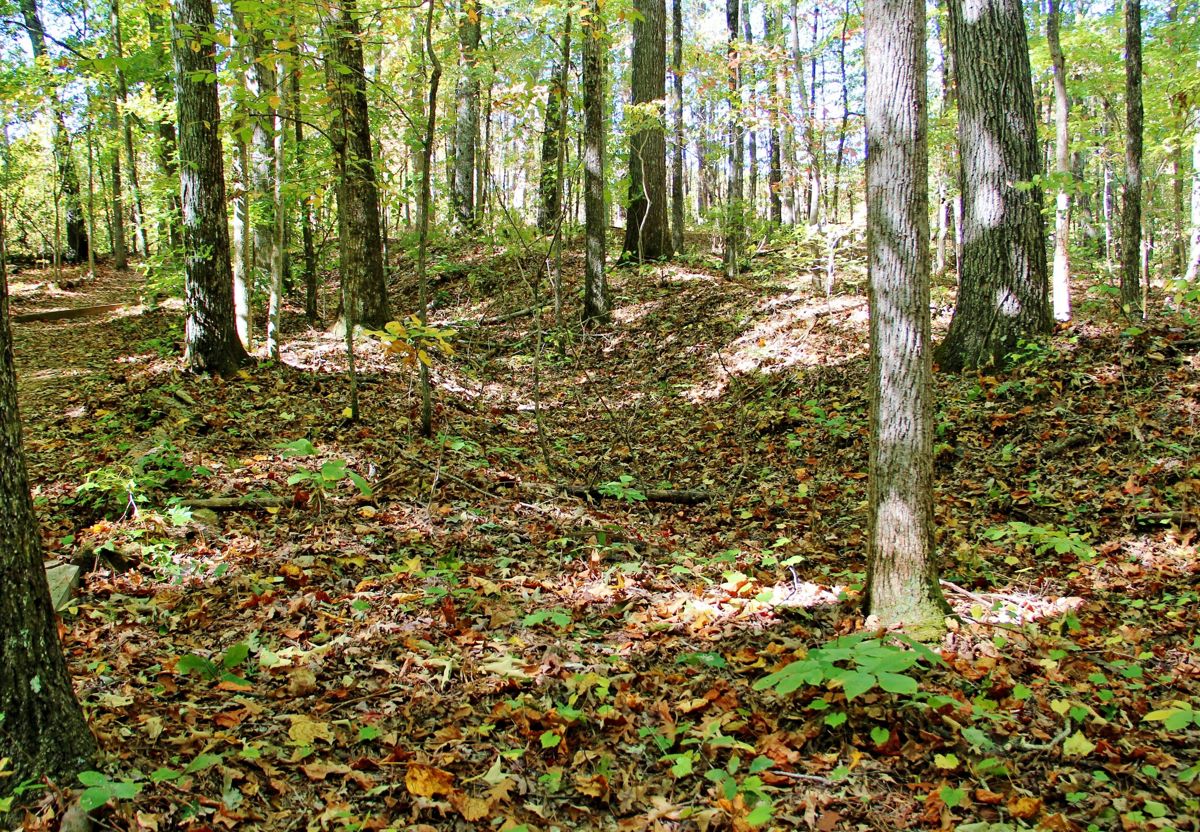
Led by Colonel Oliver Payne, the 124th proudly marched out as a fine body of armed and uniformed troops. Attached to the Army of the Cumberland, the regiment fell under the overall command of General William Rosecrans. After a stop at Louisville, Ky., Corporal Connell boarded a ship along with his Ohio comrades for a trip down the Ohio River that carried them closer to the seat of war in Tennessee. The spring brought the mundane activities of marching, picket duty, and guarding wagon trains. Come summer, General Rosecrans began his campaign to drive General Braxton Bragg out of Tennessee. All felt pleased that a battle was brewing, a feeling that quickly dissipated. Soon, they’d be before the enemy muskets questioning why they had been so eager. Rosecrans succeeded in chasing Bragg from Chattanooga and followed the Southern army into Georgia. The Union general finally caught up with Rebels along the banks of the Chickamauga Creek. General Bragg had no intention of withdrawing any farther. In a fight that had casualties second only to Gettysburg, the Union army suffered a devastating defeat. At the September Battle of Chickamauga, James and the Ohioans felt a battle’s terror for the first time. Any Ohio soldier anxious to fight had their fill. The 124th suffered heavy casualties in Farmer Brock’s field, including a severely wounded Colonel Payne. James survived his baptism under fire unscathed and felt fortunate to have escaped intact. Defeat didn’t sit well with the Buckeye boys after their first real fight. Regimental historian, Captain George Lewis later wrote, “It was, indeed, a sad hour. Two days before we had gone into this conflict with full ranks and high hopes of victory. Now we were silently stealing away under cover of the darkness.” It didn’t take long for the 124th to redeem themselves In eight weeks, the sweet taste of victory replaced the demoralizing sting of defeat for the 124th Ohio. On November 25, in the Battle of Missionary Ridge, the Ohio regiment was one of the lead units that charged the heavily defended ridge unrestrained and without orders to capture the ridge. The pride felt by the regiment when departing Camp Cleveland had been restored. Captain George Lewis stated, “Every soldier of the 124th was instantly in position, and as the silvery notes of the bugle sounded the forward, the 124th, with clutched muskets, rushed forth to the charge of death. As soon as we emerged from the line of timber the rebel guns opened on us, and the whole ridge blazed like a volcano.” By securing Missionary Ridge the Federals controlled Chattanooga. Once again, Corporal James Connell dodged Confederate shot and shell. Chattanooga served as a logistical base for General Sherman’s upcoming surge into Georgia. In the spring of 1864, the 124th marched into Georgia with Sherman while attached to General William Hazen’s brigade of the IV Corps. Connell now marched with sergeant’s stripes on his sleeves. The boys in the regiment remembered fighting in Georgia at places like Rocky Face Ridge and Resaca, but it was the Battle at Pickett’s Mill on May 27, 1864, that the survivors remembered due to an ill-advised charge. Unbeknownst to Union officers, 10,000 Confederates entrenched under General Patrick Cleburne waited for Hazen’s 1500 man brigade to move forward for the attack. The poorly planned action resulted in a humiliating rout. The regiment suffered their greatest loss in the charge against Cleburne’s superior numbers. Hazen’s Brigade, including the 124th Ohio, was carelessly sacrificed. Casualty reports listed 4 officers killed, 14 enlisted men killed, 44 wounded, and 10 missing. One casualty was a severely wounded Sgt. James Connell. For Connell, fate and a musket ball intervened at Pickett’s Mill to dramatically change the course of his life. With darkness falling over the Pickett’s Mill battlefield, a counterattack by General Cleburne pushed back the Union line leaving the Confederates in possession of the battlefield. Injured Union soldiers cried out in vain to fleeing Union soldiers to carry them off the field, but to no avail. All the wounded fell into Southern hands. Sgt. Connell was now a prisoner of war still bleeding from a wound inflicted by a Confederate musket ball. James was loaded onto a wagon bound for Atlanta where he received treatment for his injuries. Many wounded Confederate soldiers and Union men fell under the care of Dr. Samuel Stout’s hospital system. Doctors were in short supply, but many young women of Atlanta served as nurses in caring for the soldiers. Being both wounded and a prisoner should have been a depressing and a debilitating experience for any soldier. But for one Union sergeant in Atlanta, suddenly being a captive and wounded didn’t seem so bad. While James waited for treatment in a makeshift hospital, she walked into his room. Her name was Cassandra and she served as one of the caregivers to hearts of two youthful souls touched by the irresistible power of love. Connell’s health was steadily growing stronger, so was his affection for Cassandra. Thoughts of being a prisoner didn’t matter anymore. Information circulating around the city suggested Sherman’s capture of Atlanta was imminent. With his wound nearly healed, a forced separation from Cassandra wasn’t far off as James still had an obligation to the Federal Government. General Sherman’s army liberated Atlanta on September 1, 1864. Connell was now a free man, but he still belonged to the Union army. To stay in Atlanta may not have been an option. Now able to travel, he left Atlanta for Cincinnati. Boarding the train and leaving his new love had to be devastating for the love-struck soldier. But Sgt. James Connell promised never to forget his beloved Cassandra. During the final months of the war Connell rehabbed back home and wasn’t fit for service. Thoughts of Cassandra never strayed far from his mind. Plans for returning to Atlanta reigned supreme. After the war ended, Connell’s records show he was discharged on July 9, 1865. Most of the remaining boys of the 124th Ohio received the proper “mustered out” designation on the same date. It’s likely Connell’s discharge came with a surgeon’s certificate. Once free from the constraints of his army obligations, James hurried back to Atlanta to be united with his precious Cassandra. A long awaited reunion brought two hearts together never to be separated again. The absence only carried their love to new heights. Their adoration for each other flourished in a country without war. Wasting no time, the loving couple married in Atlanta. Cassandra brought into the marriage a readymade family counting her younger brother and sister. James packed up his new family and traveled back to Cincinnati. Eventually, three more daughters joined the family. In his hometown, he established himself in a successful steam boat fitting business. With his success in the business world he was able to buy a tract of land on Peachtree Street in Atlanta. It was the same ground saturated with the sweat and blood of Confederate and Yankee soldiers who clashed in Sherman’s campaign to capture Atlanta. It wasn’t long before the Connell family packed up again and headed south back to Atlanta. Perhaps Cassandra and her siblings longed for friends in Georgia. Whatever the case, James and Cassandra made their permanent home in Atlanta. With James no longer a prisoner, the husband and wife freely continued an enduring love in Atlanta after a tumultuous war had finally ended. “Till Death Due Us Part” proved to be a promise kept. The couple had attained a love sought after and envied by every young man and woman. From war comes great tragedy. Too many families found sorrow and pain in the Civil War. The Sergeant and his Nurse found each other! The perspective is a long one, encompassing army wagons to the left, the car shed, and right behind it the light-colored Georgia Railroad Bank Agency and the three-story “Concert Hall”—which really wasn’t a concert hall (the Atheneum was). (Caption by Stephen Davis, photo by George Barnard, Library of Congress)
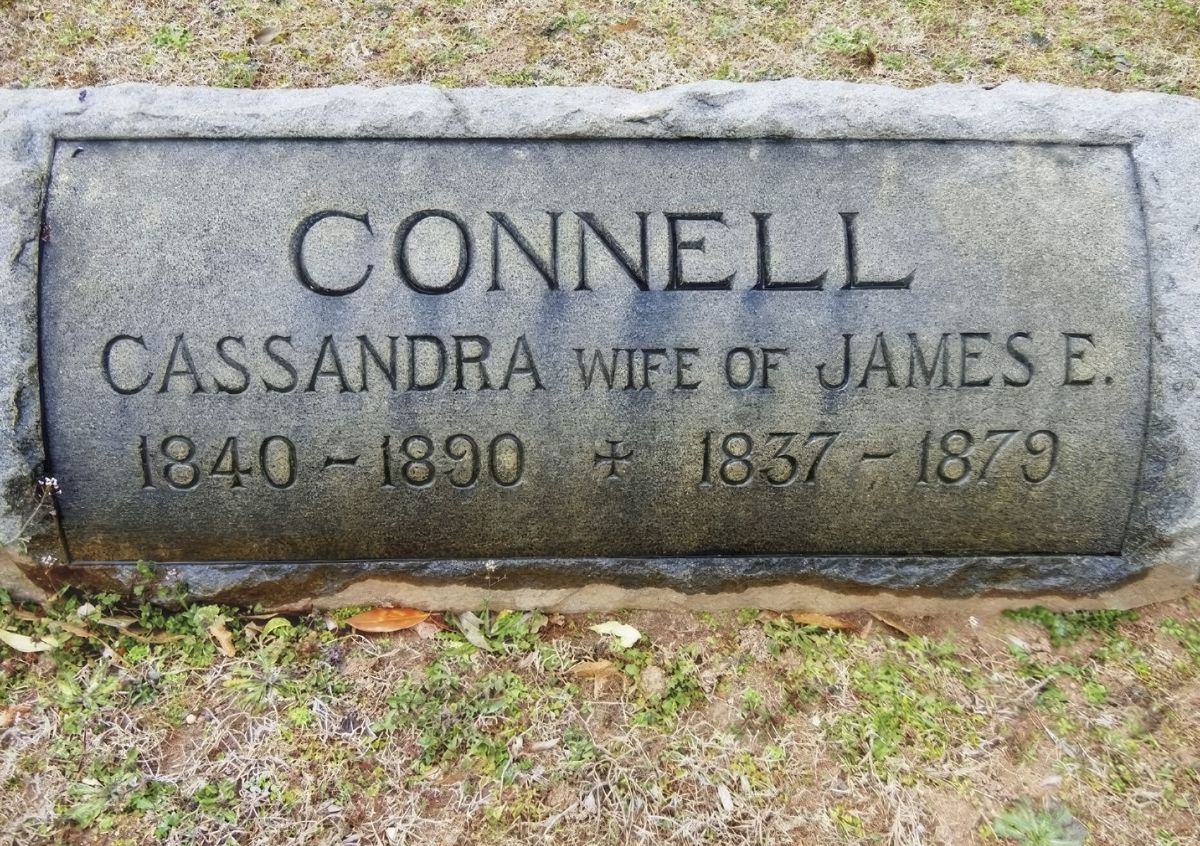
tend to James. The young nurse made quite an impression on the wounded Yank. Cassandra was a 24 year old orphan, whose father was killed early in the war. Her mother had left with another child on a ship bound for England. Cassandra stayed behind along with her younger brother and sister. All three siblings were on their own in Atlanta. Being resourceful, she found a means of support caring for the wounded. The fortunes of war never seem to smile on enlisted men, but for James, a treasure seemed at hand. Times spent with Cassandra proved to be the best medicine. A kind word and a tender touch offered daily can make the spirit soar. Emotions seemed to be stirring in the heart of a bed ridden Yankee. Cassandra had taken a liking to the Sergeant. Days and weeks passed with a bond forming between the nurse and her patient. Their budding relationship may have been a secret affair. A woman in the South romantically involved with a Yank may have been frowned upon by Southern men. A stolen kiss likely transpired behind closed doors. One can imagine the glee James felt when Cassandra entered the room. Love was taking hold in two individuals unexpectedly drawn together by the misfortunes of war. With Sherman moving closer to capturing Atlanta in early September 1864, Dr. Stout moved all wounded Confederates out of Atlanta. Any Yankees in prison or the hospital system were left behind. Cassandra now had fewer patients and more time for James. She had additional time not only in treating his healing wound, but also idle time for talking and laughing. Feelings blossomed in the
Joseph F. Wilson is a member of the General Meade Society and the Old Baldy CWRT. He lectures on various topics of the Civil War. YouTube channel – “Joseph F. Wilson.” Contact the author at joef21@aol.com.
