
Coquettish Confederate Spy Celebrated as the Siren of the Shenandoah Valley
By Bob Ruegsegger · Originally published January 2023 · pp. 38–41
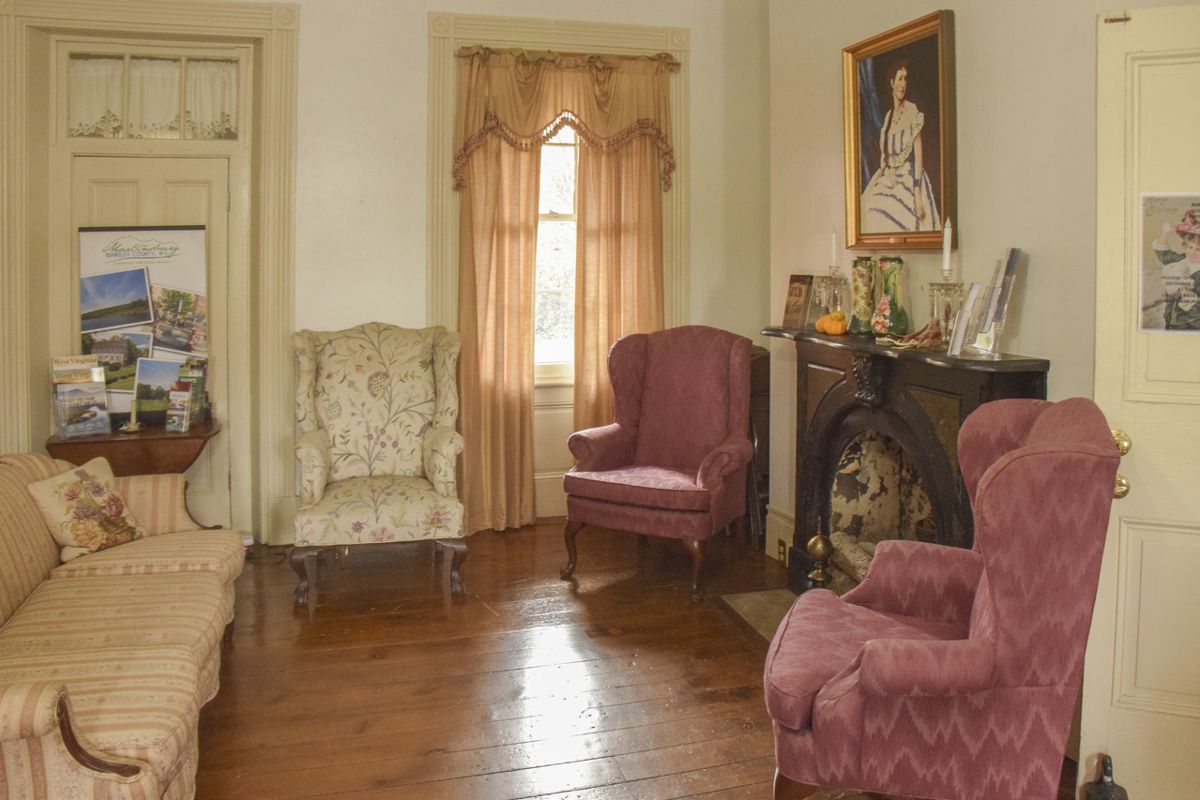
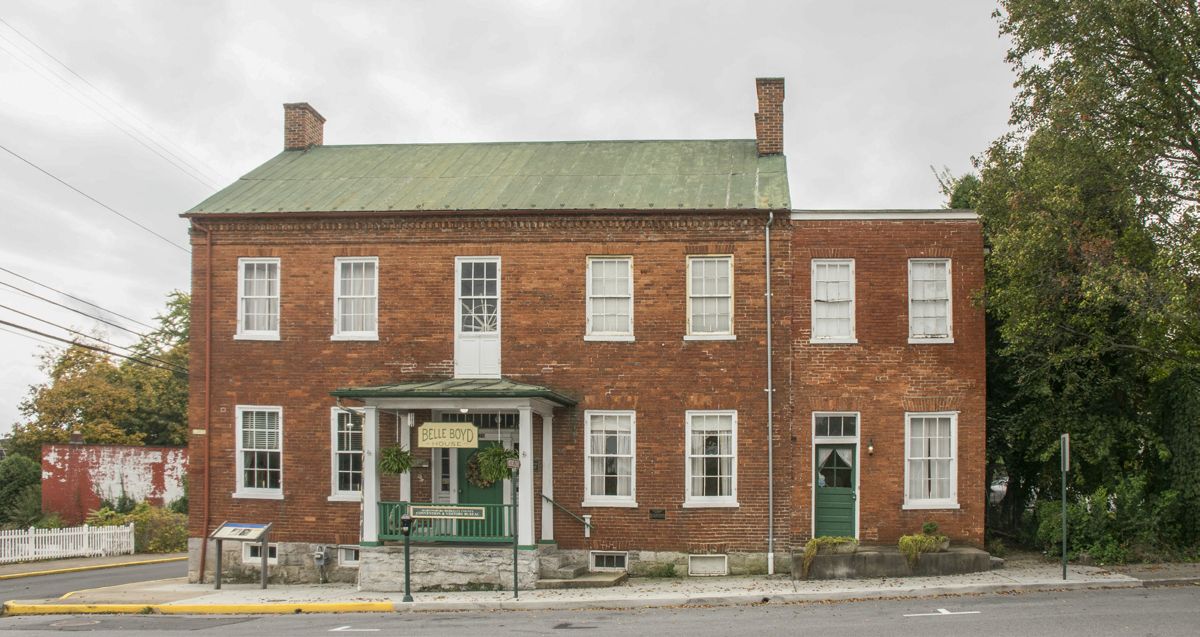
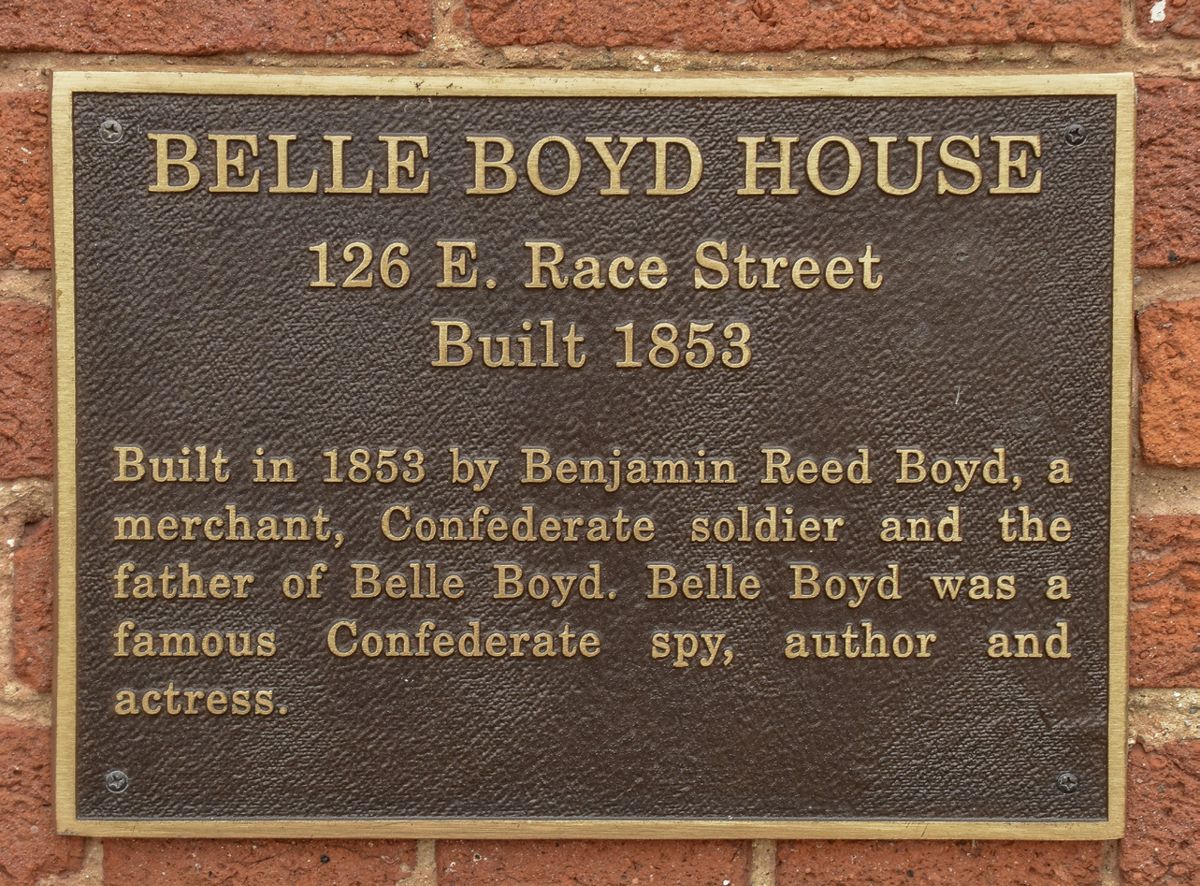
Maria Isabella Boyd was born to a prosperous family with strong Southern ties in Martinsburg, Va., a part of the Old Dominion strategically situated at the northern entrance to the agriculturally vital Shenandoah Valley. Although Belle Boyd’s countenance was not exactly angelic, she had other very appealing assets, a heavenly body and a flirtatious nature, that served her well during espionage efforts on behalf of the Confederacy throughout the Civil War. The Belle Boyd House in Martinsburg, W.V., was built by Benjamin Reed Boyd, Belle’s father, and a local merchant. It stands at 126 East Race Street. The former Boyd residence and storehouse was purchased and restored by the Berkeley County Historical Society to establish a museum to house exhibits featuring local history. “We are very popular to be honest with you. We’ve had almost 3,000 visitors to this house alone during this year,” said Susan Crowell, communications director for the MartinsburgBerkeley County Convention and Visitors Bureau. “People come for different reasons. Some come here for Belle Boyd. Others come for the Berkeley County history, which includes the Civil War. Some want to learn more about Martinsburg in general,” said Crowell. “It’s a very popular spot.” The Greek Revival style residence was built in 1853. The Boyds resided on the property until about 1858, but by the time the Civil War began, the Boyd’s were living on South Queen Street. “We think Belle only lived here for about a year and a half. She was just a young girl. They sent her to Baltimore to a finishing school,” said Carol Appenzellar, curator/collections manager with the Berkeley County Historical Society. “When she came back after having her coming out party in Washington, the family had already moved to South Queen Street,” said Appenzellar. “That house no longer stands; that is the house where she supposedly shot and killed a Union soldier on July 4, 1861, when the Federals had taken Martinsburg.” When the Civil War erupted, Martinsburg was in Virginia. Martinsburg became part of the newly formed state of West “proper young lady” at the Mount Washington Female College in Baltimore.
Virginia in 1863. Martinsburg was critical to the Union’s war effort because the Baltimore and Ohio Railroad passing through the town provided the means to transport supply shipments and facilitate troop movements crucial to the defense of Washington. “Belle’s career as a Rebel spy did not start at the house that’s standing now,” said Carol Appenzellar. “The South Queen Street house is not standing, so we interpret this slightly earlier family home.” When Federal soldiers came into Martinsburg, 17-year-old Belle was arrested for shooting and killing a soldier who was forcing his way in to the Boyd residence to confiscate rumored Confederate flags. A particularly aggressive soldier was rough on Mary Boyd, Belle’s mother, so the young girl whipped out a concealed Colt 1849 Pocket Pistol and shot him. Mortally wounded, Private Frederick Martin, 25, of Company K, 7th Pennsylvania Volunteers, later died. Belle was exonerated for the killing of Private Martin. Union authorities apparently considered it reasonable for a Southern girl to defend her mother. Subsequently, General
Patterson ordered Federal guards posted outside the Boyd’s Queen Street home to keep the family safe, avoid potential trouble that might be caused by Union troops, and to keep a watchful eye on young Belle. Inspired perhaps by Federal indulgence, leniency, and outraged by the invasion of her Virginia home by Union troops, Belle Boyd, an ardent secessionist, decided to actively support the cause of Southern independence through espionage.
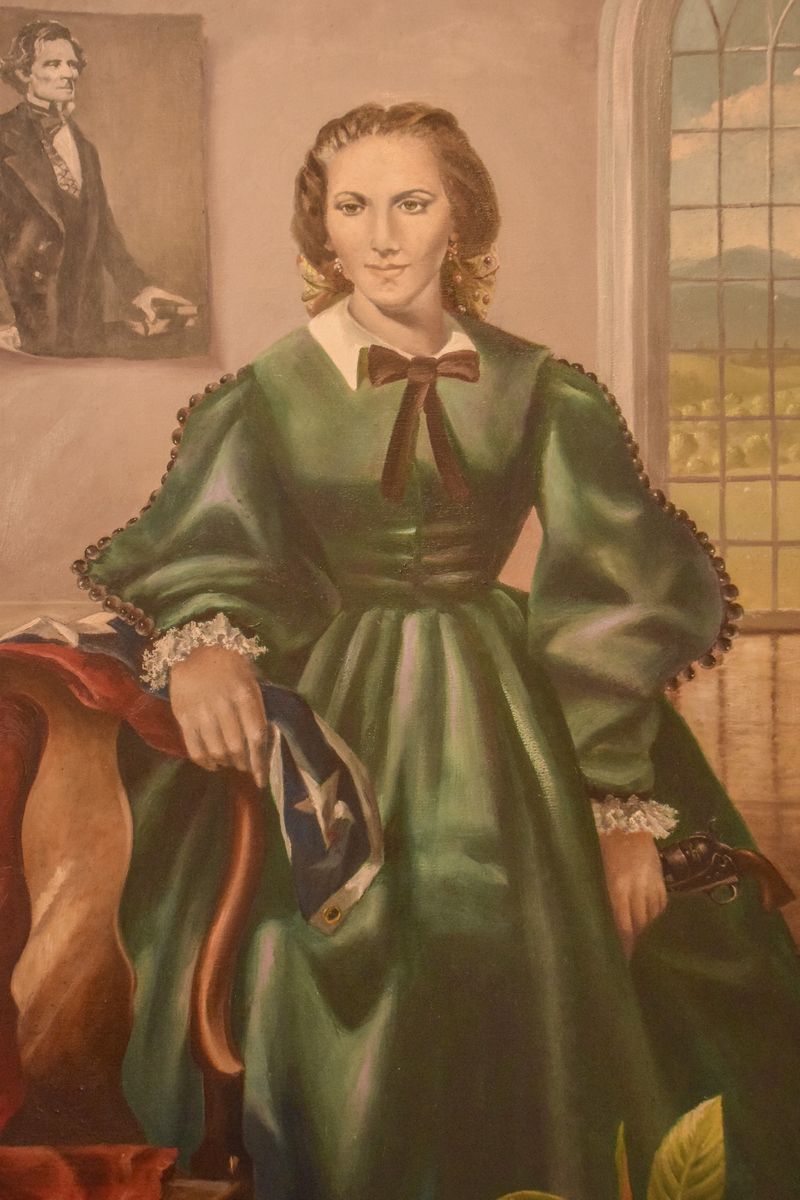
CivilWarNews.com Belle Boyd was called the “Siren of the Shenandoah” among other colorful and disparaging sobriquets by both her admirers and detractors. Her admirers dubbed her La Belle Rebelle. Most female spies of the War Between the States era fell into two extreme categories; the seductress who used her charms to manipulate men, and the impersonator who dressed as a male to intermingle unobtrusively. Belle Boyd employed both in her role as a Confederate operator.
“She wasn’t a particularly beautiful woman, but she was charming and coquettish,” said Appenzellar. “She would get [military] information from the soldiers and pass it on to Confederate officers. She was mentioned several times by name in the Official Records of The War of Rebellion by the Union army,” Appenzellar noted. “One of the Union dispatches actually mentions trouble with people like Belle Boyd.” Boyd’s spying became troublesome. She became a celebrated emissary with a widely-recognized reputation for her ability to cross Union and Confederate lines with relative impunity. Union authorities sought to keep her from behind Federal lines because her efforts at espionage, over time, proved to be particularly mettlesome. When Belle’s aunt and uncle moved from Washington, D.C., to manage the Fishback Hotel in Front Royal, Va., Belle went to Front Royal to assist them, and do a little spying as well. While Federal troops occupied Front Royal, the officers were billeted in the Fishback Hotel where Fanny Stewart, Belle’s aunt, was the innkeeper. A cottage in a tree-shaded courtyard behind the hotel was reserved for the proprietor’s family and exclusive guests. When Federal officers were quartered in the hotel, the Stewart family moved into the cottage. Belle found the situation at the Fishback Hotel and the cottage outback highly conducive to her espionage aspirations. From the cottage, Belle performed her best known service related to the May 23, 1862, Confederate victory at the Clarke’s room.

Belle Boyd Cottage sign.
Battle of Front Royal. General Jackson’s forces advanced toward Front Royal but hesitated during the initial engagement with Union pickets. When Belle heard the gunfire, she decided that General Jackson had to be advised that Federal soldiers were exiting the town and that if he reacted quickly he could seize the bridges over the Shenandoah River before the Yankees burned them in retreat.
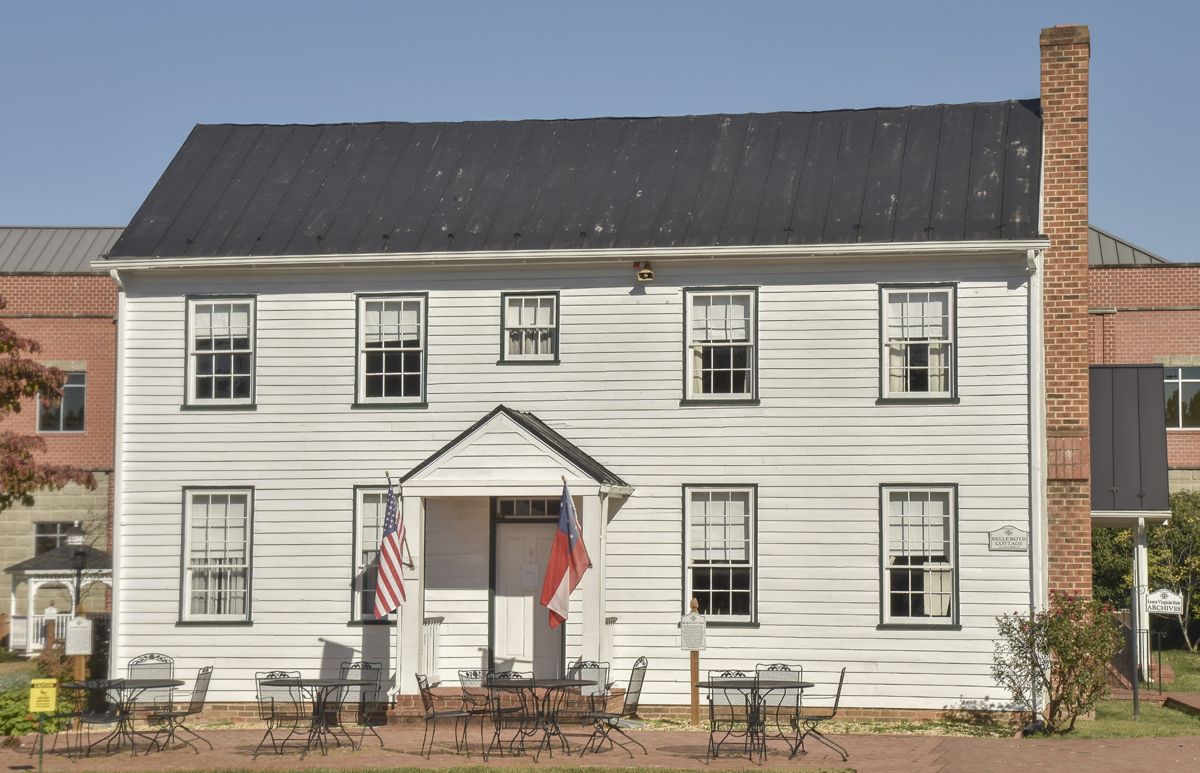
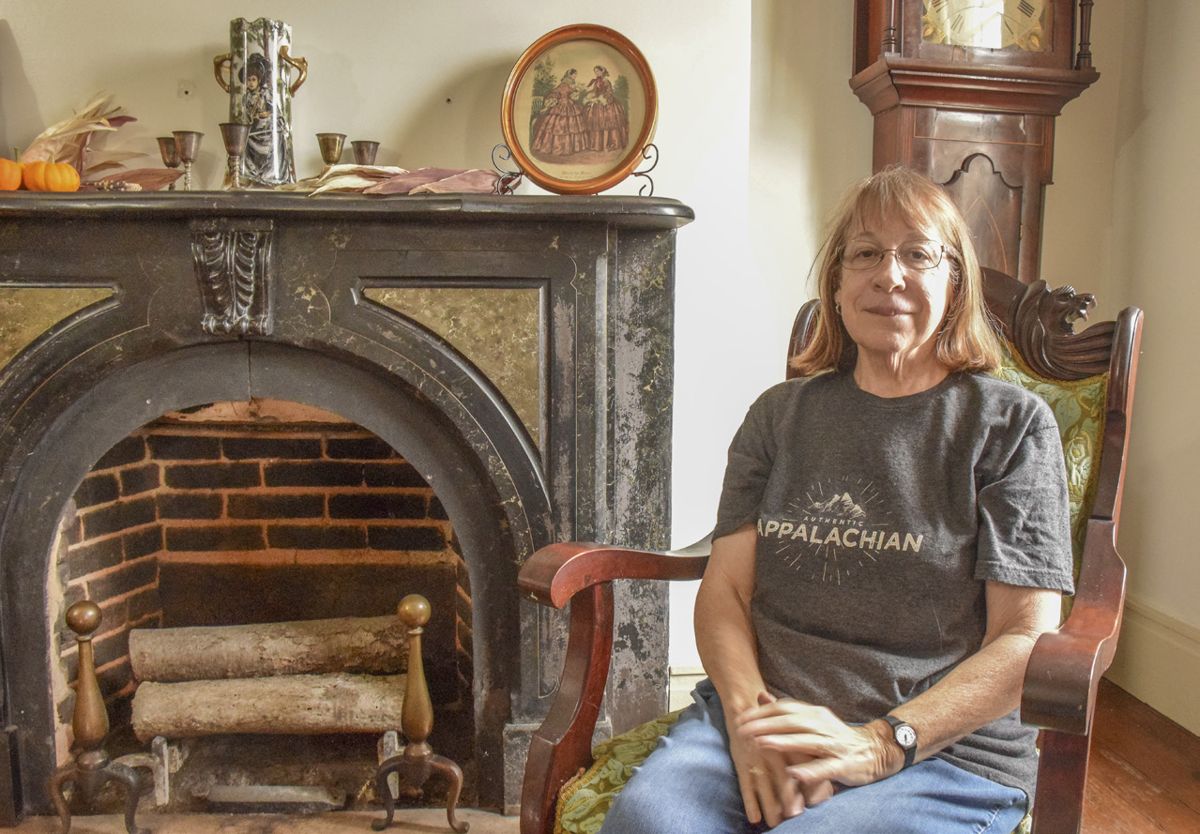
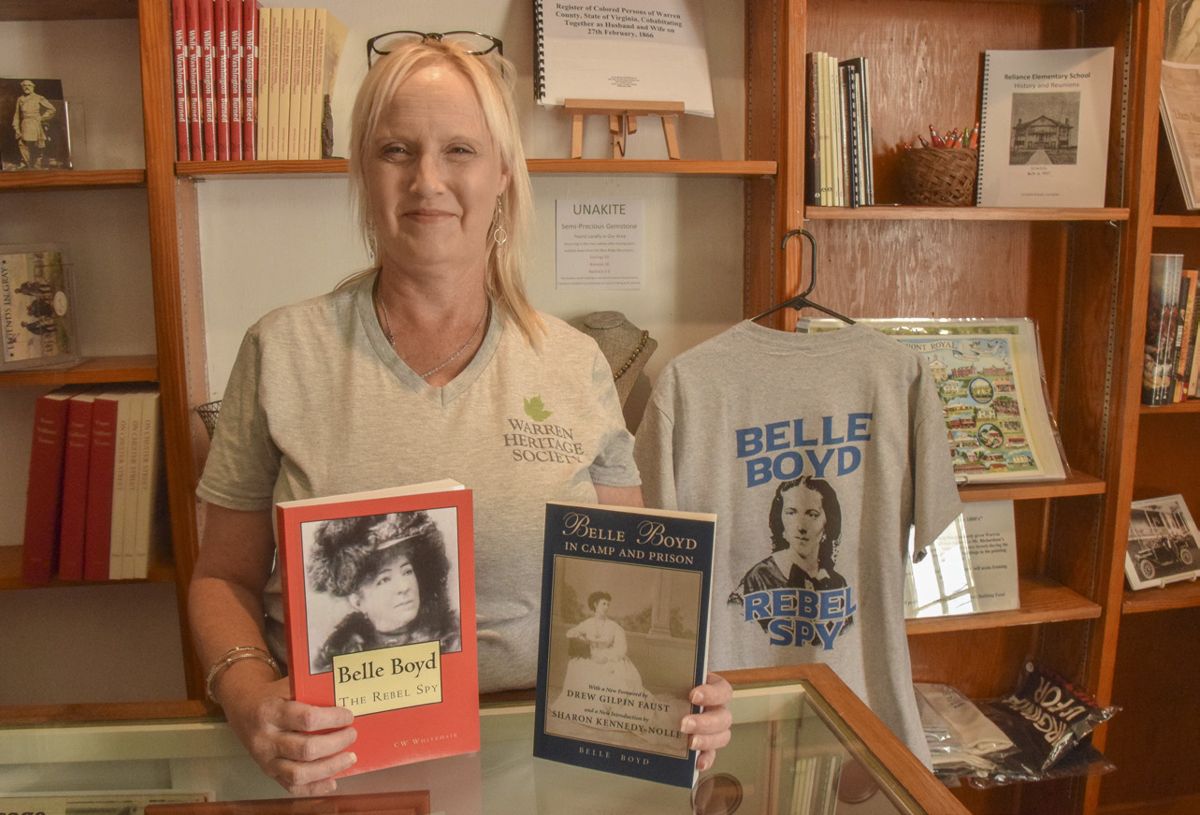
As no man from town was heroic [fool] enough to run through the opposing skirmish lines to alert Jackson, Belle decided that she would assume the risk herself. On foot, Belle Boyd ran down the street and across the open fields courageously exposing herself to Union gunfire. “I did not stop to reflect. My heart, though beating fast, was not appalled,” wrote Belle in her memoirs, Belle Boyd, in Camp and Prison. “I put on a white sun bonnet, and started at a run down the street, which was thronged with Federal officers and men,” wrote Boyd. “I soon cleared the town and gained the open fields, which I traversed with unbated speed, hoping to escape observation until such a time as I could make good my way to the Confederate line, which was still rapidly advancing.” She wore a dark-blue dress with a fancy white apron affixed. The contrast in colors made her more conspicuous from a great distance than was comfortable. The skirmishing between the outposts was sharp. Miraculously she survived the dash through enemy lines unscathed. Her darkblue dress was later cut up into two shirts for wounded Rebel soldiers. “The Battle of Front Royal was her big thing. Historians debate whether or not General Jackson already had the information. He probably did. He had his own scouts. She just confirmed it,” said Appenzellar. “She rode horses in the night and passed on critical information. She was an ardent Southerner and secessionist who had very passionate views. “ From her cell in the Old Capitol Prison in Washington, Belle Boyd vehemently, and unequivocally, expressed her political stance regarding her fidelity to the United States. “Tell Mr. Stanton from me, I hope that when I commence the oath of allegiance to the United States Government, my tongue may cleave to the roof of my mouth; and that if I ever sign one line that will show to the world that I owe the United States Government the slightest allegiance, I hope my arm may fall paralyzed by my side.” The Belle Boyd Cottage on Chester Street in Front Royal, Virginia, is operated by the Warren Heritage Society. The cottage is among the oldest buildings in town. In 1982, the old cottage was offered to the Warren Heritage Society and relocated to its present site. “It was not her home. She was sent to live here with her aunt and uncle because she got in trouble.
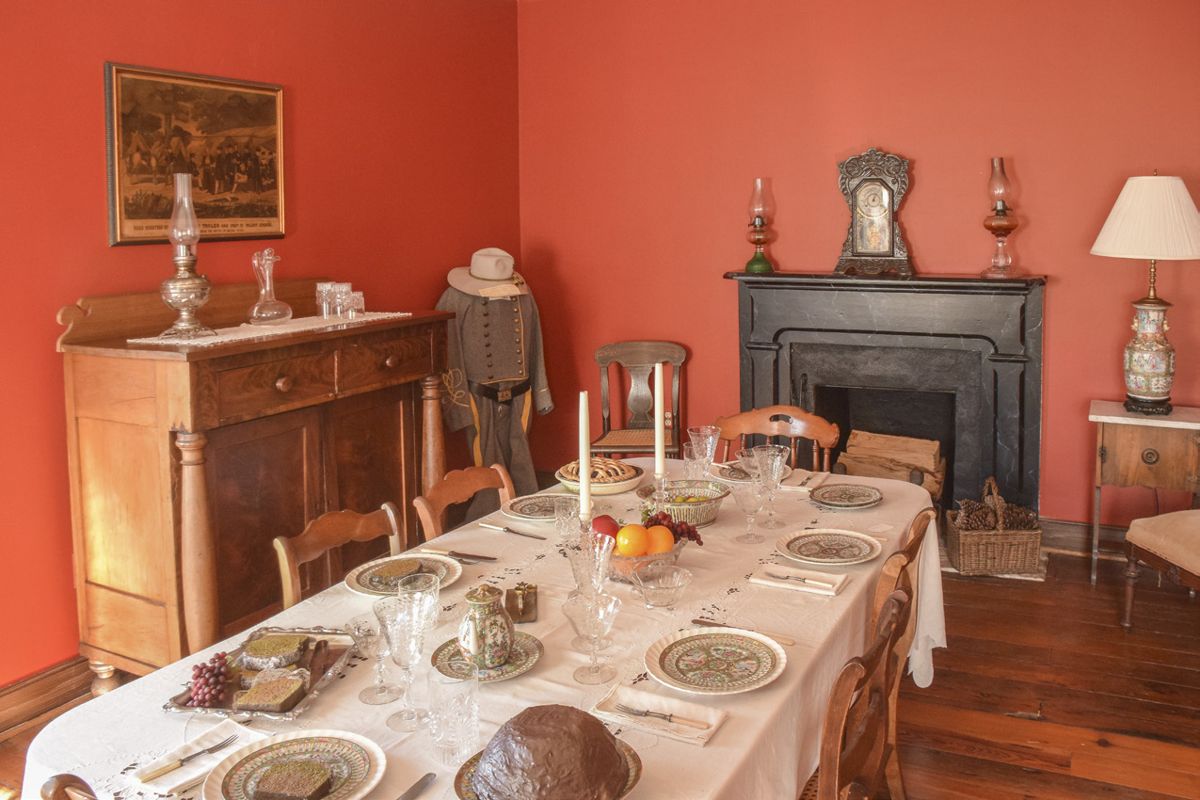
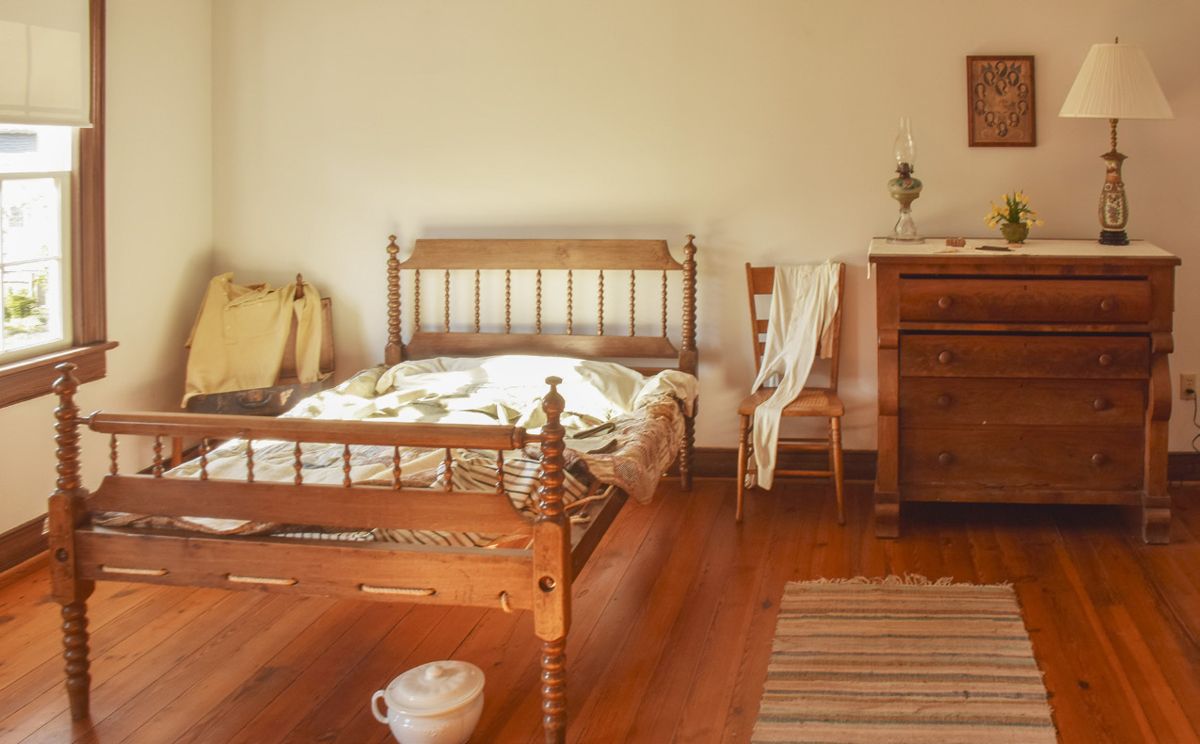
Her parents couldn’t handle her,” said Melanie Gregory, manager with the Warren Heritage Society in Front Royal. “To avoid going to jail or legal trouble, her parents sent her to live with her aunt and uncle, the innkeepers at the Fishback Hotel.” When Washington fell under martial law, Belle’s uncle, fearing his own arrest, vacated his home, abandoned his law practice, and fled with his family to Front Royal where Belle would visit her relatives for months at a time. She rode into the camps and stayed for a week at a time gathering intelligence. She was frequently seen strolling down Main Street arm in arm with Federal officers. Men young and old appeared to adore Belle. She was very good listener and an excellent flirt. Women generally didn’t particularly care for Belle. The Belle Boyd Cottage has a central hall with a parlor and dining room downstairs. On the second floor there are two bedrooms. There was no kitchen; an outdoor kitchen served the hotel guests as well as the cottage residents. “If you love the Civil War, you will love this house,” said Gregory. “This cottage illustrates how a typical Civil War era house would have been set up: the dining room, parlor, and the bedrooms. It’s very interesting,” she observed. “If you want to learn anything about Belle Boyd during the Civil War, this is the place to come.” An upstairs bedroom in the Bell Boyd Cottage depicts the room of A.W. Clarke, a correspondent for the New York Herald who was staying at the inn prior to the Battle of Front Royal. Belle and the reporter both overheard Federal soldiers discussing battle plans. Clarke realized that Belle would attempt to convey their tactics for battle to the approaching Confederate forces. Before Clarke was able to advise Federal officers of Belle’s treacherous intentions, Belle locked him in his hotel room. With all the commotion downstairs, Clarke’s cries for help went unheard, and Belle personally carried the vital intelligence to Jackson’s command. “When you go into the room where the reporter was sitting, you realize that she risked her own life to save Stonewall Jackson’s life,” said Melanie Gregory. “You can see the reporter’s hat, his paper, his pen. He knew what she was going to do. She just shut the door and locked him in there,” she said. “That’s worth coming here for.” After being imprisoned for spying on a number of occasions, Belle Boyd found herself in very hot water. She decided that it was in her best interest to flee America. In 1864, the Siren of the Shenandoah boarded the steamer Greyhound, a blockade runner, in Wilmington, North Carolina. Bound for England loaded with cotton bales, the Greyhound was intercepted by the Union blockade, seized, and sent to Boston to be sold as a prize. Belle Boyd was banished to Canada. From Canada, Belle sailed to England where she wrote her memoirs, Belle Boyd, in Camp and Prison, to help support herself. Following the Civil War, Belle returned to America where she exploited her notoriety during the war to earn a living as an actress, billing herself as Belle Boyd of Virginia. Occasionally, she rode onto the stage on horseback and frequently depicted dramatic scenes from her memoirs. Perhaps, in a sense, the Siren of the Shenandoah, at the time a 20-year-old girl, may even have manipulated President Lincoln when, via letter from England,
CivilWarNews.com she proposed suppressing the publication of her memoirs in exchange for the release of her husband Samuel Wylde Hardinge from imprisonment at Fort Delaware. “If you will release my husband & set him free, so that he may join me here in England by the beginning of March, I pledge you my word that my book shall be suppressed,” wrote Belle Boyd Hardinge. “Should my husband not be with me by the 25th of March I shall at once place my Book in the hands of a publisher.” On February 3rd, ten days following Belle’s demand and threat to expose “atrocious circumstances,” Samuel Hardinge was released from imprisonment. Lincoln may have admired Belle Boyd’s audacity in sending an ultimatum to the President of the United States. Samuel Hardinge’s only wrongdoing was that he was Belle Boyd’s husband. Perhaps, Lincoln, “with malice toward none and charity for all,” considered that. Hardinge boarded the steamship Cuba, after a visit to his family home in Brooklyn, and joined his wife in England several weeks later. The Siren of the Shenandoah died of a heart attack at Kilbourne City [now Wisconsin Dells] in
Southern Wisconsin, at age fiftysix. Four Union army veterans served as her pallbearers. An auxiliary of the Grand Army of the Republic contributed funds for her burial. The United Daughters of the Confederacy were asked to scatter the place of her interment with dirt from Virginia, so that Belle—La Belle Rebelle—could repose in eternal peace. “I admire her for what she did. There are people from all over the United States, even people from outside the country, that love her and come here just to see the Belle Boyd Cottage,” noted Melanie Gregory. “Just to see her things. Just to see where she lived. Just to see her home where she lived for three months. They come to see that. They love her. They see her as a hero.” Bob Ruegsegger assignments frequently take him to historic sites throughout Virginia, the Mid-Atlantic, and the Southeast. His favorite haunts include sites within Virginia’s Historic Triangle—Jamestown, Yorktown, and Williamsburg. Bob served briefly in the U.S. Navy. He is a retired educator and has been an active newspaper journalist for the last twenty years.