
Chaos at the High Water Mark
By Carl L. Sell Jr. · Originally published January 2023 · pp. 14–17
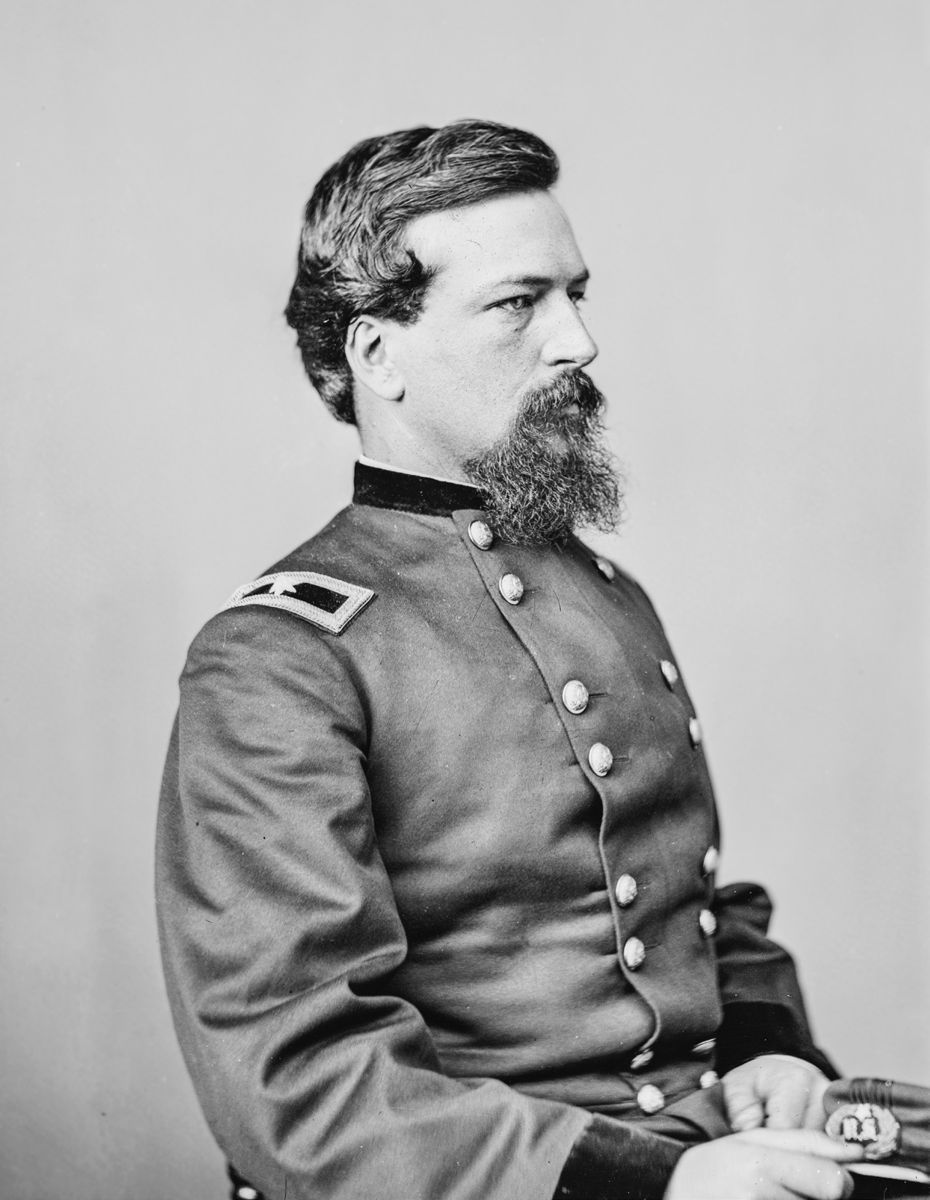
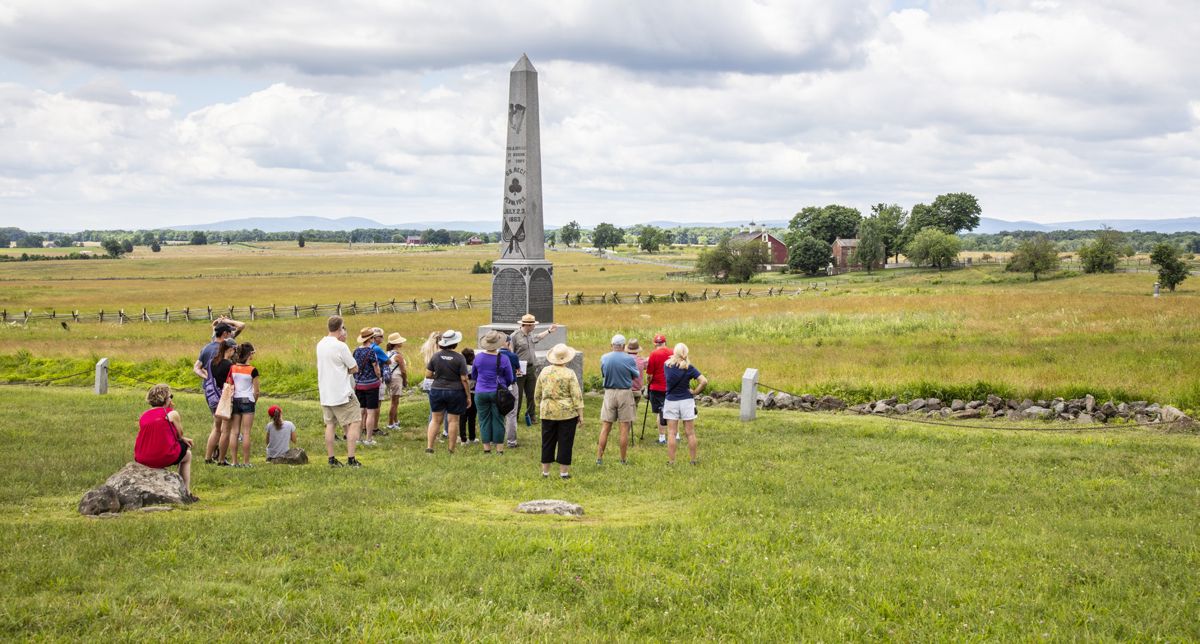
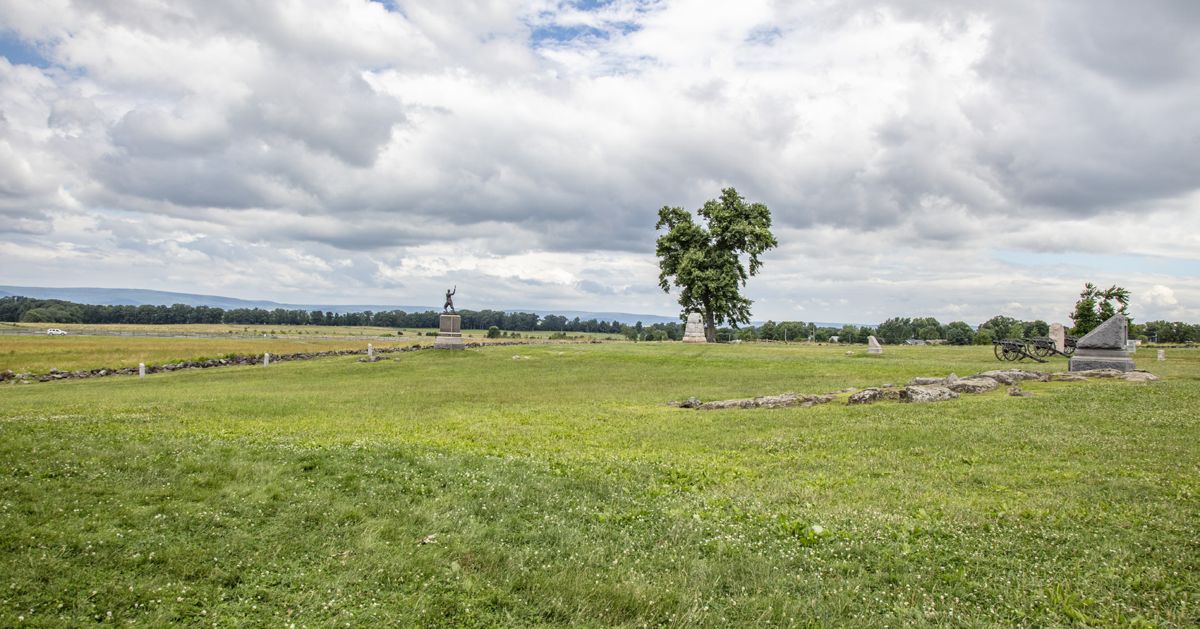
The chaos, confusion, and carnage at Gettysburg’s July 3, 1863, High Water Mark on Cemetery Hill, was a potential disaster for the Union Army of the Potomac. However, two brigadier generals’ coolness under fire, one on the ground and one in the saddle, saved the day and possibly the outcome of the war. Brigadier General Alexander Webb, although wounded while at the front of his line, rallied remnants of the Philadelphia Brigade, and with the help of New York regiments, brought the Confederate assault, named “Pickett’s Charge” for its leader,
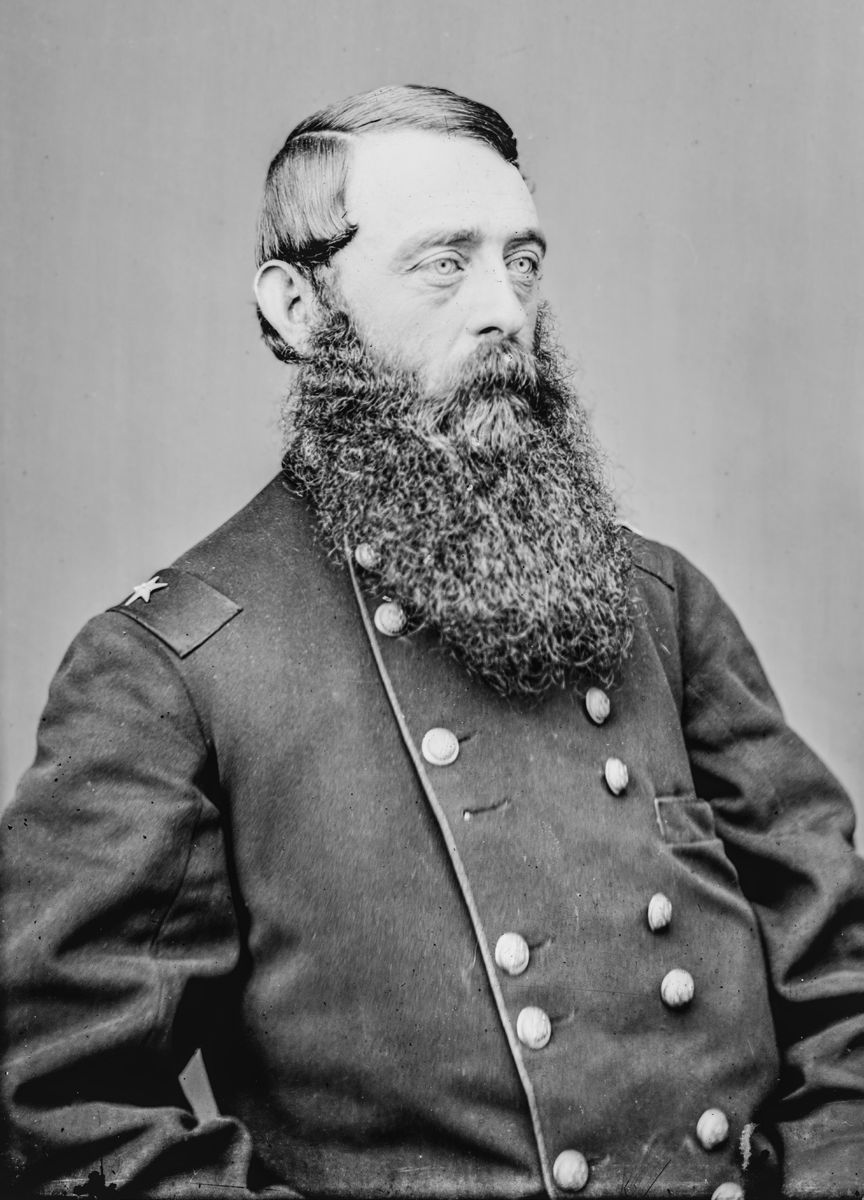
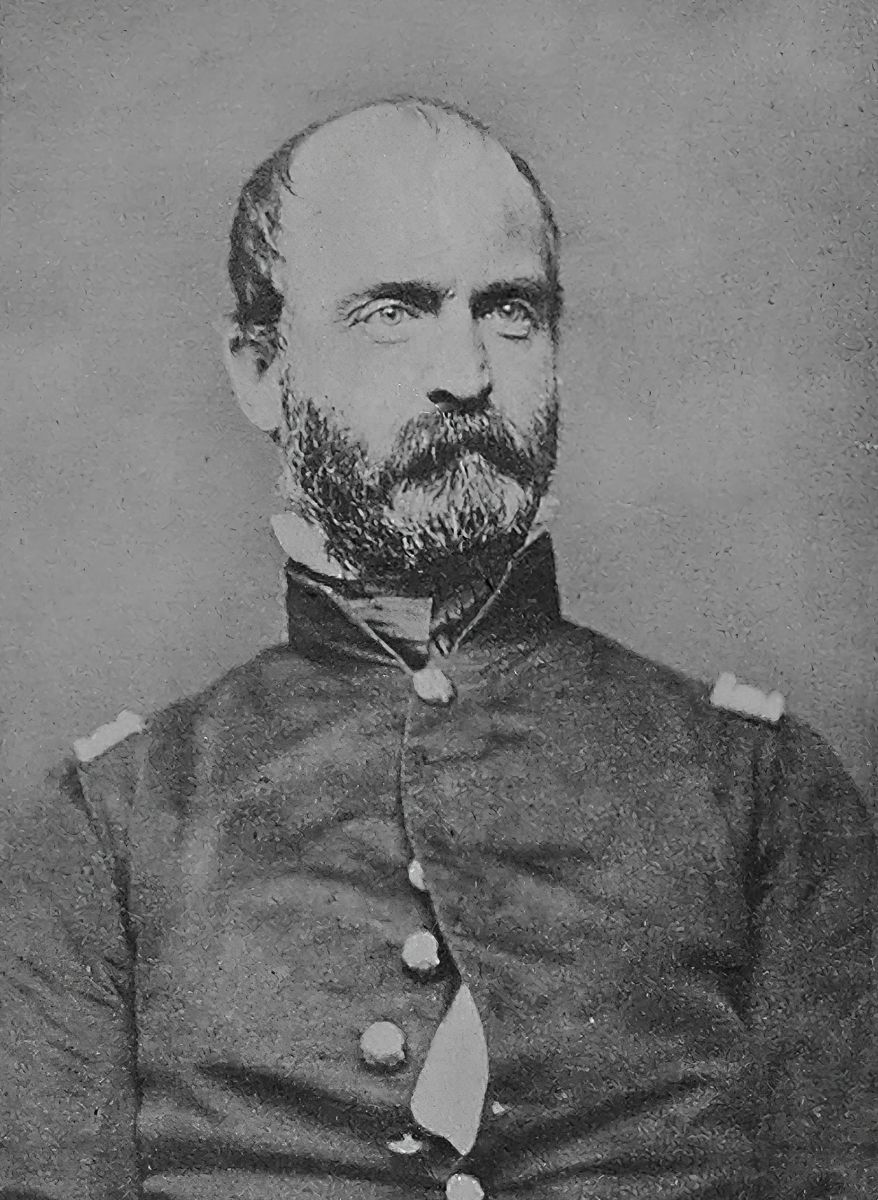
Maj.. Gen. George Pickett, to a standstill. Pickett watched the action from the Codori farm on the Emmitsburg Road. Webb would write in his report that the enemy had gotten behind troops from the Sixty-Ninth Pennsylvania and the Seventy-First and SeventySecond Pennsylvania had fallen back in the face of the assault. About the same time, a little to the east of Webb’s position, Union Brigadier General David Gregg was alerted by lookouts on Cemetery Hill that Confederate cavalry was moving toward his position on what would become the East Cavalry Field battleground. Gregg, fearing he was outmanned, had just convinced Brigadier General George Custer and his brigade to join Gregg’s ranks. Gregg had been left alone to guard the rear of the Union infantry battalions near the top of the “fishhook” defense on Cemetery Hill almost in the town of Gettysburg. Custer had been scheduled to join Union cavalry units moving to protect the Federal flank near Cemetery Hill when Gregg asked him to stay back. Brigadier General Judson Kilpatrick, a Union cavalry commander, had ordered Custer to move south with units commanded by Brigadier General Elon Farnsworth and Brigadier General Wesley Merritt to protect the Union rear behind the Round Tops. The Confederate cavalry’s movement seems timed to coincide with the infantry’s frontal attack by Confederate General Robert E. Lee. If possible, the two attacks would strike the Union army in both the front and rear, sever the defensive line, and result in a Southern victory. A reading of after-battle reports by generals on both sides makes it unclear how close the timing of Pickett’s Charge and the cavalry attack were actually coordinated. One thing is clear, however, the action involving the attacking and defending infantry forces went on for some time, making the additional cavalry thrust a possible threat. The Confederate infantry brigade led by Brigadier General Lewis Addison Armistead hit the Union line after assaults by brigades led by Brigadier Generals Richard Brooke Garnett and James L. Kemper failed to completely dislodge the defenders at great costs to the attackers. Armistead followed with his hat perched on his sword and was mortally wounded at the Union guns. The scene was described by Lieutenant James Whitehead, himself wounded and lying just steps from where Armistead fell. Whitehead was with the Fifty-Third Virginia Infantry, made up mostly of soldiers from Pittsylvania County. His words come from personal letters and a publication of war recollections collected by the County. “Company I was the color company for Armistead’s Brigade, and when Jones, one of the color corporals, fell with the colors at the stone wall, Lieutenant Hutchings Carter snatched them up and bore them over the wall and up to the captured artillery where were standing General Armistead, Col. (Rawley) Martin and some men from Company I, viz.: Lt. H. C. Carter, Chip Coleman, Tom Tredway, Geo. White and Zeb Walker and perhaps others,” said Lieutenant Whitehead. “We had driven the Yankees back from the stone wall, captured all the artillery in front of Armistead’s Brigade and the victory up to this point was complete,” Whitehead said. “But reinforcements arriving for the enemy and none for ourselves, that was the end of our dearlybought victory.” Carter continued his description of the attack in “War Recollections,” talking about what happened at the wall.
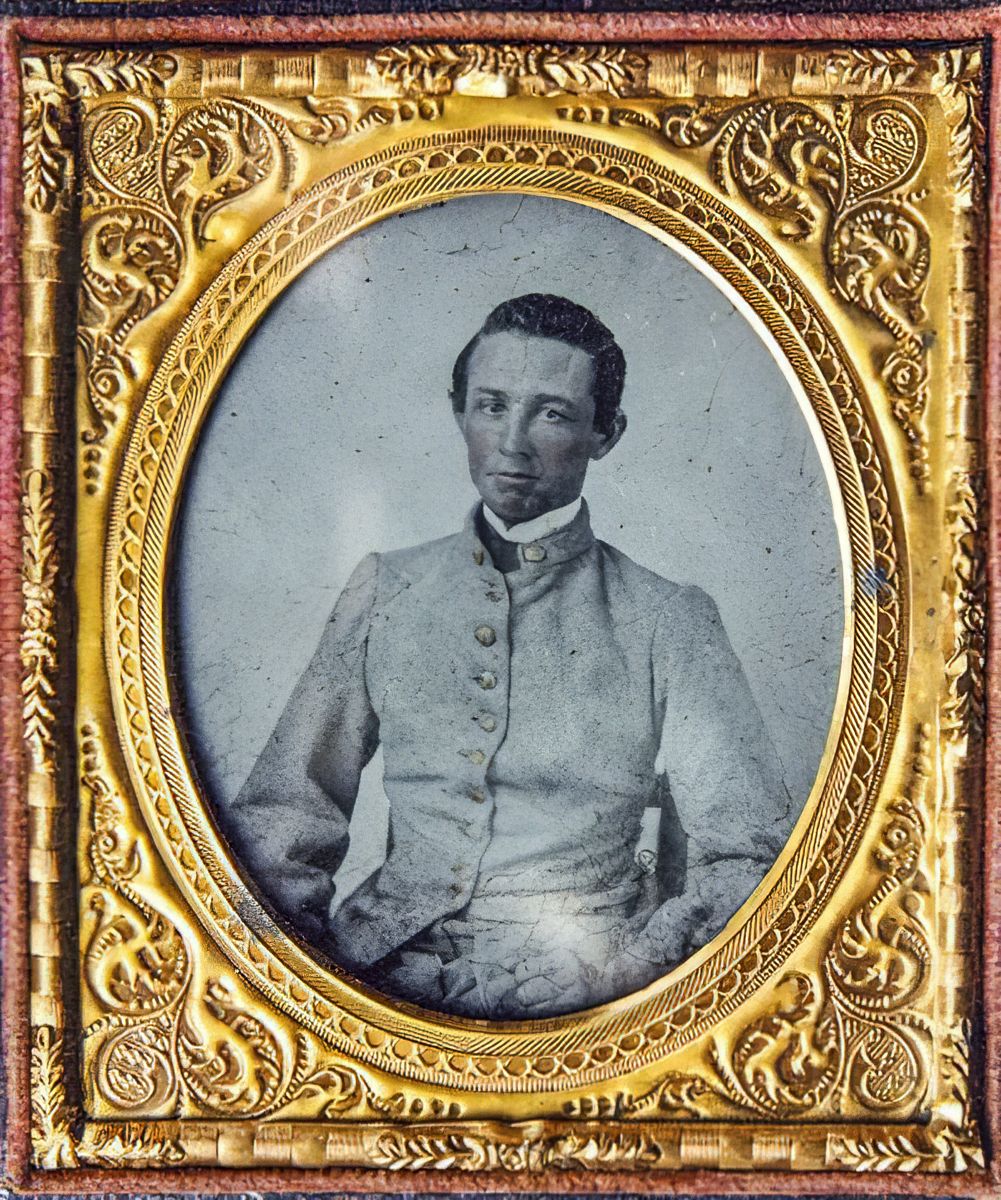
“When the brigade reached the wall there were very few men left and Armistead, turning to Lieutenant Colonel R.W. Martin, said ‘Colonel, we can’t stay here.’ Colonel Martin replied ‘Then we’ll go forward;’ and over the wall the remaining few went. But there were only seven or eight men left, General Armistead, Col. Martin, and Lieutenant H.L. Carter, Thomas Tredway, James C. Coleman, and some others. When Jones fell from the wall, Lieutenant H.L. Carter seized the colors and ran forward among the cannon, which the enemy had abandoned. “But reinforcements coming up they returned [sic], re-took the guns, there being no one to hold them, and opened fire on our line. General Armistead was killed (Armistead was hit by three gunshots and was mortally wounded) trying to turn one of the guns on the enemy. Col. Martin was wounded, his leg shattered by a ball. His friend, Thomas Tredway, who ran to his assistance, was shot and fell across his body dead. “The others fell also, and Lieutenant Carter, finding himself alone in the enemy’s lines, surrendered and was sent a prisoner to the rear, leaving the flag among the guns. He had seventeen bullet holes in his clothes and yet was without a wound.” The Sixty-Ninth Pennsylvania bore the brunt of the assault by the brigades of Garnett and Kemper. Although flanked on both sides, the Pennsylvanians’ fire decimated the Confederate brigades, killing Garnett (whose body was never recovered) and
CivilWarNews.com seriously wounding Kemper, who survived and later became governor of Virginia. Armistead’s brigade, consisting of the Ninth, Fourteenth, Thirty-Eighth, Fifty-Third, and Fifty-Seventh
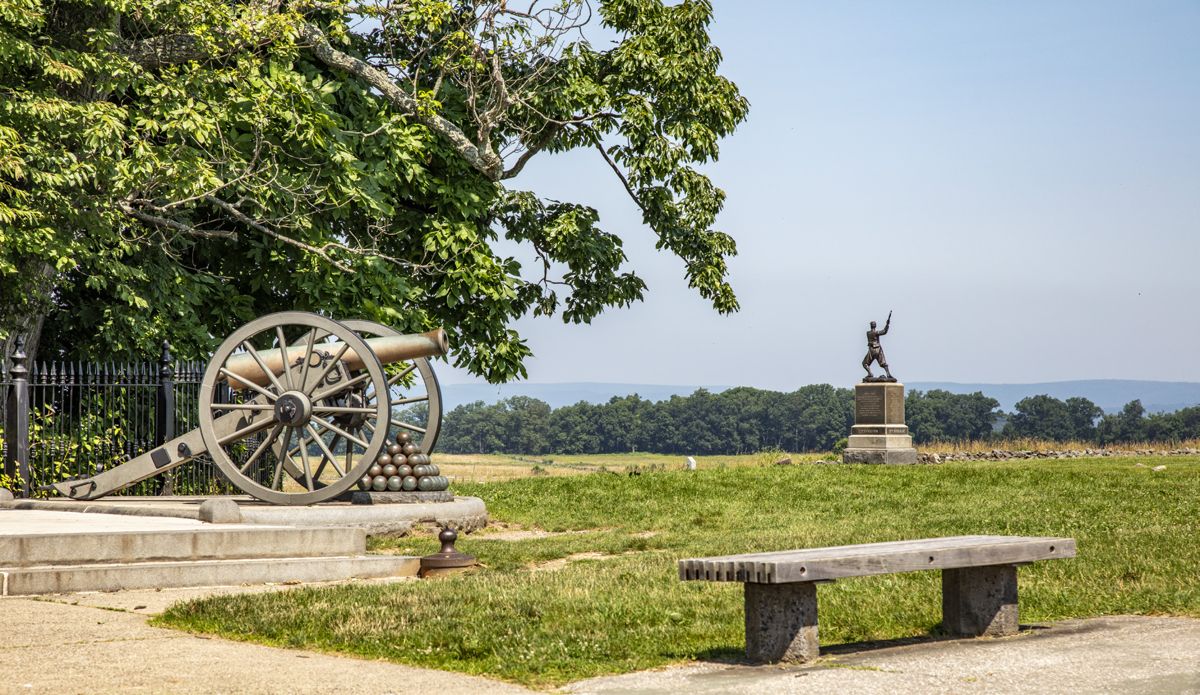
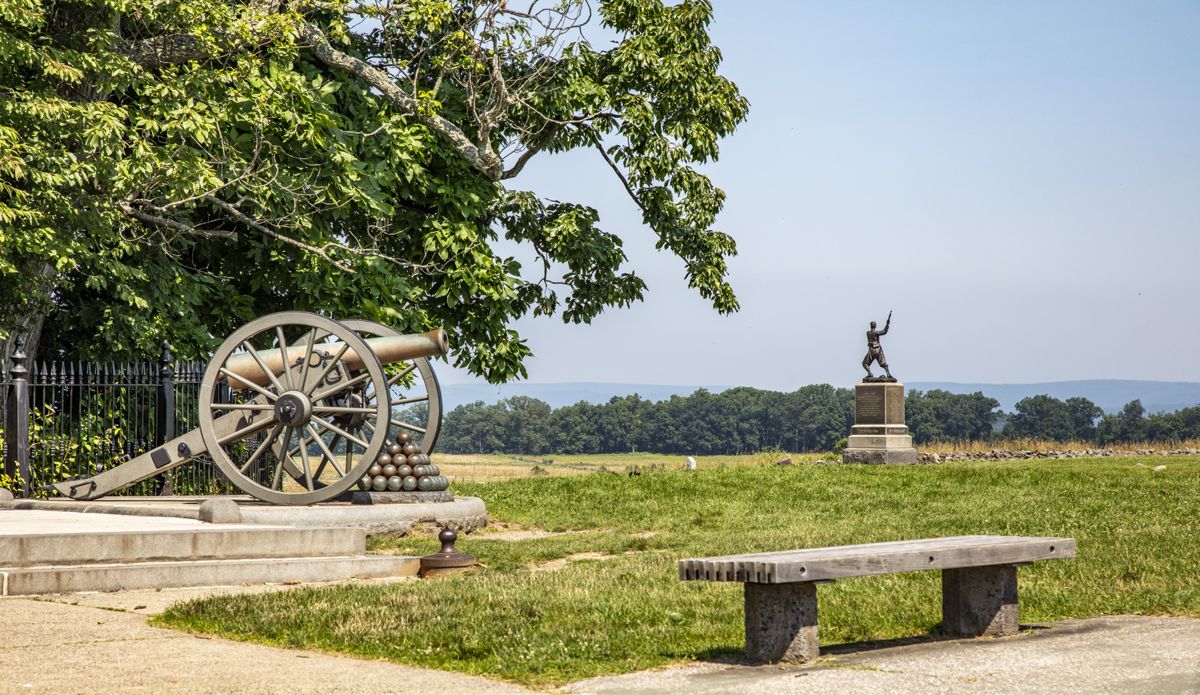
Virginia infantry regiments, pushed back the Seventy-First Pennsylvania and the SeventySecond Pennsylvania which was farther away from the wall than their comrades. Despite being wounded in his thigh and groin, Webb rallied his men with the help of two regiments, under Colonel Norman J. Hall, as well as troops from the Second Division commanded by Brigadier General William Harrow. Webb’s men stopped the Confederate assault, inflicting heavy casualties and forcing the remaining Confederates back toward Seminary Ridge. Webb noted that a portion of the One Hundred Sixth Pennsylvania Volunteers also took part in repelling the assault. There was widespread admiration for the performance by Lieutenant Alonzo H. Cushing of Battery A, Fourth U.S. Artillery although individual accounts differed in describing Cushing’s activities. There is little doubt he directed fire that decimated the oncoming Confederates, then moved the guns under his command from a forward position to the stone wall, where he would be wounded, then killed. Colonel Hall wrote two weeks after the battle, “Lieutenant Cushing challenged the admiration of us all.” Cushing would be nominated to receive the Medal of Honor 150 years later. The ceremony honoring him as a recipient would occur in August 2014. In his Official Report nine days after the battle, Webb called Cushing “cool, brave, competent, he fought for an hour and a half after he had been wounded in both thighs.” A day earlier, Webb and the Philadelphia Brigade had helped repulse one attack on Cemetery Hill and mounted a counterattack to help stop another. His bravery resulted in a battlefield promotion to Brevet Major General, all achieved within three days! On September 29, 1891, Webb was the recipient of the Medal of Honor “for distinguished personal gallantry in leading his men forward at a critical period in the contest” at Gettysburg. A full-size statue of General Webb was dedicated in 1915 overlooking the approach of
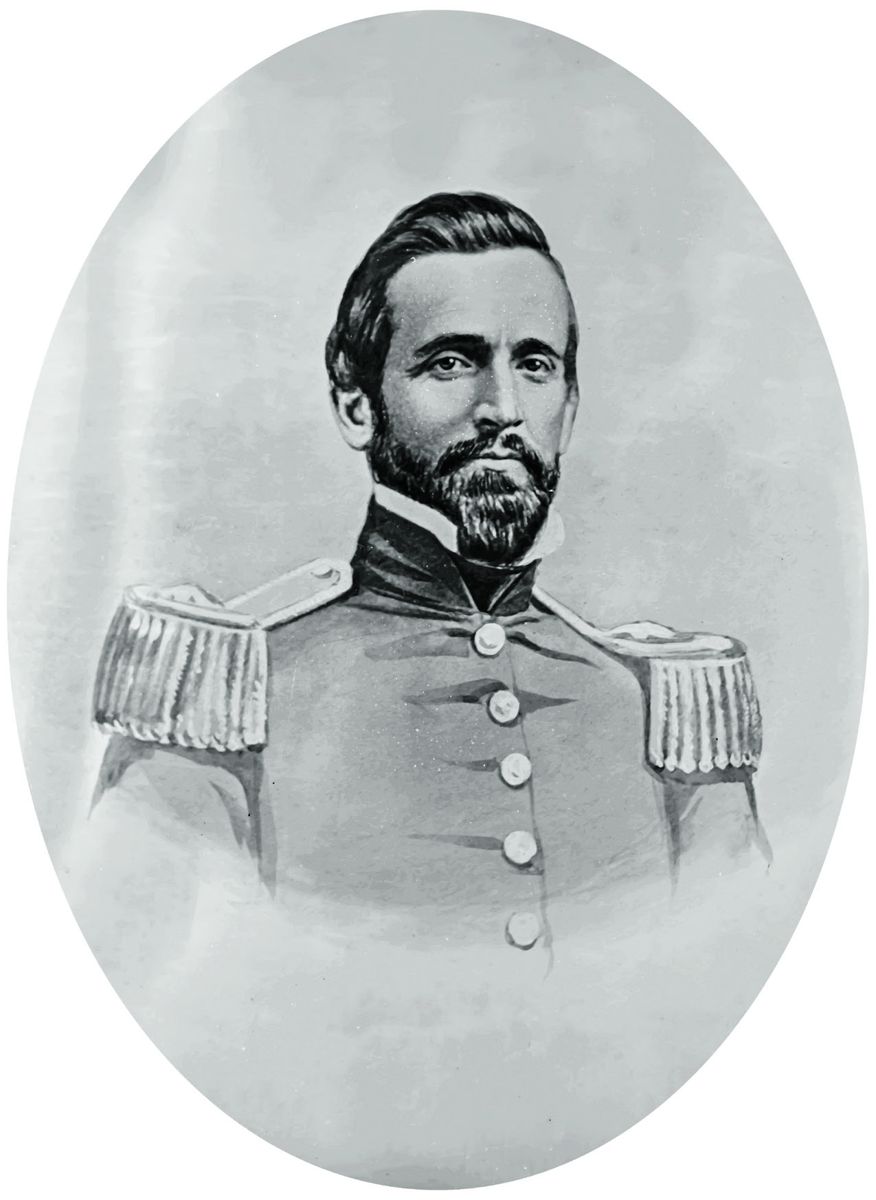
Pickett’s Charge. The spot was specifically selected by General Webb when asked to do so by the president of the Gettysburg Commission. Another is at City College of New York, where he was president from 1869 to 1902. He is buried at West Point, where he graduated in 1855. In an interesting aside from the battle, the members of the Seventy-Second Pennsylvania, which lost the most men of any Union unit involved that day, later protested the location for their monument at the High Water Mark. The unit leaders demanded that their monument be closer to the wall than the site selected by the Gettysburg Commission. After appeals to the Commission and the Pennsylvania Supreme Court, the location sought by the unit was approved and today the statue stands where the regiment fought. After a grueling roundabout ride from Virginia to Gettysburg and a spirited battle with Union cavalry at nearby Hunterstown on July 2, Major General James Ewell Brown Stuart’s Confederate cavalry was no doubt looking for an opportunity to damage the Union infantry facing an allout frontal attack. Stuart was an opportunistic leader who liked to befuddle the opposition when least expected.
Lieutenant Cushing. Congress)
Alonzo (Library
H. of (Jack W. Melton Jr.)
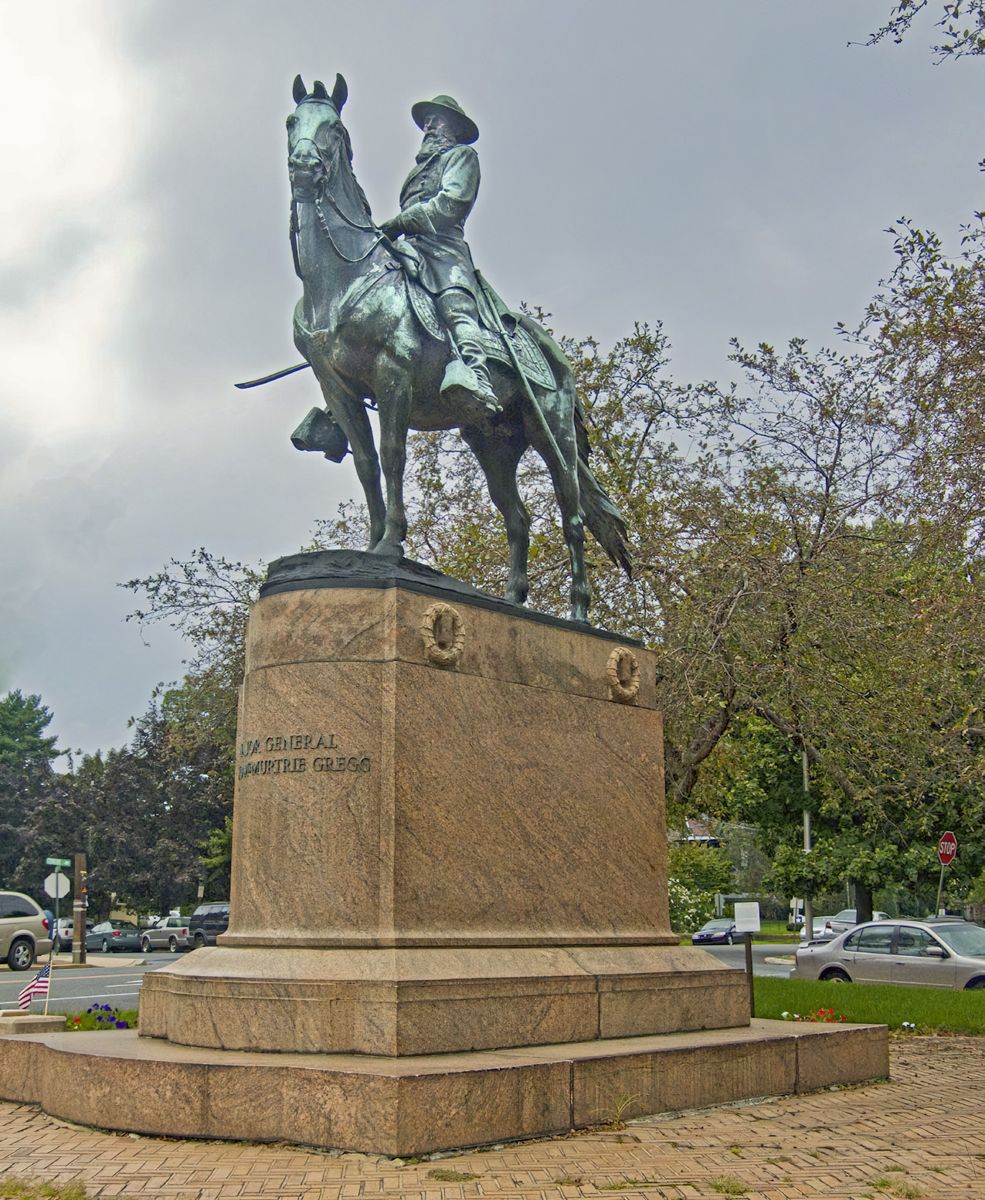
in hand-to-hand Stuart was still smarting from Witcher’s men to first retire, then engaging the surprise attack by Federal turn and unleash a deadly volley combat. Artillery on both sides cavalry units at Brandy Station before falling back across a field. didn’t fire for fear of hitting their in early June. At Gettysburg was From there, the battle ebbed and own men. Out of 432 men that the very Union leader who had flowed with many combatants Witcher took into action at East tried to sneak up on his rear on Fleetwood Hill at Brandy Station. Stuart had repulsed that attempt and before him at East Cavalry Field was Gregg, the commander who had tried to make a fool of him in Virginia. Anticipating an attack coming from the north along the Hanover Road, Gregg moved brigades commanded by Custer and Colonel John B. McIntosh into position along the Low Dutch Road. At this point, the two adversaries had roughly equal numbers, each with about 3,500 riders. After firing four shots from a single cannon in what was believed to be a signal to the infantry on the other side of Cemetery Hill that he was in place, Stuart sent his forces forward, ordering brigades commanded by Wade Hampton and Fitzhugh Lee to mount an attack. He also ordered a battalion commanded by Lieutenant Colonel Vincent Witcher to dismount, advance, and hold the Rummel farm’s barn and a Equestrian statue of Maj. Gen. David McMurtrie Gregg line of fencing. Artillery fire and (1922), by Augustus Lukeman, 4th Street and Centre
Cavalry Field only 96 survived. Hampton, in the middle of the fight, was wounded by a saber cut to the head and a pistol shot to the thigh. On the Union side, Custer led several charges, including an assault on the defenders at the fence line, but emerged unscathed. After the competing forces disengaged from close combat, Federal artillery forced Stuart to withdraw to the York Road and set up camp for the night. While both sides claimed victory in the vicious East Cavalry Field fighting, the Union cavalry under Gregg thwarted Stuart’s advance toward the rear of the Federals battling the allout infantry assault. We’ll never know the answer as to Stuart’s intentions because of the Union cavalry east of Cemetery Hill. It gave Webb the time to organize a counterattack against Confederate infantry that breached the Union defense, preserving the Army of the Potomac’s center, possibly the entire effort during those three days and the future of the war. By Gettysburg, Gregg was a veteran who had been promoted to brigadier general in December 1862. Gregg remained with the Army of the Potomac after Gettysburg and was promoted to
Brevet Major General during the Siege of Petersburg. In January 1865, he abruptly resigned his commission and settled in Reading, Pennsylvania, citing family affairs as the reason. He owned farming property in Milford, Delaware, but found himself yearning for life as a soldier, but was denied reinstatement to the army. He was involved in raising funds to preserve Valley Forge as a national historic site, briefly served as U.S. Consul to AustriaHungary, and was involved in Pennsylvania political activities. An equestrian statue of Gregg was erected in a plaza in Reading by the Commonwealth of Pennsylvania in 1921, five years after his death. Carl Sell is a frequent contributor to Civil War News. Because his great grandfather and great uncle attacked the High Water Mark on July 3, 1863, he has read and researched extensively about the event. His great uncle, George White, is identified in an eye-witness account included in this story. Both were wounded that day, eluded capture, and survived the war. Carl can be reached at sellcarl@aol.com or 703-971-4716.