
Critic's Corner
Ham Chamberlayne Virginian
By Stephen Davis · Originally published August 2023 · pp. 26–27
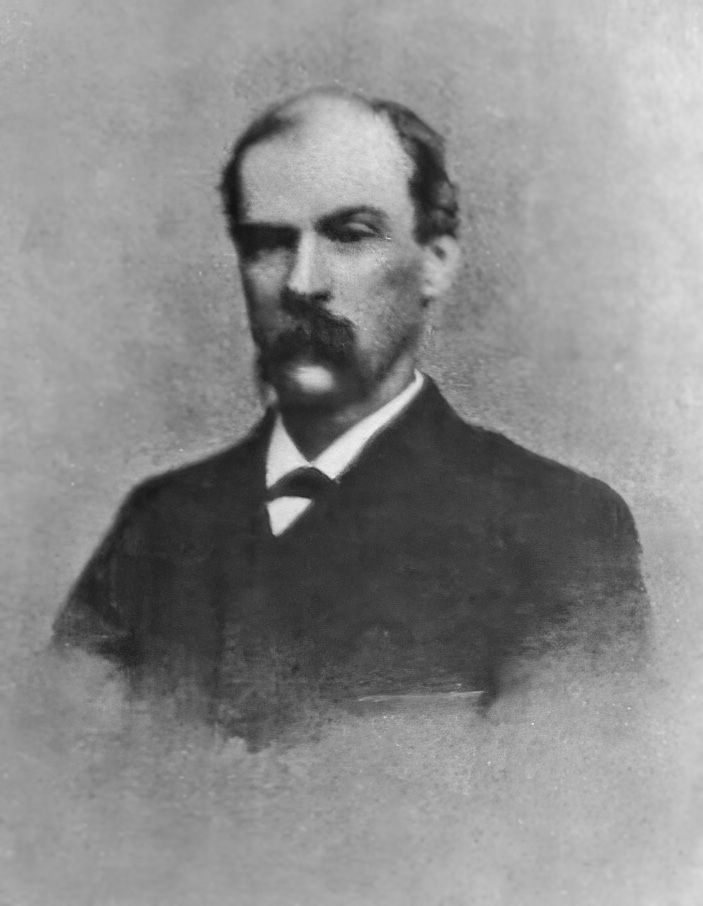
Ham Chamberlayne Virginian “For the shortest, dullest letter really written in a past age can bring its atmosphere home to you as the most vivid historian of a later time can do.” – Lord David Cecil in The Saturday Review of Literature, March 29, 1930 This commentary on the historical value of epistolation sets the stage for Ham Chamberlayne Virginian: Letters and Papers of an Artillery Officer in the War for Southern Independence 1861– 1865. Published at Richmond in 1932, Captain Chamberlayne’s letters were brought forth by his son, C. G. Chamberlayne, who wrote the Introduction. He explains that he obtained the papers from his mother and from collections of correspondence kept by Richmonders. Altogether more than 150 missives are presented. Sixty percent went to Chamberlayne’s mother, Martha, in Richmond. He mailed another two score to his sister
Lucy. A smattering of others went to family friends, such as Dr. George W. Bagby (of the Southern Literary Messenger, which occasionally published Ham’s writing). In truth, the captain wrote much about how he was doing in camp and asking about friends. But to the extent that his subject touched on the war, the editor refrained both from tinkering with the text of the letters and from softening “the oft-times harsh statements of the writer.” Indeed, C.G. was rather proud of his father’s writing, sprinkled as it was with Latin. (Ham once wrote his sister, “Nescio tamen… oportet esse. Hunt up a dictionary & translate.”) Of his subject’s references to Shakespeare, Milton and the English poets, the editor remarks that they bespeak “an acquaintance not common in these days of narrower and more specialized education.” Moreover, the son made no apology for his father’s partisan expressions and political opinions, which he characterized as reflecting “sober optimism as to the successful outcome of the struggle for Southern independence” and an “unbounded faith in the wisdom and practical ability of General Lee,” as well as “the absence of any trace of regret either for the course adopted by his native State in 1861 or for the sacrifice that he individually had had to make as a result of answering the call of the Commonwealth for his services.” Indeed, as the son explains, “Ham Chamberlayne loved Virginia with an intensity and wholeheartedness that amounted to adoration.” (“If I should ever have a family,” he once wrote, “one should be Virginius & one Virginia.”) John Hampden Chamberlayne was born in Richmond, June 1838, the son of a physician professor at the Medical College of Virginia. Young Ham attended private academies and graduated from the University of Virginia in 1858. He then studied law and briefly practiced in Richmond. When war came, he enlisted as private in Company F, 21st Virginia. A month later he was a lieutenant on quartermaster’s duty. He yearned for active service, and by June of ’61 was with Capt. Lindsay Walker’s
John Hampden Chamberlayne. Battery, 4th Virginia Artillery, as second lieutenant in Johnston’s Army of the Potomac. Soon came transfer to Col. William Gilham’s 21st Virginia, but as private. In October 1861 Chamberlayne was promoted to sergeant. As he wrote to his mother, “I know that I am of some use here, and do my part, tho’ it be now a small one, toward the great & common end.” The 21st was part of Loring’s “Army of the Northwest,” and took part in Jackson’s Romney campaign. During the winter of 1861-’62 the Confederacy suffered disheartening defeats, yet Sergeant Chamberlayne kept up his spirits. “Our Brigade is a very fine one, & a full, Virginians all,” Chamberlayne proudly wrote home in April 1862; the 21st was then part of the 2d Brigade in the army that Stonewall Jackson was assembling in the Valley. Even when McClellan’s huge army approached Richmond in early May, Chamberlayne voiced optimism: “As long as we have two great armies in the field our cause is full of hope. The occupation of every sea port & river town & all our frontier is only the first step in conquering us. A people cannot be conquered by occupying its territory, its armies must be beaten & broken up. Their “Anaconda” will have a slow meal after he has swallowed the sea side & the frontier; our army will be indigestible.” He reminded his sister Lucy that in the first Revolution, the British captured every colonial port, and still the Rebels won. “Are we not more unanimous against the Yankees than against them?” he asked. “If we are only half as true as our ancestors were we must win.” More, the Yankees were a lot worse than the Limeys. “I desire neither ease nor riches nor life if to be had under Y. Doodle, most abject of tyrants, most mean & despicable.” During the winter,
Chamberlayne had requested transfer back to Capt. Lindsay Walker’s Battery. In early June ’62 Walker recommended Sergeant Chamberlayne’s promotion to lieutenant and assignment as his adjutant; the promotion and assignment came through. Thus he began to mark his envelopes, “J. H. Chamberlayne adj. art. Light Division”—he was marching with A. P. Hill, part of Jackson’s command. Chamberlayne was a good old Rebel. He reveled when Stonewall humiliated “Pope, the prince of braggarts.” He was there when Jackson seized Manassas Junction, and delighted in writing home of starving Rebels reveling amidst a sea of plunder. “At the Junction was a large store depot, 5 or six pieces of artillery, two trains containing probably 200 large cars loaded down with many millions worth of qr mr. and Commissary stores; besides these there were very large sutlers depots full of everything; in short there was collected there in a square mile an amount & variety of property such as I have never conceived of (I speak soberly). Twas a curious sight to see our ragged & famished men helping themselves to every imaginable article of luxury or necessity whether of clothing, food or what not; for my part I got a toothbrush, a box of candles, a quantity of lobster salad, a barrel of coffee & other things wh. I forget. The scene utterly beggars description.” Then came Second Manassas, where, writing of the Yankees, he concluded “they were out generaled & beaten from the start & at 4 ½ P.M. or 5 twas plain they were awfully conquered.” Of Lee, Chamberlayne could not say enough: “he is silent, inscrutable, strong, like a God.” He had forged “an army great in numbers and spirit [which] has by experience gained such confidence in itself and its leaders that it may be said to be irresistible.” Marching into Maryland, the lieutenant saw Sharpsburg, which he considered a Southern victory after Lee’s army beat back the Yankee attacks (“the enemy was repulsed at every point with great slaughter”). Even after the retreat back to Virginia, he boasted that “we can whip 150,000.” After Fredericksburg he even looked ahead to “the dawn of glorious liberty & peace.” Ham enjoyed writing his mother, filling long letters with all sorts of details of army life. After a religious service, he judged the minister as having “preached but poorly”; besides, he “pronounced dooty &c like a Yankee.” Through newspapers he kept up with events in other theaters. After Murfreesboro he recorded, “All that we ask is that we may hold our own at the West; Lee’s unconquered army will do the rest.” Lieutenant Chamberlayne commanded “Crenshaw’s Battery,” four Napoleons and ninety men, at Chancellorsville, where they were slightly engaged. He penned an account of the battle that appeared in Bagby’s SLM. During the Pennsylvania campaign, Chamberlayne was captured near Chambersburg on June 28 while foraging for horses. Soon he was behind bars at Fort Delaware, and from there moved to Johnson’s Island. Though the prison was on Lake Erie, in late October he was able to write home, “the weather so far has been delightful.” To while away time he chatted with comrades, played chess and cards, and of course read. Relatives sent him books by Shakespeare and the French writers; he even taught himself German. After a winter on the lake, Chamberlayne was exchanged; by mid-March 1864 comrades were welcoming him back to “the land of Tobacco & Race horses.” The lieutenant and his battery fought in the Overland Campaign all the way into the Petersburg trenches. Meanwhile Ham sought further promotion. A captaincy arrived in mid-August ’64, with Chamberlayne commanding “Davidson’s Battery.” When Grant exploded his mine on July 30, the captain and his guns were nearby, unscathed, but close enough for Chamberlayne to have watched the ensuing infantry fight. In unusual detail he related it to his mother in a letter dated August 3. “On Saturday last the enemy sprung a mine under a salient angle, on the Baxter road, near Mr. Tim Rives’ & the N. Market race course 2 ½ miles East of Psbg., blew up a battery of 4 guns, disabling two of them, & parts of 2 regiments & then rushed in, held the work, & attempted to form line of battle in rear of it & sweep down the line. Their whole force was concentrated & that days attempt was, doubtless, the grand affair. There was a gloomy look out for some two hours, after which we cleared them out effectually, retaking the guns, killing upwards of 700
outright, wounding many more & taking 11 to 1200 prisoners—A brilliant & important victory, achieved by ⅓ of our force & with comparatively light loss. A month of mining, his whole force concentrated, & his own time & place selected enabled him to lose from 4500 to 5000 men & gain nothing—For we hold every foot of ground—& they have not advanced an inch.” The Confederates’ Crater victory, which in Chamberlayne’s telling looked so easy, allowed the captain to brag: “If they will whip Sherman, we will finish the war here.” News from the west, though, was hard to verify. Soldiers called rumors “grapevine telegraphs” and “canteen dispatches”; one of them had Kirby Smith crossing the Mississippi and marching on Sherman’s rear. After the longed-for captaincy arrived in mid-August, Chamberlayne’s/ Davidson’s Battery was one of three in Maj. Wade Gibbes’ artillery battalion. Like other officers in the Petersburg trenches, Chamberlayne busied himself overseeing the strengthening of the works. “Lee holds Grant checked baffled beaten,” he wrote home on August 27. Yet the Confederate army was undeniably pinned down in the Petersburg tranches. “All men agree now that on this army & on the taking or holding of Rd—the great question rests.” Chamberlayne served the entire war without receiving a serious wound. Thus it was for comic effect that he closed an epistle to a friend, “Yours till blown up, sharp shot or otherwise wiped out.” Although there could be no joking about the iron and lead being flung at them by the Yankees, Johnny Rebs still made light of it all. “You know a shot from the flank, raking a position is called technically an enfilade (from the French),” he tutored his sister Lucy; “the men have baptised the mortar shell as the top filade.” Even though the enemy fire could be deadly, the day-to-day of trench life became monotonous. “I & my command,” Chamberlayne wrote under the heading “Battery in the Trenches Oct 1864,” “have been occupied in digging and building earthworks & winter huts for the men, & beyond the shelling & the musketry have not been in action since July.” “Drills and horse cleaning take most of my time,” he wrote on another occasion.. Ham’s letters offer occasional
CivilWarNews.com glimpses of soldier life, as when he noted that cigarettes had become popular among the men. All the while, he hoped for yet another advancement: this one would be to major. (It never came; it was as captain that Chamberlayne surrendered at Appomattox.) …except that he didn’t. When General Lee met with Grant to arrange the capitulation, Ham determined to have no part in it. “McIntosh and myself with several others refused to attend the funeral at Appomattox C.H,” he wrote on April 12, “& as soon as the surrender was certain we cut or crept our way out.” He and his comrades planned to make their way to join Joe Johnston in North Carolina. When that didn’t pan out, Chamberlayne envisioned heading farther. En route toward Atlanta, by April 21 he was in Charlotte, N.C. He hoped to get to Texas, though he affirmed, “my duty is still to my country, Virginia.” The trek was cut short, however. Chamberlayne and his travel companions were paroled near Athens, Georgia, in the first week of May. He took his loyalty oath in Atlanta on the 12th. My copy of Ham Chamberlayne Virginian was printed in a run of 1,000 by the small Richmond publishing house of Dietz Printing. I bought it in January 1978 for $30. It may not, as Lord Cecil put it, convey Civil War history “as the most vivid historian.” Yet it is a handsome collection of thoughtful, articulate letters written by an educated Virginian and a conscientious Confederate. As such it has an esteemed place in my library. Stephen Davis resides in Cumming, Ga., with his sweet wife (ejus uxor dulcis) Billie and their cat Cha Cha (color: gray and butternut). He holds his Bachelor’s from Emory, Master’s from Chapel Hill, and Ph.D. again from Emory. Dissertation: “Johnny Reb in Perspective: The Confederate Soldier’s Image in the Southern Arts.” His recent books include a twovolume study of General Hood (Mercer University Press). He has begun to write a counterfactual war history for Shotwell Publishing in Columbia. Jefferson Davis, of course, served one term, but later Confederate presidents include Woodrow Wilson. As the United States teetered toward war in Vietnam, C.S. Senator from Georgia Richard B. Russell warned Washington of an entangling, losing war in southeast Asia. Well, we know what happened…