
Chasing the Gray Ghost
By Don Hakenson and Chuck Mauro · Originally published October 2019 · pp. 30–31
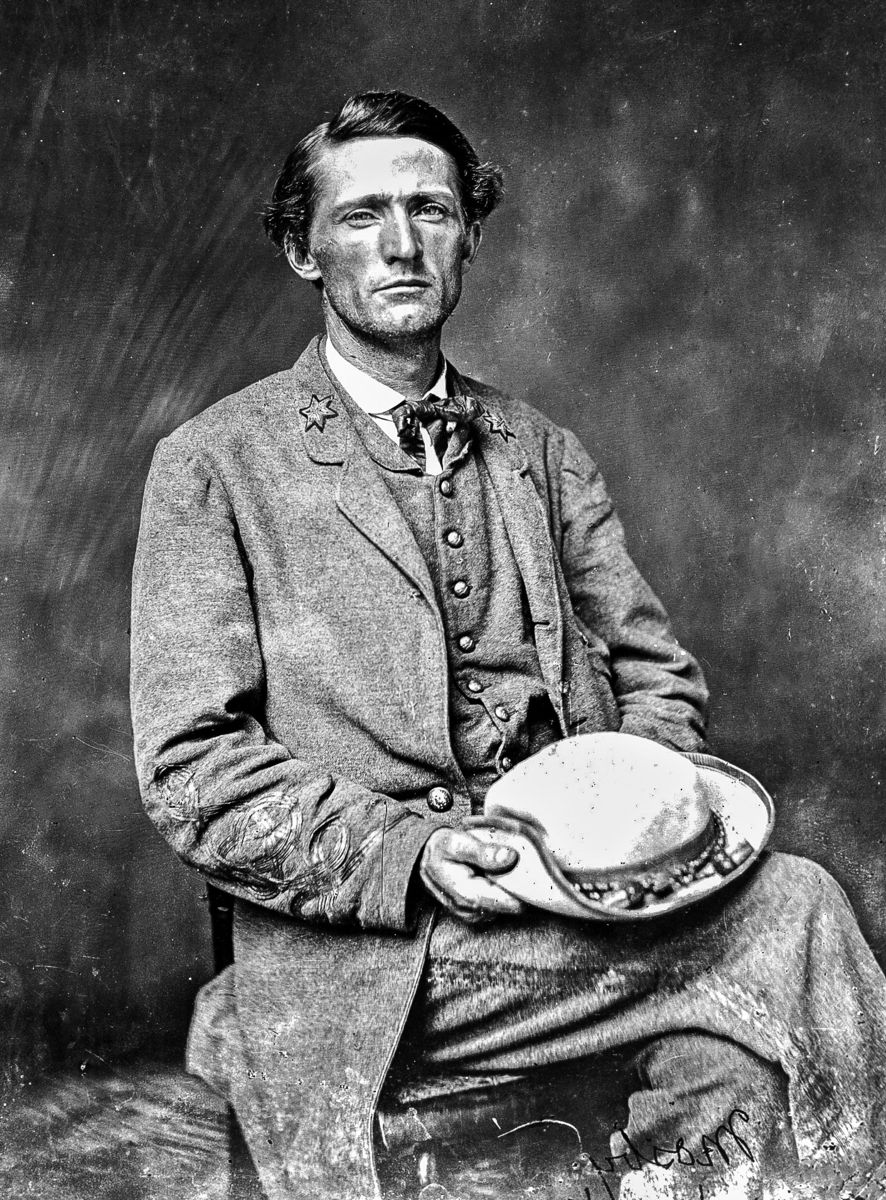
Chasing the Gray Ghost By Don Hakenson and Chuck Mauro Confederate Colonel John S. Mosby spent the last two and half years of the Civil War conducting guerilla combat operations against the Union Army in and around the city of Washington, the Union capital. He led a small band Confederate cavalrymen known as the Forty-third Battalion of Virginia Cavalry, or Mosby’s Rangers. His unit conducted their operations primarily behind enemy lines in Northern Virginia. They kept large numbers of Union troops guarding Washington instead of fighting against General Robert E. Lee. This little body of a few hundred men, under Mosby’s skillful and daring leadership, accomplished more with less. The Rangers struck quickly, gobbling up horses, men, and supplies before disappearing before reinforcements or help could arrive. The ability to appear and quickly disappear from a fight, and having no permanent camp, earned the Mosby the moniker the “Gray Ghost.” This unit is recognized by today`s U.S. Army and Marine Corps as the most feared and successful guerilla unit in the history of American warfare. The area in which they operated would become known as Mosby’s Confederacy. Authors Don Hakenson and Chuck Mauro have been retracing the steps of this famous guerilla leader for over 30 years, documenting the locations of his fights, safe houses, his men’s burials, and his other escapades in a series of books starting with A Tour Guide and History of Col. John S. Mosby’s Combat Operations in Fairfax County, Virginia, then in Loudoun County and now in Fauquier County, Virginia. Although they have researched over 350 locations, they’ve documented, they still needed help for the less well known sites. For their Fauquier County book, they turned to two local historians for help. One story they were researching goes as follows: On April 27, 1863, at six o’clock in the morning, Union Major General Julius Stahel left Fairfax Court House in Northern Va., leading a brigade of two thousand cavalry and four cannon, with five days rations in an effort to capture or exterminate then Major John S. Mosby and his troublesome guerillas.1 When the expedition reached Cub Run, the Union advance guard captured three of Mosby’s men; Jack Barnes, Peachy Taliaferro, and Ab Wrenn, who were traveling horseless to Fairfax in the hope of obtaining some fine Union mounts.
Union General Julius Stahel It was proposed to General Stahel by one of his officers to send these prisoners under guard to Fairfax Court House, but he replied that it was impossible for him to do so while on so important and hazardous an expedition. He would not weaken his force for any purpose whatever. “No,” said the general, with an air of profound cogitation, “the prisoners must be made to accompany the expedition on foot.” At Aldie, the number of
Major John S. Mosby prisoners increased by the acquisition of seven additional citizens and capture of three more Mosby men; Privates Thompson, Thomas N. Green, and Lycurgus Hutchinson.3 Stahel, hoping to strike terror in the hearts of the locals on the expedition, turned onto the road to Ashby’s Gap and prepared to spend the night near Middleburg. Stahel, riding a fine white horse, made an impressive sight for the citizens of that small town when the Union force passed through Middleburg.4 Stahel determined to camp for the night in a body of woods one mile from the town. Stahel was a cautious man and ordered his artillery to open a concentrated fire on the wooded area before entering. Satisfied that not even guerillas could live under so destructive a fire, he finally proceeded to limber up and take possession of the desired camping ground. This shelling amused the now alerted Mosby and his men; they merrily ridiculed Stahel for bombarding an area that contained nothing more than bats and owls. Each artillery piece was placed in such a position as to be most serviceable in case of a night attack. The horses were unbitted, but only long enough to enable them to eat; the men, after a hasty supper, were ordered to sleep with their animals in case of an emergency. The night was cold and rainy, yet not a fire would
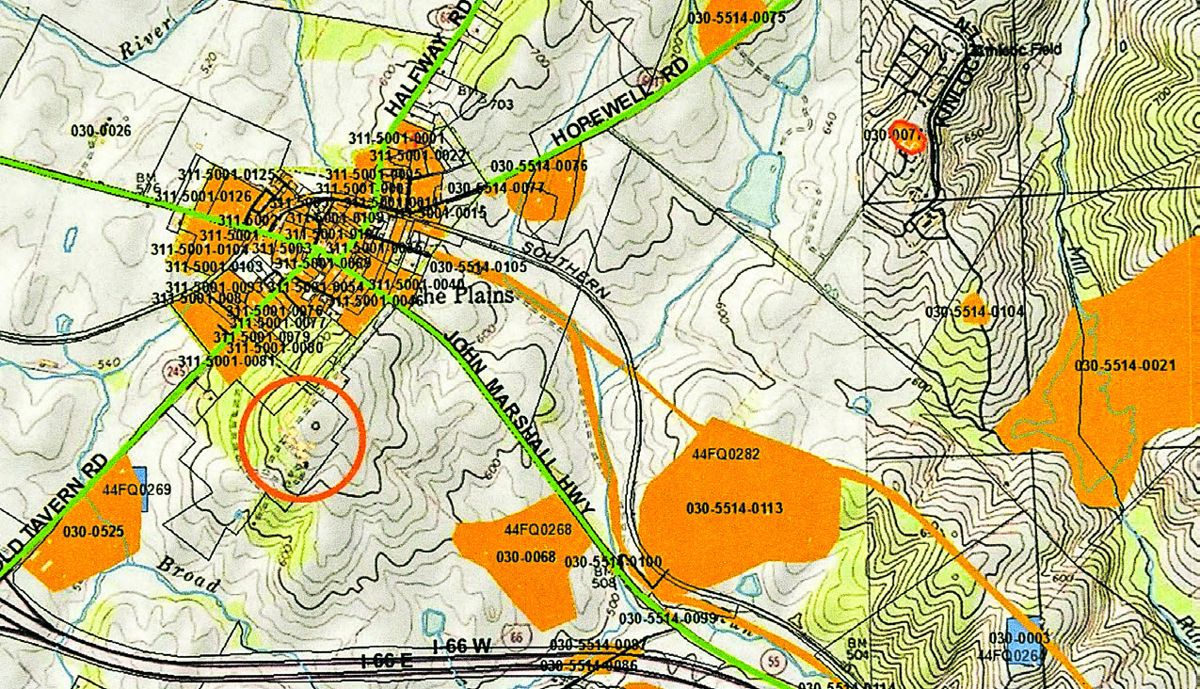
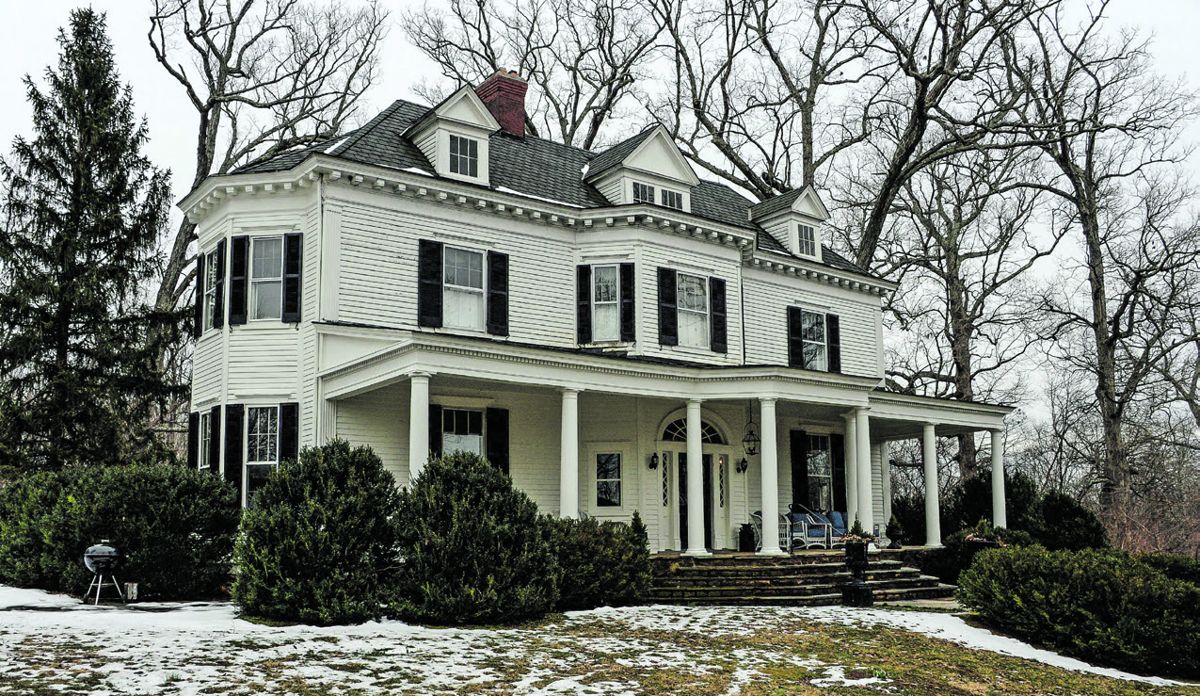
General Stahel allow to be kindled; for he very prudently remarked that he did not intend to light signal fires to direct guerillas in a nocturnal attack upon his camp.5 The next day the Union brigade set their march towards Upperville but before the invading force had advanced halfway Ranger Tom Richards, with five or six men, met the advance guard and opened fire. Supposing this to be a general engagement, Stahel halted his column and placed it in line of battle, posting his artillery on neighboring elevations. He held this position unmolested for an hour, but at the end of that time, General Stahel moved abruptly to the left, in the direction of Salem (now Marshall), proposing to return to Fairfax through Thoroughfare Gap. Mosby would not allow that to happen. Heading quickly to Salem, Mosby had come a few miles from the Gap, when he was overtaken by Alfred Glascock and Norman Smith, whom he had left on the road; they informed Mosby that five hundred of Stahel’s Union cavalrymen were now on Mosby’s tracks. Mosby quickly ordered, “They are the same men whom we whipped at Chantilly and at Miskell’s and we can do it again.” Mosby immediately reversed his column and proceeded towards The Plains; after going a few miles, he was informed that Stahel had altered his plans again, and was trying to make good his retreat to Fairfax through Hopewell Gap in the Bull Run Mountains. Apparently, Stahel had been told that Mosby, and maybe even General J.E.B. Stuart’s cavalry, were at Thoroughfare Gap waiting to surprise him. Mosby left the road and rode across country to a road leading from The Plains to the mountain pass. As fortune would have it, when Mosby reached the road, he found the advance guard of Stahel’s command. The Union advance guard fell back and found General Stahel at The Plains. Stahel was informed that Stuart’s cavalry now occupied Hopewell Gap, and were then pressing forward to attack.6 Again, Stahel prepared for action, and drew up his forces in line of battle on a hill near The Plains, which would become known during the war as Stahel’s Hill.7 From an eminence near Kinloch, Mosby could plainly observe Stahel’s movements.8 Stahel, believed he was completely surrounded by barbarians and was obviously planning on cutting his way back to Fairfax and safety. General Stahel considered himself in a situation of extreme peril, surrounded by marauders who were doubtless waiting for him to make one mistake so they could pounce and begin a murderous encounter. Stahel thought the only course of action was a night march when he could give Stuart and Mosby the slip and make it back to the Union lines. At dusk the columns were formed, and headed towards Middleburg, the only avenue of escape still open.9 Today, the location of the hill that Mosby ascended and Stahel’s Hill are left to conjecture. There are a number of hills around the Kinloch house and The Plains that Mosby and Stahel could have used. With the help of a topographical map kindly provided by Wendy Wheatcraft, the Fauquier County Preservation planner, the authors were able to first locate the only hill in the area large enough to accommodate General Stahel’s 2,000 men. The hill south of the Plains that General Stahel most likely ascended is called Headache Hill today. It is the highest and largest hill in the area giving Stahel the ability to scout the Confederates via line of sight in any direction. It earned the name Headache Hill due to the difficulty that horses and wagons had crossing it in the early 1800s. It was subsequently known as Stahel’s Hill, as it was referred to by Confederate veterans in the area after the war. The Archwood house and the Wakefield School are on top of the hill. The property was sold to the school from the Kinloch estate in 1994. This coincides with the account that Mosby could plainly see Stahel’s men from a hill on the Kinloch estate. The Archwood house was built in 1916 as Ravenscroft by Robert Downman Jr., the son of Confederate Major Robert Henry Downman of the Black Horse Troop. It was subsequently renamed Archwood in 1928 by the new owner, Mr. H. Teller Archibald. It is on the site of the previous house named Ravenscroft, which predated the Civil War, but was torn down by Union troops for lumber to make a marquis for a ball for Union General John Pope.
the parameters of the historical accounts. Charlie Mackall, the great-grandson of Confederate Brigadier General William Whann Mackall, currently lives on Selby. Charlie tells a family story that when his grandfather was eleven or twelve years old, living at nearby Avenel, he used to hide the family’s horses from the Union pickets as they one could not see very far ahead. He saw Mosby and his rangers take off riding pell-mell down the north side of the hill toward Union soldiers guarding the railroad. Following a barrage of gunshots and commotion which he could hear but not see, he then saw Mosby and his men reappear from the fog bank, riding up the hill with captured Union soldiers on the backs of their horses. Till this day, Charlie and his family call such foggy mornings, “Mosby Mornings.” Charlie also remembers his mother, Rebecca Beverley Mackall, telling him that Mosby had dined at the house for Sunday dinner with his grandfather and grandmother, Rebecca Dulany Beverly, a year or two before Mosby passed away in 1916.
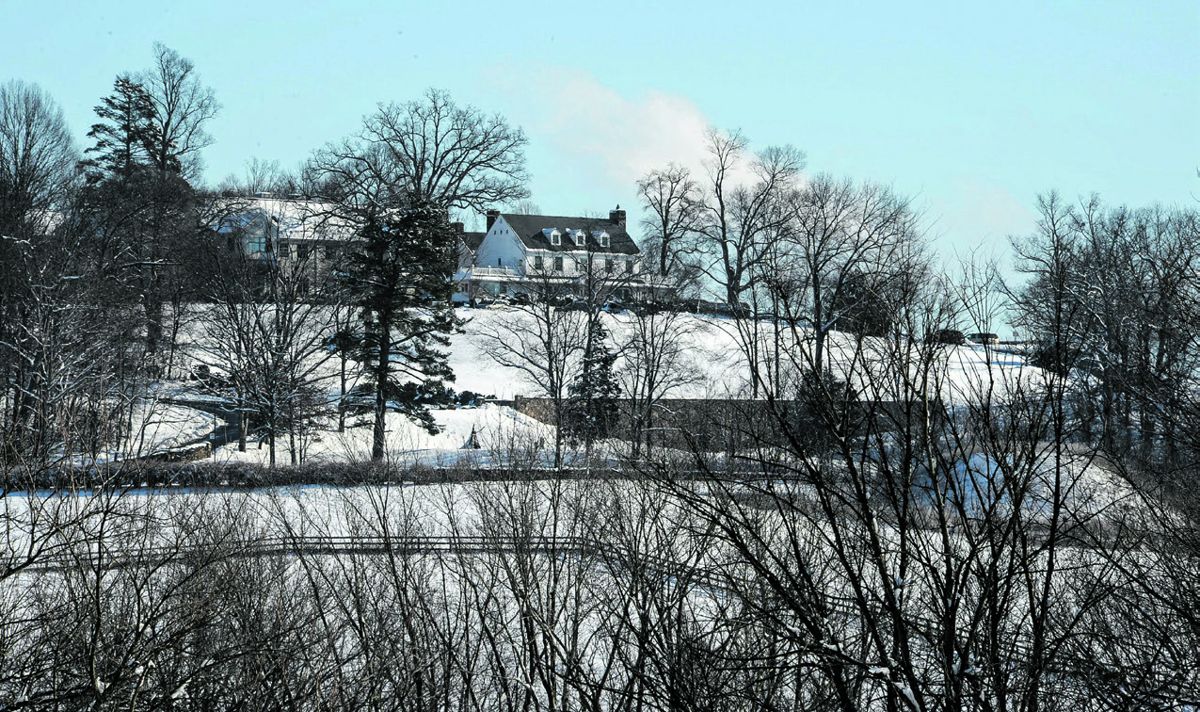
School as seen from Headache/Stahel Hill The hill Mosby ascended, heading south from Kinloch, which he noted was within plain eyesight of Headache Hill, was more troublesome to locate. Stahel’s Hill is surrounded by many smaller hills and ridges to the north, east, and south. The Kinloch Estate does not extend further south, so the options were to the north and east. To the east, O’Bannon Road runs along a long north-south ridge which Mosby and his men could have ascended. This ridge however is a little too far from Stahel’s Hill for a clear view of the Union cavalry. This is where The Plains historian, Marcia Markey, provided some much-needed insight. From her vast knowledge of the area and history of the Civil War, she indicated that the hill Mosby would have most likely ascended is one traversed today by Selby Lane. It is just northeast of Stahel’s Hill, across today’s Route 55, the John Marshall Highway. It, and Stahel’s Hill, were both part of the Kinloch estate, one key fitting rode through the area or were stationed close by guarding the Manassas Gap Railroad. The rails ran between his property, a part of Avenel where he later built his house, and Headache Hill. Beverley remembers seeing Mosby and his men on Headache Hill early one morning, while there was a thick bank of white fog in the valley between the two hills. The fog was so thick that
Map of Mosby sites in Fauquier County by Stephen Wolfsberger.
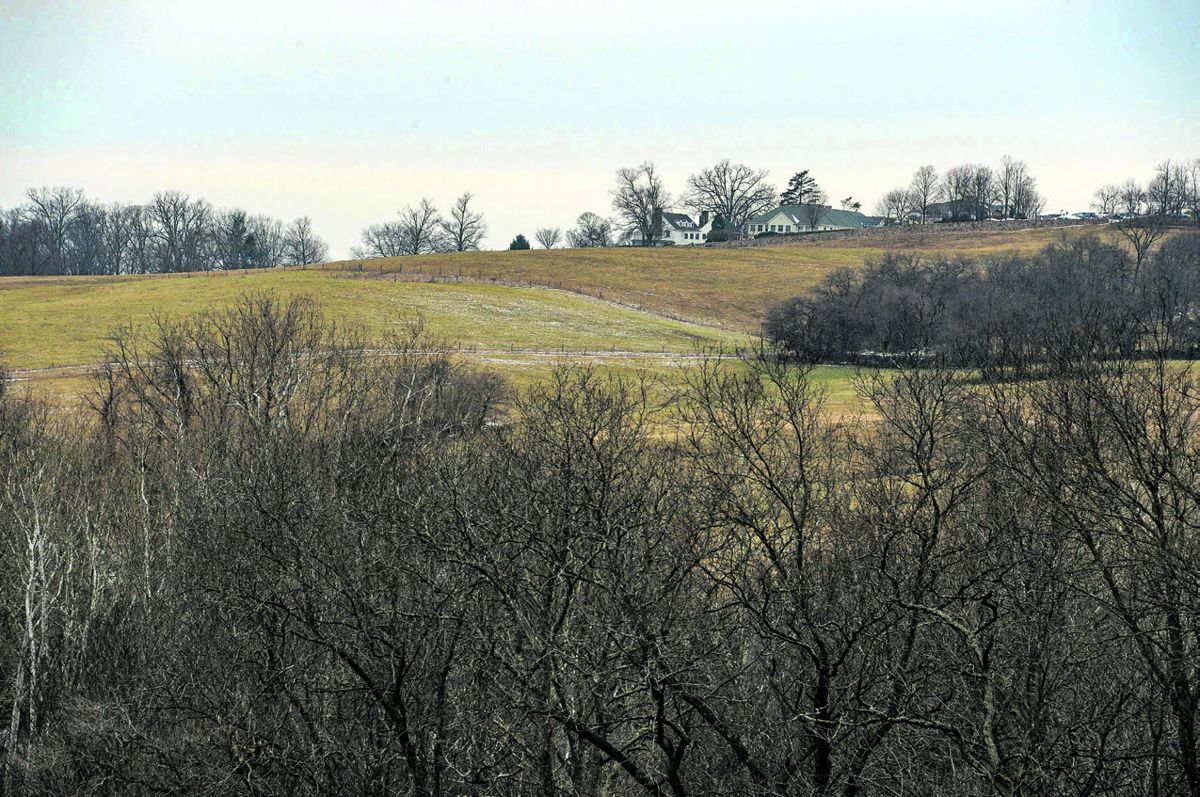
The old Manassas Gap Railroad between Selby Lane and Headache/Stahel’s Hill used by Amtrak today. In this case, the authors were able to successfully chase down the location of the Gray Ghost while so many Union officers and soldiers were unable to do so during the war. They are continuing their work on this series. 1.
Dunaway Branch between Selby Lane and Headache/ Stahel’s Hill.
Endnotes
Ramage, James A., Gray Ghost, The Life of Col. John Singleton Mosby; The University Press of Kentucky; Lexington, Kentucky; 1999; page 167. Scott, John; Partisan Life with Mosby; Harpers & Brothers,
Publishers; (1867); New York; pages 78-79. Scott only provided the last names Thompson, Taliafero, Green and Hutchinson of the captured rangers. Keen, Hugh C. & Mewborn, Horace; 43rd Battalion Virginia Cavalry Mosby’s Command; H.E. Howard, Inc.; 1993. A review of this regimental history provided the first names of Peachy Taliafero, Thomas N. Green, and Lycurgus Hutchinson. Scott, John; Partisan Life with Mosby; Harpers & Brothers, Publishers; (1867); New York; page 82. Scott describes Stahel’s mount as “the general on a milkwhite steed.” Scott, John; Partisan Life with Mosby; Harpers & Brothers, Publishers; (1867); New York; page 79. Scott, John; Partisan Life with Mosby; Harpers & Brothers, Publishers; (1867); New York; pages 81-82. Scott, John; Partisan Life with
Mosby; Harpers & Brothers, Publishers; (1867); New York; page 82. Scott describes Stahel’s Hill, “the Federal general again prepared for action, and drew up his forces in line of battle on a hill near the Plains, henceforth to be known as Stahl’s [Stahel’s] Hill.” Scott, John; Partisan Life with Mosby; Harpers & Brothers, Publishers; (1867); New York; page 82. Scott also stated “From an eminence in the neighborhood of Kinloch Mosby could plainly observe this movement.” Scott, John; Partisan Life with Mosby; Harpers & Brothers, Publishers; (1867); New York; page 82.
Don and Chuck’s series of books on Mosby’s Combat Operations and other books on the Civil War in Northern Virginia are available on Amazon and www.hmshistory.com. Feel free to contact them at dhakenson@verizon.net and cmauro10@aol.com.